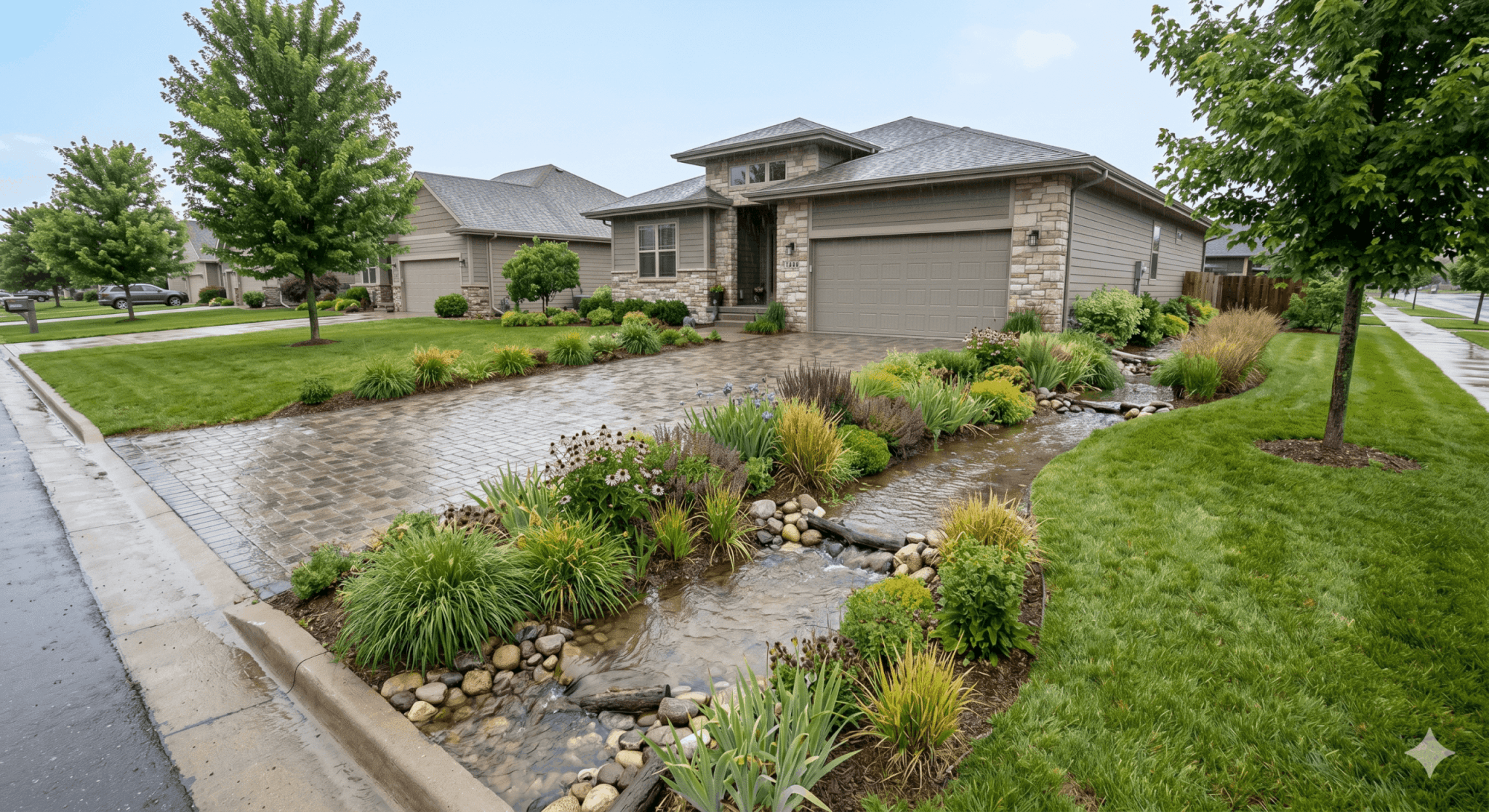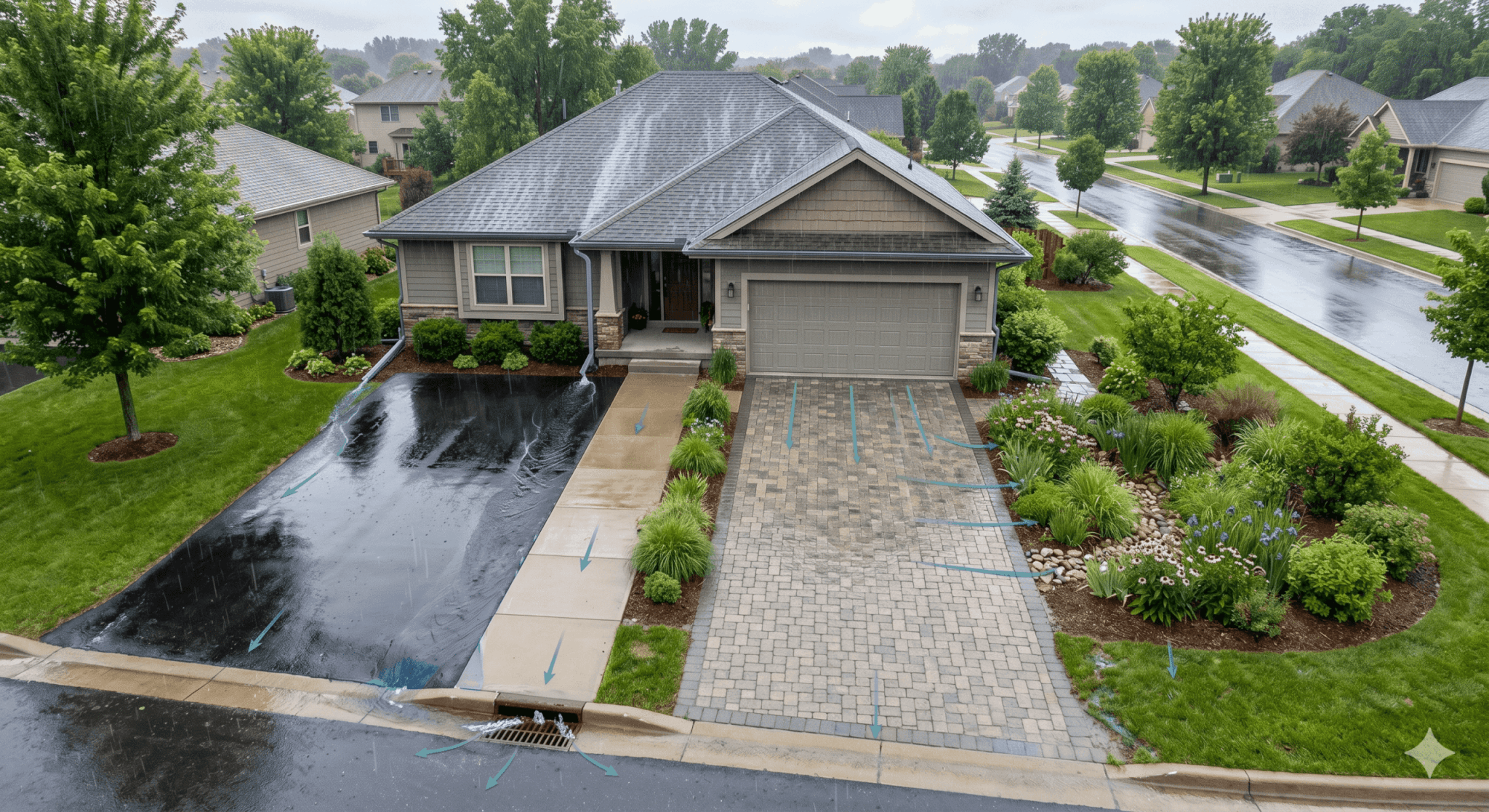

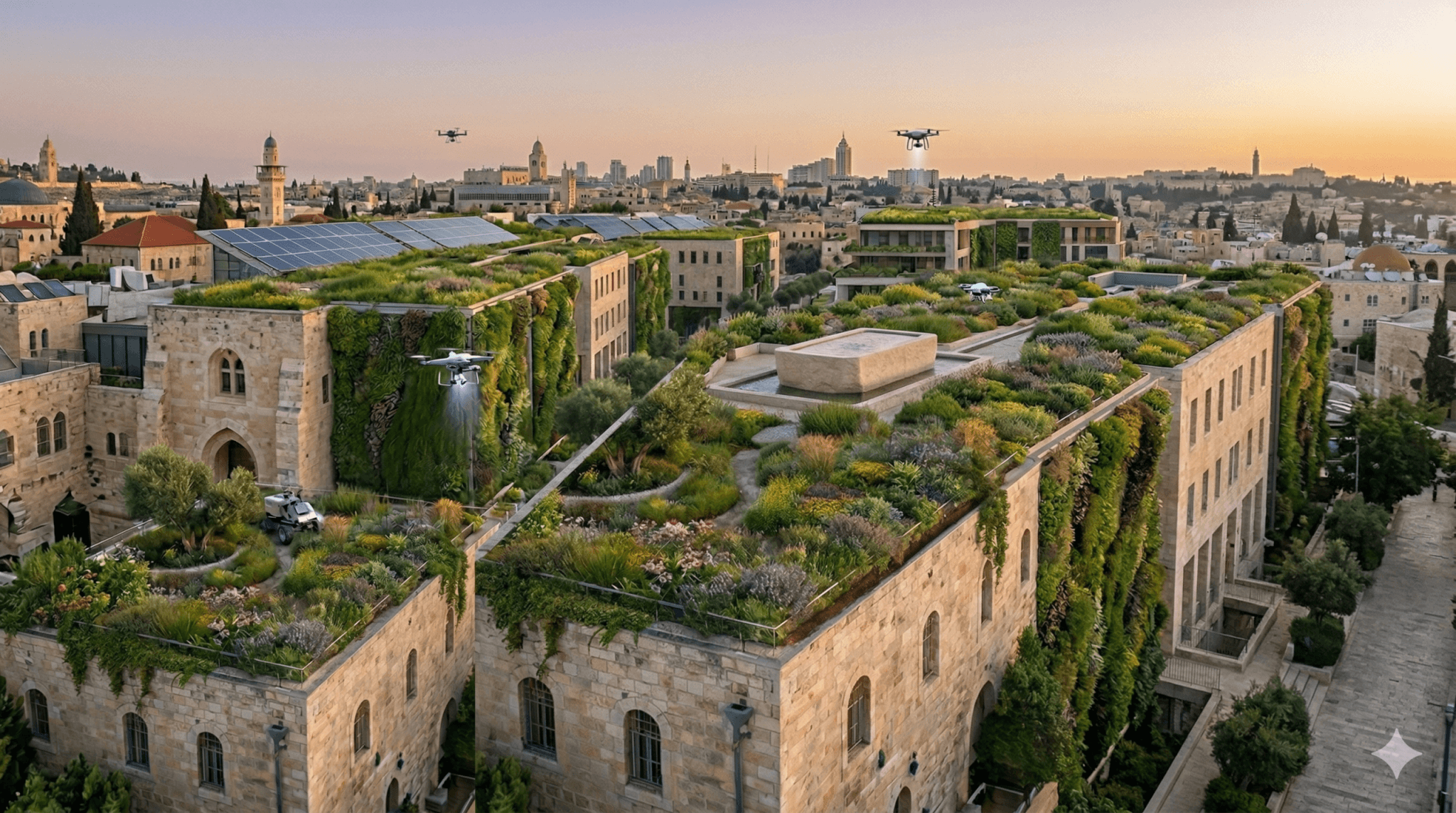

Green roofs extend membrane lifespan to 40-50 years by protecting against UV damage while capturing 65-90% of rainfall, with installation costs of $10-30 per square foot offset by rebates.
Your roof takes a beating year after year. Rain, snow, UV rays, and temperature swings gradually wear down materials, drive up energy costs, and eventually demand expensive replacements. Most property owners accept this cycle as inevitable, but there’s a smarter approach that flips the script entirely.
A green roof transforms your building’s biggest liability into its greatest asset. Instead of just protecting your property, it actively manages stormwater, cuts energy bills, extends roof lifespan by decades, and can even qualify for rebates that offset installation costs. Green roofs aren’t just about environmental benefits anymore – they’re about measurable savings, increased property value, and long-term protection that pays for itself.
This guide breaks down green roofs in 2026: how they work, what they cost, which type fits your property, and the rebates that make them affordable. We’ll also show you how Rainplan simplifies the entire process – from property assessment to finding installers and securing funding.
Key takeaways
- Green roofs pay for themselves through energy savings and extended roof life: capture 65-90% of rainwater while potentially doubling your roof’s lifespan from 20 to 40-50 years.
- Financial incentives can cover 20-50% of installation costs: federal tax credits, state rebates, and municipal stormwater fee reductions make green roofs affordable investments.
- Extensive systems work best for most homeowners: 2-6 inch soil depths require minimal structural changes and maintenance while delivering maximum stormwater and energy benefits.
- Rainplan simplifies your entire green roof journey: get property assessments, discover available incentives, and connect with qualified installers through one platform.
- Success depends on proper plant selection and seasonal maintenance: choose drought-tolerant native species and follow simple seasonal checklists to protect your investment.
What is a green roof?
A green roof is a rooftop covered with plants and soil layers that manage stormwater while providing insulation for your building. Think of it as a garden on your roof that works hard to save you money on energy bills and protect your property from water damage.
Your green roof sits on top of several protective layers that keep water out while letting plants thrive. Each component has a specific job, from blocking roots to managing drainage. When these layers work together, they create a living system that captures rainwater, reduces runoff, and extends your roof’s lifespan by decades.
Here’s what makes up a green roof and why each layer matters: Each layer has a specific job:
- Waterproofing membrane: This bottom layer shields your building from moisture, acting as the foundation for everything above it.
- Root barrier: A protective shield that stops plant roots from penetrating your roof structure.
- Drainage system: Channels excess water away while keeping enough moisture for plants to thrive.
- Growing medium: Lightweight engineered soil that supports plant growth without overloading your roof.
- Vegetation layer: The plants themselves, from hardy sedums to native grasses that create your living roof.
Top benefits of green roofs
[rainplan_cta id=”6661″]
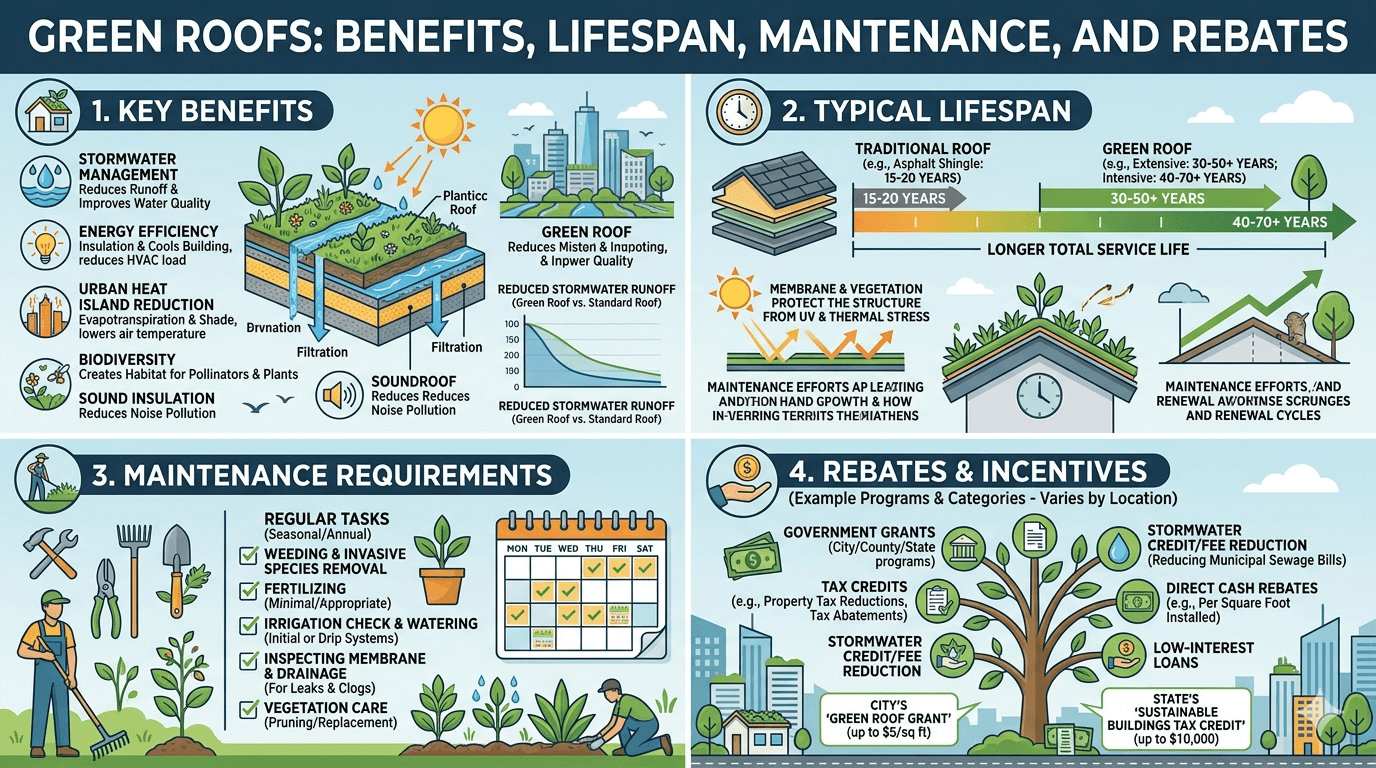
Green roofs are one of the highest-performing elements in a whole-property green infrastructure strategy for managing stormwater and reducing energy costs.
Green roofs cut your utility bills and make your roof last longer – that’s money back in your pocket. You’ll save on energy costs and could double your roof’s lifespan. These aren’t just environmental perks. They’re practical upgrades that pay for themselves.
The benefits range from lower bills today to higher property value down the road. Here’s what a green roof brings to your property:
Financial and performance advantages:
- Stormwater management: Captures 65-90% of rainwater depending on system depth, reducing runoff that would otherwise flood your property or neighborhood.
- Energy cost reduction: Natural insulation keeps buildings cooler in summer and warmer in winter, cutting HVAC costs significantly.
- Extended roof lifespan: Plants shield membranes from UV damage and temperature swings, potentially lasting 40-50 years versus 20 for conventional roofs.
Property and incentive benefits:
- Property value increase: Green roofs boost market value and curb appeal, making your property stand out to buyers.
- Tax incentives and rebates: Many cities offer financial incentives that can cover 20-50% of installation costs.
Rainplan connects you with these incentives automatically. The platform identifies which rebates apply to your property and helps you navigate the application process, turning complex paperwork into simple steps.
Types of green roofing systems
Choosing between extensive and intensive green roofs depends on your budget, structural capacity, and maintenance preferences. Most residential properties work best with extensive systems, while intensive systems suit properties wanting usable outdoor spaces. Here’s how to choose the right system for your property.
| Feature | Extensive green roofs | Intensive green roofs |
| Depth | 2-6 inches | 6+ inches |
| Weight | Lighter load | Heavier structural requirements |
| Plants | Sedums, grasses | Shrubs, small trees, vegetables |
| Maintenance | Minimal | Regular care required |
| Cost | Lower upfront investment | Higher initial cost |
| Access | Typically not accessible | Can include walkways and seating |
Extensive vs intensive approaches
Most homeowners should start with extensive systems. They use shallow soil depths and drought-tolerant plants that need minimal care after establishment. Your roof won’t need major structural changes, and you’ll spend less time maintaining it. These systems handle stormwater and cut energy costs without the hassle of a full rooftop garden.
Intensive systems transform your roof into usable outdoor space. With deeper soil, you can grow vegetables, install walkways, and create genuine rooftop gardens. These require stronger structural support and regular maintenance, similar to ground-level gardens. They’re ideal when you want both green infrastructure benefits and additional living space.
Hybrid or semi-intensive options
Semi-intensive green roofs give you more plant variety than extensive systems but skip the heavy maintenance. You get visual interest and moderate accessibility while keeping structural requirements reasonable. These systems work well for property owners who want something more than basic sedums but aren’t ready for full rooftop gardens.
5 ways to extend green roof lifespan
Your green roof is a major investment that should last 40-50 years with proper care. The right installation and regular maintenance keep it performing for decades. These five steps keep your roof working hard for decades.
Step 1: Choose the right substrate
Engineered growing medium beats regular soil for rooftops – it’s lighter, drains better, and lasts longer. It weighs less, drains efficiently, and maintains structure over decades.
Standard garden soil compacts and retains excess water, stressing both plants and roof structures. Quality substrate costs more upfront but saves you money on maintenance and extends your roof’s life.
Step 2: Ensure proper drainage
Water pooling kills plants and wrecks membranes fast. Install drainage systems that move water efficiently while retaining enough for plant health.
Watch for yellowing plants or standing water after storms. Good drainage protects everything – from waterproofing to plants.
Step 3: Select drought-tolerant plants
Native species and adapted plants thrive with minimal intervention. Sedums, native grasses, and wildflowers evolved for harsh rooftop conditions.
Key plant selection benefits:
- Water efficiency: They need less water than non-native alternatives
- Natural pest resistance: Local plants resist regional pests naturally
- Temperature tolerance: They survive extreme rooftop temperature swings
Choosing the right plants cuts maintenance costs and keeps your roof healthy.
Step 4: Schedule regular inspections
Check your green roof each spring and fall for membrane integrity, plant health, and drainage function. Small problems caught early cost far less to fix than major repairs.
Inspection priorities:
- Plant health: Look for bare spots, invasive weeds, or disease signs
- Drainage function: Check for clogged drains or standing water
- Membrane integrity: Watch for any signs of damage or wear
Professional inspections every few years catch issues you might miss.
Step 5: Integrate maintenance planning
Make maintenance part of your annual property care routine. Set seasonal reminders for inspections, fertilization, and replanting.
Rainplan’s network includes qualified maintenance providers who specialize in green roof care. Regular attention prevents costly surprises and keeps your roof working like it should.
Maintenance tips for a thriving living roof
Keeping your green roof healthy takes seasonal attention and a few simple habits. Stay on top of maintenance and you’ll avoid bigger problems later. Most tasks take just a few hours per season – minimal effort for long-term protection.
Seasonal checklist
Each season has its own maintenance priorities. Here’s what to focus on: Stick to this schedule and your roof stays healthy all year:
Spring maintenance tasks:
- Debris removal: Remove winter debris from drainage outlets
- Plant assessment: Check plant survival rates and identify areas needing attention
- Replanting: Address bare areas before summer heat arrives
Summer care priorities:
- Irrigation monitoring: Monitor irrigation during dry spells
- Weed control: Remove invasive weeds before they spread
- Plant maintenance: Deadhead flowers to encourage continued blooming
Fall preparation steps:
- Drainage clearing: Clear fallen leaves that block drainage
- Winter protection: Add winter mulch to sensitive plants
- System inspection: Inspect membranes before freezing weather
Winter monitoring:
- Traffic limitation: Minimize foot traffic on frozen plants
- Ice management: Check for ice dam formation
- Planning: Plan spring maintenance tasks
Irrigation and weeding best practices
Water early morning or evening to minimize evaporation and maximize absorption. Drip irrigation systems deliver water efficiently without waste. Hand-pull weeds when soil is moist for easier removal.
Watch for wilting or yellowing that signals watering problems. Over-watering causes as many issues as drought, so monitor soil moisture regularly.
For complex maintenance tasks, Rainplan connects you with professionals who understand green roof systems. They handle seasonal inspections, irrigation repairs, and plant health assessments, ensuring your roof stays healthy year-round.
Cost and rebates for eco-friendly rooftops
Green roofs typically cost $10-30 per square foot, varying by system complexity and local labor rates. Financial incentives can reduce your out-of-pocket expense by 20-50%. Knowing which programs apply to you can turn green roofs from expensive upgrades into smart investments.
Green roofs work best as part of a comprehensive stormwater management plan – one that addresses all runoff sources from roof to driveway.
Available incentives and tax credits
Several funding sources can cut your green roof costs. Each program works differently. Here’s what’s available:
Federal and state programs:
- Federal tax credits: Some green infrastructure qualifies for energy efficiency credits
- State and local rebates: Cities like Washington DC, Philadelphia, and Seattle offer direct rebates per square foot installed
Municipal and utility incentives:
- Stormwater fee reductions: Many municipalities reduce monthly stormwater fees for properties with green infrastructure
- Utility incentives: Energy companies may offer rebates for reduced cooling and heating loads
Financing options and payback
Most green roofs pay for themselves in 6-15 years through energy savings and incentives. Rainplan offers upfront financing that covers project costs directly. Rainplan only succeeds when your project succeeds.
You avoid large upfront payments while still accessing premium contractors and materials. Search your address on Rainplan’s platform to discover exactly which incentives apply to your property. The system automatically identifies available programs and calculates potential savings based on your location and project scope.
Key challenges and how to solve them
Every green roof project hits obstacles, but there’s a solution for each one. Know these issues upfront and you’ll plan better. The right approach keeps you from making mistakes that trip up other property owners.
Structural load concerns
Your building must support additional weight from soil, plants, and retained water. Professional structural assessment determines safe load limits before installation.
Load capacity considerations:
- Extensive systems: 2-6 inch soil depths work for most existing buildings without reinforcement
- Intensive systems: May require structural upgrades due to deeper soil and heavier loads
- Safety priority: Never skip structural assessment; it protects your investment and ensures safety
Pest-resistant design
Choose the right plants and you’ll create an ecosystem that naturally resists pests. Native plants adapted to your region attract beneficial insects while deterring harmful ones.
Good drainage prevents standing water that breeds mosquitoes. Healthy, diverse plantings resist infestations better than monocultures. Choose plants that local pests already ignore rather than fighting nature.
Transform your property with green roof technology
Green roofs are one of the best ways to get environmental benefits and real financial returns. They capture 65-90% of rainwater and can double your roof’s lifespan – value that goes way beyond the upfront cost.
Success comes down to choosing the right system and keeping it maintained. Whether you go with an extensive system or an intensive design, your green roof delivers decades of energy savings, stormwater control, and higher property value.
Rainplan simplifies everything from assessment to installation. The platform analyzes your property, finds incentives, and connects you with qualified pros – no guesswork. You get expert guidance without the usual complexity of green infrastructure projects.
Start by seeing what’s possible for your property:
- Property assessment: Get a virtual evaluation showing your roof’s green infrastructure potential
- Incentive discovery: Automatically find rebates and financing available in your area
- Contractor matching: Connect with vetted installers who specialize in your project type
- Project financing: Access upfront payment options aligned with project success
Ready to transform your roof into a money-saving, eco-friendly asset? Search your address to explore green roof options tailored to your property.
Frequently asked questions
How long do green roofs typically last?
Green roofs typically last 40-50 years with proper maintenance, roughly double the lifespan of conventional roofs. The vegetation and soil layers protect waterproofing membranes from UV radiation and temperature fluctuations that cause standard roofs to deteriorate.
Do green roofs require special building permits?
Yes, green roof installations require building permits and structural engineering approval. Your local building department needs to verify that your roof can safely support the additional weight of soil, plants, and retained water.
What’s the difference between a green roof and a roof garden?
A green roof is a complete roofing system with integrated waterproofing, drainage, and growing medium covering the entire surface. A roof garden typically consists of container plants or raised beds placed on an existing conventional roof.
Can you install green roofs on existing buildings?
Green roofs can be installed on existing buildings if the structure supports the additional weight. This requires professional structural assessment to determine load capacity and any necessary reinforcements before installation begins.
Do green roofs attract unwanted pests or insects?
Properly designed green roofs with appropriate plant selection and drainage support beneficial insects while deterring pests. Native plants and good water management create balanced ecosystems that naturally resist problematic infestations.
What maintenance does a green roof require?
Green roof maintenance includes seasonal inspections, occasional weeding, irrigation checks during dry periods, and drainage cleaning. Extensive systems need minimal care after establishment, while intensive systems require regular maintenance similar to ground-level gardens.
Green Roof Cost by System Type: 2026 Reference Table
Green roof cost varies significantly by system type, roof size, and region. Here is what property owners pay in 2026:
| System Type | Soil Depth | Cost Per Sq Ft | Typical Project Cost | Best For |
|---|---|---|---|---|
| Extensive (basic) | 2-4 inches | $10-$16/sq ft | $10,000-$25,000 | Most residential homes |
| Extensive (premium) | 4-6 inches | $16-$22/sq ft | $20,000-$40,000 | Residential with structural capacity |
| Semi-intensive | 6-12 inches | $20-$28/sq ft | $30,000-$60,000 | Properties wanting plant variety |
| Intensive (rooftop garden) | 12+ inches | $25-$50+/sq ft | $50,000-$150,000+ | Commercial, flat-roof residential |
| Modular tray system | 3-4 inches | $12-$20/sq ft | $15,000-$30,000 | DIY-friendly, retrofit projects |
Costs include materials and installation. Structural reinforcement, if required, adds $5-$15/sq ft. Rebates in many cities reduce net cost by 20-50%.
Green Roof Rebates and Incentives by City
Dozens of cities offer direct rebates, stormwater fee credits, or grants for green roof installation. Here is what is available in major markets:
| City | Program | Incentive Amount | How to Apply |
|---|---|---|---|
| Washington, DC | RiverSmart Rooftops | $15/sq ft (up to $75,000) | DC Dept. of Energy & Environment |
| Philadelphia, PA | Stormwater Management Incentives | Stormwater fee credits + grants | Philadelphia Water Department |
| Chicago, IL | Green Permit Program | Expedited permits + fee waivers | City of Chicago Dept. of Buildings |
| New York, NY | Green Infrastructure Grant Program | Up to $100,000 for large systems | NYC Dept. of Environmental Protection |
| Seattle, WA | RainWise Program | Up to $3.50/sq ft rebate | Seattle Public Utilities |
| Portland, OR | Clean River Rewards | Up to 35% stormwater fee reduction | Bureau of Environmental Services |
| Los Angeles, CA | LA Sanitation Green Infrastructure | Varies by project | LA Sanitation & Environment |
| Nashville, TN | Stormwater Management Credits | Stormwater fee reductions | Metro Water Services |
| Atlanta, GA | Green Infrastructure Program | Fee credits available | Department of Watershed Management |
Use Rainplan’s incentive search to find programs available at your specific address – many homeowners find rebates they didn’t know existed.
Frequently Asked Questions About Green Roofs
How much does a green roof cost?
A green roof costs $10-$30 per square foot installed, depending on system type and location. For a typical 1,500 sq ft residential roof, expect $15,000-$45,000 total. Extensive systems (2-6 inch soil depth) are least expensive at $10-$22/sq ft. Intensive systems with deeper soil and walkable surfaces cost $25-$50+/sq ft. City rebates and stormwater credits in many areas reduce net cost by 20-50%.
What does a green roof cost per square foot?
Green roof cost per square foot ranges from $10-$16 for basic extensive systems to $25-$50+ for intensive rooftop gardens. The main cost drivers are: soil depth (more depth = more structural reinforcement needed), plant selection, waterproofing membrane quality, and local labor rates. Modular tray systems typically run $12-$20/sq ft and are easier to retrofit onto existing roofs than built-in-place systems.
Are green roofs worth it?
Green roofs are worth it for properties that can access available rebates, have flat or low-slope roofs, and plan to stay in the property long-term. The financial case: energy savings of $0.10-$0.25/sq ft annually, extended roof membrane lifespan (40-50 years vs. 20), and stormwater fee reductions of $100-$500+/year. With DC rebates of $15/sq ft, a 1,000 sq ft green roof can receive $15,000 back – dramatically shortening the payback period to 3-7 years. Without incentives, payback typically runs 10-20 years.
Do green roofs require a permit?
Yes. Green roof installation requires building permits and structural engineering approval in virtually all US jurisdictions. Your local building department verifies that the roof structure can safely support the added weight – typically 15-150 lbs per square foot depending on system depth. Most installers handle permit applications as part of their service. Factor 2-8 weeks for permit processing into your project timeline.
How do green roofs work?
Green roofs work by layering vegetation, engineered growing medium, drainage mat, root barrier, and waterproofing membrane on top of a roof structure. Rainwater is captured by the growing medium and plants rather than running off the roof. The vegetation and soil insulate the building, reducing heat transfer in summer (urban heat island effect) and retaining warmth in winter. Excess water drains through the drainage layer and exits through roof drains, but at a much slower rate than conventional roofs – reducing peak stormwater flows by 65-90%.
What is the lifespan of a green roof?
A properly installed green roof lasts 40-50 years, roughly double the lifespan of a conventional membrane roof. The vegetation and soil layers protect the waterproofing membrane from UV radiation, temperature fluctuations, and physical damage that cause standard roofs to deteriorate. Most manufacturers warrant the waterproofing membrane for 20-25 years when installed under a green roof system.
Can any roof support a green roof?
Not every roof can support a green roof without modification. Extensive systems (2-6 inch soil depth) weigh 15-35 lbs per square foot when saturated and can typically be added to roofs designed to 25+ psf live load – which includes most commercial buildings and many residential structures. Roofs with steeper pitches (above 30 degrees) require retention systems to prevent growing medium from sliding. A structural engineer assessment costs $500-$2,000 and is required before any green roof installation.
Related reading: green infrastructure for homeowners
- Rainwater harvesting 101: collect, store, and use rainwater at home
- Rain gardens: a homeowner’s complete guide to design and installation
- Permeable pavement: types, costs, and stormwater benefits
- Bioretention systems: engineered alternative for clay soils
- What is a bioswale? Design, benefits, and homeowner options
- Stormwater utility fees: what they are and how to reduce them
- What is a green bank? Low-interest financing for green upgrades
[rainplan_cta id=”6574″]