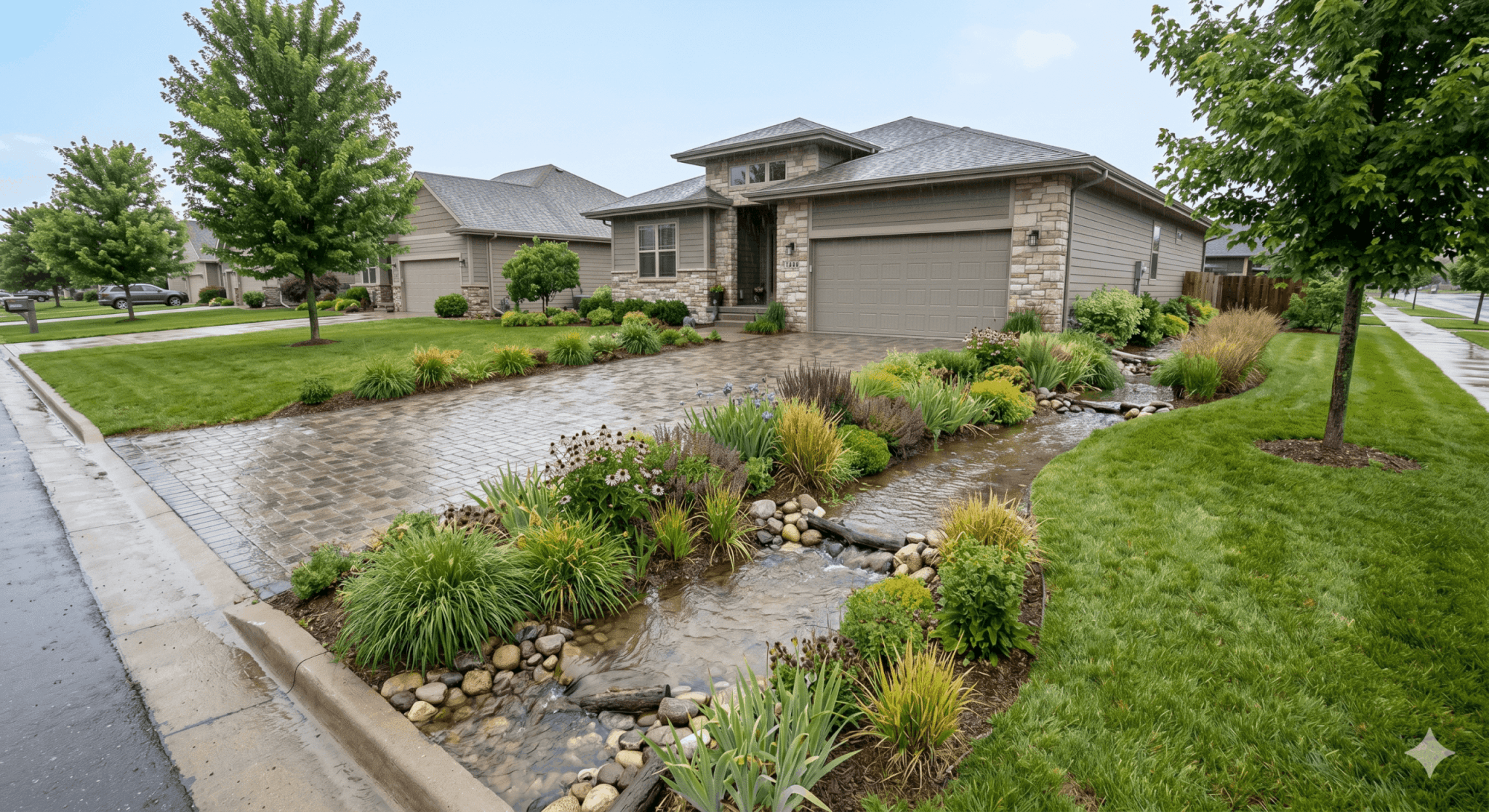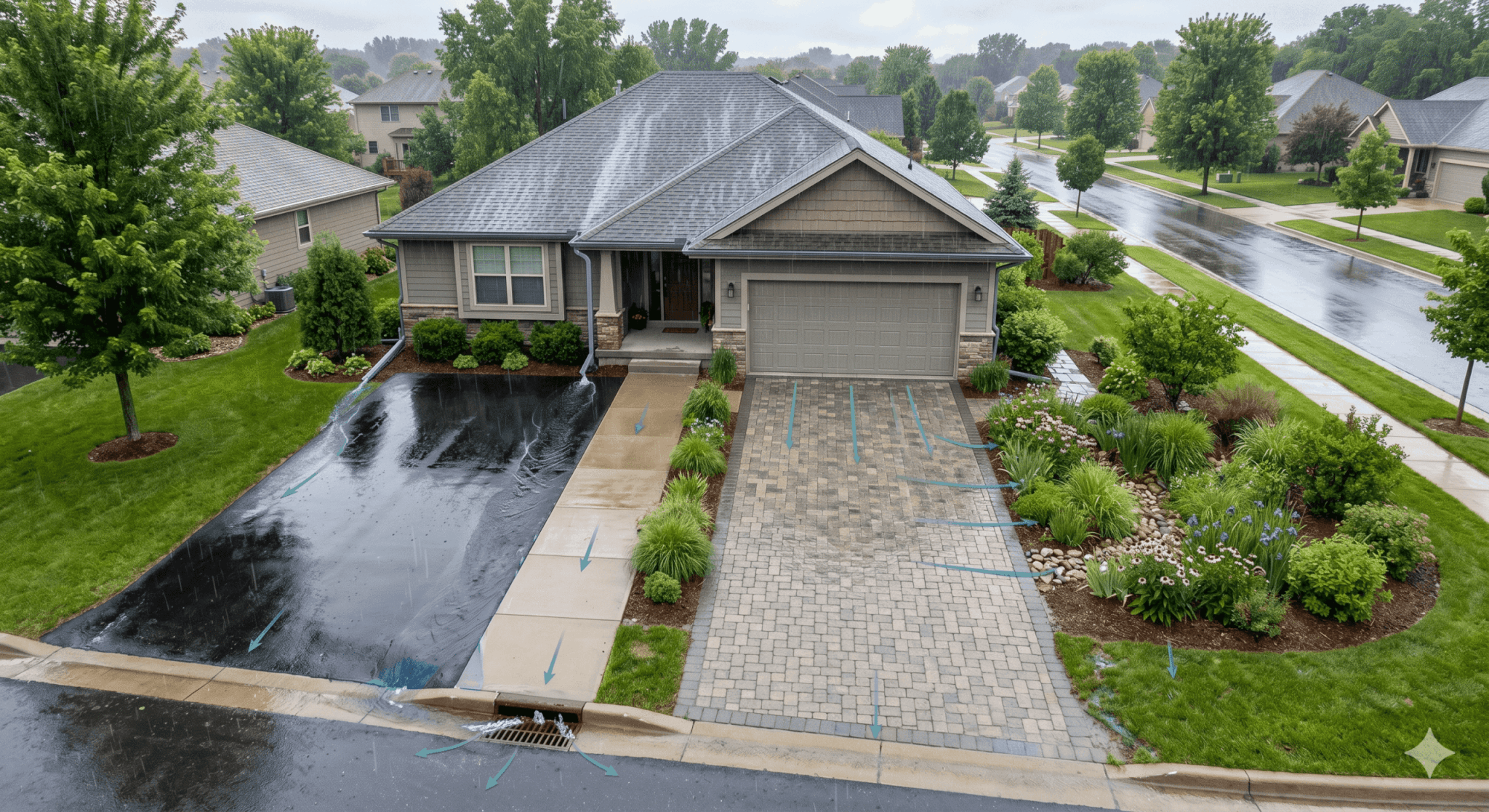



Stormwater management plans require site assessment, BMP selection, and permit compliance, with utility rebates covering 25-75% of green infrastructure installation costs.
Your property gets hit with heavy rain, and suddenly you’re dealing with flooded basements, soggy yards, or water pooling near your foundation. Meanwhile, your neighbor’s house stays dry. The difference often comes down to having a solid stormwater management plan that actually works with your property’s unique conditions and local requirements.
A stormwater management plan helps you understand how water moves across your property and gives you a roadmap for controlling runoff through smart infrastructure choices. It covers everything from assessing your site conditions and selecting the right solutions to navigating permits and accessing local rebates. When done right, these plans don’t just prevent flooding. They can lower your water bills, boost property value, and qualify you for financial incentives.
This guide walks you through creating an effective stormwater management plan, covering everything from your first site walk to keeping it working for years. You’ll discover practical solutions that fit residential properties and learn how to navigate local requirements without the regulatory headaches. Plus, find out how platforms like Rainplan connect you with rebates and qualified contractors who make the process simple.
Key takeaways
- Start with a site assessment during rainfall: Walk your property when it’s raining to see exactly where water pools, flows, and causes problems – this reveals drainage patterns no map can show.
- Rebates can cover 25-75% of your project costs: Many utilities and municipalities offer significant financial incentives for green infrastructure, making rain gardens and permeable pavement much more affordable than you think.
- Match your solution to your soil type: Sandy soils work great for rain gardens that soak water in, while clay soils need collection systems like rain barrels that capture and store runoff.
- Rainplan connects you with local rebates and qualified contractors: The platform instantly matches your property with available incentives and provides upfront financing, removing the hassle of researching programs and paying full costs before reimbursement.
- Simple maintenance keeps your investment working: Monthly inspections and seasonal debris removal are usually all you need to keep rain gardens and other green infrastructure functioning properly for years.
Understanding stormwater management plans
A stormwater management plan is your property’s blueprint for handling rainwater runoff. Think of it as a strategic document that maps out exactly how you’ll control, capture, and filter rain that flows across your property during storms. Rather than letting water rush toward storm drains carrying pollutants, your plan shows you exactly how to keep water where it falls.
When rain hits hard surfaces like your roof, driveway, or patio, it can’t soak into the ground. This creates runoff that picks up oil, fertilizers, and debris on its journey to local waterways. Your stormwater management plan addresses this by mapping out solutions that fit your property’s conditions and local requirements.
Understanding a few key terms makes the rest easier to follow. Here’s what you need to know:
- Runoff: Water that flows across surfaces instead of absorbing into soil
- Impervious surfaces: Materials like concrete and asphalt that block water absorption
- Best management practices (BMPs): The specific solutions you install to manage stormwater, from rain gardens to permeable pavement
Every effective stormwater management plan does three things that protect your property and community:
- Runoff control: Slows water flow and encourages ground absorption, preventing overwhelmed drainage systems
- Water quality protection: Filters out pollutants before they reach rivers and groundwater
- Regulatory compliance: Helps you meet local requirements while avoiding fines
Why stormwater management plans deliver real value
Find Rainwater Rebates in Your Area
Enter your address to see local rebates for rain barrels and green infrastructure. Many programs cover 50%+ of costs.
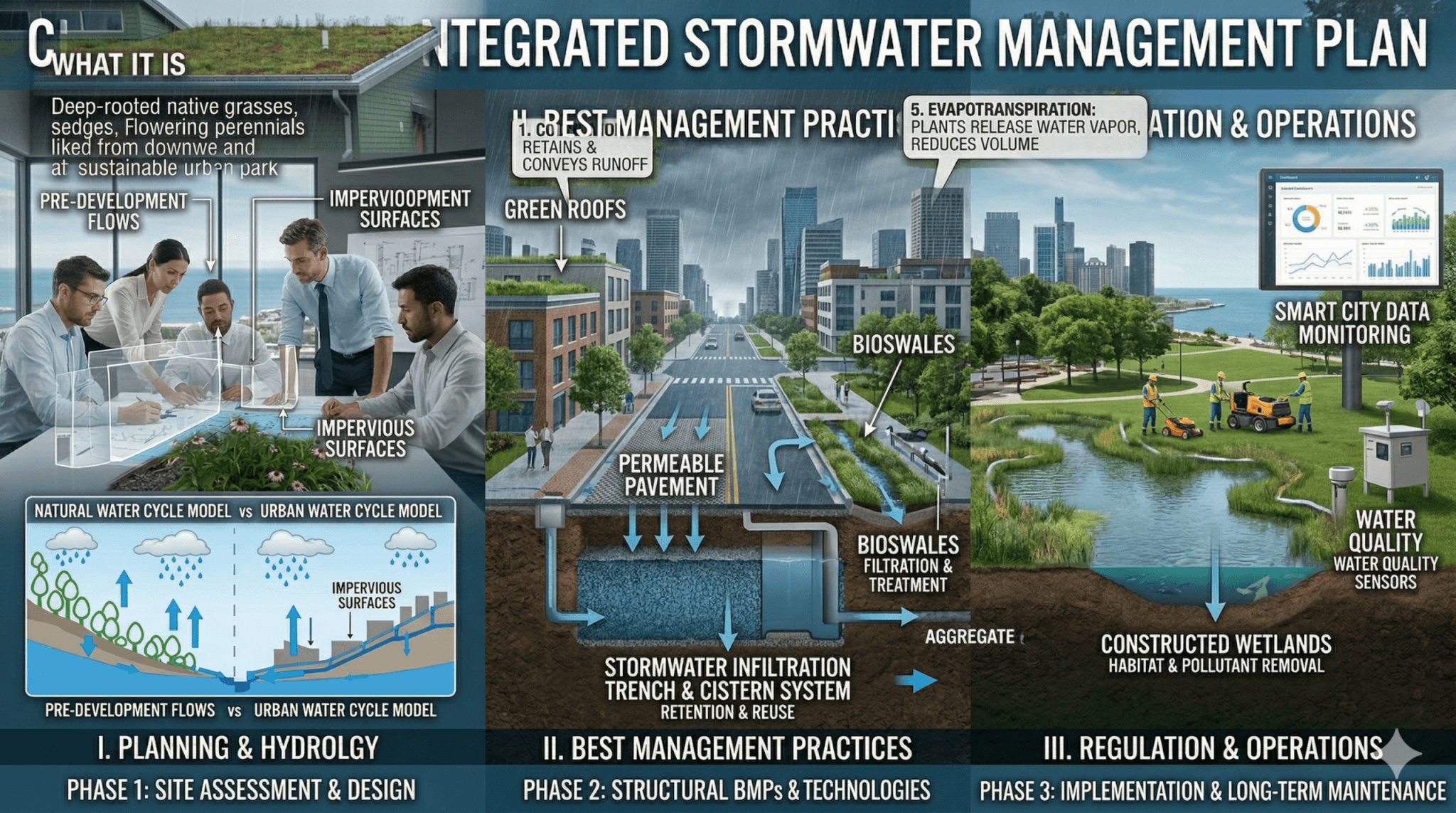
A stormwater management plan does more than satisfy local regulations. You’re protecting your property while saving thousands in fees and preventing costly damage. Property owners who implement green infrastructure get reduced stormwater fees, rebates, and higher home values.
The money you’ll save makes planning worth your time. Many municipalities now charge stormwater fees based on your property’s impervious surface area. By reducing that surface through strategic green infrastructure, you directly lower your monthly bills. Add in rebates that can cover 25-75% of project costs, and that rain garden starts paying for itself.
Your stormwater management plan delivers real value in several ways:
- Flood prevention: Captures water before it pools around foundations, reducing basement flooding and structural damage
- Cost savings: Qualifies your property for rebates and reduced stormwater fees
- Property value: Increases home value through sustainable improvements that appeal to environmentally conscious buyers
- Legal protection: Ensures compliance with local regulations, preventing fines and project delays
Here’s what a properly sized rain garden can do. It can reduce roof runoff by 30% compared to traditional landscaping. That water won’t flood your basement or wash lawn chemicals into local streams. Rainplan helps property owners identify these opportunities through virtual assessments, showing exactly how environmental benefits translate to financial savings.
Stormwater rules vary by property type. Knowing which apply to you saves time and money. The regulations might seem complex, but breaking them down by property type makes them easier to handle. Know these requirements before you start, and you’ll avoid delays.
This quick reference table shows permit requirements based on your property type:
| Property type | Permit required | Key requirements |
| Residential | Local permits | Site plan, BMP selection |
| Construction (>1 acre) | EPA CGP | SWPPP, inspections |
| Industrial | EPA MSGP | Facility SWPPP, monitoring |
Municipal stormwater requirements
MS4 (Municipal Separate Storm Sewer System) permits affect many property owners who don’t even know it. If you live in an MS4 area, your municipality must implement six minimum control measures to reduce stormwater pollution. These measures create requirements for private property owners like you.
Your local government may require you to manage runoff on your property, especially when adding impervious surfaces or making significant landscape changes. Many municipalities charge stormwater fees based on your property’s hard surface area. Reducing that area through green infrastructure directly lowers your bill.
Construction permits and SWPPP
You need a SWPPP (Stormwater Pollution Prevention Plan) for construction projects that disturb land. The EPA requires a Construction General Permit (CGP) for projects disturbing one acre or more, though local rules often apply to smaller projects too.
Your SWPPP must include these essential components:
- Site maps: Show drainage patterns and water flow directions
- Erosion control measures: Protect soil during construction phases
- Inspection schedules: Regular monitoring to ensure compliance
- Corrective action procedures: Steps to address any violations
Even if your project falls below federal thresholds, check with your local permitting office. Many jurisdictions have stricter requirements.
Industrial permits and monitoring
Businesses with outdoor operations, storage areas, or manufacturing activities need industrial permits. The EPA’s Multi-Sector General Permit (MSGP) covers most industrial facilities, requiring a facility-specific SWPPP plus regular monitoring.
Creating your stormwater management checklist
Building a stormwater management plan works best when you follow these steps in order. This approach ensures your plan meets requirements and works for your property. Following these steps in order prevents costly mistakes and helps you find every available rebate.
Step 1: Assess your site conditions
Walk your property during a rainstorm. Watch where water pools, flows, and exits. Note existing drainage features, low spots, and erosion areas. You’ll see drainage patterns no map can show.
Soil type significantly impacts your stormwater strategy:
- Sandy soils: Drain quickly, ideal for infiltration-based solutions
- Clay soils: Hold water, better suited for collection systems
- Mixed soils: May require combination approaches
A simple percolation test shows how fast water soaks into your ground. Digital platforms like Rainplan analyze these conditions through virtual assessments, providing expert insights based on your specific site.
Step 2: Identify best management practices
Your site conditions, budget, and local requirements determine which BMPs work best. You’ve got two main options, and they often work well together:
- Infiltration-based solutions: Rain gardens and permeable pavement that allow water to soak into the ground
- Collection-based solutions: Rain barrels and cisterns that capture water for later use
Step 3: Calculate budget and obtain funding
Get quotes from multiple contractors. Remember to include design, permitting, installation, and ongoing maintenance costs. Many property owners underestimate maintenance costs, and their systems suffer for it.
Federal, state, and local rebate programs can offset significant project costs:
- Utility rebates: Often cover 25-50% of installation costs
- Municipal programs: May provide direct cash incentives
- State incentives: Tax credits or grants for green infrastructure
Rainplan maintains a database of available incentives and helps you find funding specific to your location. The platform also provides upfront financing for approved projects.
Step 4: Finalize permits and documentation
Submit your complete permit application with site plans, BMP specifications, and maintenance commitments. Review timelines vary by jurisdiction-expect anywhere from two weeks to several months.
Read your approval conditions carefully before you sign. Common requirements include:
- Maintenance agreements: Ongoing care commitments
- Performance monitoring: Regular effectiveness checks
- Inspection schedules: Required compliance reviews
Step 5: Implement green infrastructure
Choose contractors who’ve actually installed green infrastructure before. General landscapers often don’t understand the technical requirements for BMPs to work properly. Ask for references from similar projects.
Project sequencing matters:
- Install erosion controls first
- Grade the site properly
- Install infrastructure components
- Add plants and finishing touches
Catch problems during installation, and you’ll avoid expensive fixes later.
Step 6: Monitor and maintain
Regular monitoring keeps your BMPs working properly and helps you catch problems early. Document everything-you’ll need it for compliance and tracking performance.
Top green infrastructure solutions for your property
Your property needs solutions that fit its specific conditions. Here are your best options. These proven BMPs work well for residential and small commercial properties. Each one offers different benefits depending on your site and goals. The right combination gives you the biggest environmental benefits and cost savings.
Rain gardens
Rain gardens are shallow, planted depressions that collect and filter runoff from roofs and driveways. Plan for a rain garden that’s 20-30% the size of the area draining into it. A 1,000 square foot roof needs a 200-300 square foot rain garden.
Key benefits:
- Pollution filtering: Native plants remove contaminants naturally
- Flood reduction: Captures water before it overwhelms drainage systems
- Wildlife habitat: Attracts beneficial insects and birds
Native plants with deep roots work best. Their roots create channels for water to soak in while filtering out pollutants. You’ll need to weed, replace dead plants occasionally, and keep inlets and outlets clear. Rainplan connects you with contractors who know how to size rain gardens correctly and choose the right plants for your area.
Permeable pavement
Permeable pavement lets water soak through the surface into the ground below. You can choose permeable concrete, porous asphalt, or permeable pavers. All three work well for driveways, patios, and walkways.
Installation considerations:
- Base preparation: Requires proper gravel foundation
- Drainage design: Must connect to appropriate soil conditions
- Load capacity: Different types handle varying weight requirements
You’ll need to vacuum sweep these surfaces regularly to prevent clogging. They cost more upfront than conventional pavement but often eliminate the need for other stormwater infrastructure.
Bioretention cells offer a more engineered option for properties with clay soil or high groundwater, treating runoff through layered filter media.
Rain barrels and cisterns
Rain barrels typically hold 50-80 gallons and connect directly to downspouts. Cisterns hold 500 gallons or more, often installed underground. Both capture roof runoff for irrigation use.
Maintenance requirements:
- Mosquito prevention: Use screens and secure lids
- Winter preparation: Drain and store in freezing climates
- Regular cleaning: Prevent algae and debris buildup
Vegetated swales
Vegetated swales are shallow, planted channels that slow down runoff and filter it as water moves across your property. They’re perfect for driveways and property edges where water already flows naturally.
Proper slope is critical:
- Too steep: Water moves too fast to infiltrate
- Too flat: Water pools instead of flowing
- Optimal range: 1-5% grade for best performance
Native grasses and plants slow flow while their roots filter pollutants.
Understanding costs and accessing rebates
Knowing typical costs helps you plan realistically and spot where rebates make projects affordable. Prices vary by region, contractor, and site conditions. Use these ranges as starting points for your budget. Consider both upfront costs and long-term savings when evaluating green infrastructure.
Typical project costs:
- Planning and design: $500-2,000 for residential properties
- Rain gardens: $3-10 per square foot installed
- Permeable pavement: $2-8 per square foot premium over conventional pavement
- Rain barrels: $100-300 each installed
Rebate programs change the math on these projects. Many utilities offer credits for reducing impervious surface area. Some municipalities provide direct rebates for specific BMPs. With 25-75% of costs covered, that rain garden gets a lot cheaper.
Common rebate types:
- Stormwater fee reductions: Lower monthly bills based on reduced runoff
- Installation rebates: Direct cash back for completed projects
- Tax incentives: Credits for environmental improvements
Finding and applying for these incentives usually takes hours of research. Rainplan makes this easier by instantly matching your property with available local incentives. The platform even provides upfront financing for approved projects, so you don’t have to pay full costs before getting your rebate.
Maintaining your green infrastructure investment
Proper maintenance keeps your green infrastructure working for years and helps you stay compliant with permit conditions and rebate requirements. Neglected BMPs can fail and cause the flooding and runoff problems you installed them to fix. Most maintenance is straightforward and doesn’t require professional help. But knowing what to look for and when to act keeps your infrastructure working and prevents expensive problems.
Your maintenance schedule should include these essential activities:
- Monthly inspections: Check for clogs, erosion, and plant health during growing season
- Seasonal tasks: Remove debris, replace mulch, and prune vegetation as needed
- Annual assessments: Evaluate overall performance and document compliance
- Record keeping: Maintain inspection logs and maintenance records for regulatory purposes
Common maintenance issues to watch for:
- Inlet clogging: Prevents water from entering BMPs properly
- Plant mortality: Reduces filtration and aesthetic value
- Erosion damage: Compromises structural integrity
- Sediment buildup: Decreases storage capacity over time
Many rebate programs require you to sign maintenance agreements. Rainplan connects property owners with qualified maintenance providers who understand green infrastructure, keeping your investment working properly for years.
Maximizing your stormwater investment returns
A well-designed stormwater management plan changes how your property handles rain, protecting your investment and contributing to healthier waterways. You’ll need to understand your site, select the right solutions, navigate permits, and commit to ongoing maintenance.
Financial incentives make these projects more affordable than most property owners think. Between rebates, reduced stormwater fees, and increased property values, green infrastructure usually pays for itself. Match the right solutions to your property conditions and local incentive programs.
Technology platforms make this process much simpler. From initial assessment through funding applications and contractor connections, the right support makes stormwater management easier for everyday property owners. Planning today protects your property investment and builds community resilience.
Ready to explore stormwater solutions for your property? See if you qualify for rebates and financing through Rainplan’s platform.
Frequently asked questions
How much does a stormwater management plan typically cost for residential properties?
A stormwater management plan for residential properties typically costs $500-2,000, though many areas offer rebates covering 25-75% of expenses through local utilities and environmental programs.
What exactly does a SWPPP include and when do I need one?
A SWPPP (Stormwater Pollution Prevention Plan) includes site maps, erosion controls, inspection schedules, and pollution prevention measures, required for construction projects disturbing one acre or more under EPA regulations.
What are the 5 main components of construction stormwater management?
The five pillars of construction stormwater management are erosion control, sediment control, pollution prevention, dewatering management, and regular inspections with corrective actions to maintain compliance.
Do homeowners need permits for installing rain gardens or rain barrels?
Most residential green infrastructure projects like rain gardens and rain barrels don’t require permits, though you should verify local regulations before starting any stormwater management project.
How can I find rebates for my stormwater improvement projects?
You can find stormwater rebates through your local utility, municipal stormwater program, or state environmental agency, with platforms like Rainplan maintaining comprehensive databases of available incentives by location.
What regular maintenance do rain gardens require to function properly?
Rain gardens require monthly inspections during growing season, seasonal debris removal, annual mulch replacement, and occasional plant replacement to maintain proper drainage and filtration performance.
Related reading: stormwater planning and green infrastructure
- Green infrastructure: examples, benefits, and rebates for homeowners
- Bioretention systems: pricing and installation examples
- Rain gardens: design, plants, and upkeep guide
- Bioswales: linear stormwater channels for driveways and property edges
- Percolation test: revealing your soil’s infiltration rate before you build
- Rainwater harvesting 101: add water collection to your stormwater plan
- Government home improvement grants: federal programs for green upgrades
- Green bank financing: fund your stormwater management project
Turn Runoff Into Rebates
Join Rainplan to access personalized data and discover sustainable solutions tailored to your specific site.