


Find your local incentive programs by typing in your property address.
Property Projects Are Affordable-if You Know Where to Find Financial Assistance
The government wants you to have a rain plan.
Adoption of green infrastructure – specifically stormwater infrastructure – can be a tough sell for businesses and homeowners. It’s not apathy towards embracing the concept of sustainability. It’s that home improvements are often costly and don’t always show an immediate return on investment. As has been the case with renewable energy sources like wind and solar, tremendous investment at the state and federal level has been made to incentivize the undertaking of green stormwater infrastructure projects.
Unlike utility-scale energy projects, these programs must be utilized by property owners for their impact to be felt – and it’s not always easy to navigate the process or figure out the type of aid available in each city or state. As part of our commitment to the long-term greening of the country’s stormwater infrastructure, we help clarify the available incentive programs also known as government subsidies.
Let’s break down the different types of financial assistance and how they differ.

Types of Incentive Programs
Development incentives
This type of incentive is targeted at real estate developers to bring new projects on board with sustainable features and components. Developers willing to seek out targeted incentive programs may see speedier permitting processes, beneficial zoning rulings and stormwater credits, and reduced requirements. One successful example is the Grey to Green Initiative in Portland, OR that offered cash reimbursements and expedited permitting applications for green roof projects. The program helped drive significant adoption of green infrastructure in the city.
Grants
Cities, states, and government agencies also offer direct cash payments to homeowners, community groups, and business owners to drive targeted investment in specific green infrastructure areas. There are both small grants that individual homeowners can apply for and larger federal grants that cities can apply for if their goal is to undertake large-scale upgrades to their stormwater infrastructure.
Rebates and tax credits
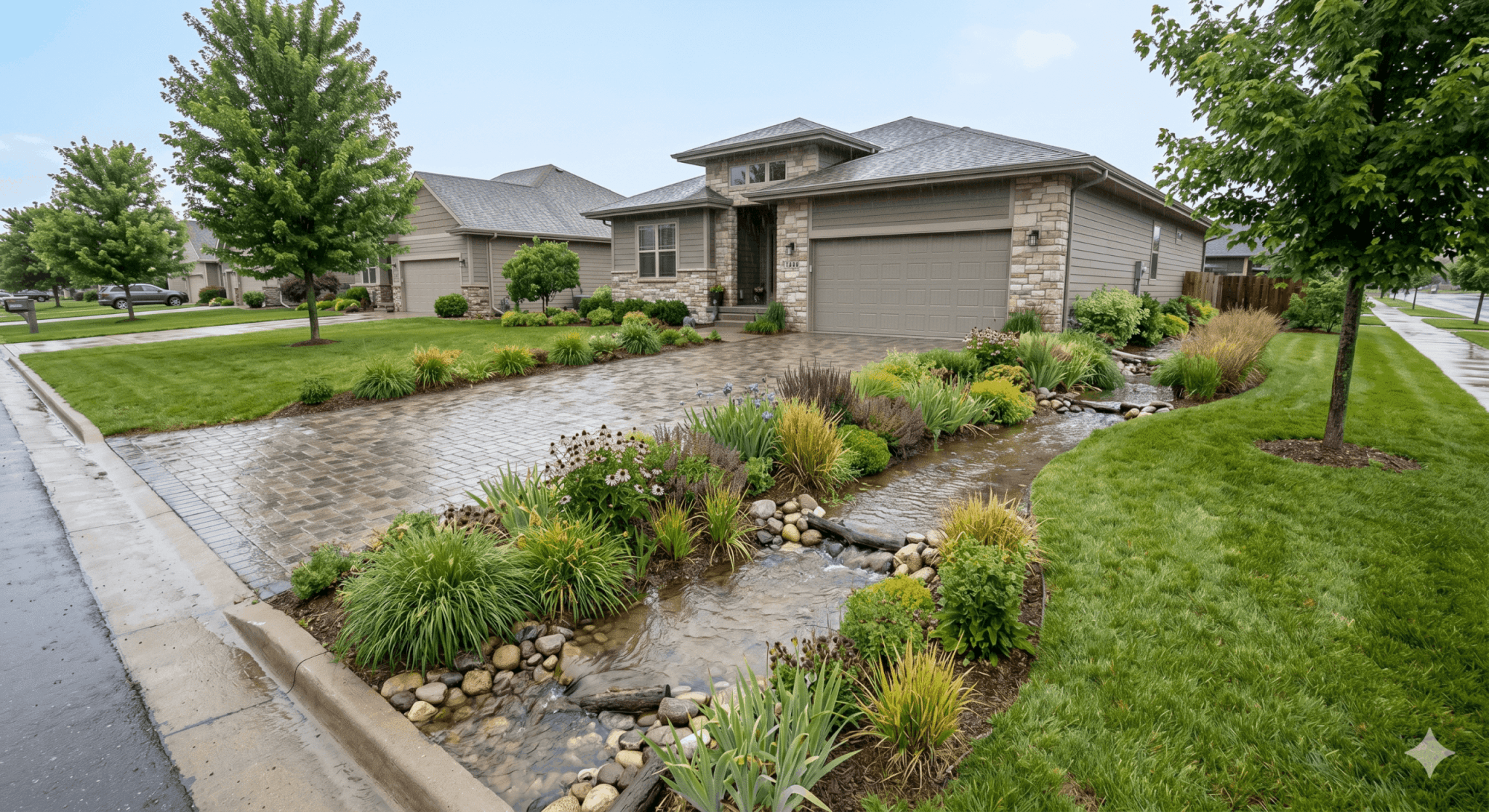
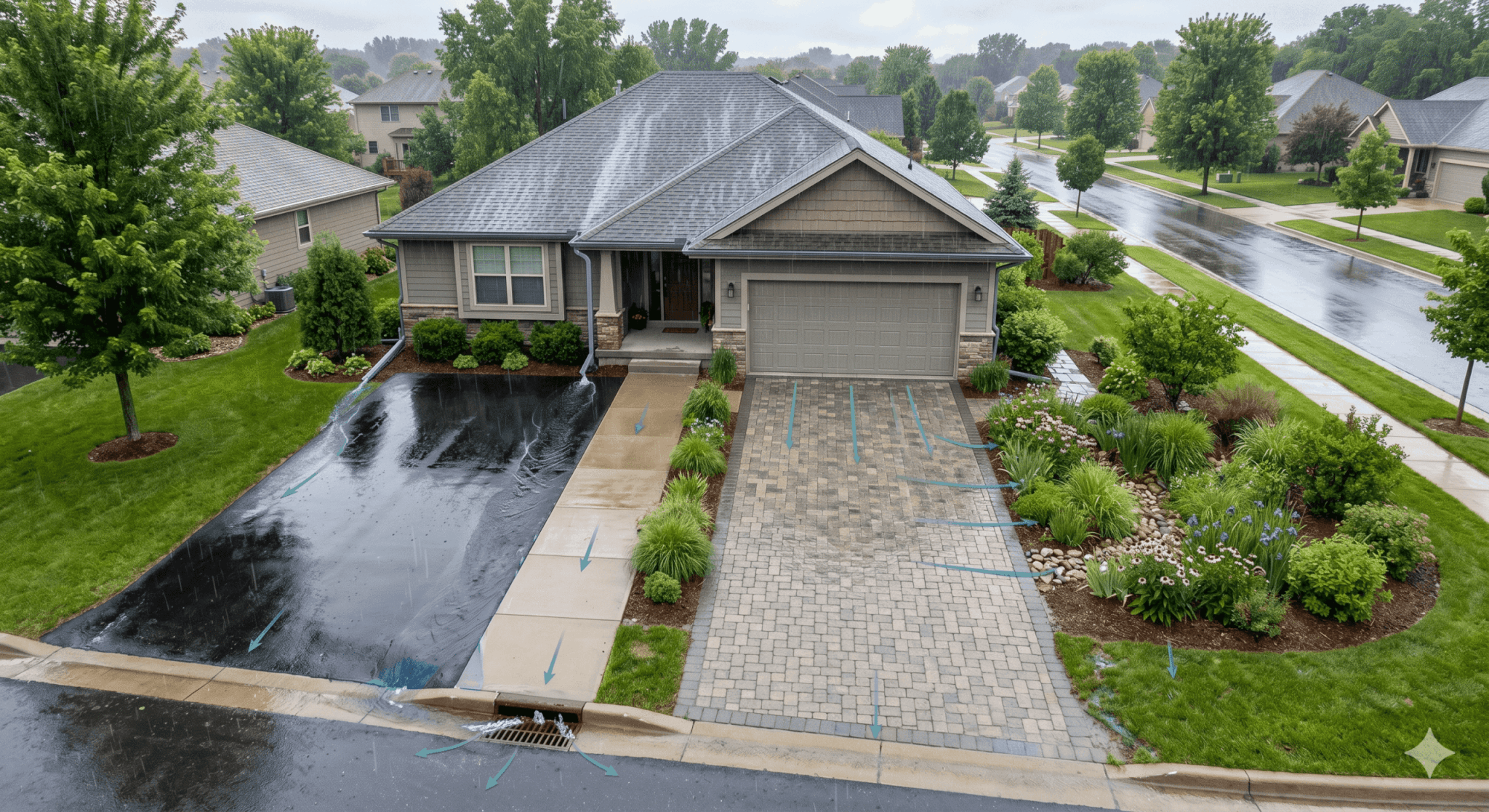
Rebates in the form of tax credits or reimbursement are among the most common forms of incentive to drive green infrastructure spending at the private level. Credits are available for a wide-ranging list of green infrastructure projects, including permeable pavement installation, green roofs, stormwater collection tanks, rain barrels, gutter upgrades, and rain gardens. Landowners may be required to provide substantial documentation outlining their project, associated costs, and performance metrics.
Awards and certifications
An award or a certificate for stormwater might not result in immediate cash back into an owner’s pocket but could have longer-term ramifications like increased property values. Like LEED accreditation for energy efficiency, certifications are developed related to a property’s watershed impact. LEED certifications are prestigious, and BLUE Certified homes may eventually see a similar status upgrade.
Stormwater fee reductions
Suppose you pay a monthly water bill to your city, town, or municipality. In that case, a portion of that bill will be related to your property’s contribution to the demand on the water authority’s stormwater network. Property owners who make an effort to reduce the amount of impervious coverage on their land will frequently be rewarded with a reduced stormwater fee on their monthly bill. Reduction of fees can lead to significant annual savings, especially if the projects are completed utilizing other sources of funding mentioned above like grants, rebates, and development incentives.

Rainplan’s goal is to make it easier for homeowners and businesses to tap into all of these different funding sources, upgrade their properties with green infrastructure, save money and reduce flood risk and water pollution.
Using our simple tool, property owners can enter their addresses and discover which types of incentives are available in their area. Understanding the different funding options will allow property owners to move forward confidently to navigate the ins and outs of government programs.
The process of applying for any of these incentives is tedious and confusing. That is where Rainplan steps. in. We handle the heavy lifting of applying for grants and credits, complying with regulations, and hiring a reliable, trusted engineering and construction team to ensure the project is completed successfully for the best price. The first step however is to discover possible pathways for funding.
We empower you as a property owner by setting up a matchmaking system that will show you which incentives are available for the property address you typed in.
Check out how it works using the property search bar on our homepage.