

Your water bill keeps climbing, and your lawn keeps browning despite constant sprinkler runs. Meanwhile, your neighbor’s yard looks lush with half the effort. The difference isn’t luck or expensive landscaping services. It’s drought-tolerant landscaping that works with your climate instead of fighting it.
Drought-tolerant landscaping cuts outdoor water use by 30-50% through three moves: choosing plants that handle dry spells, upgrading your irrigation, and designing spaces that work with your climate instead of against it. It’s not about replacing green space with gravel. It’s about picking plants that survive dry spells, upgrading irrigation so water goes to roots instead of sidewalks, and using mulch and hardscape to cut your weekend chore list.
You’ll find 21 practical ideas here, from quick weekend wins like adding mulch to bigger projects like installing drip irrigation or building a rain garden. You’ll discover how to select plants that match your soil and sun conditions, remove or reduce thirsty grass areas, and design a landscape that handles both drought and heavy rainfall. We’ll also cover financing options and local rebates that can cut your upfront costs by 25-75%.
Key takeaways
- Start with a 7-step plan to avoid costly mistakes: Map your sun exposure, soil type, and slopes before buying plants to ensure they’ll actually thrive in your specific conditions.
- Remove water-hungry grass for immediate 30-50% water savings: Use sheet mulching or turf removal machines to replace traditional lawns with drought-tolerant alternatives that cut maintenance time.
- Group plants by water needs into three zones: Create high, moderate, and low water areas to prevent overwatering drought-tolerant plants while keeping favorites near your home properly hydrated.
- Maximize savings with rebates and financing through Rainplan: Discover turf replacement rebates, irrigation efficiency programs, and rain capture incentives that can offset 25-75% of your project costs.
- Apply 2-4 inches of mulch for 50% less watering: Use organic mulches or gravel around plants to prevent evaporation and reduce irrigation needs while suppressing weeds naturally.
What is drought tolerant landscaping?
Drought tolerant landscaping creates attractive outdoor spaces using plants and techniques that need minimal water once they’re established. It works with your region’s natural rainfall instead of forcing your yard to depend on constant sprinklers. You’ll also hear this called xeriscaping, which refers to the same water-wise approach.
Here’s what matters: you’ll save serious water. A well-designed drought tolerant landscape reduces outdoor water use by 30-50% compared to traditional lawns and gardens. Your water bills drop, you spend less time on maintenance, and your yard thrives during dry spells instead of turning brown.
Four things make this work:
- Climate-appropriate plants: Native and adapted species that naturally thrive in your region’s rainfall patterns
- Efficient water use: Strategic irrigation that delivers water only where and when plants actually need it
- Soil improvements: Amendments that help your soil retain moisture and support healthy root systems
- Mulching: Ground cover that reduces evaporation while suppressing weeds
7 steps to plan your drought tolerant yard
[rainplan_cta id=”6574″]
Planning ahead saves you from expensive mistakes and wasted weekends. Most people buy plants first, then realize they picked the wrong ones for their yard. These seven steps help you build a plan that actually works for your property.
Step 1: Assess your sun, soil, and slope
Start by mapping your yard’s sun exposure throughout the day. Note which areas receive full sun (6+ hours), partial shade (3-6 hours), or deep shade (less than 3 hours). Use this sun map to pick plants that’ll actually thrive.
Test your soil type with a simple jar test:
- Fill a jar with soil and water
- Shake it vigorously
- Let it settle overnight
- Observe the layers: sand sinks first, then silt, then clay on top
Sandy soil drains fast, so you’ll need drought-tolerant plants that can handle going dry between waterings. Clay soil holds moisture longer but can waterlog roots if you choose the wrong plants.
Check drainage by digging a 12-inch hole and filling it with water:
- Fast drainage (within an hour): You need deep-rooted plants
- Slow drainage (several hours): You’ll need plants that tolerate wet feet or soil amendments to improve drainage
Map your slopes too. Water flows downhill, creating dry spots at the top and wet zones at the bottom.
Step 2: Define water use zones
Hydrozones are simple: group plants with similar water needs together. This setup prevents you from drowning your drought-tolerant plants or starving the thirstier ones. It also makes your irrigation system easier to design and run.
Most yards work well with three zones that let you water exactly what needs it:
- High water zone: Areas near the house for vegetables or favorite plants needing regular watering
- Moderate water zone: Transition areas with plants needing occasional summer water
- Low water zone: Areas relying primarily on natural rainfall
Step 3: Set realistic goals and budget
You’ll probably tackle this in phases over 2-3 years, and that’s fine. Trying to do everything at once burns you out, blows your budget, and kills your plants.
Start with your most visible or problematic areas first:
- Dying front lawn: High visibility makes this a priority
- Water-guzzling side yard: Immediate water savings
- Problem slopes: Areas where nothing grows well
Rebates can cut your costs significantly. Rainplan helps property owners discover available rebates and financing options for green infrastructure projects, including turf removal and rain capture systems that complement drought-tolerant designs.
Step 4: Select native or adapted plants
Native plants evolved with your local rainfall, soil, and wildlife. That makes them naturally resilient. Adapted plants come from similar climates and perform well here too. Both types grow deep roots that reach groundwater during dry spells.
Your local nursery and extension office know what actually grows well in your area. They know what survives your summer heat and winter cold.
Native plants deliver:
- Water efficiency: Naturally adapted to local rainfall patterns
- Wildlife support: Food and habitat for local pollinators and birds
- Lower maintenance: Fewer pest and disease problems
- Cost savings: Less fertilizer and replacement needed
Step 5: Map out hardscape and softscape
Hardscape includes patios, walkways, and walls that require no irrigation. Softscape covers plants, mulch, and soil areas. Both elements work together to create spaces that look good and save water.
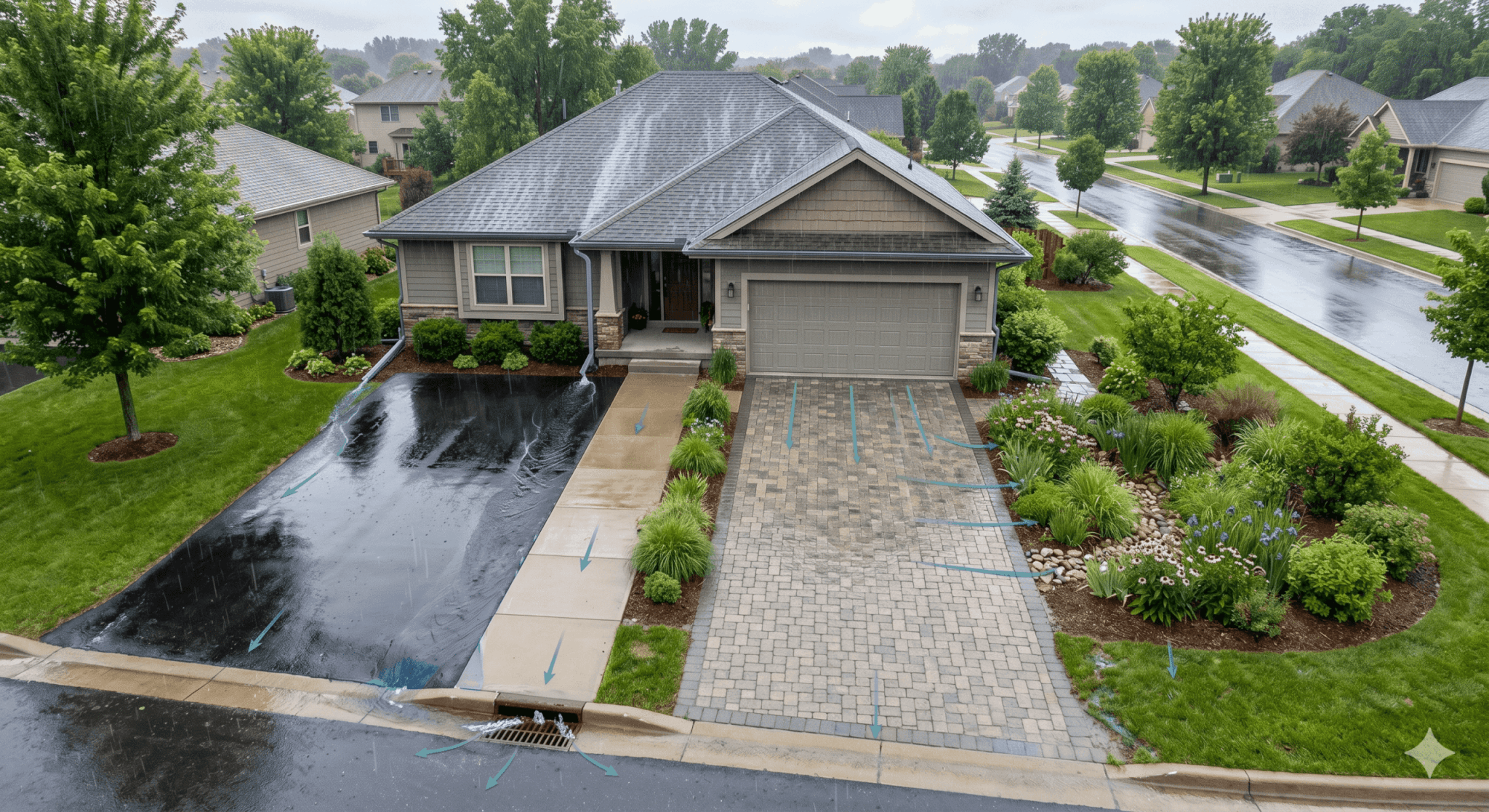
Place hardscape thoughtfully to direct water toward planted areas and create microclimates that protect sensitive plants. Permeable materials like gravel or spaced pavers let rain soak into the ground instead of running off into storm drains. This setup handles both drought and heavy rain.
Step 6: Create an efficient irrigation layout
Give different plant zones separate irrigation controls so you don’t waste water. Drip irrigation works best for shrubs and trees. It delivers water straight to roots with almost no evaporation. Each zone gets the right amount of water at the right time.
Irrigation basics:
- Zone separation: Different water needs require different controls
- Drip systems: Most efficient for trees and shrubs
- Smart controllers: Adjust watering based on weather conditions
- Proper coverage: Minimize overspray onto hardscape
If you’re keeping some lawn for kids or pets, use sprinklers that don’t spray water onto sidewalks where it just evaporates.
Step 7: Plan for maintenance and growth
Drought-tolerant plants need regular watering for 1-2 years while they establish deep roots. After that, they’re water-independent. Skip this step and your plants won’t survive.
You’ll need to handle:
- Mulch renewal: Annual refresh of organic mulches
- Irrigation system checks: Seasonal adjustments and repairs
- Occasional pruning: Shape plants and remove dead growth
- Weed management: Prevention through proper mulching
Effective ways to remove or reduce grass
Traditional lawns use 2-3 times more water than drought-tolerant alternatives. Cutting back on turf is usually the biggest water-saver you can tackle. Here are three ways to ditch water-hungry grass.
Sheet mulching
Sheet mulching kills grass naturally by blocking sunlight with layers of organic materials. Layer cardboard over your grass, then pile 4-6 inches of compost and mulch on top. The grass breaks down underneath and enriches your soil.
Timeline and benefits:
- Duration: 6-12 months to fully break down grass
- Cost: Less expensive than mechanical removal
- Equipment: No special tools required
- Soil improvement: Enriches soil throughout the process
This method takes patience, but it improves your soil while killing the grass. You can usually find materials locally, which keeps costs down.
Turf removal machine
Rent a sod cutter for larger areas or when you need quick results. Most rental stores charge $75-150 per day. You can clear a typical front yard in one weekend.
Practical considerations:
- Speed: Immediate results, ready for new plantings
- Reuse potential: Removed sod can be composted or relocated
- Physical effort: Requires moderate physical work
- Timing: Best done during cooler months
You can reuse the sod elsewhere in your yard or compost it. This method clears the space immediately so you can plant or mulch right away.
Replacing with low water alternatives
Once the grass is gone, you’ve got options that use minimal water:
- Ornamental grasses: Provide movement and texture with deep roots that need little irrigation
- Groundcover plants: Spread to fill space naturally while preventing weeds
- Mulched pathways: Create defined walking areas that need zero irrigation
Smart irrigation tools for water efficiency
Pair your irrigation upgrades with a rain barrel or cistern, since collecting and storing rainwater for irrigation cuts dependence on municipal water.
Efficient irrigation cuts water use by 20-50% compared to basic sprinklers. Your upgrade often pays for itself within a few seasons thanks to lower water bills. Pick your system based on what you’re growing and how your yard’s laid out.
| Irrigation type | Water efficiency | Best for | Approximate cost |
| Drip irrigation | Highest | Trees, shrubs, garden beds | $2-4 per square foot |
| Micro-sprays | High | Groundcovers, small areas | $1-3 per square foot |
| Smart controllers | Moderate improvement | Any existing system | $100-300 per controller |
Rainplan’s platform identifies rebates for efficient irrigation equipment in your area, reducing your upfront investment while improving your system’s performance.
Best mulch practices for water retention
Proper mulching cuts watering needs by up to 50% by preventing evaporation from soil. Pick the right mulch and apply it correctly, or you’ll deal with rot and pests. Here’s what works for different plants and climates.
Organic mulch types
Wood chips, shredded bark, and compost all work well. They break down over time. As they break down, they add nutrients to your soil. You’ll need to refresh them every 1-2 years.
Cost-saving tip: Many cities offer free wood chips from tree trimming operations. Check with your local public works department or search for community chip drop programs to save money on this essential material.
Inorganic mulch and gravel
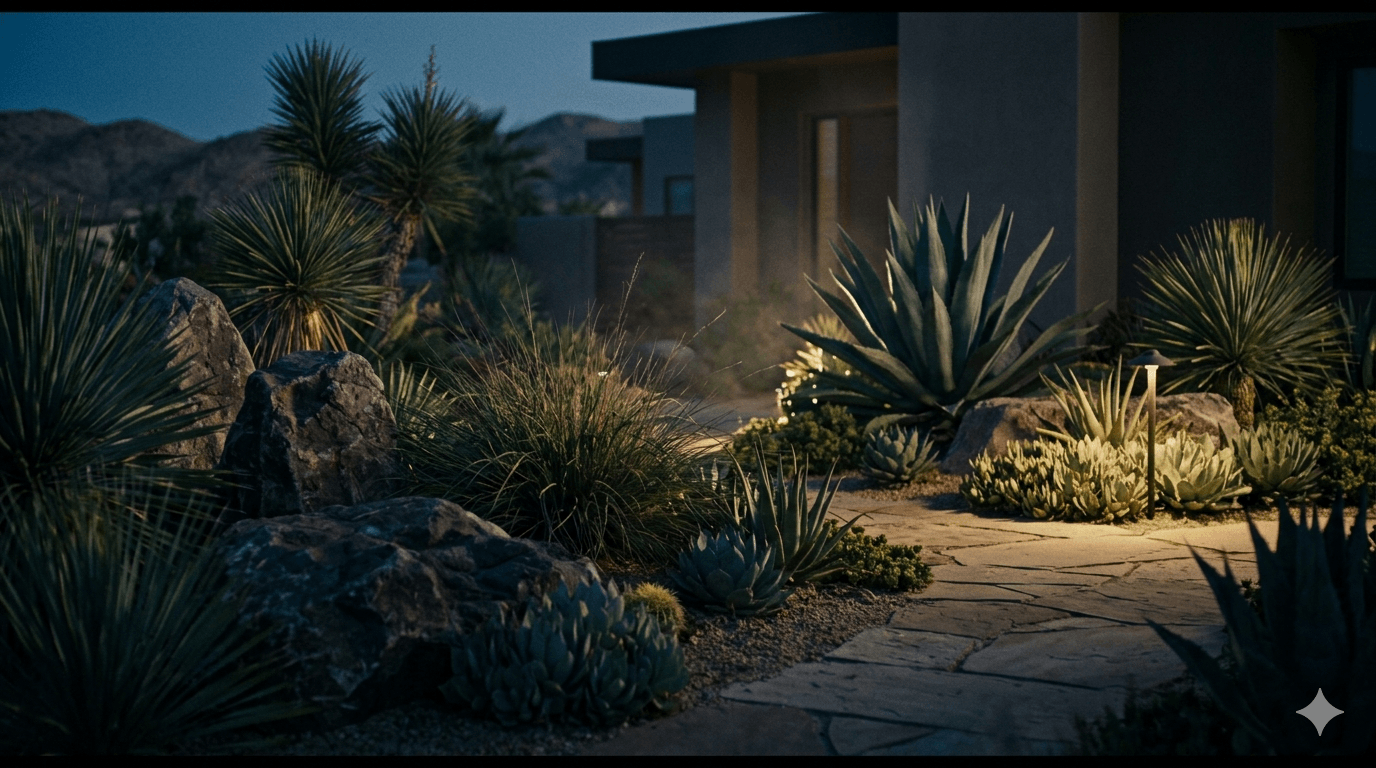
Gravel, decomposed granite, and decorative stones look great in Mediterranean or desert-style plantings. These materials don’t break down, so you won’t need to replace them. They look great with heat-loving plants.
Important consideration: Keep in mind that rocks can get hot in full summer sun, potentially stressing nearby plants. Use them around succulents, cacti, and other plants that thrive in rocky spots.
Proper application techniques
Apply organic mulches 2-4 inches deep to retain the most moisture. Gravel and stone mulches work best at 2-3 inches.
Critical spacing rule: Keep all mulch several inches away from plant stems and tree trunks to prevent moisture buildup that attracts pests and diseases.
Affordable plant choices for a drought tolerant yard
Choosing the right plants saves money long-term. Drought-tolerant species need less water, fertilizer, and replacement than traditional landscape plants. The right plants look good year-round and thrive in your local conditions. Pick plants that give you multiple benefits without needing much care once they’re established.
Water saving trees
Trees provide shade that cuts cooling costs. Once their roots go deep, they need minimal water. Plant them on the west and south sides of your home to maximize energy savings and create comfortable outdoor spaces.
Here’s what works in different regions:
- Oak species: Deep roots access groundwater while providing wildlife habitat
- Pine varieties: Evergreen coverage adapted to many climate zones
- Desert willows: Fast-growing shade for southwestern regions
Low water ornamentals
Colorful plants thrive with minimal water when you pick ones suited to your climate. Group plants by water needs and visual impact to create great-looking displays that don’t waste water.
Reliable choices include:
- Flowering shrubs: Lavender, rosemary, and native salvias for color and fragrance
- Textural plants: Ornamental grasses, succulents, and silver-leafed plants for visual interest
- Groundcovers: Creeping thyme, native sedums, and regional wildflowers for coverage
Native grasses and groundcovers
Native grasses look good year-round and need little care once they’re established. Their deep roots prevent erosion, improve soil health, and attract beneficial insects.
Check with your local extension office for species that work in your area. What thrives in the Southwest won’t necessarily work in the Southeast.
Integrating permeable surfaces and hardscaping
Good hardscape directs rainwater to planted areas and cuts maintenance. These features handle both drought and heavy rain, making your landscape tougher year-round. The right materials create useful spaces that save water.
Permeable materials help in several ways:
- Permeable pavers: Allow rainwater infiltration while creating stable walking surfaces
- Gravel pathways: Define circulation routes while letting water soak into soil
- Decomposed granite: Creates natural-looking surfaces that drain well
- Retaining walls: Manage slopes and create terraced planting areas
Rainplan helps property owners explore permeable paving options and available incentives, making these upgrades more affordable while improving stormwater management.
Maintaining a low water landscape year round
Drought-tolerant doesn’t mean maintenance-free, especially while plants are getting established. Know what to expect so you avoid common mistakes that kill plants. Learn what your plants need each season so you can keep them healthy without constant fussing.
Seasonal irrigation adjustments
Your plants need way more water in summer than winter. Most plants need more water in hot summer months and almost none during cool, rainy seasons.
Adjustment strategies:
- Manual controllers: Adjust seasonally based on weather patterns
- Smart controllers: Automatically adjust based on weather data
- Plant monitoring: Watch for stress signals to guide watering decisions
Watch your plants for stress signals. Afternoon wilting is normal. Morning wilting means you need to water. Yellowing leaves usually mean you’re overwatering, not underwatering.
Simple weed and pest management
Proper mulching and plant spacing prevent most weed problems. Healthy, established plants naturally resist pests and diseases without chemical interventions.
Prevention-focused approach:
- Pull weeds when small: Before they set seed and spread
- Diverse plantings: Support beneficial insects that control pest populations naturally
- Avoid monocultures: Prevent specialized pest problems and maintenance headaches
Fertilizer and soil amendments
Most drought-tolerant plants need minimal fertilizer once established. Annual compost application provides sufficient nutrients for most species while improving soil structure and water retention.
Over-fertilizing actually increases pest problems and water needs by promoting lush, weak growth. Native and adapted plants evolved in lean soils and perform best without excessive feeding.
Financing options and local incentives
Utilities and municipalities offer rebates because drought-tolerant landscaping reduces demand on water systems during peak usage periods. These programs can offset 25-75% of your project costs when you plan strategically. Understanding available programs helps you maximize savings while improving your property.
Common incentive programs help make water-wise improvements affordable:
- Turf replacement rebates: Cash back per square foot for removing grass and installing alternatives
- Irrigation efficiency rebates: Discounts on drip systems and smart controllers
- Rain capture incentives: Support for rain barrels and cisterns that store water for dry periods
- Native plant vouchers: Reduced-cost plants through local conservation programs
Check rebate requirements before starting work, as many programs require pre-approval. Rainplan streamlines this process by helping property owners discover and apply for relevant incentives in their area.
21 practical ideas to transform your landscape today
These ideas range from quick weekend projects to larger transformations. Each includes specific details to help you plan and budget effectively. Start with projects that address your biggest water waste or maintenance challenges for immediate impact.
Water capture and management (Ideas 1-7)
- Redirect roof runoff to planted areas: Install downspout extensions for under $20 to water trees naturally
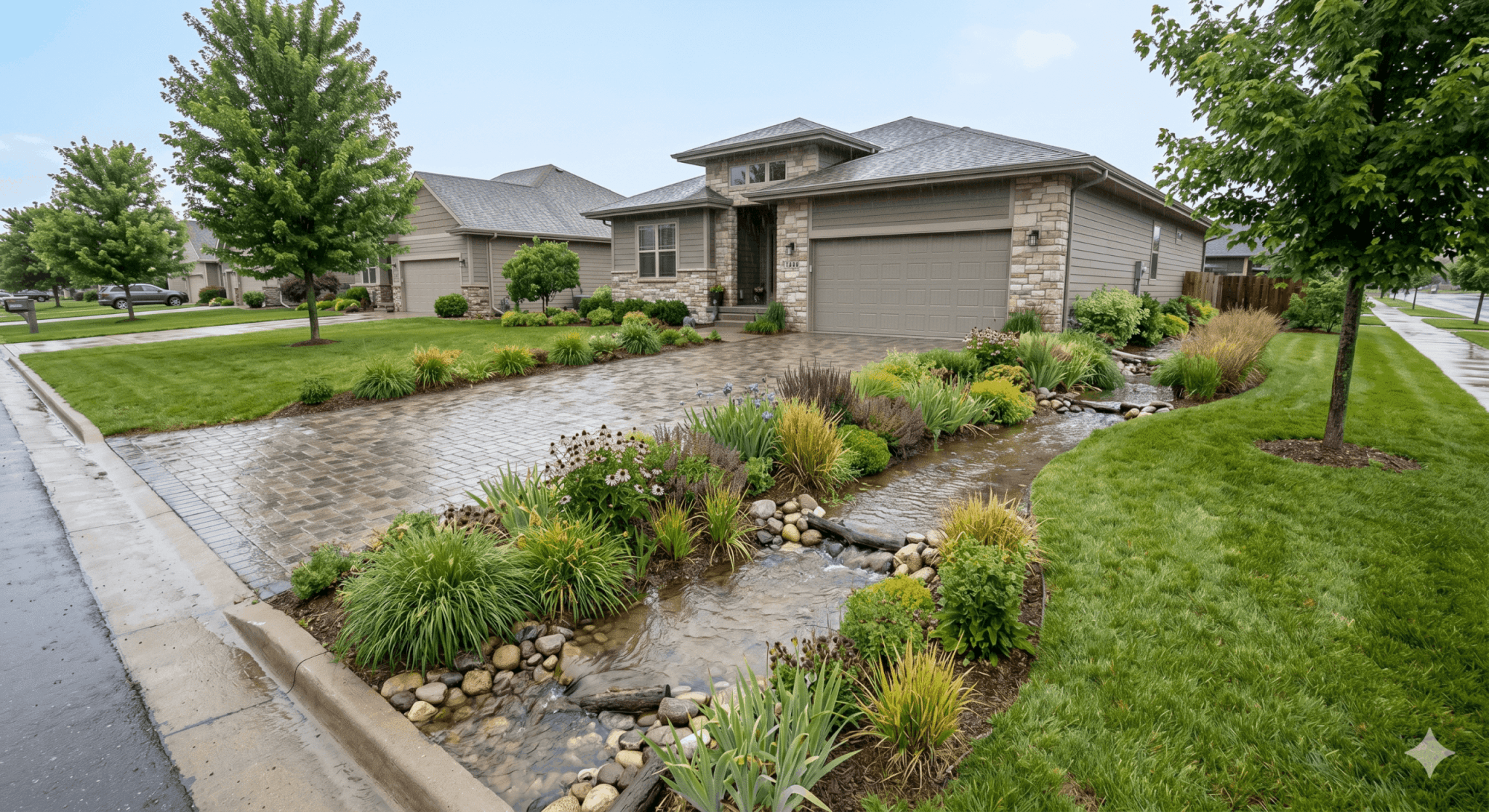
- Add a rain garden: Create a 100-square-foot depression that captures runoff and supports native plants
- Install rain barrels: Basic 50-gallon barrels cost $50-150 and provide irrigation during dry spells
- Create swales and berms: Shape your landscape over a weekend to slow and infiltrate rainwater
- Use permeable pavers: Replace 200 square feet of concrete walkway for $600-800 in materials
- Add a dry creek bed: Manage drainage while creating visual interest with $200 in stones
- Install French drains: Direct excess water away from foundations for $10-15 per linear foot
Plant swaps and additions (Ideas 8-14)
- Replace lawn sections with native grasses: Save 50% on watering while adding texture
- Plant Mediterranean herbs: Enjoy fragrant, edible groundcover that thrives without irrigation
- Add drought-friendly succulents: Create focal points for $5-15 per plant
- Choose heat-tolerant perennials: Maintain summer color with plants needing weekly water or less
- Create wildflower meadows: Support pollinators with $20 in native seed mix per 100 square feet
- Plant shade trees: Reduce cooling costs 15-30% with strategic placement
- Add native shrubs: Create privacy screening that needs no supplemental water after year two
Infrastructure and efficiency (Ideas 15-21)
- Install drip irrigation: Deliver water to root zones for $2-4 per square foot
- Use mulch rings: Reduce grass competition around trees with $5 in materials per tree
- Group plants by water needs: Create three hydrozones to prevent over or under-watering
- Add smart controllers: Save 20-40% on irrigation water for $100-300 investment
- Create gravel seating areas: Design outdoor spaces needing zero irrigation for $3-5 per square foot
- Incorporate decorative boulders: Add structure for $50-200 per boulder depending on size
- Capture available rebates: Offset 25-75% of project costs through utility programs
Start your water-wise transformation
Successful landscape transformation happens in phases. Pick one project from the 21 ideas that addresses your biggest pain point, whether that’s high water bills from your front lawn or the dead zone where nothing grows.
The long-term benefits compound each year. Lower water bills, reduced maintenance time, and a landscape that thrives in your local climate rather than struggling against it. Your property becomes more resilient to both drought and heavy rain events.
Rainplan helps property owners plan and fund water-efficient improvements that work for your specific property conditions. See if you qualify for rebates and incentives in your area.
Frequently asked questions
What is the 70-30 rule in drought tolerant gardening?
The 70-30 rule in drought tolerant gardening means using 70% native or adapted plants and 30% non-native accent plants in your landscape design. This balance provides local resilience while allowing personal preferences for specific colors or textures you love.
Which plants tolerate 100-degree weather without wilting?
Plants that tolerate 100-degree weather include desert natives like agave and palo verde, Mediterranean herbs like rosemary and lavender, and heat-adapted ornamental grasses like buffalo grass and blue grama. Your local extension office can recommend specific varieties proven to handle extreme heat in your region.
How long before drought tolerant plants stop needing regular water?
Drought tolerant plants typically need 1-2 years of regular watering to establish deep root systems before becoming truly water-independent. Consistent moisture during this establishment period helps roots grow deep enough to access groundwater during dry spells.
Can drought tolerant landscaping still be colorful year-round?
Drought tolerant landscaping can be extremely colorful using native wildflowers, flowering shrubs like salvias and penstemons, and ornamental grasses with seasonal color changes. Many drought-adapted plants actually bloom more vibrantly under mild water stress than overwatered plants.
What rebates exist for drought tolerant landscaping projects?
Rebates vary by location but commonly include turf replacement programs paying $1-3 per square foot, irrigation efficiency rebates covering 50% of upgrade costs, and native plant vouchers providing free or discounted plants. Rainplan helps you discover and apply for all available incentives in your area.
How much water does drought tolerant landscaping actually save?
Drought tolerant landscaping typically reduces outdoor water use by 30-50% compared to traditional landscapes. Your actual savings depend on current lawn size, local climate, and which water-saving techniques you implement.
Related reading: water-smart landscaping and stormwater management
- Stormwater management plan: full checklist, costs, and rebates
- Rain gardens: a homeowner’s complete guide
- What is green infrastructure? Examples and rebates for homeowners
- Ways to conserve water at home: practical tips and upgrades
- Stormwater utility fees: what they are and how to reduce them
- What is a green bank? Financing for green landscaping projects
[rainplan_cta id=”6661″]