

Rainwater harvesting systems range from $50 rain barrels to $15,000+ cisterns, capturing 65-90% of roof runoff while reducing water bills and qualifying for local rebates.
Your water bill keeps climbing, but every time it rains, hundreds of gallons flow straight off your roof and into storm drains. Meanwhile, your garden wilts during dry spells, and you’re left wondering if there’s a smarter way to manage the water that’s literally falling from the sky.
Rainwater harvesting captures this free resource and puts it to work on your property. It involves collecting, storing, and using rainwater from rooftops, driveways, and other surfaces for irrigation, household needs, and stormwater management.
From simple rain barrels that cost under $100 to sophisticated cistern systems that can supply your entire home, rainwater harvesting offers practical solutions that reduce utility costs, protect your landscape during droughts, and help manage flooding.
Here’s what you need to know about rainwater harvesting in 2026: system types, sizing, installation, regulations, and how to find funding.
Key takeaways
- Start with a simple rain barrel to test the waters: Connect one to your downspout for around $150-200 without rebates (or $50-150 in areas with rebates) and immediately reduce water bills while learning the basics of rainwater collection.
- Understand your roof’s water potential before investing: A home with an average-sized roof in a moderate rainfall area could capture thousands of gallons per year-enough to make a noticeable dent in outdoor water use.
- Rainplan removes the guesswork from system sizing: The platform analyzes your property’s specific conditions and local climate to recommend the right capacity and show available rebates.
- Match your storage size to actual water usage: A vegetable garden thrives with a rain barrel, while maintaining lawns through droughts requires cistern capacity of 1,000+ gallons. Click here for usage stats.
- Prevent mosquito breeding with simple maintenance: Screen all openings with fine mesh, keep lids tight, and use or empty water every 10 days to avoid pest problems.
What is rainwater harvesting?
Rainwater harvesting is the practice of collecting and storing rain from surfaces like roofs, driveways, and patios for later use around your property. You’re capturing free water that would otherwise flow into storm drains and putting it to work in your garden, lawn, or even inside your home.
Every system shares four core components:
- Catchment area – your roof or other impervious surface where rain lands
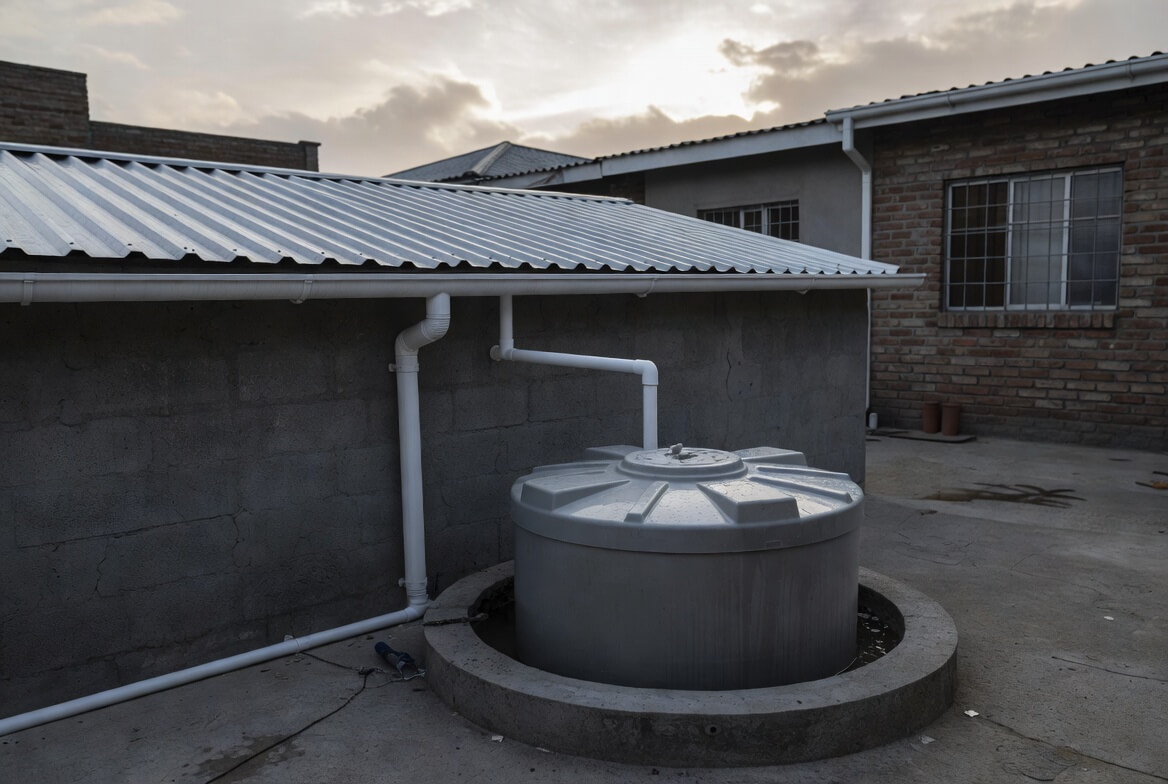
- Conveyance – gutters and downspouts that channel water to storage
- First-flush diverter / filter – removes debris and contaminants before storage
- Storage tank – rain barrel, above-ground cistern, or underground tank
Most residential systems focus on nonpotable uses since they require simpler setups and fewer permits. You can start small with a single rain barrel connected to your downspout, then expand as you see the benefits and savings add up.
Why harvest rainwater for your property?
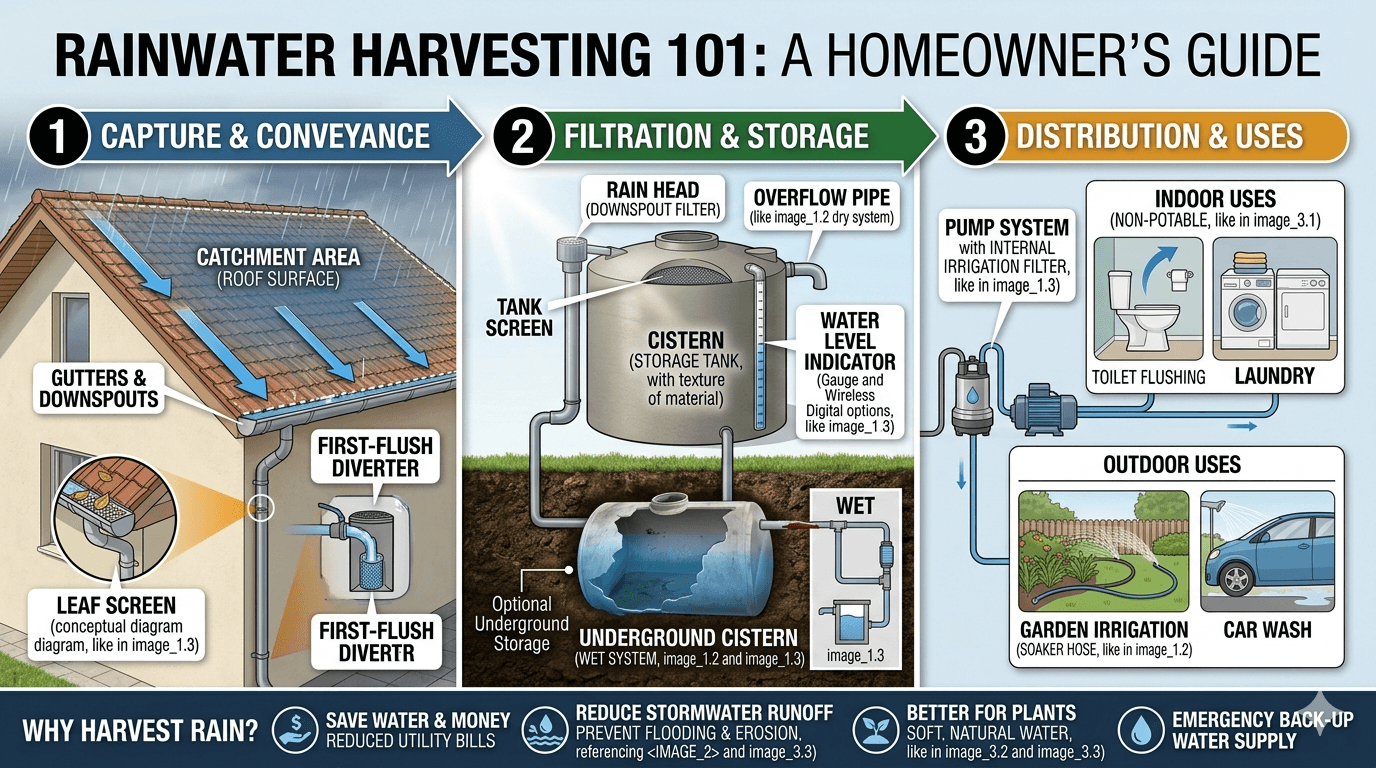
- Lower water bills: Replace municipal water with free rainwater for irrigation and outdoor cleaning, potentially saving hundreds annually
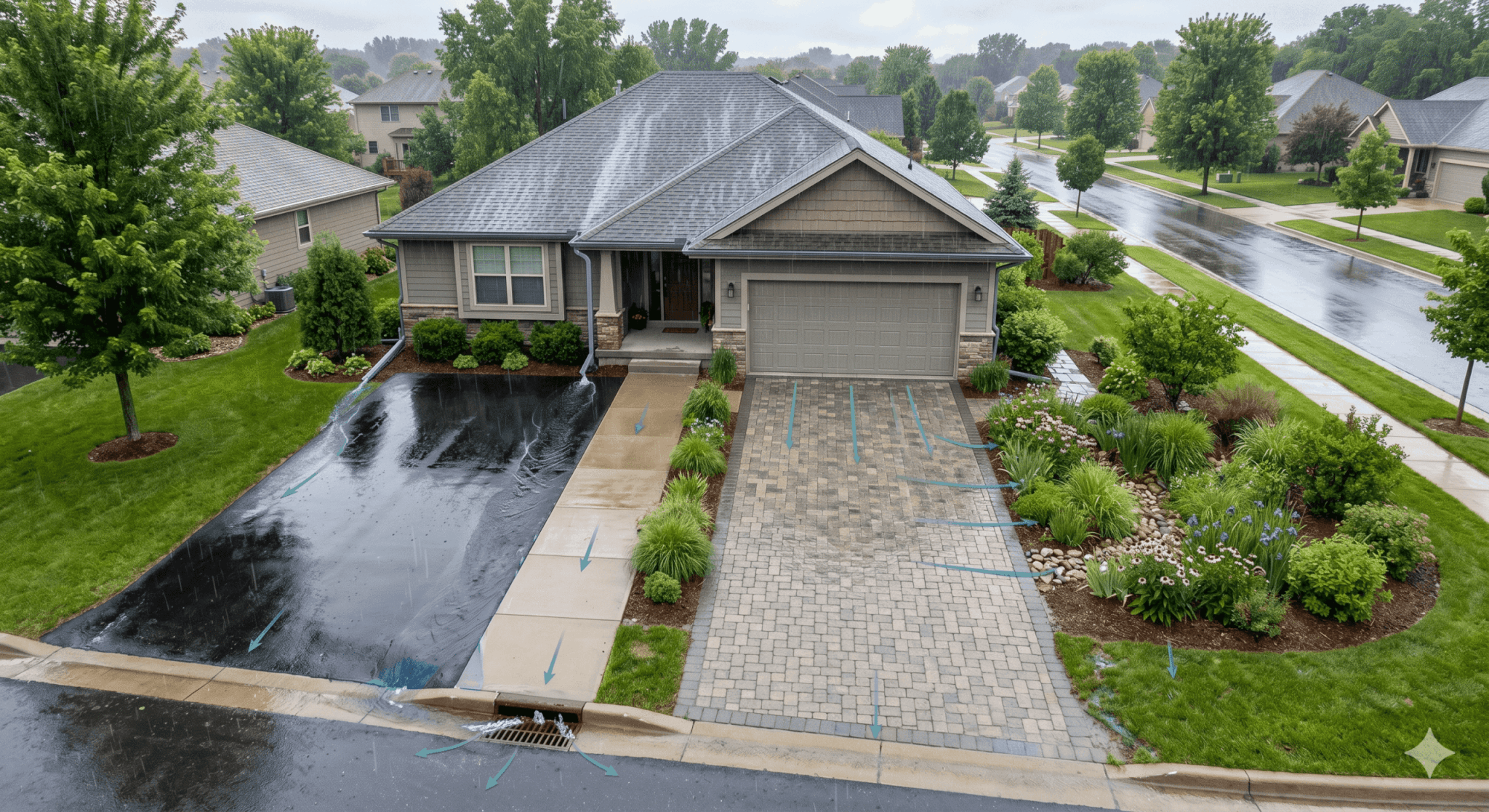
- Foundation protection: Manage runoff that causes erosion, flooding, and costly structural damage
- Drought insurance: Maintain water access when restrictions limit municipal supply
- Healthier plants: Provide chlorine-free water that many plants prefer over treated tap water
- Property value: Add an eco-friendly feature that appeals to environmentally conscious buyers
Find Rainwater Rebates in Your Area
Enter your address to see local rebates for rain barrels and green infrastructure. Many programs cover 50%+ of costs.
2025-2026 rainwater harvesting system costs
Understanding costs upfront helps you match the right system to your budget. The global rainwater harvesting market was valued at $2.07 billion in 2025 and is projected to reach $2.2 billion by 2026, growing at a 6.1% CAGR as water scarcity drives demand. Here’s a current snapshot of what homeowners are spending:
| System type | Low end | Average | High end |
|---|---|---|---|
| Basic rain barrel (DIY) | $50 | $150 | $300 |
| Rain barrel with installation | $120 | $500 | $1,200 |
| Above-ground cistern system | $1,000 | $2,500 | $5,000 |
| Underground cistern (residential) | $3,000 | $4,000 | $8,000 |
| Whole-property harvesting system | $5,000 | $10,000 | $21,000 |
| Commercial / large-scale system | $8,000 | – | $50,000+ |
Key cost factors include your location, roof catchment area size, desired storage capacity, and whether you need water treatment for indoor use. Many municipalities offer rebates that significantly reduce out-of-pocket costs – search for local incentives at Rainplan.
Types of rainwater harvesting systems
Three main approaches to rainwater collection fit different needs and budgets. Here’s how to match the right system to your property.
Rain barrels
Rain barrels offer the simplest entry point into active rainwater harvesting. These containers connect directly to your downspouts and store water for easy access when you need it.
Best rain barrels 2025-2026
Based on current expert reviews, these are the standout products for residential use:
| Product | Capacity | Best for | Est. price |
|---|---|---|---|
| RTS Home Accents Flat Back | 50 gal | Overall best – durability + value | ~$90-$110 |
| FCMP Outdoor Raincatcher 4000 | 50 gal | Ease of use, clean design | ~$100-$120 |
| FreeGarden Rain 55-Gallon | 55 gal | Best value for budget buyers | ~$70-$90 |
| RTS Home Accents 35-Gal with Planter | 35 gal | Aesthetics + small yards | ~$80-$100 |
| Good Ideas Impressions 50-Gal | 50 gal | Value + reliability | ~$85-$105 |
| EarthMinded RainStation 45-Gal | 45 gal | Style-conscious homeowners | ~$138-$141 |
What to look for when buying a rain barrel
- Capacity: Most municipal rebate programs require a minimum 50-gallon capacity
- Material: Food-grade polyethylene or HDPE plastic is the safest and most durable choice
- Overflow outlet: Essential – prevents flooding around your foundation during heavy rain events
- Mosquito screening: Fine mesh (#24 or finer) over all openings prevents breeding
- Spigot height: Should be high enough to fit a watering can underneath
- Flat-back design: If space is tight, flat-back barrels sit directly against a wall
Cisterns: large-scale storage
Cisterns are the right choice when you need more than a few hundred gallons – for whole-home irrigation, toilet flushing, car washing, or commercial use. They range from 330-gallon above-ground tanks to 35,000-gallon underground reservoirs.
Above-ground vs. underground cisterns
| Feature | Above-ground | Underground |
|---|---|---|
| Cost | Lower ($1,000-$5,000) | Higher ($3,000-$8,000+) |
| Installation | DIY-possible for smaller tanks | Requires excavation equipment |
| Aesthetics | Visible; can be screened/covered | Hidden – no visual impact |
| Temperature | Susceptible to freezing | Stays stable year-round |
| Capacity | Typically up to 5,000 gallons | Up to 35,000+ gallons |
| Algae risk | Higher (light exposure) | Lower (opaque, buried) |
| Best for | Homes, small commercial | Large residential, commercial |
Cistern materials
- Polyethylene / polypropylene: Most popular for residential. Cost-effective, widely available, up to 10,000 gallons. Opaque options prevent algae growth.
- Fiberglass: Durable and corrosion-resistant; good for underground installations
- Galvanized steel: Strong and long-lasting; common in agricultural settings
- Concrete: Extremely durable; used in large commercial or municipal cisterns
For buried installations, always use specially reinforced tanks designed to withstand soil pressure – standard above-ground tanks are not rated for burial.
Indoor rainwater systems
Indoor rainwater systems, often integrated with gray water systems, cost more and require professional installation, but they can supplement municipal water for toilets, laundry, and, with proper treatment, even drinking water.
- Nonpotable indoor use: Toilet flushing and washing machines require plumbing separation from your potable water supply
- Potable systems: Demand comprehensive filtration, disinfection, and regular testing to meet health standards
- Professional requirements: Most jurisdictions require permits and certified installers for indoor connections
Which system is right for your property?
| Your situation | Best system |
|---|---|
| Apartment / condo with small patio | Collapsible 50-gallon rain barrel |
| Single-family home, garden irrigation | 50-100 gallon rain barrel or 2-barrel linked system |
| Large yard, frequent irrigation needs | 500-1,000 gallon above-ground cistern |
| Whole-home non-potable reuse (toilets, laundry) | 2,500-5,000 gallon underground cistern |
| Commercial property / school / restaurant | 5,000-35,000 gallon cistern, professional design required |
| Heavy rainfall region, flood mitigation priority | Linked barrel system with rain garden overflow |
5 steps to size and set up your system
Step 1: Calculate your collection potential
Your roof area and local rainfall determine how much water you can harvest. Multiply your roof’s square footage by annual rainfall inches by 0.623 to get potential gallons per year. A 1,000 sq ft roof receiving 30 inches of rainfall could capture about 14,000 gallons at 75% efficiency.
Step 2: Match storage to your needs
A vegetable garden might thrive with a simple rain barrel, while maintaining a large lawn through dry periods requires substantial cistern capacity. Ask yourself: How many gallons do you use monthly? Do you want backup supply during droughts? Will you expand to indoor use later?
Rainplan analyzes your property and local climate to recommend the right system size.
Step 3: Install collection components
Clean gutters and proper filtration ensure water quality from the start. First-flush diverters remove the initial dirty runoff, typically diverting 10-20 gallons per 1,000 square feet of roof area. Basic mesh screens on downspout connections and tank inlets prevent leaves and debris from entering storage.
Step 4: Set up distribution
Elevated storage enables gravity-fed systems, while ground-level tanks require pumps for pressurized delivery. Automatic controllers maximize harvested water use by switching between rainwater and municipal supply based on tank levels.
Step 5: Add treatment if needed
Irrigation typically needs only basic filtration. Indoor nonpotable applications benefit from UV disinfection to control bacteria.
- UV lights: Kill bacteria and viruses without chemicals
- Chlorination: Provides effective, affordable disinfection
- Ozone: Offers powerful treatment that breaks down quickly
Maintaining water quality and safety
Filtration and disinfection essentials
- Irrigation water: Basic particle removal through mesh screens
- Indoor nonpotable use: Disinfection through UV or chlorination
- Potable applications: Comprehensive treatment including sediment filtration, carbon filtration, UV disinfection, and regular testing
Preventing mosquitoes and contamination
- Screen all openings: Fine mesh (1/16 inch or smaller) blocks insects and debris
- Maintain circulation: Regular use prevents stagnation
- Seal containers: Tight-fitting lids eliminate access points
- Clean seasonally: Remove sediment and organic matter that degrades water quality
Seasonal maintenance checklist
Every season:
- Inspect all mesh screens – clean or replace if clogged
- Check overflow hose/pipe for blockages
- Flush first-flush diverters
- Inspect connections and spigots for leaks
Spring:
- Inspect for winter damage
- Clean gutters thoroughly
- Check screens and seals for integrity
Summer:
- Monitor water quality during peak use
- Verify pump operation
- Track usage patterns
Fall:
- Clear leaves from gutters and screens
- Prepare for temperature drops
Winter:
- Drain rain barrels completely – frozen water expands and cracks containers
- Disconnect downspout diverters and store barrels indoors
- Insulate any above-ground cistern pipes
Annually:
- Empty and clean interior of barrels and tanks (algae, sediment)
- Inspect for cracks and UV degradation on above-ground tanks
- Test pump operation and pressure on cistern systems
- Clean gutters feeding the system before rainy season
Legal considerations and financial incentives
Regulations and incentives can make or break your project’s budget. Most areas offer rebates, tax credits, or fee reductions for residential rainwater systems.
State and local regulations
Most U.S. states permit and even encourage rainwater harvesting. Texas exempts rainwater equipment from sales tax, while California’s building code includes provisions for rainwater systems in new construction.
- Water quality standards: Requirements for indoor use and proper plumbing separation
- Mosquito prevention: Mandated screening and container sealing
- Permit requirements: Professional installation requirements for indoor systems or large cisterns
Available rebates and grants
- Utility rebates: Water utilities often provide $50-200 for rain barrels, more for cisterns
- Tax credits: Some states offer income tax credits for rainwater system installations
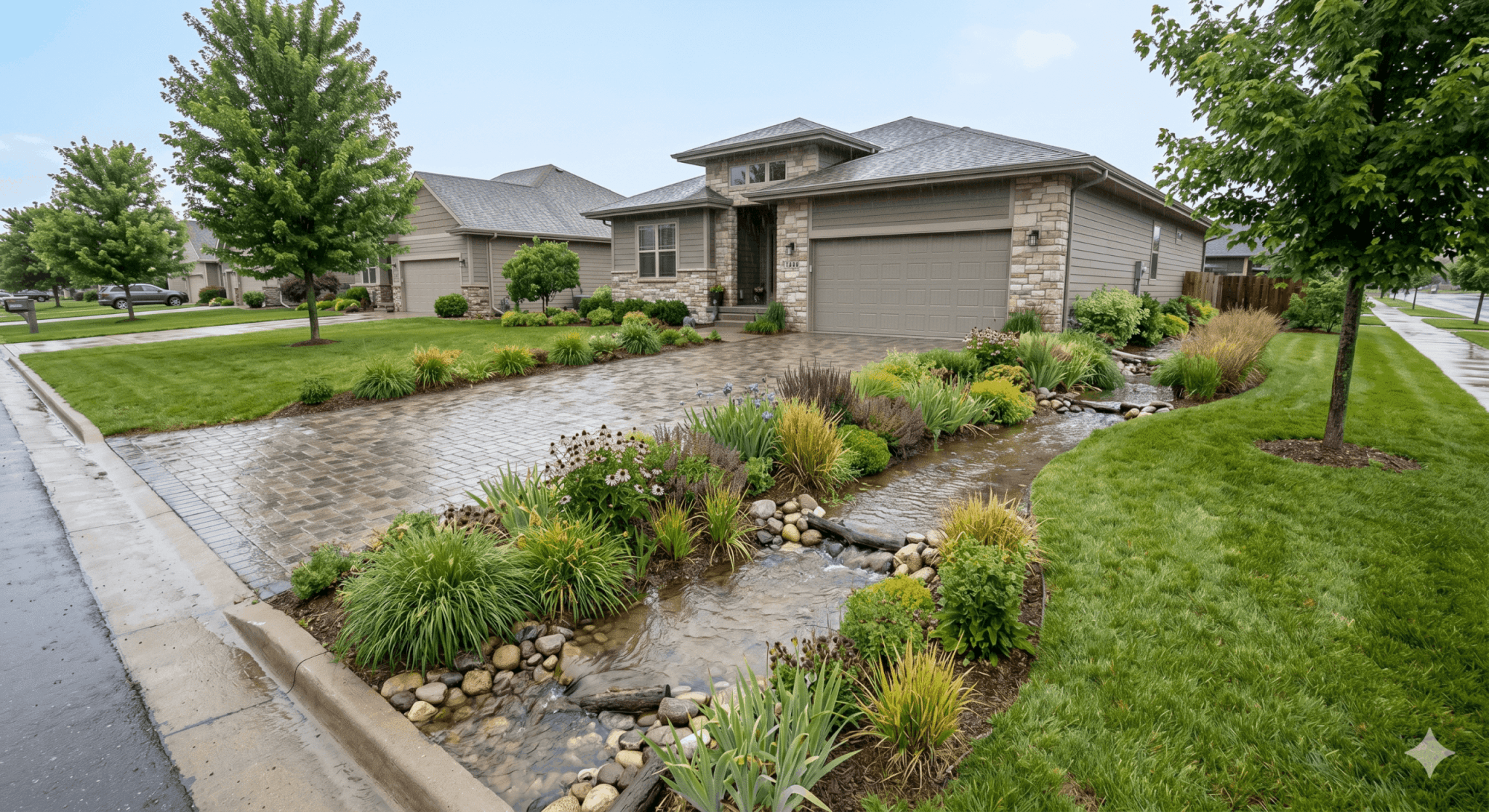
- Stormwater fee reductions: Properties with green infrastructure may qualify for lower monthly stormwater fees
- Grant programs: Local governments sometimes fund residential projects in priority watersheds
Rainplan’s platform matches your property address with available programs, showing exactly what incentives you qualify for.
Start small and scale your water independence
Your rainwater system helps your property and your community. When neighbors capture rainwater together, it reduces flooding and improves water quality across the whole area. Start small – a single rain barrel teaches you the basics while delivering immediate benefits. Once you see the savings add up, you can expand.
Frequently asked questions
What states legally allow you to collect rainwater?
Most U.S. states allow rainwater collection, with states like Texas, California, and Washington actively encouraging it through incentives and building codes. Only a few states have restrictions, and these typically apply to large-scale collection rather than residential rain barrels.
Can you drink rainwater straight from the sky?
Rainwater is not safe to drink without proper treatment, as it can contain bacteria, chemicals, and debris from air pollution and collection surfaces. Potable rainwater systems require filtration, disinfection, and regular testing to meet drinking water standards.
How much rainwater can you collect from your roof?
You can collect approximately 0.623 gallons per square foot of roof area per inch of rainfall, with typical collection efficiency of 75-85%. A 1,000 square foot roof could collect about 470 gallons from a 1-inch rainstorm.
Is rainwater harvesting expensive to maintain?
Basic rainwater systems like rain barrels require minimal maintenance – mainly cleaning gutters, checking screens, and emptying containers regularly. More complex systems with pumps and treatment may need annual professional servicing.
How do you prevent mosquitoes in rain barrels?
Prevent mosquitoes by screening all openings with fine mesh, keeping tight-fitting lids, and either using water regularly or emptying containers every 10 days. Adding a few drops of vegetable oil to the surface can also prevent mosquito breeding. Mosquito Dunks can also be an effective solution for non-potable water use.
What size rainwater tank do you need?
Tank size depends on your water needs, roof area, and local rainfall patterns. A typical household might need 1,000-5,000 gallons for irrigation, while whole-house systems often require 10,000+ gallons with backup municipal supply. Even rain barrels as small as 50 gallons can be useful for vegetable gardening and light landscaping tasks.
Rainwater Harvesting System Cost: Frequently Asked Questions
How much does a rainwater harvesting system cost?
Rainwater harvesting system cost ranges from $50 for a basic DIY rain barrel to $21,000+ for a whole-property system. The most common residential setups fall into three ranges: rain barrels ($50-$300), above-ground cisterns ($1,000-$5,000), and underground cisterns ($3,000-$8,000). Installation adds $120-$1,200 for barrels and several thousand for cisterns. Many municipalities offer rebates that cover 50-100% of equipment cost – search your address on Rainplan to see what’s available locally.
What is the cost of a rainwater collection system?
A rainwater collection system costs $50-$300 for simple rain barrel setups, $1,000-$5,000 for above-ground cistern systems, and $3,000-$8,000+ for underground residential cisterns. Whole-property systems with pumps, filters, and distribution plumbing run $5,000-$21,000. Commercial systems start around $8,000 and scale up based on storage requirements. Cost drivers include: storage capacity, whether you need a pump, water treatment requirements for indoor use, and local labor rates.
What is the cheapest way to collect rainwater?
The cheapest way to collect rainwater is a DIY rain barrel using a repurposed food-grade barrel ($20-$50 in materials) or a basic 50-gallon manufactured barrel ($50-$90). Many municipalities offer free or subsidized rain barrels through rebate programs – some utilities provide them at no cost in exchange for proof of installation. If you qualify for a rebate program, a 55-gallon barrel with overflow fitting and downspout diverter can cost $0-$50 out of pocket. For maximum savings, check your city’s program before buying anything.
How much does it cost to install a rain barrel?
A rain barrel installation costs $50-$300 for a basic DIY setup (barrel + downspout diverter + overflow hose), or $120-$500 for professional installation including a raised platform for gravity-fed pressure. Most homeowners install rain barrels themselves in 1-2 hours. The main components: rain barrel ($50-$150), downspout diverter ($10-$30), overflow hose or connector ($5-$20), and a raised platform or cinder blocks ($0-$50). Linked multi-barrel systems for 100-300 gallons of total capacity run $150-$600 DIY.
How much does a cistern cost for rainwater harvesting?
A cistern for rainwater harvesting costs $300-$1,500 for a small above-ground tank (250-1,000 gallons), $1,000-$5,000 installed for a standard above-ground system, or $3,000-$8,000+ for an underground cistern with pump and filter. The underground premium comes from excavation costs ($1,000-$3,000), a submersible pump ($300-$800), and first-flush diverter and filtration ($200-$500). Underground cisterns offer hidden installation and year-round temperature stability – justifying the higher upfront cost for properties with large irrigation or non-potable indoor needs.
Are there grants or rebates for rainwater harvesting systems?
Yes – rebates and grants for rainwater harvesting systems are available in hundreds of US cities and counties. Common programs include: utility rebates of $50-$200 per rain barrel, cistern rebates of $200-$1,500 in cities like Austin, San Antonio, Tucson, and Denver, stormwater fee credits reducing monthly bills by $20-$100/year, and state tax credits in Arizona (up to $1,000) and other states. Some programs cover 50-100% of equipment cost. Enter your address at Rainplan to see which programs apply to your property.
How much does rainwater harvesting save on water bills?
Rainwater harvesting saves the average homeowner $50-$200/year on outdoor water bills from a single rain barrel, and $200-$800+/year from a full cistern system used for irrigation. At national average water rates of $0.008/gallon, a 1,500 sq ft roof receiving 30 inches of annual rainfall can theoretically capture 14,000+ gallons – worth $112 in direct water cost savings annually. The larger financial benefit typically comes from stormwater utility fee credits, which in many cities reduce monthly bills by $20-$100/year, often doubling or tripling the total annual savings.
Related reading: stormwater management and water collection
- Rain gardens: a homeowner’s complete guide to design and installation
- Rain garden design guide: sizing, plants, and costs by region
- Stormwater management plan: full checklist, costs, and rebates
- What is green infrastructure? Examples and rebates for homeowners
- Permeable pavement: types, costs, and stormwater benefits
- Bioretention systems: engineered alternative for clay soils
- Stormwater utility fees: what they are and how to reduce them