
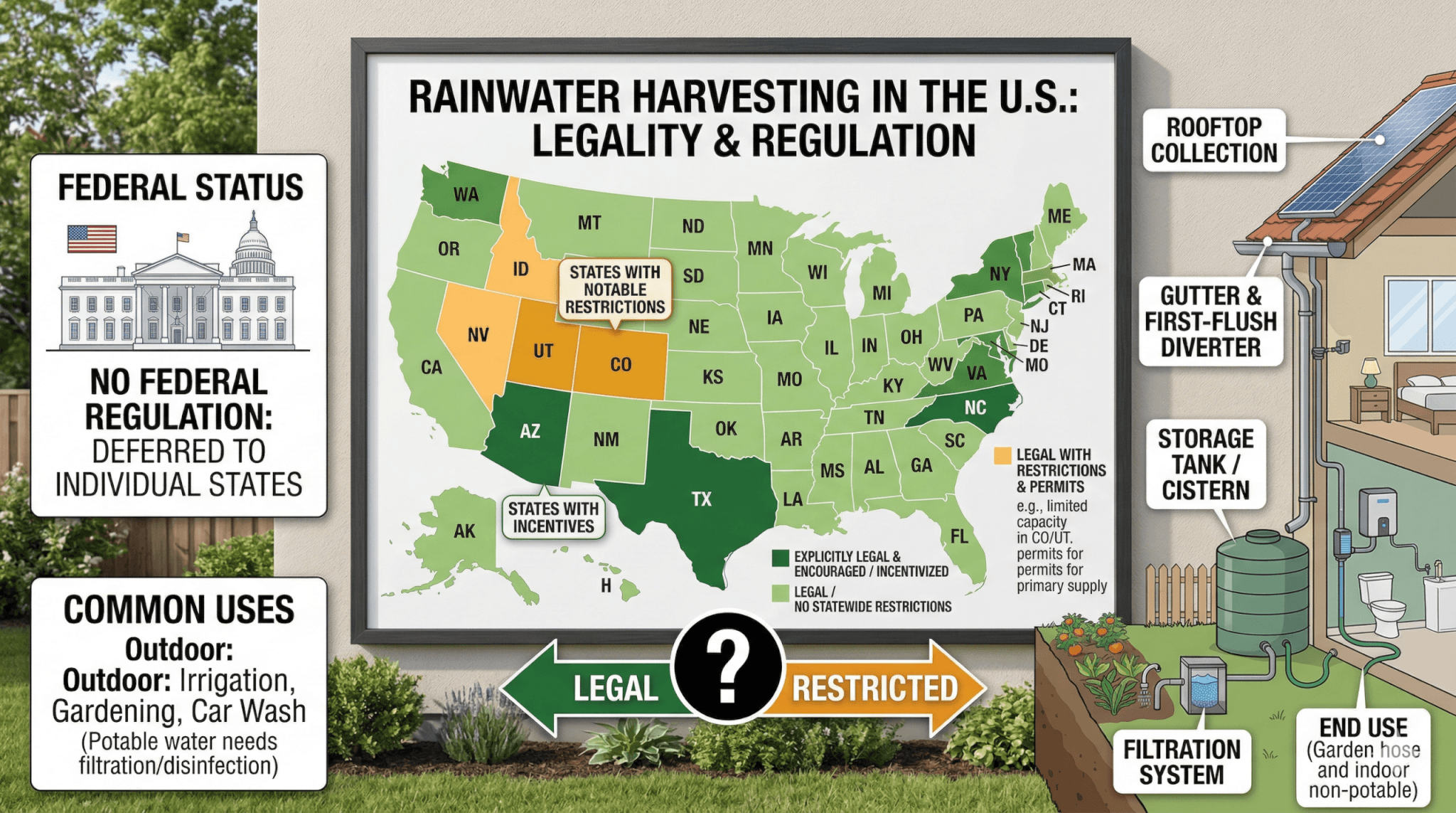

Here’s what actually matters: rainwater laws vary by location, not by blanket bans. While rainwater harvesting is legal in most of the United States, a patchwork of federal, state, and local regulations creates different rules depending on where you live. Some states actively encourage it with rebates and incentives, others have specific restrictions on storage amounts or uses, and a few still maintain limits rooted in century-old water rights laws.
We’ll cover federal guidelines, state-by-state differences, and the local codes that usually matter most when you’re installing a system. You’ll learn which states restrict collection, when you need permits, and how to stay compliant while grabbing available rebates.
Key takeaways
- Rainwater harvesting is legal nationwide: You can collect rainwater in all 50 states, with only Colorado, Utah, and Nevada having minor storage limits or registration requirements.
- Start simple with rain barrels for outdoor use: Begin with basic 55-gallon barrels for garden watering and car washing – most locations don’t require permits for small systems under 100 gallons.
- Check local rules before installing larger systems: Contact your city building department about permits, overflow requirements, and HOA restrictions since local codes vary even in permissive states.
- Take advantage of financial incentives: Many communities offer rebates covering 50% or more of equipment costs, plus ongoing stormwater fee discounts for properties that reduce runoff.
- Use Rainplan to find local programs and qualified installers: Enter your address to discover applicable incentives, potential savings, and connect with professionals who understand your area’s specific requirements.
Is harvesting rainwater illegal or encouraged?
Rainwater harvesting is legal in most of the United States. You can collect rain from your roof into barrels or cisterns for garden irrigation, car washing, and other household uses. While a handful of states have specific regulations about storage amounts or registration requirements, the practice itself is widely permitted and often encouraged through rebates and incentives.
The legal framework for rainwater collection operates at three distinct levels, each with its own scope of authority. Knowing which level controls what helps you figure out exactly what’s allowed on your property.
- Federal level: No restrictions exist on rainwater collection at the national level
- State level: Individual states regulate water rights, storage limits, and permitted uses
- Local level: Cities and counties control building codes, plumbing permits, and stormwater management rules
Your specific location determines which rules apply to your property. Most regulations encourage collection, not ban it. More cities now see rainwater harvesting as a win: less flooding, less strain on aging infrastructure, and cleaner local waterways.
Why do states have different rules?
[rainplan_cta id=”6661″]
Why do rules vary so much? It comes down to each state’s water history, climate, and how they manage resources. States disagree on who owns water and how to divvy it up, which is why you’ll find different rules depending on where you live.
Water rights and allocation
Western states built their water laws around prior appropriation doctrine. This system grants water rights based on who claimed them first, creating a hierarchy where senior rights holders get their full allocation before junior users receive any water.
Some states treated every raindrop as part of the larger water supply. Rain falling on your roof would theoretically flow into streams and aquifers that downstream users depended on for their legal water allocations.
Colorado exemplified this restrictive approach for decades, prohibiting most residential rainwater collection to protect downstream water rights. That’s changed. Colorado now allows homeowners with certain property types to collect up to 110 gallons of rainwater, recognizing that small-scale residential collection has minimal impact on watershed supplies.
Climate and resource management
Water-rich states like Washington and Oregon rarely restrict rainwater harvesting because abundant precipitation creates less competition for water resources. Arid states like Nevada and Utah historically maintained tighter controls over any form of water diversion, though even these states have relaxed restrictions in recent years.
States started allowing collection once they realized it helps manage stormwater. Capturing rain before it becomes runoff reduces flooding risk, keeps pollutants out of waterways, and decreases the burden on aging stormwater infrastructure. Many municipalities now actively promote rainwater collection as part of their green infrastructure strategies.
Potable vs non-potable rainwater usage
Whether you’re collecting water for drinking or just watering plants determines which rules apply. It affects permits, equipment specs, and how often you’ll need to maintain the system.
Potable means safe for human consumption. Non-potable means suitable only for uses where the water won’t be ingested.
Requirements for drinking water
Converting rainwater into drinking water requires meeting strict health and safety standards. Most states permit potable rainwater systems, but the requirements are substantial.
You’ll need specialized filtration equipment, disinfection systems, and often professional installation by a licensed plumber. Many jurisdictions require permits, regular inspections, and periodic water quality testing.
For most people starting out, potable systems are too complex and expensive to justify. Building codes typically mandate specific treatment sequences, backflow prevention devices, and clear labeling to prevent cross-contamination with municipal water supplies.
Outdoor and landscaping uses
Start with outdoor uses – they’re the easiest way in. Small systems for garden irrigation rarely trigger permit requirements.
You can use collected rainwater for multiple purposes around your property:
- Garden irrigation: Water vegetables, flowers, and ornamental plants during dry periods
- Lawn maintenance: Keep grass healthy without drawing from municipal supplies
- Vehicle washing: Reduce water bills for routine car and equipment cleaning
- Pool top-offs: Supplement pool water levels with filtered rainwater
- Toilet flushing: Where local codes permit, supply indoor fixtures with non-potable water
Rainplan helps property owners identify which applications work best for their location and intended uses. The platform matches your address to local regulations and available incentive programs, clarifying what’s possible before you invest in equipment.
Which states restrict or limit rainwater collection?
Just three states still restrict rainwater collection, and even they’ve loosened up considerably. Knowing what’s allowed helps you pick the right system and stay out of trouble.
| State | Restriction level | Key limitations | Notes for homeowners |
| Colorado | Limited storage | 110 gallons maximum | Two 55-gallon barrels typical |
| Utah | Registration required | 2,500 gallons with registration | No registration under 200 gallons |
| Nevada | Rooftop only | Single-family residential use | Non-potable applications only |
Colorado’s evolving regulations
Colorado permits most residential properties to store up to 110 gallons of rainwater, typically using two 55-gallon rain barrels. Properties with certain well permits may qualify for additional collection capacity. The state’s water resources division provides detailed eligibility guidelines on their website.
Utah’s registration system
Utah requires free online registration for systems storing between 200 and 2,500 gallons. Smaller systems using containers under 100 gallons each need no registration. The process takes minutes and helps the state track water usage patterns without restricting reasonable residential collection.
Nevada’s residential allowances
Nevada allows single-family homes to collect rooftop runoff for non-potable domestic use. This change in 2017 opened rainwater harvesting to residential properties after years of prohibition. Ground-level collection and commercial applications face different requirements that vary by county.
Local variations matter
Even in states without statewide restrictions, local building codes and homeowners association rules may apply. Some cities require permits for cisterns over certain sizes. Others specify overflow routing requirements or mosquito prevention measures. Always verify local requirements before installing your system.
Are there penalties or fines?
You won’t face criminal charges for collecting rainwater at home. The sensational headlines about arrests typically involve large-scale commercial water diversion or willful violations of court orders, not homeowners with rain barrels. Here’s what actually gets you in trouble – and how to avoid it.
If you follow basic rules, officials will help you fix problems instead of fining you. Typical enforcement actions include:
- Educational outreach: Agencies prefer helping residents understand and follow rules
- Modification requests: Officials may ask you to adjust non-compliant systems
- Permit requirements: Ensuring proper applications for larger installations
- Compliance orders: Written notices to correct specific violations
Simple rain barrel setups rarely face any enforcement action. The issues that do trigger complaints usually involve:
- Overflow problems: Water discharge onto neighboring properties or public sidewalks
- Cross-connections: Improper connections between rainwater and municipal water lines
- Mosquito breeding: Uncovered containers creating public health hazards
- Structural concerns: Unsafe placement or inadequate support for large cisterns
- HOA violations: Non-compliance with community appearance standards
How to comply and benefit from rainwater harvesting
Ready to install a system? Here’s how to stay legal and get the most out of it. A clear plan keeps you out of trouble and helps you grab available rebates.
Step 1: Choose a legal system
Start here to stay compliant:
- Contact your city or county building department to ask about rain barrel ordinances, permit thresholds, and overflow requirements
- Begin with basic rain barrels to learn local rules before investing in larger cisterns
- Focus on rooftop collection through gutters and downspouts rather than ground runoff
- Use collected water only on your own property to avoid any water rights complications
Many departments have fact sheets or websites dedicated to rainwater harvesting guidelines. When researching local requirements, use these specific search terms and contacts:
- Search online: “rain barrel ordinance + [your city]” or “stormwater utility credit rain barrel + [your county]”
- Contact building department: Ask about plumbing permits and structural requirements
- Call stormwater utility: Inquire about runoff rules and available credits
- Check health department: Verify requirements for any potable applications
Step 2: Research incentives and rebates
Many communities offer rebates because rainwater systems reduce flooding and improve water quality. They know captured rain means less flooding, less runoff, and cleaner streams.
Common incentive types include:
- Direct rebates: Payments covering 50% or more of equipment costs
- Tax credits: State or local tax reductions for qualifying systems
- Stormwater fee discounts: Lower monthly utility bills for properties reducing runoff
- Free equipment: Rain barrel giveaways or discounted purchase programs
Most programs require documentation including installation photos, equipment receipts, storage capacity specifications, and completion dates. Some also require pre-approval before purchase or professional installation for larger systems.
Step 3: Connect with qualified professionals
Rainplan streamlines the process of finding and qualifying for stormwater incentive programs. Instead of calling multiple agencies or searching through municipal websites, you enter your address to see applicable programs for your specific location.
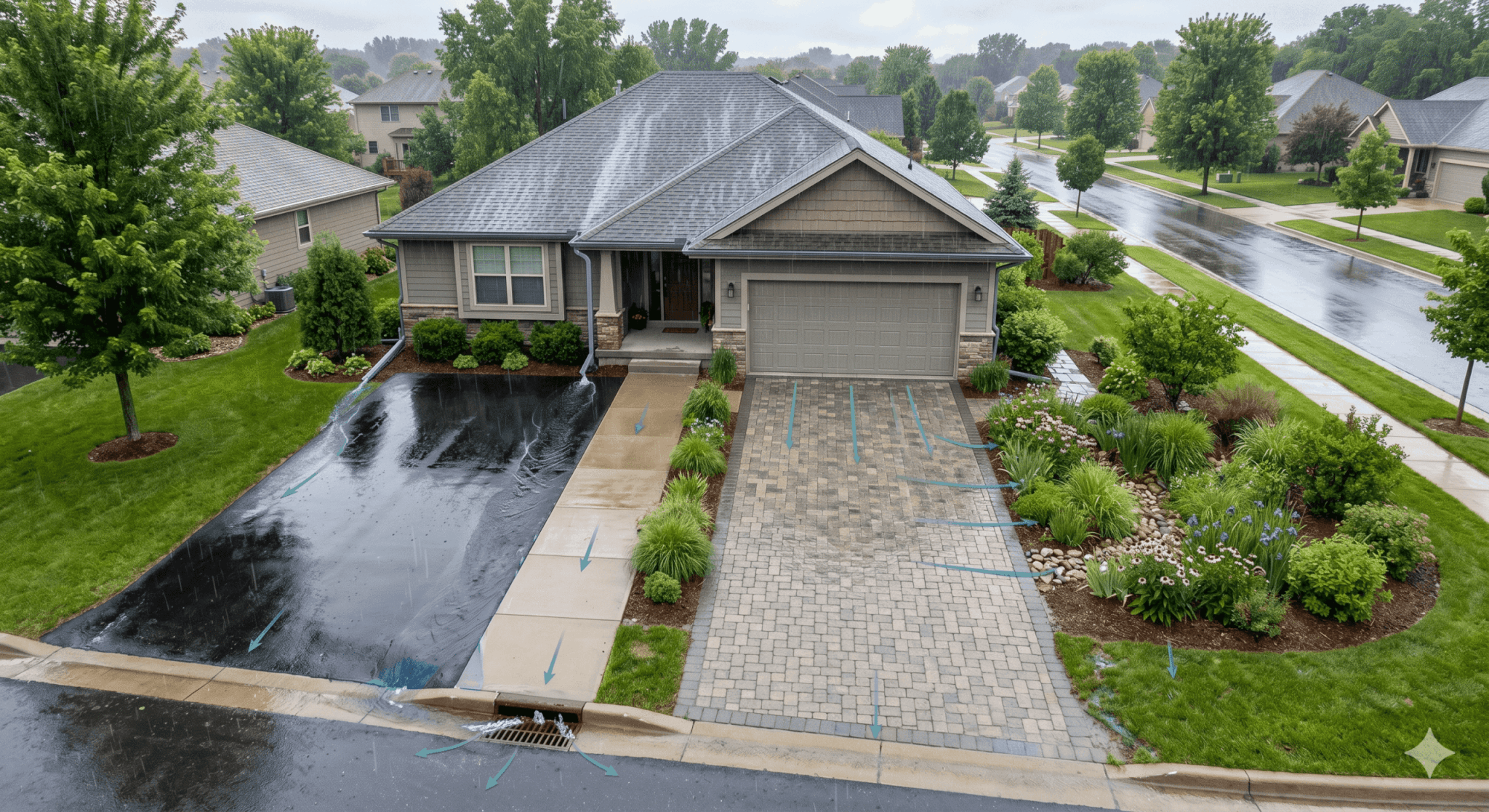
The platform shows potential savings, eligible improvements, and connects you with qualified installers who understand local requirements. Beyond rain barrels, Rainplan helps property owners explore comprehensive stormwater solutions including rain gardens, permeable pavement, and bioswales. Each option offers different benefits for managing runoff while potentially qualifying for local incentives.
Building resilient properties with green infrastructure
Rules keep getting friendlier as cities realize rainwater collection helps manage water sustainably. What used to be restricted now gets encouraged with rebates and easier permits.
Rainwater collection often leads to bigger green infrastructure projects. A simple rain barrel project can lead to rain gardens, native landscaping, and permeable surfaces that work together to manage stormwater naturally. They cut flooding risk, clean up water quality, and make properties tougher against storms.
Ready to explore stormwater solutions for your property? See If You Qualify to discover local incentives and connect with qualified professionals who can help you navigate regulations and maximize benefits.
Frequently asked questions
Can rainwater harvesting reduce my monthly water bill by a specific amount?
Rainwater harvesting can reduce your water bill by providing free water for outdoor irrigation and other non-potable uses that would otherwise require purchased municipal water, with savings varying based on your local water rates and usage patterns.
Do I need a permit for a 55-gallon rain barrel in my state?
Most states don’t require permits for rain barrels under 100 gallons, though you should verify with your local building department since cities and counties may have their own requirements.
Can I safely use harvested rainwater on my vegetable garden?
You can use harvested rainwater for irrigating vegetable gardens, though some health departments recommend avoiding direct contact with edible portions of plants you’ll eat raw.
What rules apply if my state has no specific rainwater harvesting laws?
When your state lacks specific rainwater legislation, collection is generally permitted under common law principles, but you should still check with local building departments about municipal restrictions or permit requirements.
Can I collect rainwater during official drought restrictions?
Most drought restrictions target municipal water usage rather than rainwater collection, so harvesting is typically still allowed and often encouraged as a conservation measure during dry periods.
Is rainwater collection legal in all 50 US states?
Rainwater collection is legal in all US states, though Colorado, Utah, and Nevada have specific limitations on storage amounts or require registration for larger systems.
Complete 50-State Rainwater Harvesting Laws: Quick Reference Table
Every state’s legal status, storage limits, and permit requirements – updated 2026.
| State | Legal Status | Storage Limit | Permit Required? | Key Notes |
|---|---|---|---|---|
| Alabama | Legal | None | No | No state restrictions. |
| Alaska | Legal | None | No | No state restrictions. |
| Arizona | Legal – encouraged | None | No | State income tax credit up to $1,000. Tucson requires commercial buildings 5,000+ sq ft to harvest rainwater. |
| Arkansas | Legal | None | No | Residential unrestricted; large commercial may need permit. |
| California | Legal – encouraged | None | No | SB-558 (2018) provides property tax exemption for new residential systems. No volume limits. |
| Colorado | Restricted | 110 gallons | No | Max two 55-gal barrels. Outdoor, non-potable use only on same property. HB 16-1005. |
| Connecticut | Legal | None | No | No state restrictions. |
| Delaware | Legal | None | No | No state restrictions. |
| Florida | Legal – encouraged | None | No | No state restrictions. Rebates available in some counties (Tampa Bay area). |
| Georgia | Legal – encouraged | None | No | No state restrictions. |
| Hawaii | Legal | None | No | No state restrictions. |
| Idaho | Legal | None | No | No state restrictions. |
| Illinois | Legal | None | No | No state restrictions. |
| Indiana | Legal | None | No | No state restrictions. |
| Iowa | Legal | None | No | No state restrictions. |
| Kansas | Legal | None | No | No state restrictions. |
| Kentucky | Legal | None | No | No state restrictions. |
| Louisiana | Legal | None | No | No state restrictions. |
| Maine | Legal | None | No | No state restrictions. |
| Maryland | Legal – encouraged | None | No | Rebates available in Howard and Montgomery counties. |
| Massachusetts | Legal | None | No | Some municipalities offer rebates. |
| Michigan | Legal | None | No | No state restrictions. |
| Minnesota | Legal | None | No | No state restrictions. |
| Mississippi | Legal | None | No | No state restrictions. |
| Missouri | Legal | None | No | No state restrictions. |
| Montana | Legal | None | No | No state restrictions. |
| Nebraska | Legal | None | No | No state restrictions. |
| Nevada | Restricted | No set limit | No | Rooftop collection only. Single-family residential, non-potable use. Must remain on property. |
| New Hampshire | Legal | None | No | No state restrictions. |
| New Jersey | Legal | None | No | No state restrictions. |
| New Mexico | Legal – encouraged | None | No | Some municipalities offer rebates. No volume limits. |
| New York | Legal | None | No | No state restrictions; large cisterns may need a local permit. |
| North Carolina | Legal – encouraged | None | No | No state restrictions. |
| North Dakota | Legal | None | No | No state restrictions. |
| Ohio | Legal | None | No | No state restrictions. |
| Oklahoma | Legal | None | No | No state restrictions. |
| Oregon | Legal – large systems need permit | None | For large cisterns | Rain barrels unrestricted. Cisterns 1,000+ gal may need a water right permit from Oregon Water Resources Dept. |
| Pennsylvania | Legal | None | No | No state restrictions. Called “stormwater authority” fees in some areas. |
| Rhode Island | Legal | None | No | No state restrictions. |
| South Carolina | Legal | None | No | No state restrictions. |
| South Dakota | Legal | None | No | No state restrictions. |
| Tennessee | Legal | None | No | SB 2417/HB 1850 supports rainwater harvesting as green infrastructure. No volume limits. |
| Texas | Legal – encouraged | None | No | SB 769 (2011) prevents HOAs from prohibiting systems. Sales tax exemption for harvesting equipment. |
| Utah | Restricted | 2,500 gallons | For 200-2,500 gal systems | Free online registration required for 200-2,500 gal. No registration needed under 100 gal per container. |
| Vermont | Legal | None | No | No state restrictions. |
| Virginia | Legal – encouraged | None | No | Some localities offer incentive programs. |
| Washington | Legal – large systems need permit | None | For large cisterns | Rain barrels unrestricted. Large cisterns may need a water right permit from WA Dept. of Ecology. |
| West Virginia | Legal | None | No | No state restrictions. |
| Wisconsin | Legal | None | No | No state restrictions. |
| Wyoming | Legal | None | No | No state restrictions. |
Rainwater Harvesting Laws by State: Frequently Asked Questions
Is rainwater harvesting legal in California?
Yes. California has no state-level restrictions on rainwater harvesting and actively encourages it. SB-558 (2018) provides a property tax exemption for new residential rainwater systems. There are no volume limits for residential collection.
What are the rainwater harvesting laws in Texas?
Texas actively encourages rainwater harvesting with no state-level volume limits. SB 769 (2011) prevents HOAs from prohibiting collection systems. Texas also provides sales tax exemptions for rainwater harvesting equipment, making it one of the most permissive states in the country.
Is rainwater collection legal in Colorado?
Yes, but with restrictions. Colorado allows up to 110 gallons (two 55-gallon barrels maximum) collected from a rooftop. Water must be used on the same property for outdoor non-potable purposes only. This was established by HB 16-1005 (2016), which relaxed what was previously a near-total ban on residential collection.
What are the rainwater collection laws in Florida?
Florida has no state-level restrictions on rainwater collection. Collection is unrestricted for residential use and actively encouraged as a water conservation measure. Some counties – including the Tampa Bay area – offer rebate programs for rain barrel installation.
Is collecting rainwater legal in Washington state?
Standard rain barrels are unrestricted in Washington. Larger cistern systems – typically 1,000+ gallons – that divert significant volumes may require a water right permit from the Washington Department of Ecology. Check with your local county building department for specifics before installing a large system.
What are the rainwater harvesting laws in Arizona?
Arizona actively encourages rainwater harvesting with no volume limits. The state offers an income tax credit of up to $1,000 for rainwater harvesting systems. Tucson requires commercial buildings over 5,000 sq ft to harvest rainwater for landscaping – one of the few cities with a mandate rather than just a permission.
Is collecting rainwater legal in New York?
Yes. New York has no state-level restrictions on rainwater collection. Residential collection is unrestricted statewide, though some municipalities may have specific permit requirements for large cistern installations. Check with your local building department for systems over 500 gallons.
Is rainwater harvesting legal in Oregon?
Rooftop collection into rain barrels is generally unrestricted in Oregon. However, large cistern systems that divert significant water quantities may require a water right permit from the Oregon Water Resources Department. Standard residential rain barrel setups need no permit.
Can you collect rainwater in Tennessee?
Yes. Tennessee has no volume limits or permit requirements for rainwater collection. SB 2417/HB 1850 supports rainwater harvesting as part of the state’s green infrastructure framework. The only practical restriction is that collected water should not be used for potable purposes without proper treatment.
Is it legal to collect rainwater in Indiana?
Yes. Indiana has no state-level restrictions on rainwater collection. Residential collection is fully unrestricted, with no volume caps or permit requirements at the state level. Some local ordinances may apply, so check with your city or county building department for any local requirements.
Related reading: rainwater collection and stormwater management
- Rainwater harvesting 101: how to collect, store, and use rainwater
- Rain gardens: homeowner’s guide to design, plants, and upkeep
- Bioretention systems: green infrastructure for any soil type
- Stormwater management plan: permits, BMPs, and rebates
- Yard drainage solutions: 15 ways to fix standing water
- Government home improvement grants: who qualifies?
- Green bank financing for stormwater and water management projects
[rainplan_cta id=”6574″]