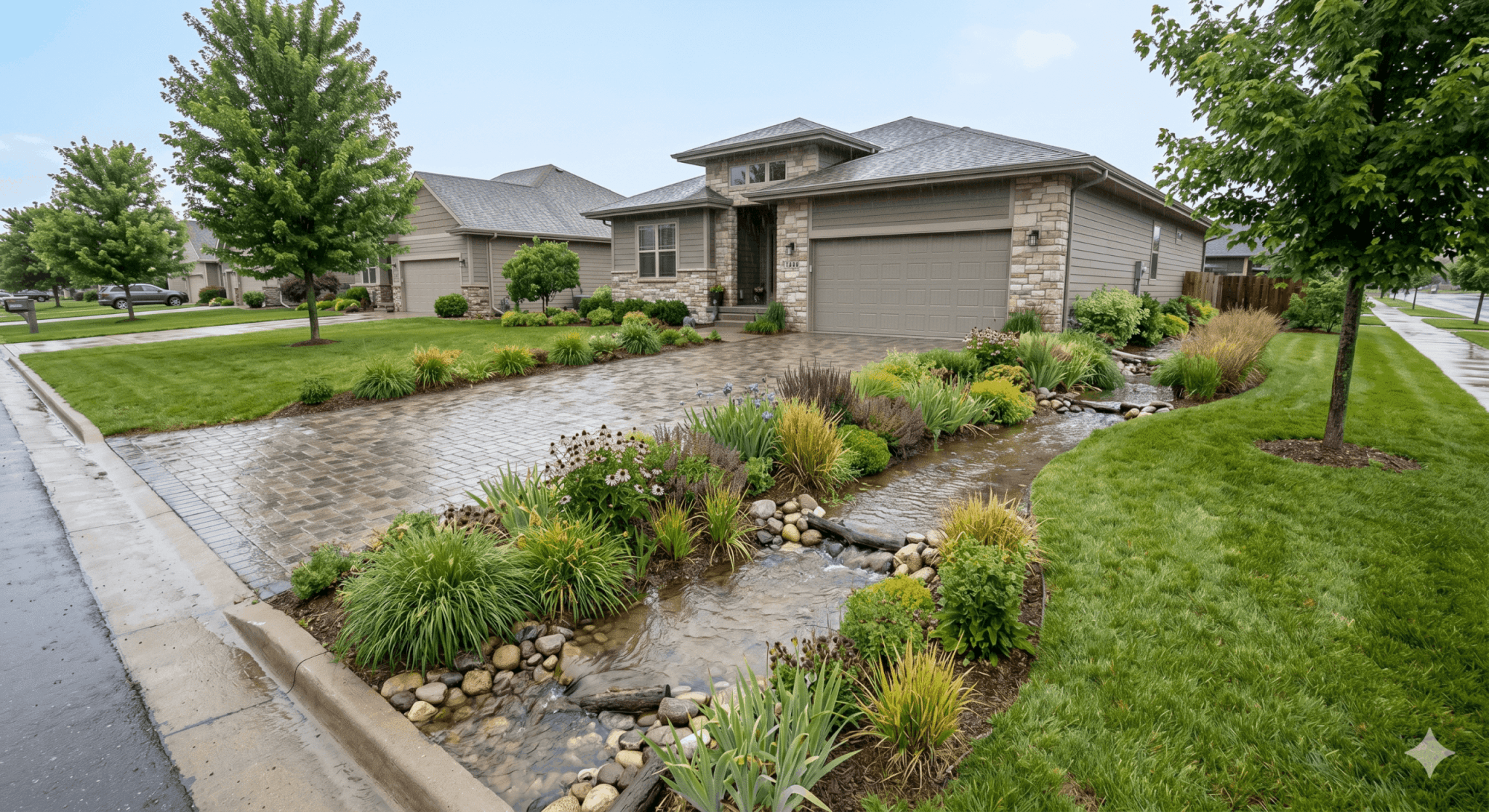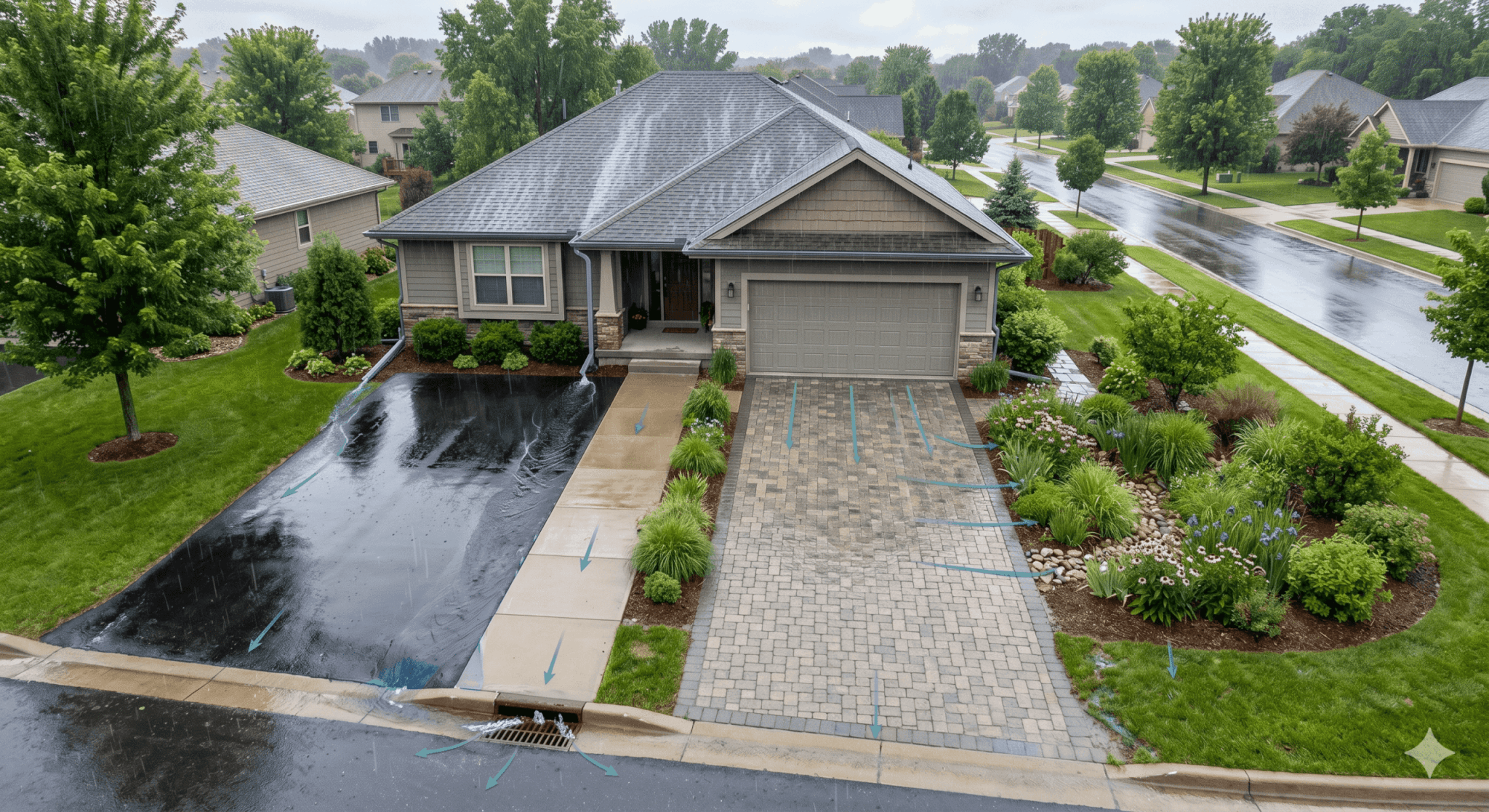


Every time it rains, thousands of gallons of water rush off driveways, parking lots, and sidewalks, carrying pollutants straight into storm drains and overwhelming local waterways. Traditional pavement creates an impermeable barrier that forces water to flow elsewhere, often flooding basements, eroding landscapes, and straining municipal systems. Property owners face rising utility costs, drainage headaches, and the growing reality that climate patterns are making these challenges worse, not better.
Permeable pavement offers a practical solution that works with nature instead of against it. This specially designed surface allows water to filter through the pavement and into the ground below, reducing runoff by up to 80% while naturally filtering out pollutants. Rather than sending stormwater racing toward the nearest drain, permeable pavement captures it on-site, recharging groundwater and protecting both your property and the broader watershed.
You’ll learn what permeable pavement is, how the filtration process works, and where it makes the most sense for residential and commercial properties. We break down the main types available, the real benefits in cost savings and environmental impact, and what to consider before installation. Dealing with flooding or want a more sustainable property? Permeable pavement turns stormwater management into an actual advantage.
Key takeaways
- Permeable pavement captures rainwater where it falls: instead of sending water rushing to storm drains, it soaks into the ground through porous surfaces, reducing flooding and protecting local waterways.
- Three main types serve different needs: porous asphalt works for parking lots, pervious concrete suits walkways, and permeable pavers offer design flexibility for driveways and patios.
- Financial benefits add up over time: rebates, lower stormwater fees, and increased property values often offset higher upfront costs, making projects surprisingly affordable.
- Rainplan simplifies the entire process: get your Storm Score to assess your property’s impact, discover local rebates instantly, and connect with qualified contractors who specialize in permeable systems.
- Regular maintenance keeps systems working: vacuum sweeping once or twice yearly removes debris and preserves drainage capacity for decades of reliable performance.
What is permeable pavement?
Permeable pavement is a porous surface that allows water to pass through instead of running off. Unlike traditional asphalt or concrete that sends water rushing toward storm drains, permeable pavement captures rain where it falls. That one difference changes everything about how your property handles stormwater.
Picture your driveway as a giant sponge. Water enters through tiny gaps in the surface, filters down through stone layers, and slowly soaks into the ground below. You get fewer puddles, less flooding, and healthier local waterways.
Three main types dominate the market: porous asphalt, pervious concrete, and permeable interlocking concrete pavers (PICP). While each works differently, PICP is often the most widely eligible option for local and regional rebates. They all serve the same core purpose: keeping rainwater on your property instead of flooding storm systems.
How permeable pavement works for stormwater
[cs_preview_ENL id=”6661″]
Rain hits traditional pavement and sheets straight toward the street. It picks up oil, fertilizer, and debris along the way. Permeable pavement changes that story completely.
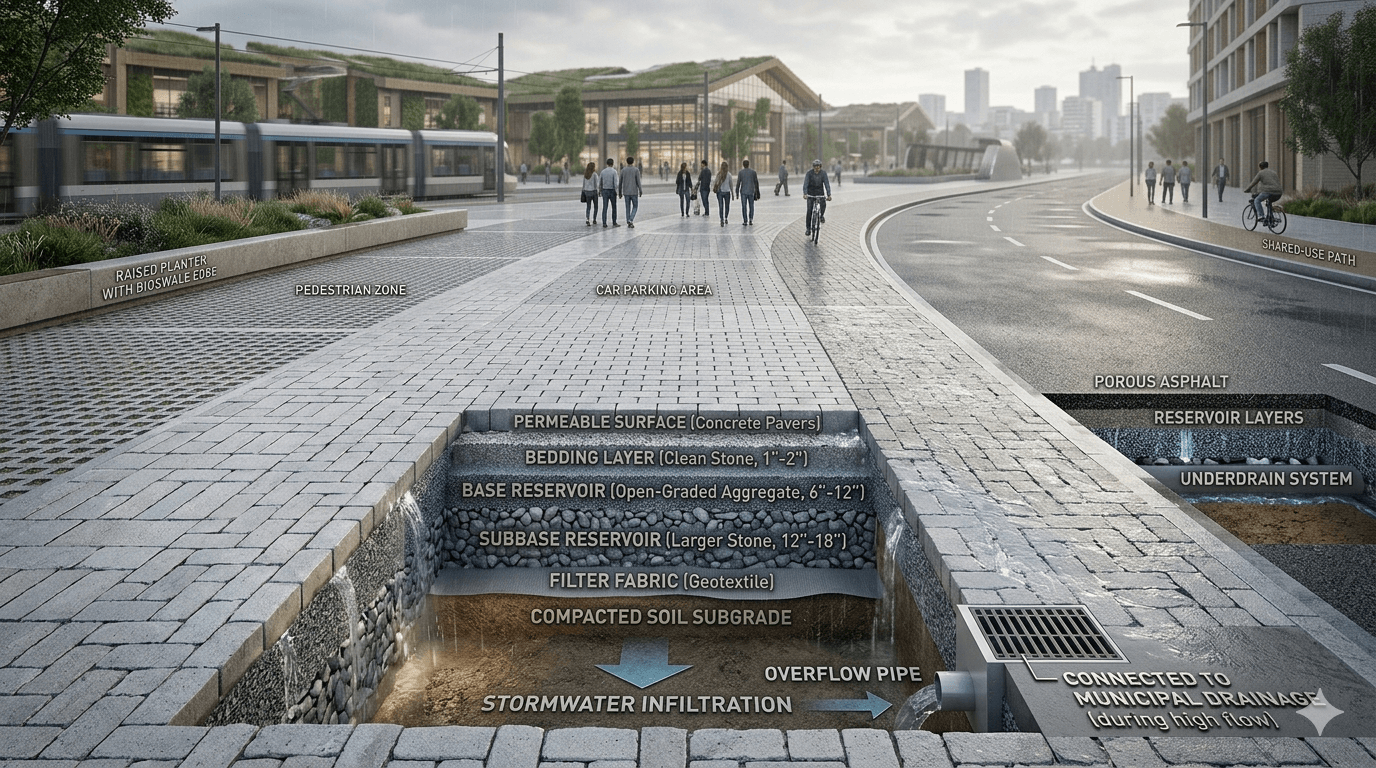
The system uses multiple layers, each handling a different part of the job during storms:
- Surface layer: Water enters through pores or gaps between pavers while the surface stays firm and walkable
- Bedding course: Small aggregate distributes water evenly just below the surface
- Storage layer: A 6 to 12 inch stone reservoir holds water temporarily during heavy rain
- Infiltration: Water slowly soaks into surrounding soil, naturally recharging groundwater
- Overflow system: Built-in drains direct excess water safely during extreme storms
Your property acts like a forest floor, not a parking lot. Rainplan helps property owners understand exactly how these systems work for their specific site conditions and local rainfall patterns.
Common misconceptions about permeable pavement
Property owners often hesitate because of myths that don’t match reality. Here’s what actually happens:
“Permeable pavement stays muddy.” The surface stays firm and dry, even after heavy rain. Water moves down, not sideways.
“It doesn’t work in winter.” Permeable pavement actually reduces ice formation. Water drains away instead of pooling and freezing. Many cold-climate cities use it successfully year-round.
“It’s too expensive for homeowners.” Upfront costs often balance out through rebates, lower maintenance, and eliminated drainage systems. Local incentives can make projects surprisingly affordable.
Types of permeable pavement materials
Your property, budget, and how you’ll use the space determine which material works best. Each type works better for specific uses. Here’s how the three main options compare:
| Material type | Best uses | Key features |
| Porous asphalt | Parking lots, low-traffic areas | Looks like regular asphalt, 2-4 inches thick, ideal for large flat surfaces |
| Pervious concrete | Sidewalks, driveways | Connected pores throughout, 4-8 inches thick, perfect for walkways |
| Permeable pavers | Residential driveways, patios | Solid units with permeable joints, design flexibility, handles heavy loads |
Porous asphalt characteristics
Porous asphalt looks just like regular asphalt. Small gaps throughout the material let water drain through. The surface still looks familiar.
Installation specifications:
- Typical thickness: 2 to 4 inches over stone reservoir base
- Common applications: Parking lots, access roads, low-traffic commercial areas
- Maintenance requirements: Occasional vacuum sweeping to keep pores open
Pervious concrete features
Pervious concrete contains connected pores throughout the material. Water passes through easily, and the surface looks lighter than asphalt.
Key advantages:
- Ideal for sidewalks, patios, and residential driveways with regular foot traffic
- Eliminates standing water, reducing slip hazards
- Keeps surfaces usable during rain
- Standard thickness: 4 to 8 inches
Permeable interlocking concrete pavers
Permeable pavers are solid units with gaps between them filled with permeable aggregate. Water flows through joints rather than through the pavers themselves.
Design benefits:
- Maximum design flexibility with various patterns, colors, and textures
- Enhanced curb appeal
- Handle higher traffic loads than other options
- Individual paver replacement without disturbing surrounding area
Key benefits for property owners
Permeable pavement delivers real financial and practical advantages beyond environmental responsibility. These benefits often outweigh the upfront investment:
You get immediate stormwater control and long-term financial returns:
- Reduces flooding: A typical 350-square-foot driveway captures over 5,600 gallons of rainwater annually
- Improves curb appeal: Various colors and patterns available, especially with permeable pavers
- Lowers utility bills: Many cities reduce stormwater fees for properties with permeable surfaces
- Boosts property value: Eco-friendly features increasingly appeal to buyers
Environmental advantages
Water soaking into the ground protects local waterways instead of overwhelming storm drains. The environmental benefits reach well beyond your property line.
Water quality improvements:
- Runoff reduction decreases local flooding and combined sewer overflows
- Rainwater soaks into ground, refilling underground water supplies
- Permeable pavement layers filter out pollutants like oil, heavy metals, and fertilizers before water reaches soil
Financial upside
The higher upfront cost pays back in several ways. The numbers surprise most property owners.
Cost savings opportunities:
- Many cities lower stormwater fees for properties with permeable surfaces
- Savings accumulate year after year
- Sustainable upgrades attract buyers, especially in flood-prone areas
- Property values increase accordingly
Municipalities and utilities offer financial incentives for green infrastructure projects. Rainplan simplifies finding these programs by matching your address with available local incentives.
7 factors to consider before installing
Seven factors determine whether your project succeeds: Consider these upfront to avoid surprises: Each factor requires specific evaluation to match your property’s unique conditions.
- Soil conditions
Soils rich in clay drain slowly and may need special drainage systems. Sandy soils work well for natural infiltration. Test your soil before installation.
- Local regulations
Some areas have specific requirements for permeable pavement. Check with your building department for compliance and permits. - Traffic load
Match materials to expected use. Residential driveways need different specifications than commercial parking lots. - Climate considerations
Permeable pavement works in cold climates and reduces ice formation. You’ll need less salt in winter. - Drainage requirements
Poor-draining soils may need underdrains as backup systems. Your contractor should assess site-specific needs. - Long-term maintenance
Plan for occasional vacuum sweeping to keep pores functioning. With proper planning, maintenance stays manageable. - Professional expertise
Choose contractors with documented experience in permeable systems. Installation techniques differ from traditional paving.
Maintenance and upkeep tips
Care for permeable pavement differently than traditional surfaces. Regular attention keeps your system working properly for 20+ years. Maintenance is simple: keep the drainage working.
Vacuum sweeping requirements
Debris, sediment, and organic matter accumulate in pores over time. Left alone, this buildup clogs the system.
Maintenance schedule:
- Plan vacuum sweeping 1 to 2 times yearly
- Increase frequency with heavy tree cover
- Use commercial vacuum sweepers for large areas
- Shop vacs work for small residential surfaces
- Can also use leaf blowers or stiff bristle brooms
- Goal: Remove fine particles before they compact and clog
Winter care strategies
Winter care is easier than you’d think. Water drains away instead of forming ice, so you’ll need less intervention.
Cold weather best practices:
- Sand clogs pores and reduces effectiveness
- Apply deicer sparingly when needed
- Natural drainage means ice forms less frequently and melts faster
Rainplan connects you with contractors who understand proper winter maintenance for permeable systems.
Where to use permeable pavement
You can use permeable pavement almost anywhere. Here’s where it works best: These systems work for homes, businesses, and public spaces.
Residential driveways and walkways
Residential driveways represent ideal applications. They offer design flexibility, boost curb appeal, and manage runoff from one of your property’s largest impervious surfaces.
Walkways and garden paths benefit from permeable materials too. These areas see lighter traffic and are excellent entry points for exploring green infrastructure.
Commercial parking lots
Commercial parking lots represent significant impervious surface area. Permeable pavement helps businesses meet stormwater compliance requirements while reducing expensive drainage systems.
Many municipalities offer incentives specifically for commercial permeable pavement projects. Regulatory compliance combined with financial benefits creates compelling opportunities for property managers.
Public spaces and infrastructure
Cities increasingly use permeable pavement in sidewalks, parks, and plazas. These installations manage stormwater at scale while creating safer, more attractive spaces.
Public projects often qualify for grant funding. They demonstrate community commitment to environmental stewardship and provide visible examples encouraging private property improvements.
Finding incentives and rebates
Cities and utilities offer incentives because it’s cheaper to manage stormwater at the source than expand drainage systems. These programs often cover a big chunk of installation costs.
Typical incentive structures:
- Rebates sometimes cover 25% or more of project expenses
- Some programs offer per-square-foot payments
- Others provide flat rebates for qualifying projects
- Availability and amounts vary by location
Finding programs independently takes time. Rainplan matches your property with eligible local incentives instantly. Search your address to discover available funding in your area.
Permeable Pavement: A Modern, Sustainable, and Attractive Choice for Your Property
Permeable pavement manages stormwater, boosts property value, and protects local ecosystems. The technology works reliably anywhere — it’s been proven for decades. Know the benefits and requirements, and you’ll make the right choice.
Ready to start? Rainplan guides property owners through the entire process from assessment to completion. Get your Storm Score to understand your property’s impact. Browse local incentives for available rebates. Connect with qualified contractors specializing in permeable pavement.
Going from curious to done is simpler than you think. With the right help, green infrastructure is accessible and affordable.
For quick answers to common installation and maintenance questions, visit our permeable pavement FAQs.
Frequently asked questions
How long does permeable pavement installation typically take?
Most residential permeable pavement projects take 2 to 5 days to complete. The timeline depends on the area size and specific site conditions.
Does permeable pavement work in areas with heavy rainfall?
Yes, permeable pavement effectively handles heavy rainfall regions. Systems may include overflow designs to manage extreme storm events safely.
Can permeable pavement be installed over existing concrete or asphalt?
No, the old surface needs complete removal to ensure proper drainage. This allows the permeable system to perform correctly long-term.
What happens if permeable pavement becomes clogged with debris?
Clogging is both preventable and reversible. Regular maintenance keeps pores open and functioning properly.
Is permeable pavement suitable for steep driveways or slopes?
Permeable pavement works best on gentle slopes of 5% or less. Steep driveways may need special modifications or alternative solutions.
How long does permeable pavement last compared to traditional pavement?
Permeable pavement typically lasts 20 to 25 years or longer with proper maintenance. This lifespan matches traditional asphalt or concrete surfaces.
Related reading: stormwater and drainage solutions
- Stormwater management plan: full checklist, costs, and rebates
- Rain gardens: a homeowner’s complete guide
- What is green infrastructure? Examples and rebates for homeowners
- Rainwater harvesting 101: collect, store, and use rainwater at home
- Bioretention systems: how they work and when to use them
- Stormwater utility fees: what they are and how to reduce them
- What is a green bank? Financing for stormwater and green infrastructure
[cs_preview_ENL id=”6574″]