

Most homeowners never think about their driveway, roof, or patio until a heavy rainstorm floods the street, or a stormwater fee appears on their utility bill. That’s when “impervious surface” enters the picture. It refers to any hard surface that water can’t soak through: concrete, asphalt, rooftops, patios. The more you have, the more rainwater runs off instead of absorbing into the ground.
That runoff creates measurable problems — localized flooding, pollutants in waterways, and higher stormwater costs. Many municipalities now charge fees based on how much impervious surface a property has, which means your driveway and roof aren’t just structural features — they’re part of your bill. Below, you’ll learn what impervious surfaces are, how coverage is calculated, and practical solutions that often qualify for rebates.
Key takeaways
- Your hard surfaces directly affect your water bill: Rooftops, driveways, and patios count as impervious surfaces — and many utilities charge fees based on how much of your property they cover.
- Small upgrades can meaningfully cut your runoff: Rain barrels, permeable driveways, and rain gardens reduce the stormwater your property generates and often qualify for local rebates or free installations.
- Not all hard surfaces are equal: Loose gravel, permeable pavers, and planted areas let water soak into the ground — replacing sealed surfaces with these materials lowers your impervious coverage.
- Rainplan analyzes your property’s impervious area and matches you with local incentives: Enter your address to see your coverage, eligible rebates, and recommended green infrastructure projects in your area.
- Runoff from your lot affects your whole neighborhood: When water can’t soak in, it moves faster and in higher volumes — raising flood risk and carrying pollutants into local waterways.
What are impervious surfaces?
An impervious surface is any hard surface that stops rainwater from soaking into the ground. Instead of absorbing naturally into the soil, water runs off into drains, streets, and waterways, often faster and in greater volume than local systems can handle.
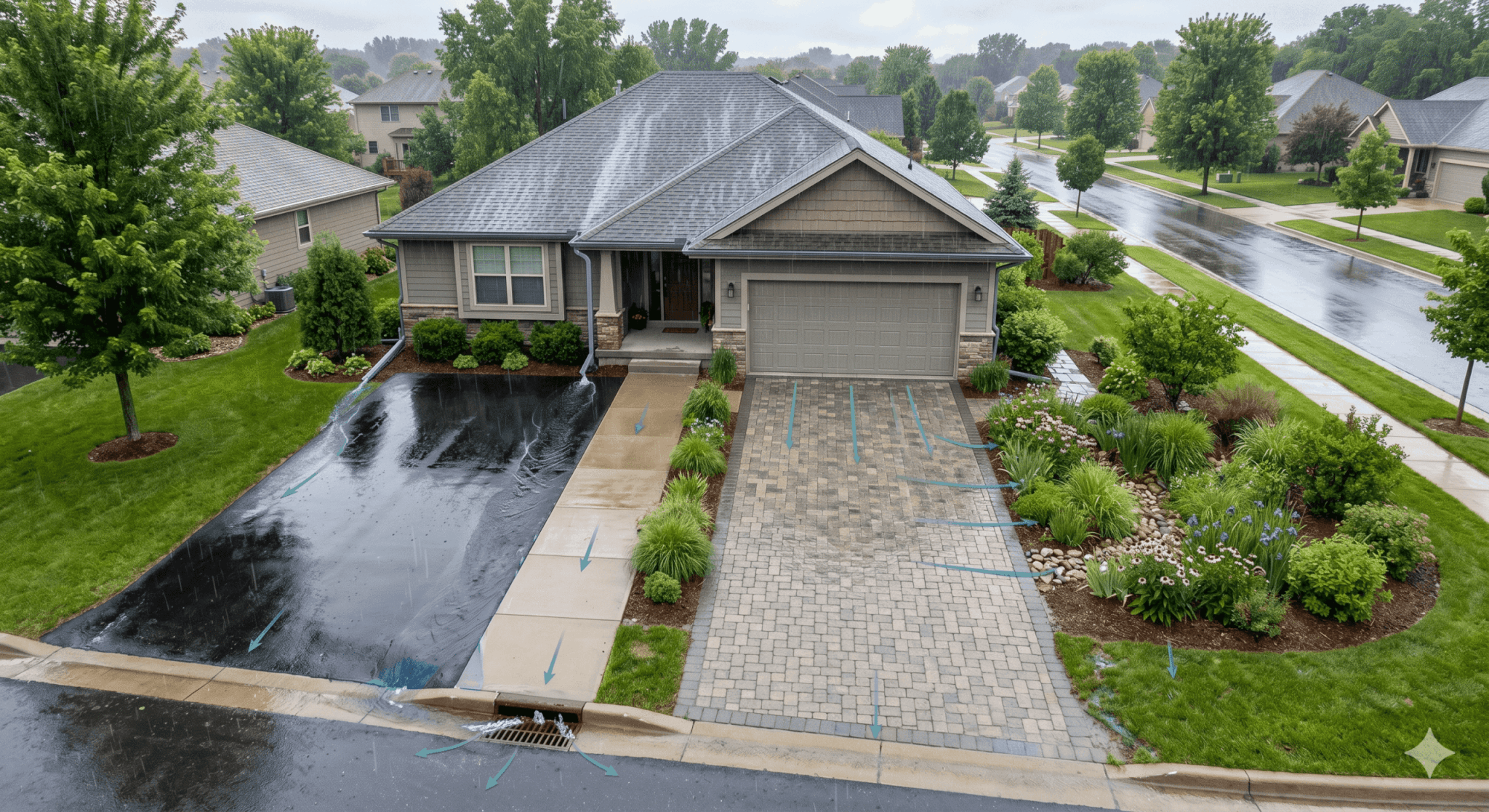
Picture rain falling on your lawn versus your driveway. The lawn slowly absorbs that water into the soil beneath. Your driveway sends it racing across the surface and down the street. That’s the key difference between pervious and impervious surfaces: water can’t pass through impervious materials, so it flows elsewhere.
For property owners, this distinction affects:
- Stormwater runoff from your property
- Neighborhood flood risk after heavy rain
- Your utility bill, which may be tied to how much impervious surface you have
Understanding what counts as impervious on your lot helps you manage runoff and qualify for rebates or fee reductions. Below, we’ll cover what impervious surfaces look like, how they’re measured, and what you can do about them.
Common examples of impervious surfaces
Recognizing impervious surfaces on your property helps you see how much runoff you’re creating. Your roof alone might be the largest impervious surface on your lot, something many homeowners don’t initially realize.
The most common impervious surfaces on residential and commercial properties shed water directly into storm systems:
- Asphalt driveways: Dense, sealed surfaces that shed nearly all rainfall directly into the street or storm drain
- Concrete sidewalks and patios: Standard concrete blocks water passage, directing runoff toward low points on your property
- Rooftops: Often the single largest impervious surface on a home, collecting rain and channeling it through gutters and downspouts
- Parking lots: Large expanses of sealed pavement common in commercial areas that generate significant runoff volumes
- Compacted gravel: When gravel packs tightly over time, it behaves like an impervious surface. Check with your municipality, as some local stormwater regulations treat compacted gravel driveways as impervious.
- Swimming pools: The pool shell blocks water from infiltrating the ground beneath it, and most municipalities count a pool’s footprint as impervious surface area
- Standard brick or stone pavers: When set in mortar or installed on an impermeable base, these function the same as solid concrete
Find Rainwater Rebates in Your Area
Enter your address to see local rebates for rain barrels and green infrastructure. Many programs cover 50%+ of costs.
Impervious vs. pervious surfaces
Here’s the thing: not all hard surfaces block water. Some materials are designed to let rainfall pass through into the ground below, and understanding this difference helps you make smarter choices about your property.
| Feature | Impervious surface | Pervious surface |
| Water infiltration | Blocks water | Allows water to soak through |
| Common examples | Asphalt, concrete, rooftops | Permeable pavers, loose gravel, mulch |
| Stormwater runoff | High | Low |
| Common use | Roads, driveways, roofs | Driveways, walkways, parking areas |
| Environmental impact | Increases runoff and heat | Supports groundwater recharge |
Here’s what matters: more pervious surfaces on your property mean less stormwater you generate. This reduces flood risk, lowers utility fees, and opens doors to incentive programs in your area.
How impervious surfaces affect stormwater runoff and flooding
Streets flood after heavy rain because impervious surfaces change how water moves through your neighborhood. Understanding how this works helps you see why your property’s surface coverage matters beyond your own lot.
In natural landscapes, rain soaks into soil, filters through layers of earth, and recharges groundwater below. When impervious surfaces replace that soil, water has nowhere to go except across the surface and into storm drains. If water never reaches the ground, the ground can’t absorb it.
Here’s what happens:
- Faster, higher-volume runoff: Impervious surfaces accelerate water flow, so runoff reaches streams and drains faster and in greater volume than it would from natural ground. This raises flood risk downstream, especially in neighborhoods where many properties have high impervious coverage.
- Pollutant transport: As runoff travels across driveways, rooftops, and parking lots, it picks up oils, fertilizers, pet waste, and sediment. These contaminants flow directly into waterways with no natural filtration.
- Reduced groundwater recharge: Less infiltration means less water replenishing local aquifers, the underground reserves that supply wells and municipal water systems.
What is effective impervious area (EIA)?
EIA refers to the portion of impervious surface that drains directly into the stormwater system. It’s often a better predictor of downstream water quality and flood risk than total impervious area, since not all hard surfaces connect directly to storm drains.
What is impervious surface coverage and how is it calculated?
Most homeowners first see this term on a stormwater bill or in a zoning document. Impervious surface coverage is simply the percentage of your property’s total area covered by impervious surfaces, and it’s easier to calculate than it sounds.
Example calculation:
- Your property is 10,000 square feet total
- The roof covers 2,000 sq ft, the driveway 1,000 sq ft, and the patio 500 sq ft
- Total impervious area = 3,500 sq ft
- Impervious coverage = 3,500 ÷ 10,000 = 35%
This number matters for two reasons:
- Zoning limits: Many municipalities cap impervious coverage at a certain percentage, often 25–40% for residential lots
- Stormwater fees: Utilities frequently calculate fees based on how much impervious surface a property has, using an equivalent residential unit (ERU) as a standard measurement — typically based on the average impervious area of a single-family home in that jurisdiction
Rainplan analyzes your property’s impervious surface area as part of its assessment, helping you understand your coverage and identify opportunities to reduce it through targeted improvements.
How impervious surface area is measured and mapped
Measuring impervious surface across a city or watershed requires specific mapping approaches. These methods help municipalities track runoff and identify where green infrastructure makes the most sense.
Mapping techniques today use imagery and data analysis to create accurate assessments:
- Aerial and satellite imagery: High-resolution images are analyzed to identify hard surfaces across large areas
- GIS and land cover datasets: National datasets like the National Land Cover Database (NLCD) provide 30-meter resolution estimates of impervious cover across the U.S.
- AI-assisted mapping: Machine learning models extract impervious surface layers from imagery faster and at higher resolution than manual methods
- Manual digitization: Analysts trace hard surfaces on imagery by hand for accurate but time-intensive results
- Parcel-level assessment: Platforms like Rainplan analyze individual properties using address data and imagery to estimate impervious area and identify green infrastructure opportunities
Understanding how your property is measured helps you make sense of stormwater bills and rebate eligibility, and sets you up to take action.
4 ways to reduce impervious surface runoff on your property
You don’t have to tear up your driveway to reduce impervious runoff. These solutions fit different property types and budgets, helping you manage stormwater, qualify for rebates, and add value to your home.
1. Rain gardens
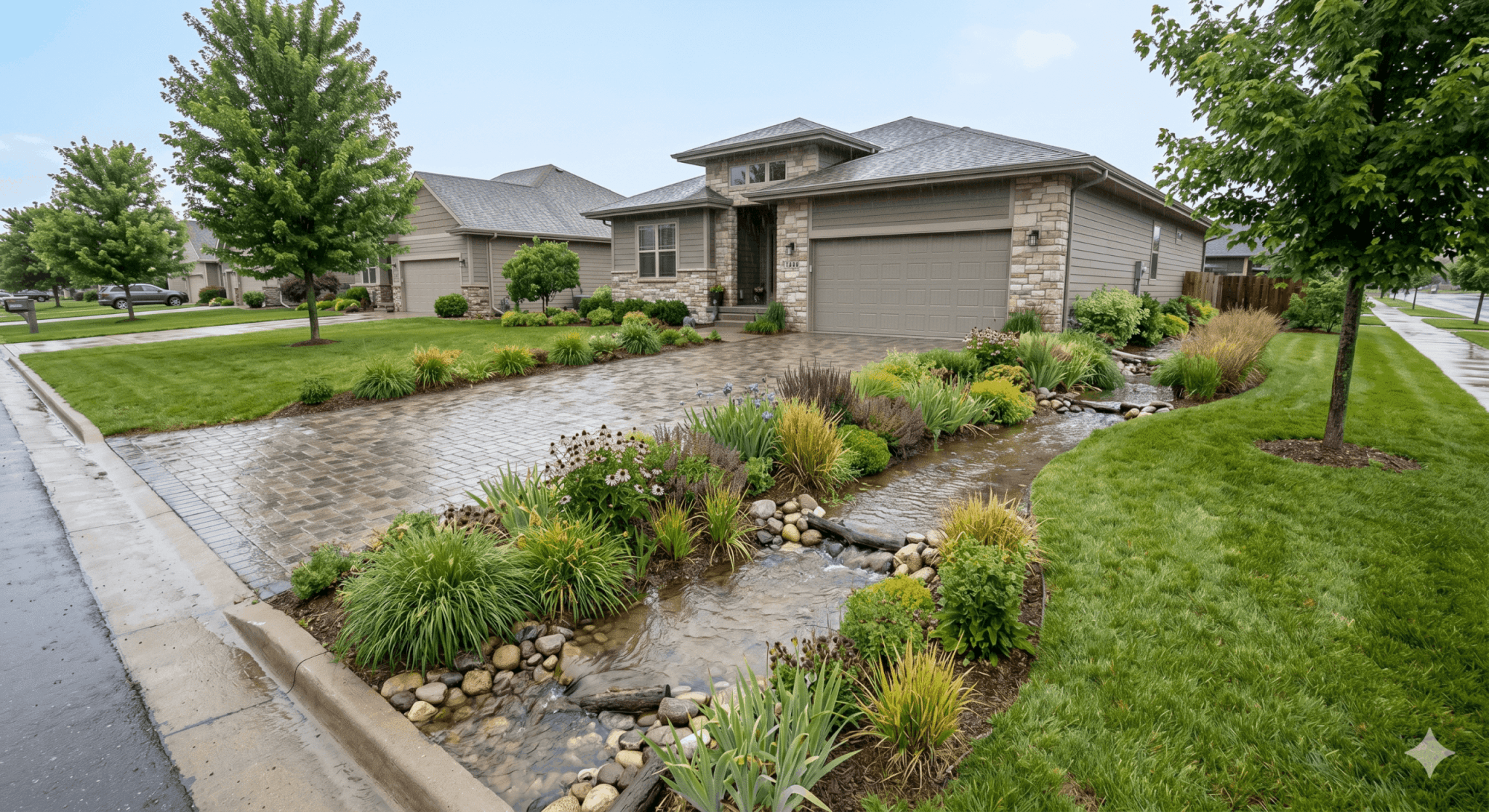
A rain garden is a shallow, planted depression that captures runoff from rooftops, driveways, or lawns and lets it slowly soak into the soil. It intercepts runoff before it reaches the storm drain, giving water time to soak in rather than flow away.
Rain gardens work best in areas with moderately permeable soil and are one of the most widely incentivized green infrastructure solutions in the U.S. Rainplan identifies whether a rain garden fits your specific property and connects you with vetted installers in your area.
2. Permeable pavers and driveways
Permeable pavers are paving materials designed with gaps or porous surfaces that let water pass through into a gravel or soil base beneath. Replacing a standard concrete or asphalt driveway with permeable pavers directly reduces the effective impervious area of your property.
Permeable driveways qualify for rebates in many municipalities, making them a practical upgrade for homeowners looking to reduce runoff and lower stormwater fees.
3. Rain barrels and cisterns
A rain barrel catches runoff from a roof’s downspout before it enters the storm drain system. While a rain barrel doesn’t eliminate impervious surface, it reduces the volume of runoff leaving your property during a storm event.
- Rain barrels: Accessible and affordable entry points for most homeowners — many stormwater programs offer them free or at a discount
4. Green roofs and vegetated swales
A green roof is a rooftop layer of soil and vegetation that absorbs rainfall before it becomes runoff — effectively converting an impervious surface into a partially pervious one. A vegetated swale is a shallow, planted channel that slows and filters runoff as it moves across a property. Green roofs are more common on commercial or multi-family buildings, while swales are practical for residential properties with sloped yards.
Stormwater fees, rebates, and financing for impervious surface improvements
Many property owners first encounter the term “impervious surface” on a stormwater utility bill. The same programs charging those fees often fund the solutions that reduce them.
How stormwater utility fees work
Many U.S. cities charge property owners a stormwater utility fee based on the amount of impervious surface on their property. These fees typically use an ERU (equivalent residential unit) as a billing standard — a property with a large paved driveway and a big roof may pay a higher fee than a neighbor with a smaller footprint and a gravel path.
Rebates and incentives for reducing impervious runoff
Many stormwater programs offer rebates, credits, or free installations to property owners who reduce their impervious surface area or install green infrastructure. These programs typically cover rain garden installation, permeable driveway replacement, and rain barrel distribution.
Eligibility varies by municipality, and Rainplan maintains a database of stormwater incentive programs to help property owners find what’s available in their area. Search your address on Rainplan to see which incentives apply to your property.
Financing options for green infrastructure projects
Upfront cost is one of the most common reasons property owners delay green infrastructure projects — and financing options exist to bridge that gap. Rainplan pays approved project costs upfront, aligning its success with the completion and performance of each project.
Start reducing your property’s impervious surface with Rainplan today
Impervious surfaces are a normal part of most properties, and understanding your coverage is the first step toward managing runoff, qualifying for incentives, and making targeted improvements.
Rainplan makes it straightforward to go from awareness to action — analyzing your property’s impervious surface area, identifying tailored solutions, and connecting you with programs and providers in your area.
Enter your property address to see your impervious surface coverage, eligible incentives, and recommended solutions.
See If You Qualify
FAQs about impervious surfaces
What does it mean if a surface is impervious?
A surface is impervious when it blocks water from soaking into the ground beneath it, forcing rainfall to run off across the surface rather than infiltrate into the soil.
What are common examples of impervious surfaces?
Common examples of impervious surfaces include asphalt driveways, concrete sidewalks, rooftops, parking lots, and standard brick or stone pavers set on a sealed base.
Is concrete always considered an impervious surface?
Standard concrete is considered impervious, but pervious concrete is specifically designed to allow water infiltration. Local stormwater regulations may define these materials differently, so check with your municipality.
What problems do impervious surfaces cause for stormwater management?
Impervious surfaces increase the volume and speed of stormwater runoff, which raises flood risk and carries pollutants into waterways. They also reduce groundwater recharge by preventing rainfall from soaking into the soil.
Is a gravel driveway considered an impervious surface?
Loose gravel is generally considered pervious, but compacted gravel may be treated as impervious under some local stormwater regulations. Check with your municipality to understand how your gravel driveway is classified.
Does a swimming pool count as an impervious surface?
Most municipalities count a swimming pool’s footprint as impervious surface because the pool shell prevents water from infiltrating the ground beneath it. Regulations vary by location, so confirm with your local stormwater authority.
Turn Runoff Into Rebates
Join Rainplan to access personalized data and discover sustainable solutions tailored to your specific site.