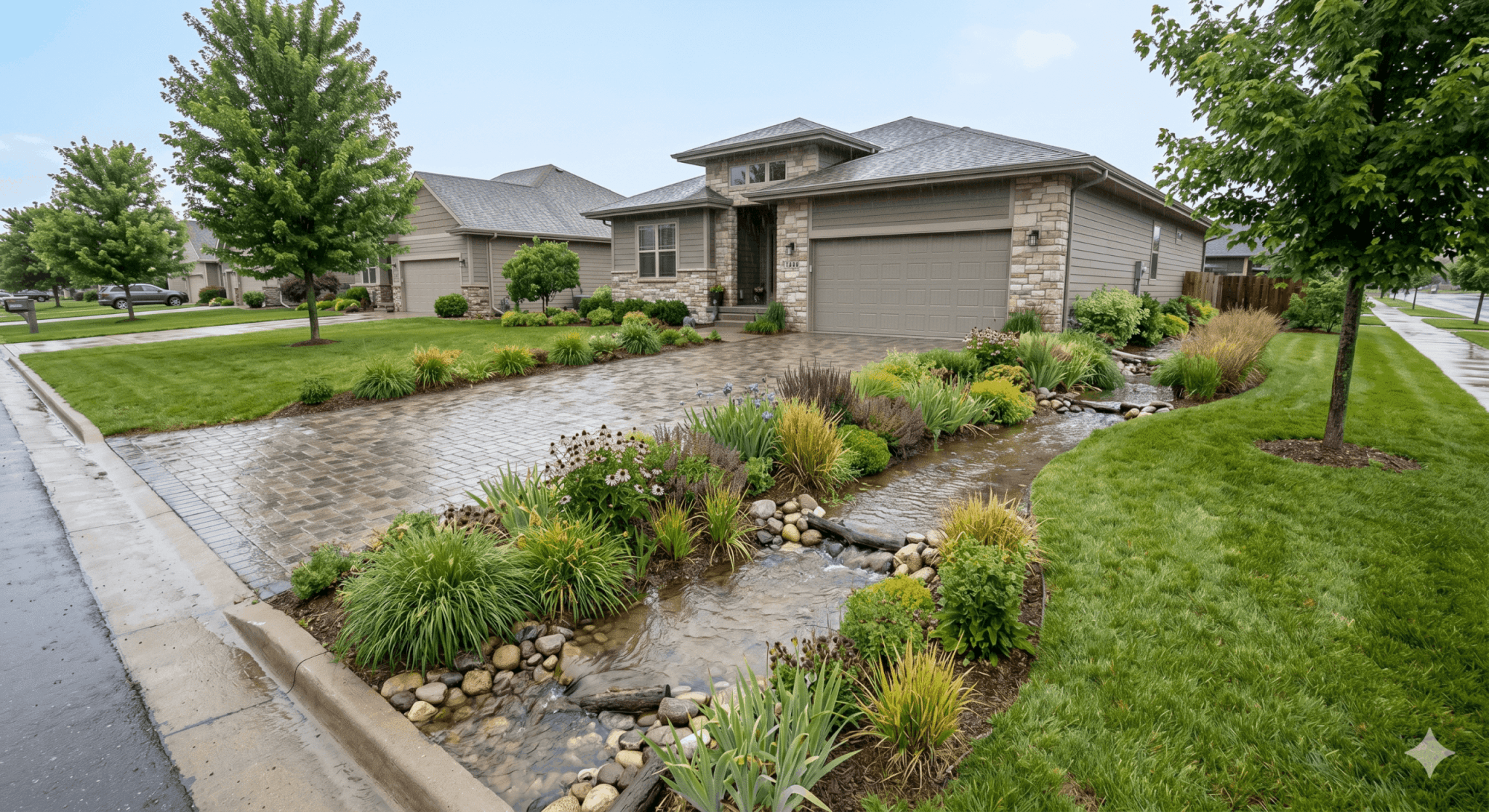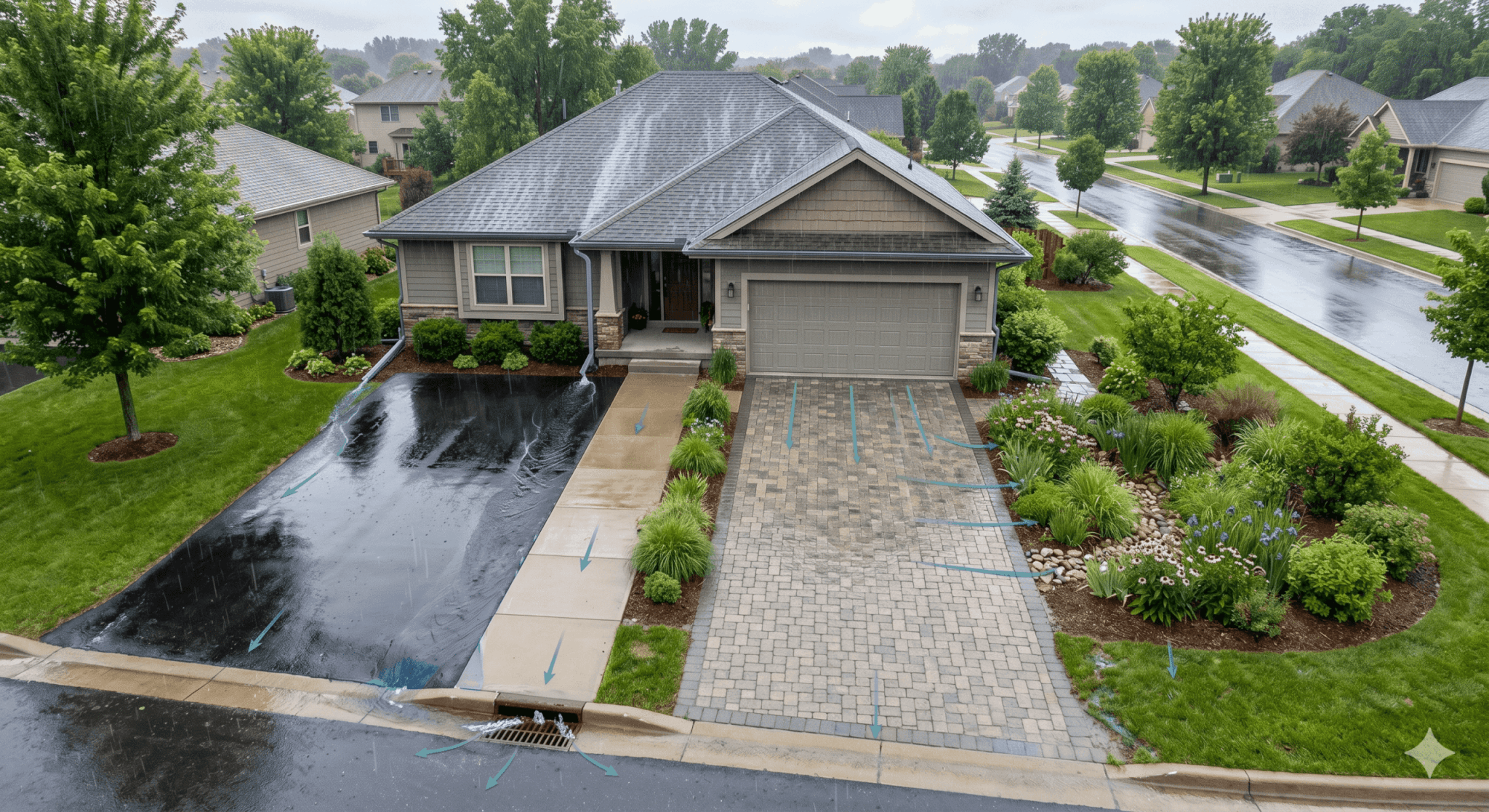


Your driveway puddles after every storm, sending runoff straight into the street. Your neighbor’s new pavement somehow absorbs rain like a sponge, leaving their surface dry while yours stays flooded. The difference? They installed porous asphalt, a pavement solution that captures stormwater right where it falls instead of pushing it downstream.
Porous asphalt works by creating intentional gaps in the pavement surface that allow water to flow through into a stone reservoir below. It cuts runoff by up to 90%, prevents ice buildup, and often qualifies you for stormwater credits or rebates. Unlike conventional asphalt that creates impervious surfaces, porous asphalt mimics natural soil infiltration while providing the durability you need for driveways, walkways, and parking areas.
You’ll learn how porous asphalt works, when it makes sense for your property, what installation involves, and how to maintain it. You’ll discover when it works best for your property, what drives project costs, and how to find qualified contractors. We’ll also explore available incentives and compare porous asphalt to other permeable pavement options to help you make an informed decision.
Key takeaways
- Evaluate your property’s soil and slope before committing: porous asphalt works best with soil that drains 0.1 to 10 inches per hour and slopes under 5%.
- Budget for specialized maintenance to protect your investment: schedule vacuum sweeping twice yearly and avoid sand or regular sweeping that clogs drainage pores.
- Capture available rebates and stormwater credits: many municipalities offer 25% to 50% cost offsets plus ongoing utility bill reductions for permeable pavement installations.
- Plan for proper installation with experienced contractors: the stone reservoir depth and material quality directly determine whether your driveway drains effectively for 15 to 20 years.
- Use Rainplan to identify property-specific incentives and qualified contractors: the platform analyzes your address to recommend suitable solutions and connects you with vetted installation professionals.
What is porous asphalt and how does it work?
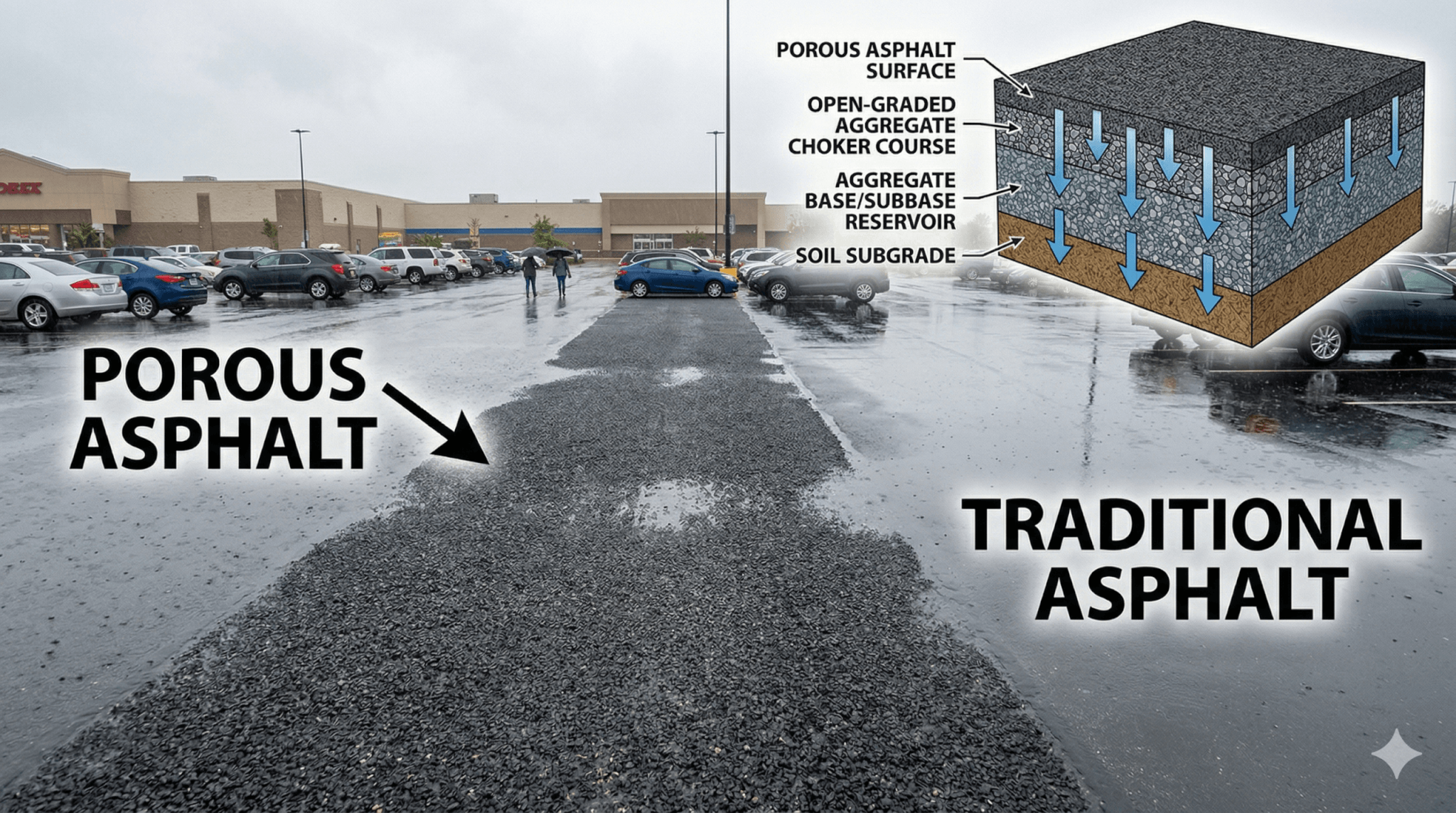
Porous asphalt is an open-graded asphalt mixture that lets water drain directly through the pavement surface into a stone reservoir below. Unlike conventional asphalt that sheds rainwater into storm drains, porous asphalt contains intentional air voids (typically 16% to 22%) that create pathways for water infiltration. Think of it as a sponge with a built-in stone cistern underneath, capturing rain where it falls and releasing it slowly into the ground.
Traditional asphalt creates a waterproof barrier that forces rainwater to flow across the surface as runoff. This runoff picks up pollutants, overwhelms storm drains during heavy rain, and contributes to localized flooding.
Porous asphalt solves this problem by managing stormwater on-site, mimicking how undeveloped land naturally absorbs rainfall. The approach reduces pressure on municipal drainage systems while protecting nearby waterways from pollution. For property owners, your driveway or parking area doubles as stormwater infrastructure.
Key components of porous asphalt pavement
A porous asphalt system includes multiple layers working together to capture, store, and release water. Knowing these layers helps you spot whether porous asphalt fits your site — and what to ask contractors before they break ground.
Water moves through the system in a specific sequence, with each component serving a critical drainage function:
- Surface course: Open-graded asphalt with 16% to 22% air voids, typically 2 to 4 inches thick, where water enters and drains downward
- Choker course: A thin layer of single-size stone preventing finer particles from migrating upward and keeping surface voids open
- Reservoir course: Stone storage layer with 30% to 40% void space that temporarily holds water during storms, with thickness varying based on local rainfall
- Filter fabric: Geotextile material preventing soil particles from clogging the stone reservoir while allowing water passage
- Subgrade: Prepared soil base, often left less compacted than conventional pavement to enhance ground infiltration
Benefits for stormwater management and water quality
Porous asphalt delivers measurable advantages for both individual properties and surrounding communities. The benefits extend beyond simple drainage to include water quality improvements and practical cost savings that often surprise property owners. These benefits matter when deciding if porous asphalt makes sense for your property and budget.
Environmental advantages
Porous asphalt keeps rainwater out of storm drains and filters pollutants before they hit local waterways. That matters if you care about water quality — and if your municipality tracks stormwater compliance.
Porous asphalt creates multiple environmental benefits through its unique drainage structure:
- Runoff reduction: Allows on-site infiltration, decreasing water volume flowing into storm drains and reducing downstream flooding risk
- Groundwater recharge: Replenishes local aquifers as water slowly filters through soil, supporting long-term water supply
- Pollutant filtering: Removes suspended solids, metals, and hydrocarbons as water passes through pavement layers, with the stone reservoir trapping contaminants
- Temperature control: Cools stormwater before it enters streams and rivers, protecting aquatic ecosystems sensitive to thermal pollution
Cost and lifestyle advantages
Porous asphalt also delivers practical wins — less ice, lower salt bills, and potential rebates. Properties with porous asphalt typically see reduced ice formation since water drains through the surface instead of pooling. This means fewer icy patches during winter months and up to 75% less road salt needed.
Many municipalities offer rebates or stormwater fee credits for permeable pavement installations. These programs can offset a significant portion of installation costs while helping meet local stormwater management requirements.
Rainplan helps property owners identify when porous asphalt makes sense as part of a comprehensive stormwater strategy, factoring in site conditions and local incentive programs.
Turn Runoff Into Rebates
Join Rainplan to access personalized data and discover sustainable solutions tailored to your specific site.
Top limitations and considerations
Porous asphalt works well in many situations, but understanding the constraints helps you make an informed decision and avoid costly mistakes. Your soil type, slope, and drainage patterns determine whether porous asphalt will actually work. Check these factors early to avoid expensive fixes and make sure your driveway drains like it should.
Site and climate factors
Several site-specific factors influence porous asphalt performance and longevity. Check these conditions before installation to avoid costly mistakes:
- Soil permeability: Works best when underlying soil infiltrates water at rates between 0.1 and 10 inches per hour
- Groundwater separation: Requires at least 2 feet between pavement bottom and seasonal high water table
- Slope limitations: Surface slopes should stay under 5% for optimal performance
- Drainage area: Most effective when receiving runoff only from the paved surface itself
Property doesn’t fit the ideal profile? You’ve got options. If soil infiltrates slowly, consider underdrains or another permeable surface. High sediment areas need pretreatment and commitment to vacuum schedules. Steeper driveways may require terraced design or alternative permeable options.
Load-bearing capacity
Porous asphalt handles typical residential and light commercial traffic without issues. Standard passenger vehicles pose no concerns for properly designed installations. However, areas with frequent heavy truck traffic or turning movements that stress the pavement need different solutions.
Maintenance access requires specialized vacuum equipment for cleaning. You’ll need to arrange for professional service or rent equipment periodically.
Get the design and installation right, and your porous asphalt should last 15 to 20 years with regular upkeep.
6 steps to plan and install a porous asphalt driveway
Installing porous asphalt requires more planning than conventional pavement. Want a driveway that drains for years, not just the first rainy season? These steps help you prepare for the project and work effectively with your contractor. Stick to this process and you’ll meet local codes while staying eligible for rebates.
Step 1: Evaluate surface conditions
Start by assessing your site’s soil permeability, slope, and existing drainage patterns. A simple percolation test reveals how quickly water infiltrates your soil. If infiltration rates fall below 0.5 inches per hour, you may need underdrains to handle excess water.
Walk your property during and after rain to observe where water flows and pools. Share this with your contractor so they can size the reservoir properly.
Step 2: Design the reservoir course
Reservoir thickness depends on your local rainfall intensity, drainage area, and soil infiltration capacity. Typical residential installations range from 6 inches to several feet of stone storage.
Make sure your contractor calculates storage based on local rainfall data — undersized reservoirs flood during heavy storms.
3. Select and prep materials
Cheap stone or contaminated aggregate will clog your system within a few years. The asphalt mix must meet open-graded specifications, and stone layers require clean, properly graded aggregates free of fines.
Dirty stone or the wrong aggregate size clogs the system fast — ask where your contractor sources materials and how they verify quality.
Step 4: Install the porous blacktop layer
You need a crew that’s installed porous asphalt before — this isn’t standard paving. The asphalt must be placed at the correct temperature and compacted carefully to maintain void structure.
Plan for dry weather and temps above 50°F — wet or cold conditions ruin the mix.
Step 5: Perform initial inspection
After installation, check the surface texture and drainage performance. The pavement should have a slightly rougher appearance than conventional asphalt, and water should disappear within seconds during a hose test.
Take photos of each layer before it’s covered — you’ll need them for warranties and rebate applications.
Step 6: Finalize drainage setup
Complete final grading around pavement edges and connect any overflow systems. Establish your maintenance schedule and identify a vacuum sweeping provider.
Rainplan connects property owners with vetted contractors experienced in porous pavement installation, helping you find qualified professionals in your area.
Maintenance tips for longevity
Maintaining porous asphalt differs from conventional pavement care. Keep those drainage pores open so your driveway keeps working — and stays eligible for rebate programs. Regular maintenance keeps your pavement draining properly for its full 15- to 20-year life.
Vacuum sweeping schedule
Schedule vacuum sweeping twice yearly using specialized regenerative air or vacuum equipment. Spring cleaning removes winter debris, while fall service clears leaves before they decompose into fine particles.
Regular brooms and leaf blowers just push debris deeper into the pores, clogging them faster.
Deicing strategies
Since water drains through instead of pooling, you’ll need less salt and no sand. Ice formation is already reduced on porous surfaces.
Use liquid deicers instead of granular salt when possible. Avoid sand completely, as it clogs pores and is difficult to remove. Apply deicing materials sparingly since less ice forms on porous surfaces.
Avoid sediment build-up
Sediment from adjacent areas threatens long-term performance. Stabilize landscaping near the pavement edge and direct roof runoff away from the porous surface.
Seeing puddles where water used to disappear? Call for vacuum service right away. Early intervention restores infiltration capacity before permanent damage occurs.
Comparisons with other permeable pavements
Porous asphalt is one of several permeable pavement options. Comparing options helps you pick the right surface based on traffic, sediment exposure, snow removal needs, and whether you want to DIY. Each works better for different properties — it depends on your priorities and budget.
| Feature | Porous asphalt | Pervious concrete | Interlocking pavers |
| Surface type | Continuous | Continuous | Modular |
| Typical cost | Moderate | Moderate to high | High |
| Maintenance | Vacuum sweeping | Vacuum sweeping | Joint refilling |
| Repair approach | Patch or overlay | Patch | Replace individual units |
| Aesthetic options | Limited (black/gray) | Limited (gray/white) | Wide variety |
| DIY potential | Low | Low | Moderate |
Pervious asphalt vs. pervious concrete
Both materials function similarly, allowing water to pass through a continuous surface into a stone reservoir. Pervious concrete offers a lighter color that reflects heat, while porous asphalt provides a familiar appearance and slightly lower installation costs in most markets.
Maintenance requirements are comparable, with both needing regular vacuum sweeping to maintain infiltration.
Porous asphalt vs. interlocking pavers
Pavers offer design flexibility and easier spot repairs since you can replace individual units. However, they cost more to install and require periodic joint maintenance to keep spaces between pavers open.
Porous asphalt provides a smoother driving surface and lower upfront costs, making it popular for driveways and parking areas where aesthetics are secondary to function.
Financing and incentives for porous pavement projects
The upfront cost of porous asphalt exceeds conventional pavement, but incentive programs can significantly reduce your out-of-pocket expense. Knowing what drives costs helps you figure out your actual expense after rebates. After rebates and utility credits, porous asphalt often costs about the same as regular pavement.
Cost drivers include excavation depth and reservoir thickness, underdrains or overflow structures, site access and hauling requirements, and ongoing vacuum maintenance schedules. Many communities offer financial incentives recognizing that on-site stormwater management reduces public infrastructure costs.
Potential rebates and credits
Various programs help offset permeable pavement costs through different mechanisms:
- Municipal stormwater credits: Reduce ongoing utility bills based on impervious area managed on-site
- Green infrastructure rebates: One-time payments for residential installations, often covering 25% to 50% of project costs
- Tax credits: Some jurisdictions offer property tax reductions for sustainable building practices
- Grants for demonstration projects: Funding for installations serving as community examples
Documentation for incentive applications
To claim incentives, keep detailed records throughout your project. Keep these records to support your applications:
- Proof of installation: Contract and invoice details
- Construction photos: Images of each layer before being covered
- Site plans: As-built drawings showing system components
- Maintenance plan: Some programs require documented upkeep schedules
Rainplan’s platform helps identify available incentives based on your property address and assists with application processes, including the documentation typically required to unlock funding.
Making the right choice for your property
The right permeable pavement for your property depends on soil type, local codes, and what rebates you can claim. Your neighbor’s solution might not work for your site. Soil type, slope, and groundwater depth determine which option makes the most sense long-term.
Porous asphalt offers a practical solution for many residential properties, combining familiar appearance with proven stormwater benefits. Match the pavement type to your site conditions and how much maintenance you’re willing to handle. With proper planning and installation, you’ll have a driveway that manages water naturally while potentially reducing your stormwater costs.
Rainplan analyzes property-specific factors to recommend suitable green infrastructure solutions, including porous asphalt where appropriate. You’ll see which incentives apply to your address and get guidance on next steps, from initial assessment through contractor selection and incentive applications.
Still have questions? Browse our permeable paver FAQs for quick answers on installation, maintenance, and incentive eligibility.
Get Started
Frequently asked questions
How long does porous asphalt pavement last compared to regular asphalt?
Porous asphalt pavement typically lasts 15 to 20 years with proper maintenance, comparable to conventional asphalt when vacuum sweeping and sediment control are maintained consistently.
What are the main disadvantages of porous asphalt for residential driveways?
The main considerations include higher upfront costs, need for specialized vacuum maintenance, and restrictions on heavy vehicle traffic.
Is porous asphalt more expensive than traditional paving options?
Porous asphalt costs more initially due to deeper excavation and stone reservoir requirements, but stormwater fee credits and rebates can offset much of the premium.
Can porous asphalt handle heavy rainfall without flooding?
The reservoir system stores water during storms and releases it gradually, handling most rain events without surface flooding when properly sized for local conditions.
What happens if porous asphalt becomes clogged with debris?
Clogged porous asphalt can often be restored through professional vacuum sweeping, which removes accumulated sediment and reopens drainage pathways.
Does porous asphalt work in cold climates with freeze-thaw cycles?
Porous asphalt performs well in cold climates when designed correctly, with successful installations throughout northern states and Canada where freeze-thaw cycles are common.
Related reading: pavement, drainage, and stormwater management
- Stormwater management plan: full checklist, costs, and rebates
- Rain gardens: a homeowner’s complete guide
- What is green infrastructure? Examples and rebates for homeowners
- Bioretention systems: engineered alternative for clay soils
- Stormwater utility fees: what they are and how to reduce them
- What is a green bank? Low-interest financing for green home improvements
Find Rainwater Rebates in Your Area
Enter your address to see local rebates for rain barrels and green infrastructure. Many programs cover 50%+ of costs.