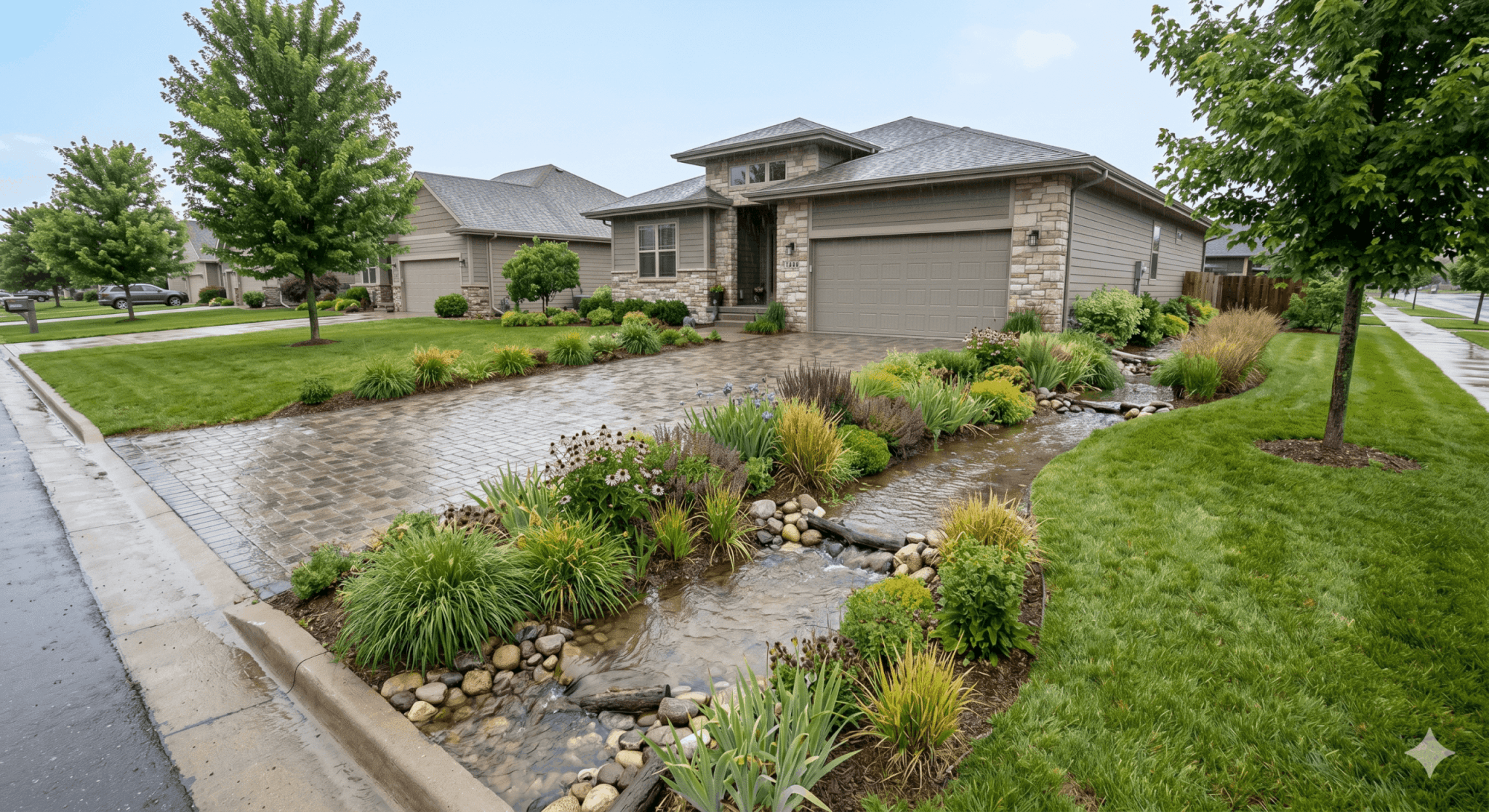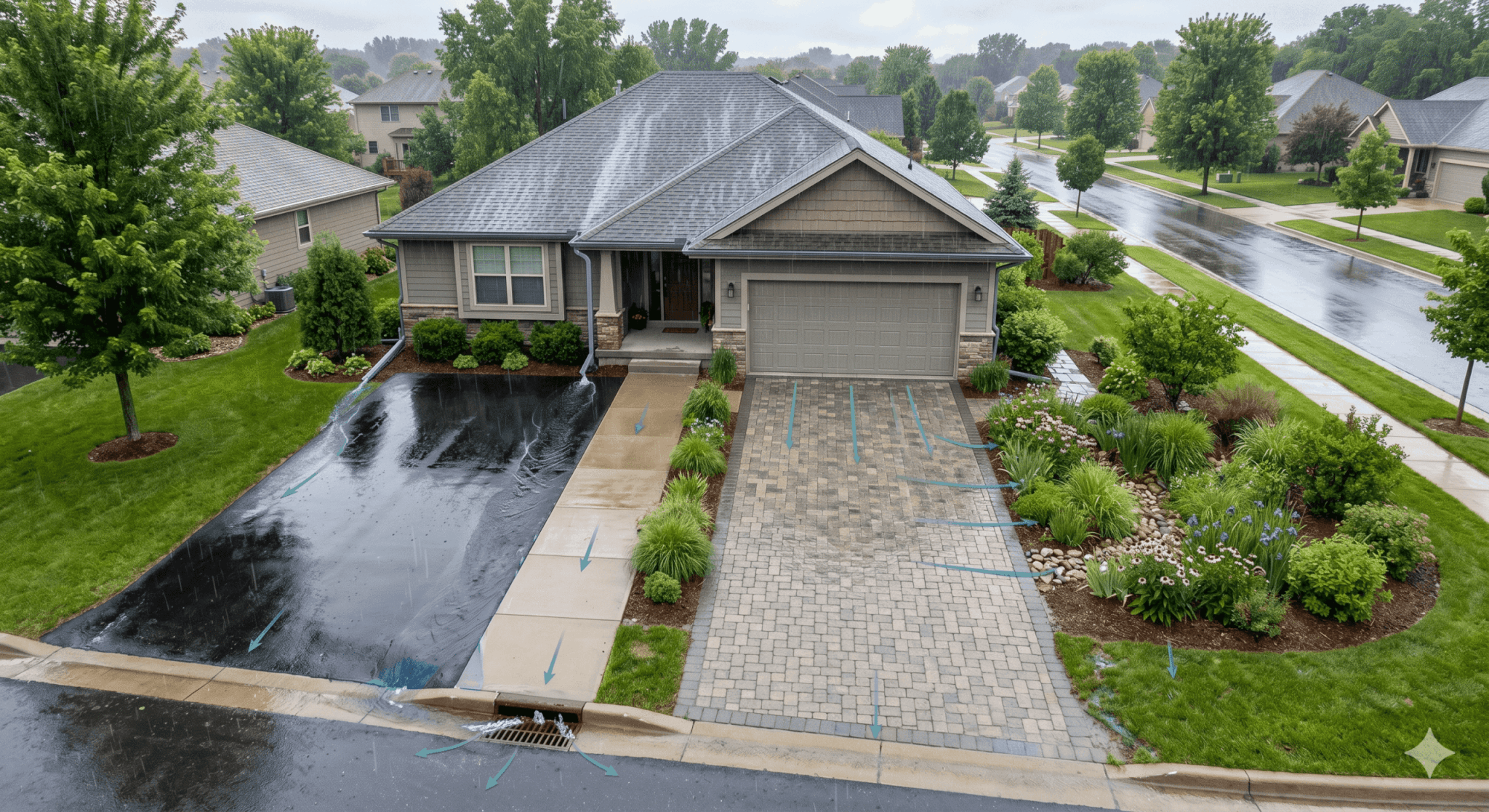



Outdoor water use makes up nearly 30% of what the average household uses – in drier regions, it’s over 50%. Most of that water goes to lawns that need constant attention and struggle through dry spells. Drought resistant landscaping flips that equation by designing yards that work with your climate instead of fighting it – using less water, needing less upkeep, and handling the dry stretches that keep getting more common.
This guide covers the decisions that actually matter: the 7 core principles behind low-water design, plant ideas for different climates, practical guidance on irrigation and mulch, and lawn alternatives for front yards. Turf removal, drip irrigation upgrades, and permeable hardscape often qualify for local rebates, but eligibility depends on your address and utility provider. Rainplan helps you find which programs apply to your property, so you can see how to fund the upgrades that fit your yard.
Key takeaways
- Native and drought tolerant plants do the heavy lifting: Choosing region-appropriate plants cuts your outdoor water use more than anything else.
- Mulch, soil prep, and permeable surfaces work together: A 2-4 inch mulch layer plus soil mixed with compost keeps moisture in the ground where your plants actually need it.
- Smart irrigation saves water without sacrificing plant health: Drip systems and weather-based controllers deliver water only when and where plants need it, cutting waste by up to 50%.
- Rebates can cover a large portion of your project costs: Turf removal, rain gardens, and permeable pavers frequently qualify for local utility and stormwater incentives, which lower your upfront costs.
- Rainplan finds the incentives your property qualifies for: Search your address on Rainplan to see available rebates, connect with vetted contractors, and get approved project costs covered upfront.
What is drought resistant landscaping?
Drought resistant landscaping reduces or eliminates the need for supplemental irrigation by using region-appropriate plants, efficient watering systems, and smart soil management. The result: outdoor spaces that thrive on natural rainfall and look good year-round.
Also known as xeriscaping or water-wise landscaping, this method transforms front and backyards into spaces that work with your climate instead of fighting it. The approach combines native plants, strategic mulching, and efficient irrigation to create yards that stay healthy through dry spells without constant watering.
Rising water costs and seasonal dry spells are pushing homeowners to rethink traditional lawns. A well-designed drought resistant landscape cuts your utility bills, saves time on watering, and handles both drought and heavy rain. Three key terms to know:
- Drought resistant vs. drought tolerant: Drought resistant plants survive dry periods with minimal water, while drought tolerant plants endure temporary drought but may prefer regular watering.
- Xeriscaping: A landscaping method using seven core principles to design yards around naturally available water.
- Water-wise landscaping: Any practice that reduces outdoor water use, including plant swaps, irrigation upgrades, and hardscape changes.
7 key principles of xeriscaping
Xeriscaping creates a yard where each principle supports the others. You don’t need to apply all seven at once. Even one or two changes can cut water use and make your yard tougher. These principles work together to create a landscape that handles water naturally and needs less upkeep.
Step 1: Plan and design before you plant
Start on paper, not in the ground. Mapping your yard before planting lets you match plants to real conditions instead of forcing them into the wrong spot. Assess these three things:
- Sun and shade zones: Note which areas get full sun, partial shade, or stay consistently moist after rain.
- Soil type: Sandy soil drains fast; clay soil holds water longer. Both affect which plants will thrive.
- Local water restrictions: Some municipalities limit irrigation days or hours, so check before you design.
Step 2: Improve your soil strategically
Healthy soil holds moisture longer, so you water less often. When amending soil, work improvements into a wider area around the root zone, not just the planting hole. This creates better long-term conditions for woody plants and perennials.
- Add organic matter: Compost improves water retention in sandy soils and drainage in clay soils.
- Avoid over-tilling: Tilling disrupts soil structure and breaks down the natural channels that move water to roots.
- Test before you amend: A simple soil test tells you exactly what your soil needs and what it doesn’t.
Step 3: Choose the right plants for your region
Plant selection has the biggest impact in a drought resistant yard. Native plants evolved in your local climate and naturally match local rainfall patterns, so they rarely need extra watering once established. They also support local wildlife and need less fertilizer and water over time.
Focus on three categories when selecting plants:
- Native plants: Evolved locally to match your rainfall and soil without extra inputs.
- Adapted non-natives: Plants from similar climates that perform well with minimal water.
- Low-water ground covers: Spreading plants that suppress weeds and reduce evaporation.
Step 4: Reduce your lawn area
Traditional turfgrass demands more water than almost anything else in your yard. Reducing lawn area, even partially, cuts outdoor water use faster than anything else. Many municipalities offer rebates for grass removal, and Rainplan helps you find and apply for those incentives at your address.
Step 5: Use mulch to lock in moisture
A 2-4 inch layer of mulch over bare soil slows evaporation, keeps soil temperature steady, and blocks weeds that compete with your plants for water. This single addition can cut watering needs by up to 30% while improving soil health over time.
| Mulch type | Best for | Key benefit |
| Wood chips / shredded bark | Garden beds, tree rings | Breaks down to add nutrients |
| Gravel | Pathways, arid plantings | Long-lasting, low maintenance |
| Decomposed granite | Drought-resistant plantings | Permeable and visually cohesive |
Skip landscape fabric under shrubs. It blocks air and restricts root growth over time.
Step 6: Irrigate efficiently
Even drought resistant plants need water while they’re getting established. The goal is applying the right amount at the right time, not eliminating irrigation entirely. Two rules that make a big difference:
- Water in early morning to reduce evaporation loss.
- Group plants with similar water needs into the same irrigation zone for more precise scheduling.
Step 7: Maintain your yard seasonally
Drought resistant landscaping requires less maintenance than traditional yards, but seasonal check-ins keep everything running smoothly. Regular maintenance protects your investment in plants and hardscape and locks in long-term water savings. We’ll cover seasonal maintenance in detail below.
Turn Runoff Into Rebates
Join Rainplan to access personalized data and discover sustainable solutions tailored to your specific site.
Drought tolerant plants and ground covers for a low-water yard
Plant selection creates the biggest visual change in your drought resistant yard. One important distinction to keep in mind: “drought tolerant” doesn’t mean “no water ever.” Most plants need regular watering during their first one to two growing seasons while their roots get established. Once established, they mostly take care of themselves.
Drought tolerant flowering perennials
Perennials return year after year, making them a smart foundation for low-water yards. They provide seasonal color without the replanting effort of annuals and build deeper root systems that tap into groundwater. Three reliable options:
- Lavender: Fragrant purple blooms that thrive in full sun and well-drained soil.
- Coneflower: Bold pink or purple flowers that attract pollinators and tolerate both drought and clay soil.
- Black-eyed Susan: Bright yellow blooms from summer into fall, spreading naturally to fill bare patches across various U.S. climates.
Hardy shrubs and trees for structure
Shrubs and trees form the structure of drought resistant yards. They define spaces, provide shade that keeps soil moist, and need little attention once established. These larger plants also catch more rainfall and cut runoff. Three solid options:
- Crape myrtle: Showy summer blooms in pink, red, or white; particularly suited to the Southeast and Southwest.
- Smoke bush: Dramatic purple or green foliage with feathery flower plumes; tolerates dry, rocky soil.
- Desert willow: Native to the American Southwest, it produces trumpet-shaped flowers and handles extreme heat and drought.
Ground covers to replace traditional grass
Ground covers spread to cover bare soil, block weeds, slow evaporation, and eliminate mowing in low-traffic areas. These alternatives look good and cut water needs by up to 70%. Options that work:
- Creeping thyme: Forms dense, fragrant mats that tolerate light foot traffic.
- Sedum varieties: Succulent ground covers that spread readily with minimal water.
- Creeping juniper: Evergreen coverage that handles slopes and controls erosion.
- Liriope: Grass-like appearance that tolerates shade, drought, and poor soil.
Efficient irrigation and soil prep for drought resistant yards
Smart irrigation separates thriving drought resistant yards from ones that struggle. The key concept: hydrozoning. Group plants with similar water needs into the same irrigation zone to prevent both overwatering and underwatering. Pair that with the right soil prep and permeable surfaces, and your yard becomes a water-smart system.
Drip irrigation and smart controllers
Drip irrigation delivers water slowly and directly to root zones, cutting evaporation and runoff compared to overhead sprinklers. This targeted method cuts water use and keeps plants healthier. You’ve got several options:
| Method | How it works | Best for |
| Drip emitters | Deliver water at slow, steady rates to individual plants | Shrubs, trees, perennials |
| Soaker hoses | Seep water along the full hose length | Densely planted beds |
| Weather-based controllers | Connect to local weather data; skip watering when rain is forecast | Full irrigation systems |
| Soil-moisture sensors | Measure actual moisture levels; trigger irrigation only when needed | Any zone with variable conditions |
Soil preparation for water retention
Well-prepared soil holds moisture longer between watering cycles, so your irrigation system runs less often. Before planting, work 2-3 inches of compost into the top 6-8 inches of soil. This improves both water retention and drainage. Avoid compaction. Compacted soil causes water to run off instead of soaking in, which defeats the purpose of a drought resistant design.
Permeable hardscapes for rain retention
Traditional concrete and asphalt shed rainwater as runoff instead of letting it soak into the ground where plants can use it. Permeable surfaces flip this. How each option compares:
- Permeable pavers: Replace solid concrete in driveways and patios, allowing rainwater to soak into the ground below.
- Gravel pathways: Simple, low-cost permeable surfaces for garden paths.
- Decomposed granite: An attractive option that’s both permeable and visually cohesive with drought resistant plantings.
Rainplan identifies which permeable hardscape projects qualify for stormwater rebates at your property, so you know exactly where to invest before you start.
Low-maintenance lawn alternatives for your front yard
The front yard presents a unique challenge: you want a polished look from the street without the water bill or mowing routine. Lawn alternatives solve this by keeping curb appeal while cutting water use by up to 80%. Many water utilities and municipalities sweeten the deal further with “cash-for-grass” or turf conversion rebates that can offset conversion costs significantly.
Five alternatives that work:
- Native meadow or wildflower lawn: Requires mowing once or twice yearly while attracting pollinators.
- Clover lawn: Stays low and green through dry spells while fixing nitrogen in the soil.
- Ornamental grasses: Blue fescue or buffalo grass provides texture and movement with minimal water.
- Ground cover plantings: Low-growing drought tolerant plants that spread without mowing.
- Rain garden: A shallow planted depression that captures roof and driveway runoff.
How incentives and rebates help fund your low-water yard
Drought resistant landscaping projects often qualify for financial incentives from local water utilities, municipalities, and stormwater programs. These programs exist because reducing outdoor water use and stormwater runoff benefits the entire community, not just individual homeowners. What’s actually available?
Incentive types vary by location. Most programs fit into one of these categories:
| Incentive type | What it covers |
| Turf removal rebates | Cash back per square foot of grass replaced with drought tolerant landscaping |
| Rain barrel and cistern rebates | Discounts on rainwater harvesting equipment |
| Permeable pavement rebates | Stormwater credits for replacing impervious surfaces |
| Rain garden incentives | Design assistance or cost-sharing for planted depressions |
| Irrigation efficiency rebates | Smart controllers, drip systems, or pressure-regulating sprinkler heads |
Rainplan analyzes your property’s impervious surfaces and runoff, identifies green infrastructure solutions that fit your yard, and shows you the incentives you’re eligible for. The platform also connects you with vetted contractors and can pay approved project costs upfront, removing the cost barrier.
Year-round maintenance tips for drought tolerant landscapes
Drought resistant yards need less ongoing maintenance than traditional lawns. That said, seasonal check-ins keep everything running smoothly and protect your investment. Three areas that matter most: irrigation scheduling, mulch depth, and system audits.
Seasonal irrigation adjustments
Leaving summer irrigation schedules running into fall and winter wastes water and can harm dormant plants. As temperatures drop, plant water needs decrease significantly – and your schedule should reflect that. Here’s a simple seasonal guide:
| Season | What to do |
| Spring | Increase irrigation gradually as temperatures rise; inspect emitters for winter damage |
| Summer | Water deeply but infrequently to encourage deep root growth; run irrigation in early morning |
| Fall | Reduce irrigation frequency; most established drought tolerant plants need little supplemental water |
| Winter | Turn off or minimize irrigation for dormant plants; protect emitters from freezing |
Mulch refresh and weed control
Mulch breaks down over time and needs annual refreshing to maintain the 2-4 inch depth that suppresses weeds and retains moisture. Weeds compete directly with your plants for water, so staying ahead of them is one of the most water-efficient habits you can build. Three simple actions keep this under control:
- Top up mulch each spring, adding enough to restore proper depth without burying plant crowns or tree trunks.
- Pull weeds early – before they set seed – to prevent spreading.
- Skip landscape fabric under shrubs, as it degrades over time and restricts root growth.
Irrigation system efficiency checks
Even well-designed drip systems develop clogged emitters, misaligned heads, or leaks over time. Quick seasonal audits catch problems before they waste water or stress plants. Check for these three issues at the start of each season:
- Clogged emitters: Flush drip lines to clear mineral buildup.
- Misaligned sprinkler heads: Look for heads spraying onto hardscape or sidewalks instead of plants.
- Soil moisture levels: Test with a simple probe or moisture meter before running any irrigation cycle to confirm the soil actually needs water.
Plan Your Drought Resistant Landscaping with Rainplan
A drought resistant yard isn’t about sacrifice. It’s about designing outdoor spaces that work with your climate, reduce maintenance, and handle both dry spells and heavy rain. The right combination of plants, irrigation, mulch, and hardscape creates a yard that looks great year-round while costing less to maintain.
Many of the improvements covered in this guide qualify for rebates through local stormwater and water utility programs. Rain gardens, permeable pavers, turf removal, and rain barrels frequently receive financial support – meaning your upfront investment is often lower than you’d expect.
Rainplan helps you find these programs, plan your project, and connect with vetted contractors who can bring your vision to life. With approved project costs paid upfront, cost doesn’t have to be a barrier to getting started.
See if you qualify – search your address to find incentives and green infrastructure solutions available at your property.
Frequently asked questions
What’s the difference between drought resistant and drought tolerant plants?
Drought resistant plants survive dry periods with minimal or no supplemental water, while drought tolerant plants can endure temporary drought but may still prefer regular watering. In everyday use, the two terms are often used interchangeably, though drought resistant plants generally require less water overall.
How long does it take drought tolerant plants to establish?
Drought tolerant plants typically need one to two full growing seasons of regular watering before they can rely primarily on natural rainfall. Establishment time varies by plant type, soil quality, and climate conditions in your area.
Can drought resistant landscaping work in shaded yards?
Yes, drought resistant landscaping works in shaded yards with the right plant selection. Many drought tolerant plants like liriope, epimedium, and certain sedges thrive in partial to full shade while requiring minimal water once established.
Does drought resistant landscaping reduce stormwater runoff?
Drought resistant landscaping reduces stormwater runoff significantly, especially when it includes permeable hardscapes, rain gardens, and deep-rooted native plants. These features allow more rainwater to soak into the ground rather than running off into storm drains.
What financial incentives exist for drought resistant landscaping projects?
Financial incentives for drought resistant landscaping projects are available through many water utilities, municipalities, and stormwater programs. These include rebates for turf removal, rain gardens, permeable pavers, and irrigation upgrades, with availability varying by location.
What’s the most water-efficient irrigation method for drought resistant yards?
The most water-efficient irrigation method for drought resistant yards is drip irrigation, which delivers water slowly and directly to root zones. Pairing drip irrigation with weather-based smart controllers ensures the system only runs when plants actually need water.
Find Rainwater Rebates in Your Area
Enter your address to see local rebates for rain barrels and green infrastructure. Many programs cover 50%+ of costs.