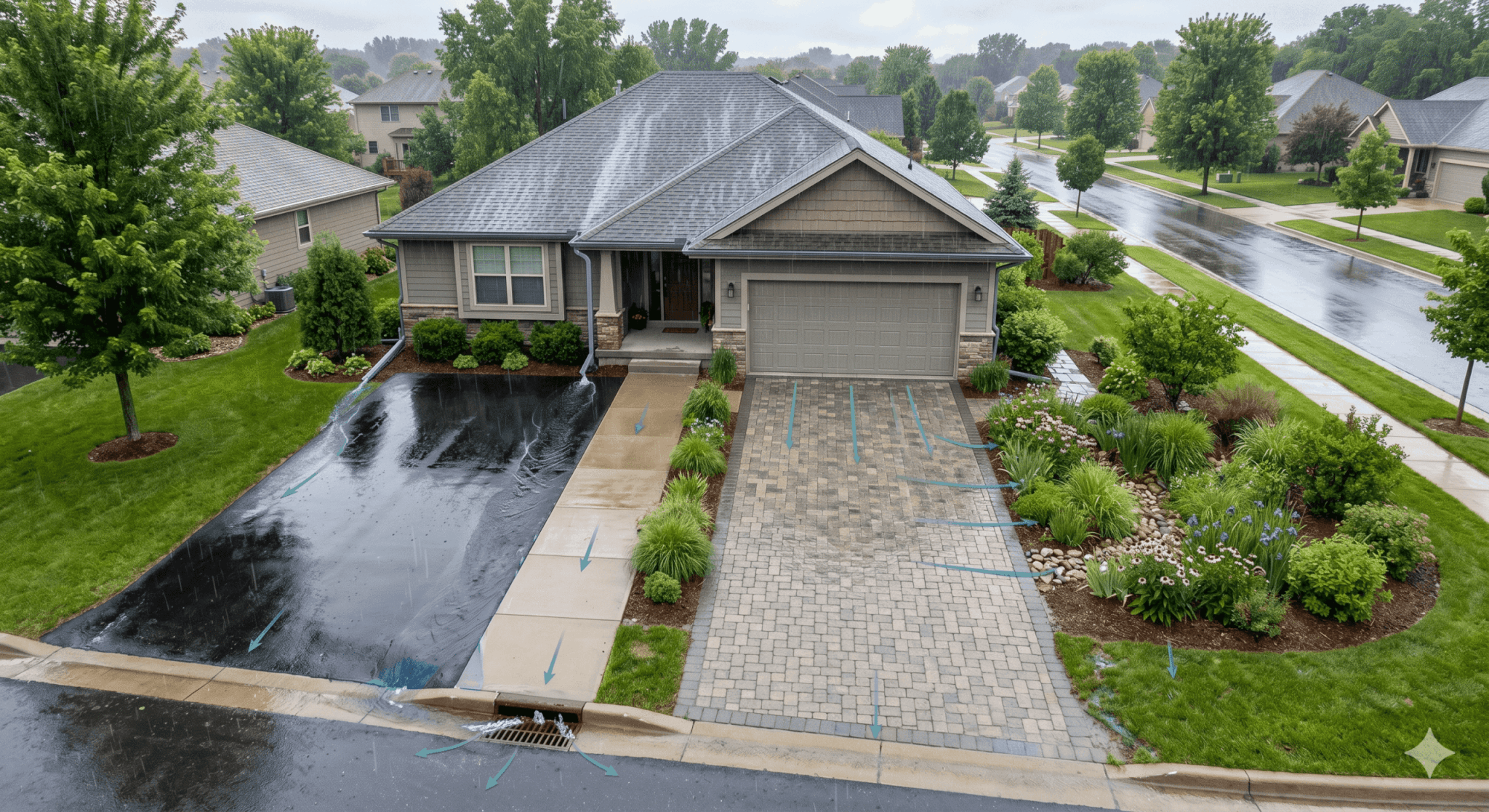


Rain gardens sized at 100-200 sq ft per 1,000 sq ft of roof area capture runoff in shallow basins that drain within 48 hours, with rebates often covering 50-100% of installation costs.
Your yard floods every time it rains hard. Water pools near your foundation, rushes down your driveway, and carries soil, fertilizer, and debris straight into storm drains. You’ve tried different drainage solutions, but the problem keeps coming back – and getting worse as weather patterns intensify.
Rain gardens offer a practical solution that works with nature instead of against it. These shallow, planted depressions capture runoff from roofs, driveways, and other hard surfaces, allowing water to soak into the ground slowly while filtering out pollutants. Unlike traditional landscaping, rain gardens are designed to handle both wet and dry conditions, supporting native plants that thrive in your local climate while reducing flooding and protecting water quality.
Here’s what you need to know: how rain gardens work, where to place them, what plants to choose, and how to maintain them for long-term success. You’ll learn how to size your garden properly, navigate local regulations, and tap into financial incentives that often cover half your costs or more.
Key takeaways
- Build a rain garden that captures 30-90% of your property’s runoff: Create a shallow, planted basin using native plants and sandy soil mix to naturally filter pollutants while reducing flooding and foundation damage.
- Size your garden correctly for maximum impact: Plan for 100-200 square feet of rain garden per 1,000 square feet of roof area, with 4-8 inches of ponding depth that drains within 48 hours.
- Access rebates and incentives that often cover 50-100% of costs: Many municipalities offer substantial financial incentives for rain garden installation, making this sustainable upgrade essentially free for qualifying properties.
- Use Rainplan’s platform to optimize your project: Get personalized site assessments, calculate exact sizing needs, identify available incentives, and connect with qualified local installers who understand your area’s requirements.
- Choose native plants that thrive in wet-dry cycles: Select species adapted to your climate that tolerate both temporary flooding and drought conditions, requiring minimal maintenance once established after 1-2 growing seasons.
What is a rain garden and why does it matter?
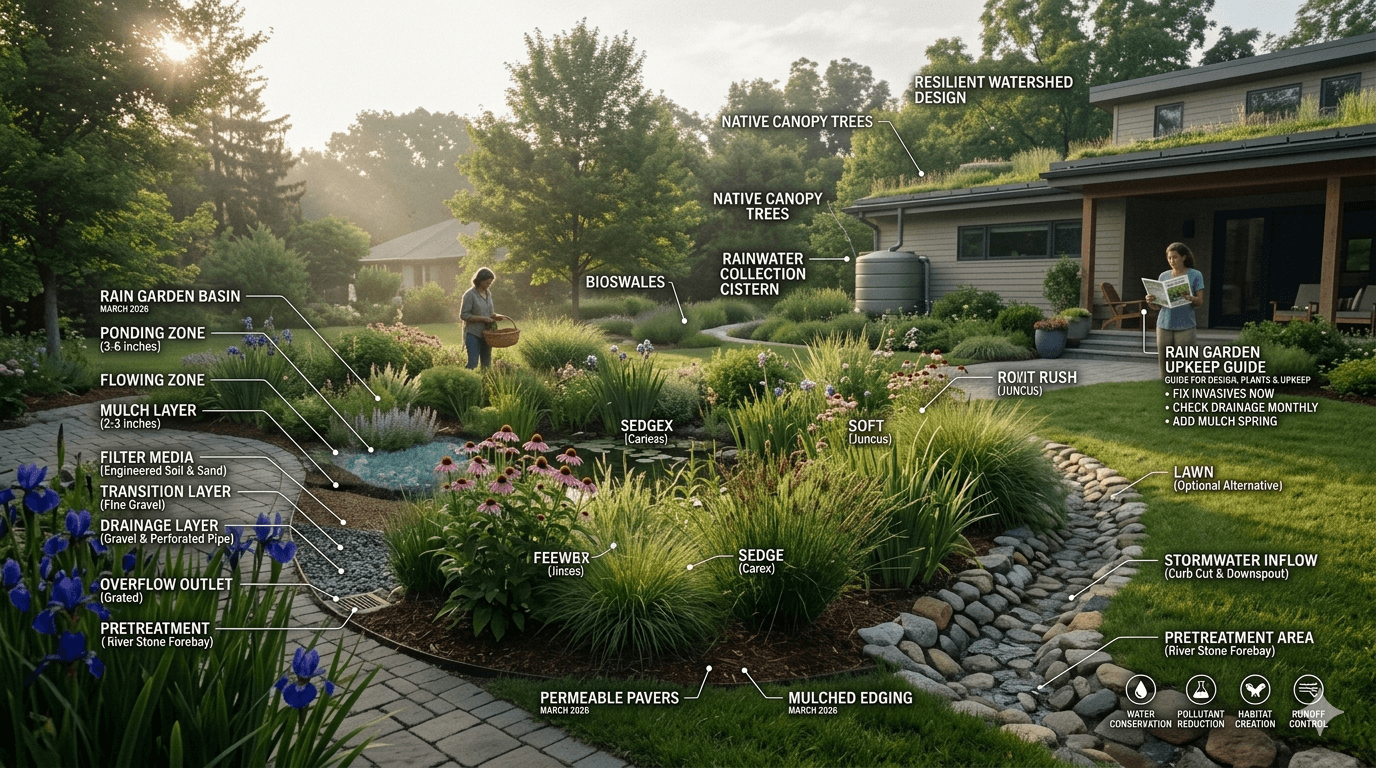
Think of a rain garden as a shallow, planted basin that catches rainwater from your roof, driveway, and other hard surfaces. Picture a beautiful basin in your yard where water collects temporarily, soaks into the ground through layers of native plants and special soil, then naturally filters pollutants before reaching groundwater. This landscaping feature works with nature to manage water on your property while adding color and texture to your yard.
You face real water challenges every day. Pooling near foundations threatens your home’s structure. Overwhelmed gutters dump water where you don’t want it. Rising stormwater fees eat into your budget. A rain garden addresses these problems by giving excess water a productive place to go.
But rain gardens do more than fix drainage problems. Rain gardens deliver real benefits for your property and community:
- Flood reduction: Captures runoff that would otherwise overwhelm storm systems and create standing water in low spots
- Pollution filtration: Plants and soil naturally remove sediment, oil, and fertilizers before they reach local waterways
- Wildlife habitat: Native plants attract birds, butterflies, and beneficial insects that enhance your yard’s ecosystem
- Financial savings: Many municipalities offer rebates and reduced stormwater fees for properties with rain gardens
- Property value: Attractive landscaping that solves drainage problems appeals to future buyers
How rain gardens function in residential stormwater management
Rain gardens work through a simple process: they catch runoff, filter it through soil and plants, and send clean water back into the ground. When rain hits your roof or driveway, it flows toward the garden through a downspout extension or shallow channel called a swale. The water collects in the basin, where it sits temporarily before infiltrating through specially mixed soil layers.
That temporary pooling isn’t a bug – it’s a feature. The water typically drains within 24 to 48 hours, fast enough to prevent mosquito breeding but slow enough for effective filtration. Plant roots and soil microbes work together to break down pollutants while the water slowly percolates into the ground below.
A 100-square-foot rain garden handles runoff from approximately 1,000 square feet of roof area during typical storms. That capacity makes a significant difference in managing your property’s water. Rainplan’s platform can calculate the exact size needed for your specific property conditions and local rainfall patterns.
Key differences from traditional gardens
Rain gardens might look like regular landscaping, but they’re built differently for a specific job. Understanding these differences helps you avoid common mistakes and build a garden that actually works.
Traditional gardens offer flexibility in placement and plant selection. Rain gardens require more strategic thinking:
- Location: Must sit in natural low spots where water collects, not just anywhere that looks nice
- Plants: Native species that tolerate both standing water and dry periods, rather than whatever catches your eye at the garden center
- Soil: Special sandy mix that drains quickly while supporting plants, not standard garden soil
- Purpose: Water management first, visual appeal second (though both are achievable)
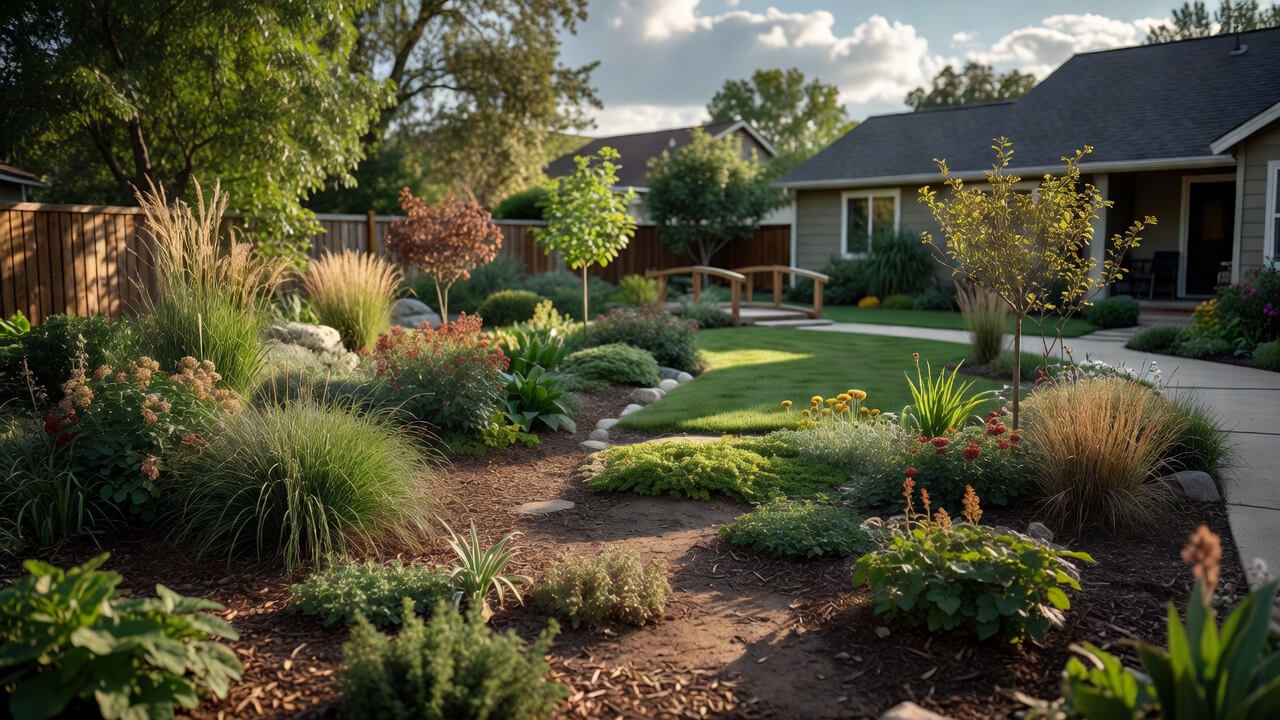
A well-designed rain garden looks just as good as any perennial bed – sometimes better. Native wildflowers, ornamental grasses, and flowering shrubs create seasonal interest while performing essential environmental work.
How rain gardens reduce runoff and pollution
[rainplan_cta id=”6574″]
Rain gardens solve two problems at once: they catch water before it floods your yard and filter it before it pollutes local streams. They reduce the volume of water leaving your property and improve the quality of water that eventually reaches streams and groundwater. Your yard stays drier, and your community’s water stays cleaner.
When rain hits pavement, it picks up everything in its path. Oil from cars, fertilizer from lawns, sediment from construction, and road salt all wash toward storm drains. Traditional storm systems send this contaminated water directly to local waterways. Rain gardens intercept this flow before it leaves your property.
Here’s how the filtration works:
- Soil particles: Trap sediment and heavy metals through physical filtering
- Plant roots: Absorb excess nutrients like nitrogen and phosphorus that cause algae blooms
- Beneficial microbes: Break down organic pollutants into harmless compounds
- Evapotranspiration: Plants release clean water vapor back to the atmosphere
Properly designed rain gardens reduce runoff volume by 30% to 90% depending on soil conditions and storm intensity. Even during large storms that exceed the garden’s capacity, the first flush of water containing the highest pollutant concentration gets captured and treated.
Essential components of a rain garden
Every rain garden needs the same basic components to work properly. Get these right, and your garden will work for years with minimal upkeep. These elements form the foundation of effective stormwater management on your property.
Selecting the right soil and mulch
Standard garden soil won’t work – you need a mix that drains quickly while supporting plant growth. Standard garden soil won’t work – you need a mix that drains quickly while supporting plant growth. Here’s the recipe:
Most rain garden soil mixes contain:
- 60-80% sand: Provides rapid drainage and prevents compaction
- Up to 20% topsoil: Supplies nutrients and structure for plant roots
- Up to 20% compost: Adds organic matter and beneficial microbes
Some municipalities specify exact ratios or require specific amendments for phosphorus control. Check local guidelines before purchasing materials. Rainplan connects you with suppliers who stock approved mixes for your area’s requirements.
Mulch does the heavy lifting for maintenance. Apply 2 to 3 inches of shredded hardwood mulch across the entire surface. It suppresses weeds, holds moisture during dry spells, and stops soil from washing away during storms. Refresh the mulch annually to maintain these benefits.
Creating the ideal ponding depth for drainage
Target a ponding depth between 4 and 8 inches for residential rain gardens. This depth holds enough water for proper filtration while draining within the crucial 24 to 48 hour window.
Shape your basin like a shallow bowl – think wide and flat, not deep and narrow. Maintain a ratio of three feet horizontal for every one foot vertical to prevent erosion and make maintenance easier. The flat bottom spreads water evenly, so all your plants get what they need and water soaks in properly.
Test your drainage rate before finalizing the depth. If your soil drains slower than expected, reduce the ponding depth to maintain the proper drainage timeline. Mosquitoes need standing water for seven or more days to complete their breeding cycle, so proper drainage eliminates this concern.
Ensuring proper overflow and inlet design
Every rain garden needs an escape route for excess water. Big storms will occasionally overwhelm your garden – plan for it now to avoid erosion and property damage later.
Design your overflow system to activate at maximum ponding depth. Options include:
- Simple spillway: Direct excess water to your lawn or another safe area
- Rock-lined channel: Guide overflow to existing drainage infrastructure
- Secondary basin: Create a backup infiltration area for extreme events
Don’t forget about the inlet. How water enters your garden determines how long it lasts. A pretreatment area with river rocks or dense grass filters out sediment before it reaches the main basin. This small addition can add years to your rain garden’s life by keeping sediment out.
7 steps to build a rain garden at home
Most homeowners can build a rain garden over a weekend or two with basic tools and planning. Follow these steps to avoid the mistakes that cause most rain gardens to fail.
Step 1: Evaluate your yard’s drainage
First, figure out how water moves across your property. Dig a test hole approximately 12 inches deep and 6 inches wide in your planned location. Fill it with water and let it drain completely. Refill the hole and time how long the water takes to disappear.
Your drainage rate tells you if a rain garden will work:
- 1 inch per hour or faster: Sandy soil ideal for rain gardens
- 0.5 to 1 inch per hour: Loamy soil that works with proper amendments
- Less than 0.5 inch per hour: Clay soil may require an underdrain system
The bottom of your rain garden must sit at least 3 feet above the seasonal high water table. Contact your local extension office if you need help determining groundwater levels in your area.
Step 2: Choose the best location and size
Get the location wrong, and nothing else matters. Follow these minimum setback requirements to protect structures and utilities:
- 10 feet minimum from building foundations to prevent water damage
- 50 to 100 feet from wells depending on local codes
- Outside the drip line of large trees to avoid root damage
- Away entirely from septic systems and drain fields
Size your garden between 10% and 20% of the contributing drainage area. A 1,000-square-foot roof section needs a 100 to 200-square-foot rain garden. Look for natural low spots that collect water but don’t turn into swamps. Rainplan’s assessment platform calculates optimal sizing based on your property’s specific conditions and local rainfall data.
Step 3: Test infiltration and prepare the site
Dig additional test holes at your planned garden depth to confirm consistent drainage rates. Inconsistent results might indicate compacted layers or other soil issues requiring attention.
Mark your garden outline with spray paint or stakes. Remove existing vegetation, setting aside quality topsoil for mixing into your planting medium. Most residential rain gardens don’t require permits, but verify local requirements before digging. Some areas have specific rules for gardens near property lines or in certain soil types.
Step 4: Excavate and shape the basin
Dig gradually and check your depth often – it’s easier to remove more soil than to put it back. Create a flat bottom with gently sloping sides that won’t erode during storms.
Keep topsoil and subsoil in separate piles. You’ll mix the topsoil with sand and compost for your planting medium. Subsoil can fill low spots elsewhere in your yard or be removed according to local disposal guidelines.
Hand tools work fine for gardens under 200 square feet, but rent a small excavator for anything larger. Larger projects benefit from renting a small excavator, which saves time and effort while achieving more consistent results.
Step 5: Amend soil and add the planting mix
Mix your soil components thoroughly before adding them to the basin – don’t try to mix in place. Get the consistency right, or your garden won’t drain properly.
Test your mix by wetting a handful and squeezing. It should hold together briefly, then crumble apart when prodded. If it stays clumped, add more sand. If it won’t hold at all, add more compost or topsoil.
Add the mixed soil in 4 to 6 inch layers, lightly tamping each to remove air pockets without creating compaction. Don’t walk on the soil or drive equipment over it – you’ll compact it and ruin the drainage. The finished surface should be level for even water distribution.
Step 6: Select and place your plants
Rain gardens have three moisture zones, and each needs different plants. Match plants to the right zone, and they’ll thrive with little help from you.
| Zone | Location | Moisture level | Example plants |
| Zone 1 | Bottom | Wettest, tolerates standing water | Swamp milkweed, blue flag iris, sedges |
| Zone 2 | Slopes | Moderate, occasional wet feet | Wild bergamot, purple coneflower, little bluestem |
| Zone 3 | Edges | Driest, well-drained conditions | Black-eyed Susan, wild ginger, native fescues |
Plan for one to three plants per square foot, depending on how big they’ll get. Spring and fall are your best bets – mild temperatures and regular rain help plants establish faster. Rainplan provides region-specific plant lists and connects you with local native plant suppliers.
Step 7: Add mulch and create a maintenance plan
Apply 2 to 3 inches of shredded hardwood mulch across the entire garden, keeping it away from plant stems to prevent rot. Water new plants deeply after planting and plan for supplemental irrigation during the first growing season while roots establish.
During the first year or two, you’ll need to:
- Regular weeding: Prevents invasive species from taking hold
- Deep watering: Helps plants develop extensive root systems during dry spells
- Plant monitoring: Replace any plants that fail to establish
By year three, you’ll barely need to touch it beyond adding mulch once a year and dividing plants occasionally.
Choosing plants that thrive in rain gardens
Pick the wrong plants, and your rain garden will struggle. Pick the right ones, and it’ll practically take care of itself. Native species adapted to your climate need almost no maintenance once they’re established. The right plants look great and handle your stormwater without constant attention.
Native shrubs, perennials, and flowers for wet-dry cycles
Successful rain garden plants tolerate extremes – they survive flooding during storms and drought between rains. They survive temporary flooding during storms and drought conditions between rain events. This adaptability comes naturally to native species that evolved with your region’s weather patterns.
Consider these factors when selecting plants:
- Root depth: Deep roots improve infiltration and drought tolerance
- Growth rate: Fast-growing species establish quickly and compete with weeds
- Wildlife value: Native plants support local pollinators and birds
- Seasonal interest: Mix bloom times for continuous color and texture
Group plants by their water needs within each zone – it makes maintenance easier and keeps everything healthy. Dense plantings shade out weeds and create a lush, natural look.
Planting timing and establishment care
Container plants give you flexibility on timing, but don’t plant in soaking wet soil – you’ll compact it. Bare root plants cost less but require specific planting windows for success.
Spring planting after frost danger passes gives plants a full growing season to establish. Fall planting works well in mild climates where roots can develop before winter dormancy. Summer planting requires extra watering and attention during hot weather.
Here’s what to expect during establishment:
- Year 1: Water weekly during dry spells, remove weeds promptly, replace failed plants
- Year 2: Reduce watering frequency, divide aggressive spreaders, add plants to fill gaps
- Year 3+: Minimal intervention beyond annual maintenance tasks
Maintenance tips for long-lasting results
Once established, rain gardens need far less care than traditional landscaping – we’re talking 2 to 4 hours a year. Most need just 2 to 4 hours of attention annually once plants establish. This minimal maintenance makes rain gardens practical for busy homeowners who want effective stormwater management without constant upkeep.
Year-round care for healthy rain gardens
Here’s what to do each season: Following this schedule prevents small issues from becoming major problems.
Spring maintenance priorities:
- Remove debris: Clear winter accumulation that blocks water flow
- Refresh mulch: Add material to maintain 2 to 3 inch depth
- Check for erosion: Repair any damage from winter storms
- Divide plants: Separate overcrowded perennials for better vigor
Summer maintenance priorities:
- Water new plants: Support establishment during dry periods
- Remove invasive weeds: Catch problems before seeds spread
- Monitor drainage: Verify proper function after storms
Fall maintenance priorities:
- Cut back perennials: Leave 6 inches for winter interest and wildlife
- Plant additions: Take advantage of ideal planting conditions
- Clear inlets: Remove leaves that could block water entry
Winter maintenance priorities:
- Minimal activity: Let the garden rest under snow cover
- Avoid foot traffic: Prevent damage to dormant plants
- Plan improvements: Research new plants or design changes
Preventing mosquitoes and weeds
Both problems have simple solutions. Proper design and maintenance eliminate both issues effectively.
Mosquitoes cannot complete their breeding cycle in properly designed rain gardens. The 24 to 48 hour drainage window falls well short of the seven days mosquitoes need for egg development. If standing water persists longer, improve drainage by adding sand to your soil mix or installing an underdrain.
Weed prevention starts with dense plantings and thick mulch. Established native plants naturally outcompete most weeds through vigorous growth and allelopathic compounds. Remove invasive species immediately before they produce seeds. Hand-pulling works best in the loose, sandy soil of rain gardens.
Quick guide to costs, rebates, and incentives
Here’s what rain gardens cost and how to get the most from available rebates. You’ll save money upfront through rebates and long-term through lower stormwater fees. Many homeowners find their rain garden pays for itself within three to five years.
| Garden size | DIY cost range | Professional cost range | Typical rebate potential |
| 100 sq ft | $300-600 | $800-1,500 | $200-500 |
| 200 sq ft | $500-1,000 | $1,200-2,500 | $400-1,000 |
| 400 sq ft | $800-1,600 | $2,000-4,000 | $800-2,000 |
Many municipalities offer substantial incentives for rain garden installation. Programs vary widely but often include:
- Direct rebates: Cash back after project completion and inspection
- Stormwater fee reductions: Ongoing savings on utility bills
- Free materials: Some programs provide plants, mulch, or soil amendments
- Technical assistance: Design help and site assessments at no cost
Rainplan’s platform identifies all available incentives for your property and guides you through the application process. Some programs cover 50% to 100% of installation costs, making rain gardens essentially free for qualifying properties.
Integrating rain gardens with other green solutions
Rain gardens work better when you pair them with other green infrastructure. This approach captures more water, treats it better, and creates a landscape that looks intentional.
For step-by-step sizing diagrams and before-and-after examples, see our detailed rain garden design guide.
Rain gardens and permeable pavers
Permeable driveways and patios allow water to pass through their surface rather than running off. Direct that filtered water to your rain garden, and you’ve got a two-stage system that cleans water twice.
Here’s why this combination works:
- Extended lifespan: Permeable pavers reduce sediment reaching the rain garden
- Increased capacity: Pavers slow water flow, reducing peak loads on the garden
- Enhanced aesthetics: Coordinated design creates cohesive landscape features
- Greater savings: Combined systems often qualify for higher rebates
Rainplan can design a system that makes both features work together for your site and budget.
Rain barrels and cisterns
Rain barrels capture roof runoff for later use watering plants, including your rain garden during dry spells. Use that stored water to keep plants healthy between storms and cut your water bill.
Connect your barrel’s overflow directly to the rain garden inlet. Small storms? The barrel captures everything. Big storms? Excess water flows to the rain garden. You conserve more water and filter more pollution.
Position barrels on stable, elevated platforms near downspouts for easy access. A 55-gallon barrel fills quickly during moderate rain, so plan for overflow management from the start.
Transform your property with sustainable water management
Rain gardens are one of the smartest upgrades you can make to your property. They fix drainage problems now and save you money for years to come.
Installation takes work, but you get more than just better drainage. You create habitat for wildlife, help the environment, and often qualify for rebates that cover most or all of your costs.
If you can dig a hole and follow directions, you can build a rain garden. Success comes down to three things: knowing your site, picking the right plants, and following basic design rules.
Ready to explore rain garden options for your property? Rainplan’s platform analyzes your site conditions, identifies available incentives, and connects you with qualified installers who understand local requirements. Get Started with a free property assessment to discover your rain garden potential.
Frequently asked questions
Do rain gardens attract mosquitoes?
Rain gardens do not attract mosquitoes when properly designed. They drain within 24 to 48 hours, which is far less than the seven days mosquitoes need to complete their breeding cycle.
How much does a rain garden cost to install?
DIY rain gardens typically cost $3 to $8 per square foot for materials. Professional installation ranges from $8 to $20 per square foot depending on size, location, and site complexity.
What happens to rain gardens during winter?
Rain gardens continue functioning during winter as water infiltrates through unfrozen soil layers. Dormant plants provide structure and wildlife habitat until spring growth returns.
Can rain gardens handle heavy storms?
Rain gardens include overflow systems that safely manage storms exceeding their capacity. They capture and treat the first flush of runoff containing the highest pollutant concentrations.
How long do rain garden plants take to establish?
Most rain garden plants establish within one to two growing seasons. Full maturity and maximum water uptake capacity typically occur by the third year after installation.
Do rain gardens work in clay soil?
Rain gardens can work in clay soil when designed with amended soil media and underdrain systems. These modifications provide filtration benefits even when natural infiltration is limited.
Related reading: rain gardens & stormwater management
- Rain garden design: sizing diagrams and before-and-after examples
- Bioretention systems: engineered alternative for clay soils
- Bioswales: linear drainage channels along driveways and property edges
- How to do a percolation test: determine if your soil drains fast enough
- Stormwater management plan: full checklist, permits, and rebates
- Rainwater harvesting 101: pair your rain garden with a collection system
- Permeable pavement: complete drainage system for driveways and patios
- Green bank financing for your rain garden project
[rainplan_cta id=”6661″]