

You walk outside after a heavy rainstorm and notice water pooling in your driveway, rushing down the street, or overwhelming your gutters. That runoff carries more than just rainwater – it picks up oil, fertilizers, and debris before flowing directly into storm drains and local waterways. Meanwhile, you’re looking at your water bill and wondering if there’s a smarter way to manage stormwater on your property while potentially saving money.
A bioswale offers a practical solution that works with nature instead of against it. This shallow, vegetated channel captures and treats stormwater runoff using plants and engineered soil to slow, filter, and absorb water naturally. Unlike traditional concrete drainage that simply moves water elsewhere, bioswales handle stormwater right where it falls while removing pollutants and reducing flooding downstream.
This guide covers what bioswales are, how they manage stormwater, where they work best, and what’s involved in designing and maintaining one. You’ll also see how Rainplan helps property owners find local incentives and funding that can cut installation costs in half or more.
Key takeaways
- Transform drainage problems into property value: bioswales capture and filter stormwater runoff while creating attractive landscaping that appeals to environmentally conscious buyers.
- Choose the right location by following water flow: observe where runoff naturally travels during storms, then install your bioswale along driveways, property edges, or below slopes for maximum effectiveness.
- Reduce costs through available incentives: many cities offer rebates covering 50% or more of installation costs – Rainplan identifies programs specific to your address and handles application paperwork.
- Expect minimal maintenance after establishment: native plants in bioswales require less care than traditional lawns, needing only seasonal inspections and occasional sediment removal every 3-5 years.
- Budget $15-25 per square foot for installation: a typical 200-square-foot residential bioswale costs $3,000-5,000 before incentives, with pricing affected by site access and soil conditions.
What is a bioswale?
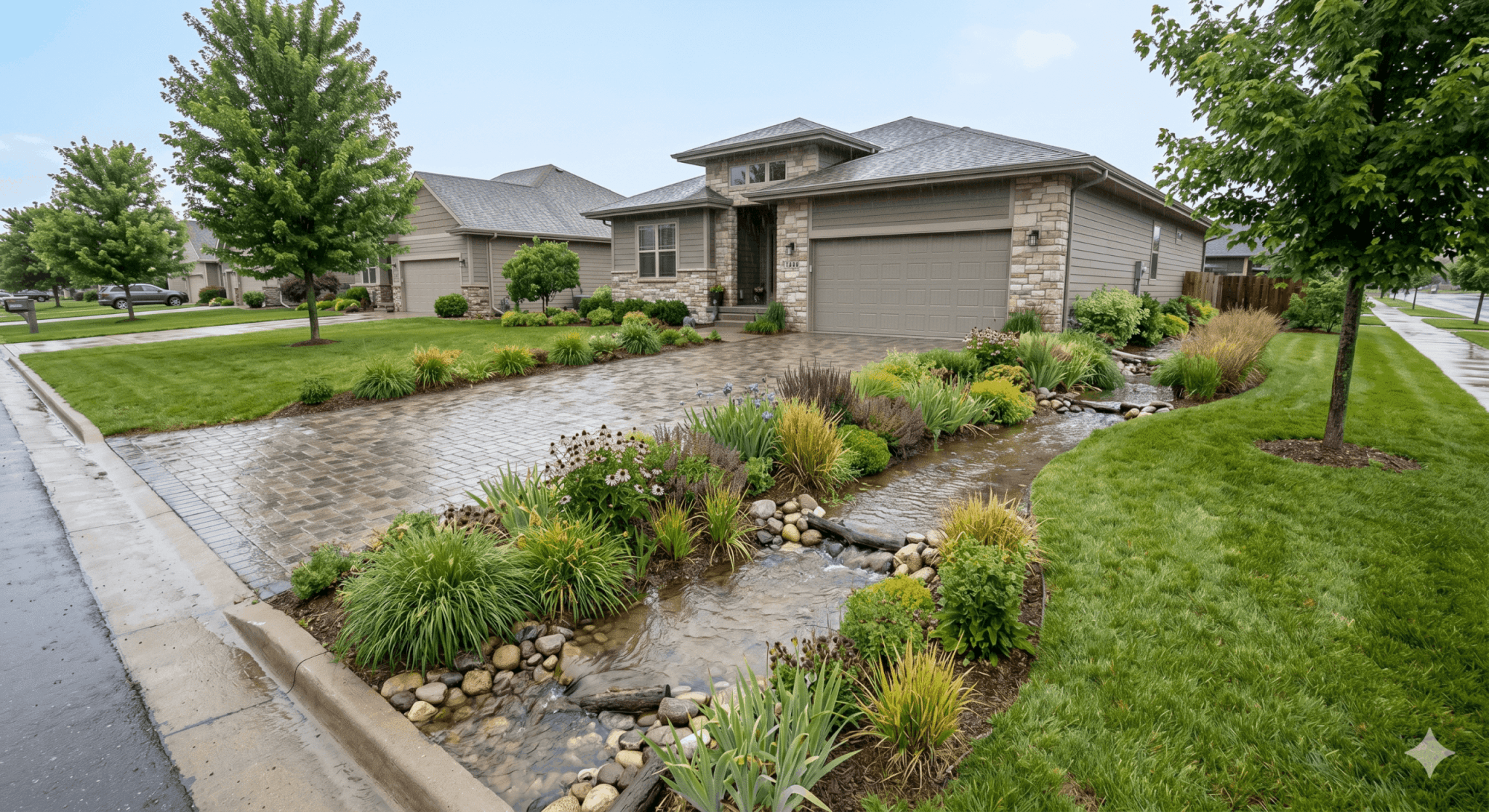
A bioswale is a vegetated, shallow channel designed to capture, treat, and infiltrate stormwater runoff as it moves across your property. Picture a landscaped depression filled with native plants and engineered soil that works like nature’s own water treatment system.
Unlike a standard drainage ditch that simply moves water away, a bioswale slows runoff, filters pollutants, and allows water to soak back into the ground where it belongs.
How bioswales work: the three-part system
Every bioswale works on three basic principles that turn runoff problems into solutions. These functions work together, handling drainage better than traditional solutions while making your property look better too.
- Conveyance: The channel shape directs water along a defined path, moving runoff away from foundations, driveways, and low spots where pooling causes problems
- Treatment: As water flows through, vegetation traps debris while engineered soil filters out pollutants like oils, metals, and excess nutrients from fertilizers
- Infiltration: Water soaks into the ground rather than rushing into storm drains, recharging groundwater and reducing the total runoff leaving your property
Bioswale vs. traditional swale vs. rain garden
Property owners often encounter these terms and wonder what makes each one different. Knowing the differences helps you pick what works for your property.
| Feature | Traditional grass swale | Bioswale | Rain garden |
| Primary function | Moves water | Treats and infiltrates water | Holds water temporarily |
| Soil type | Regular topsoil | Engineered drainage media | Amended garden soil |
| Vegetation | Grass only | Diverse native plants | Native plants and perennials |
| Shape | Linear channel | Linear channel | Basin or depression |
| Pollutant removal | Minimal | High | Moderate to high |
| Best location | Property edges | Along driveways and walkways | Near downspouts |
How bioswales manage stormwater
Turn Runoff Into Rebates
Join Rainplan to access personalized data and discover sustainable solutions tailored to your specific site.
When rain hits your roof, driveway, or lawn, it picks up everything in its path. Oil from cars, fertilizer from gardens, sediment from bare soil, and debris all mix into a polluted cocktail.
A bioswale catches this contaminated runoff and treats it naturally before the water moves on or soaks into the ground.
The treatment process: from dirty to clean
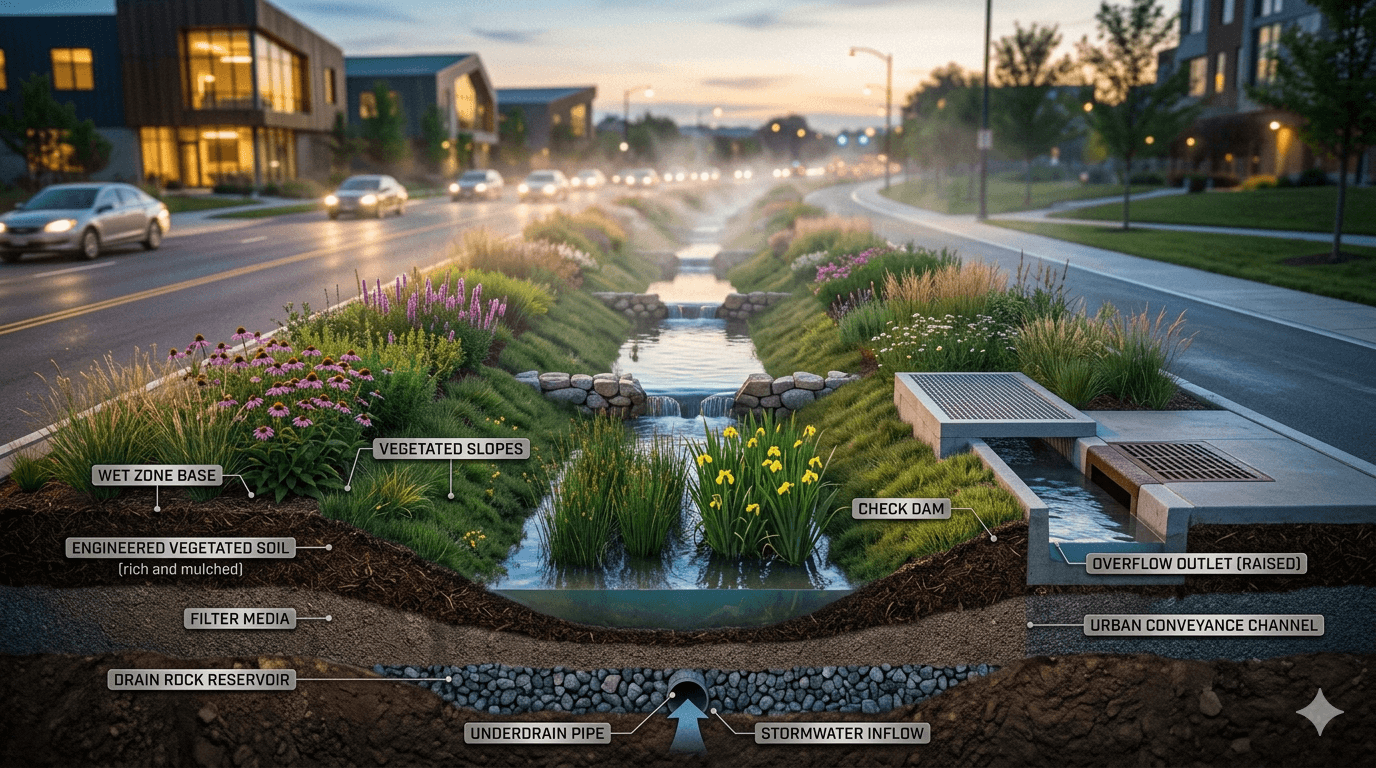
The moment stormwater enters a bioswale, the treatment begins. Dense vegetation and check dams force water to slow down dramatically. When water slows, pollutants start dropping out.
As water slows, heavier particles settle out naturally. Sediment drops to the channel bottom instead of washing into storm drains. Plant stems and leaves act like a net, catching floating materials such as leaves and litter. Meanwhile, the root zone below continues the filtration process.
The pollutants your bioswale removes depend on what washes off your property. Common contaminants filtered include:
- Sediment and soil particles: From lawns, driveways, and construction areas
- Oils and vehicle fluids: From parking areas and driveways
- Heavy metals: Copper from roofing, zinc from brake dust
- Excess nutrients: Nitrogen and phosphorus from fertilizers and pet waste
- Organic debris: Leaves, grass clippings, and other yard waste
What happens underground
Below the visible plants, engineered soil media continues treating water. This specialized mix typically combines sand, compost, and topsoil in proportions that drain quickly while supporting healthy plant growth.
Water percolates through this media layer, where soil particles bind to remaining pollutants and beneficial microbes break down organic contaminants. The gravel layer beneath provides additional drainage capacity and storage.
A properly functioning bioswale drains completely within 48 hours after a storm. This quick drainage stops mosquitoes from breeding and keeps plant roots from sitting in water too long.
Cooling your property naturally
Beyond managing stormwater, bioswales create cooler microclimates through evapotranspiration. Plants release moisture into the air, lowering temperatures around the bioswale.
This cooling works especially well along driveways and parking areas where asphalt and concrete trap heat. A bioswale planted with native grasses and shrubs can reduce local temperatures by several degrees compared to bare drainage ditches.
Where to install a bioswale
Finding the right location for your bioswale starts with observing where water naturally flows during rain. The best spot catches runoff before it causes problems and works with your current landscaping. Many properties have perfect bioswale locations without owners realizing it.
Step 1: Quick property assessment
Before diving into design details, you can perform a simple feasibility check to determine if a bioswale suits your property. This five-minute check needs no special tools and shows you the best spots.
Follow these evaluation steps:
- Watch water flow patterns: Observe where water flows during the next rainstorm and note if it follows a consistent path along your driveway or property edge
- Measure available space: Check if you have a linear space at least 10 feet long and 4 feet wide
- Test soil drainage: Dig a 12-inch hole, fill it with water, and time how long it takes to drain
- Identify overflow routes: Determine where overflow water would safely go during heavy storms
If water disappears within a few hours, your soil supports infiltration and makes bioswale installation feasible.
Step 2: Best installation locations
Bioswales work effectively in several common property locations. Each location works well for different reasons:
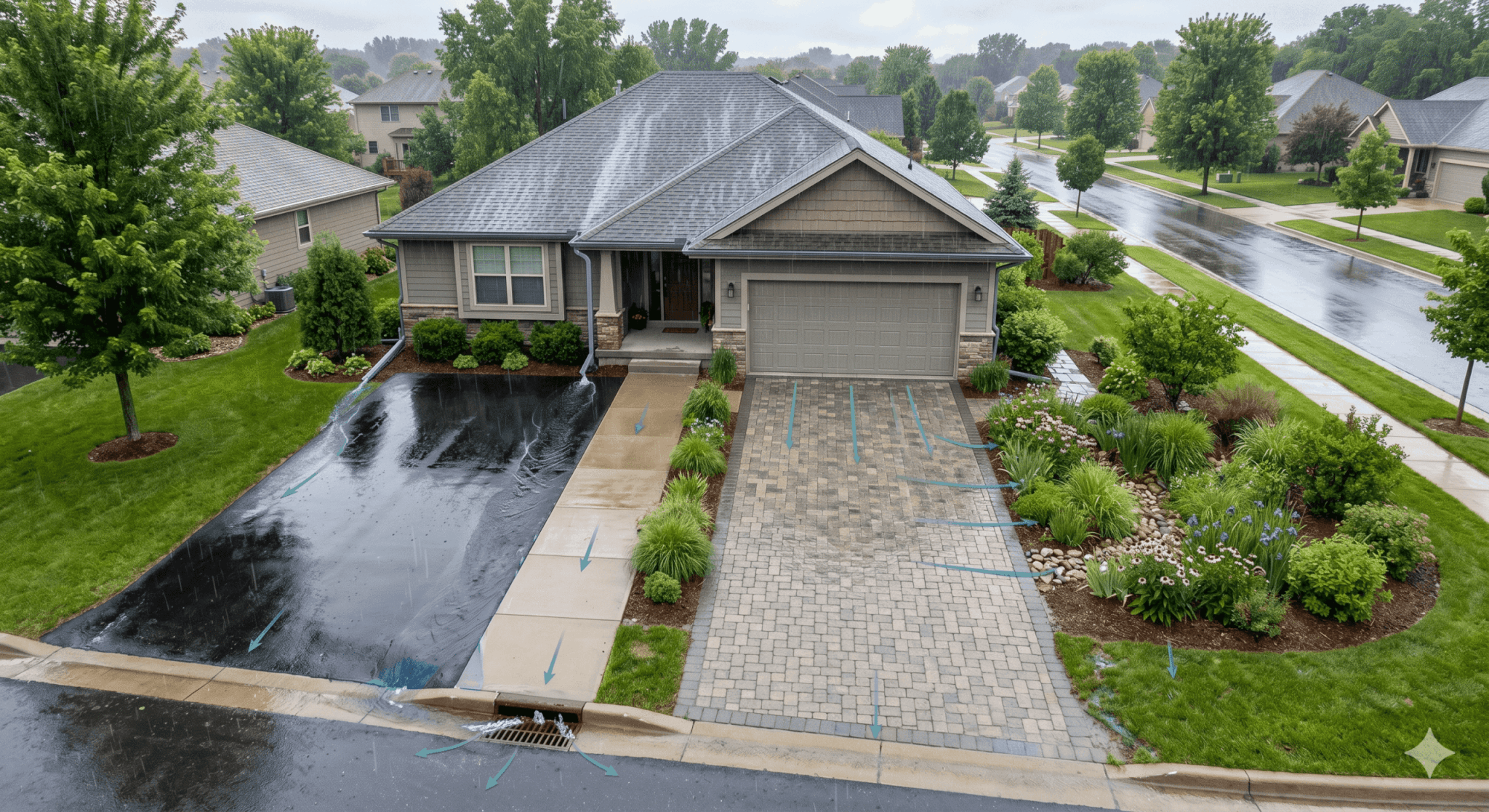
- Along driveways: Captures runoff from paved surfaces before it reaches the street
- Property boundaries: Intercepts water flowing from neighboring lots
- Between parking spaces: Treats vehicle runoff at the source
- Below slopes: Collects water naturally flowing downhill
- Street edges: Manages road runoff before it enters your yard
Remember to check local regulations and call 811 to mark utilities before finalizing your location. Many municipalities require specific setbacks from property lines, septic systems, and building foundations.
Working with challenging conditions
Limited space or poor drainage doesn’t mean you can’t install a bioswale. Narrow designs as small as 4 feet wide still provide effective treatment in urban settings.
Properties with clay soil or high water tables can incorporate underdrains that carry filtered water to existing storm systems. Rainplan helps property owners evaluate these site-specific challenges through virtual assessments. The platform identifies which design modifications work for your conditions while maintaining eligibility for local incentive programs.
Bioswale design essentials
Knowing the basics helps you evaluate contractor proposals and make smart decisions. You don’t need engineering expertise, but knowing what each part does protects your investment and keeps the system working.
Dimensions that work
Residential bioswales typically measure 4 to 8 feet wide with gentle side slopes. The channel should slope no steeper than 3 horizontal feet for every 1 vertical foot to prevent erosion and simplify maintenance.
Maximum ponding depth stays around 12 inches, as deeper water stresses plants and extends drainage time beyond the critical 48-hour window. Length depends on your drainage area but usually ranges from 20 to 100 feet for residential applications. Longer bioswales can include check dams every 50 feet to slow water and prevent erosion on steeper sites.
Soil layers and their functions
Bioswale soil isn’t regular garden soil. Each layer serves a specific purpose in the treatment process and must be engineered for optimal performance:
- Top mulch layer: Reduces erosion and suppresses weeds while allowing water to infiltrate
- Engineered soil media: Provides the primary filtration, typically containing 60% sand, 20% compost, and 20% topsoil
- Transition layer: Pea gravel prevents the soil media from washing into the drainage layer below
- Bottom drainage layer: Larger gravel that stores water temporarily and houses the underdrain pipe if needed
The exact mix varies by location, but these layers drain properly while filtering out the most pollutants.
Choosing the right plants
Plants in a bioswale do real work – they’re not just there to look good. The right vegetation stabilizes soil, promotes infiltration, and survives the extreme wet-dry cycles bioswales experience.
Look for these traits when picking plants:
- Deep root systems: Create infiltration channels and anchor soil against erosion
- Flood tolerance: Survives temporary standing water after storms
- Drought resistance: Thrives during dry periods between rain events
- Native species: Adapted to local climate with minimal maintenance needs
- Dense growth: Provides maximum filtration and erosion control
Your local extension service can recommend specific native plants suited to bioswale conditions in your area.
Benefits beyond drainage
A bioswale does more than just fix drainage problems. Bioswales solve several property problems at once and often qualify for rebates that cut installation costs.
Environmental and property improvements
A well-designed bioswale gets better over time as plants mature and the system settles in. Your property becomes more valuable in two ways:
- Reduced flooding risk: Controlled water management protects foundations and prevents yard damage
- Lower maintenance costs: Native plants require less watering and fertilizing than traditional lawns
- Cleaner runoff: Filtered water protects local streams and may help meet regulatory requirements
- Wildlife habitat: Native plantings support pollinators and beneficial insects
- Increased property value: Green infrastructure appeals to environmentally conscious buyers
Finding financial incentives
Many cities offer rebates, tax credits, or reduced stormwater fees for bioswale installation. Cities know that when you improve your property’s drainage, it helps their storm systems too. Incentive amounts vary but can cover 50% or more of installation costs.
Documentation requirements for incentive applications typically include:
- Problem area photos: Visual evidence of drainage issues
- Rough dimension sketches: Basic measurements of proposed installation area
- Downspout locations: Mapping of existing drainage features
- Contractor estimates: Professional cost assessments
- Proof of property ownership: Legal documentation
Rainplan makes this easier by finding programs for your address and helping with the paperwork.
Property value and curb appeal
A bioswale transforms a drainage problem into an attractive landscape feature. Native plantings provide year-round interest with seasonal blooms, interesting textures, and wildlife activity.
Properties with bioswales stand out to buyers who care about environmental responsibility.
Maintenance for long-term success
Once established, bioswales need less maintenance than regular landscaping. They need regular light maintenance, not intensive work – perfect for busy property owners.
Seasonal inspection checklist
Checking your bioswale regularly stops small problems from turning into costly repairs. Plan to check your bioswale in spring and fall, plus after major storms:
- Inlet areas: Remove leaves and debris blocking entry points
- Drainage time: Verify water drains within 48 hours
- Plant health: Replace dead or diseased vegetation
- Erosion signs: Look for exposed soil or channel damage
- Outlet condition: Ensure overflow areas remain clear
Managing sediment buildup
When sediment builds up, it means your bioswale is doing its job and catching pollutants. However, excessive buildup eventually impairs function.
Watch for water draining slower than usual, visible sediment mounds, or plants struggling in previously healthy areas. Most bioswales need sediment removal every 3 to 5 years, depending on runoff volume and pollutant loads.
Year-round care schedule
Each season has different maintenance tasks:
- Spring: Planting replacements, adding mulch, and removing winter debris
- Summer: Watering during the first two years while plants establish, plus monitoring for invasive species
- Fall: Removing excessive leaf litter that could clog the system
- Winter: Protecting young plants in cold climates, though mature bioswales largely maintain themselves
Understanding costs and funding
Understanding what affects costs helps you budget and find ways to save through rebates and design choices. Most property owners say the long-term savings make it worth the upfront cost.
What affects installation pricing
Typical residential bioswales cost $15 to $25 per square foot installed. A 200-square-foot bioswale might run $3,000 to $5,000 before incentives. Here’s what affects the final price:
- Site access and excavation difficulty: Tight spaces or rocky soil increase labor costs
- Depth of engineered soil required: Poor native soil means importing more media
- Underdrain installation: Adds materials and connection complexity
- Plant density and size: Larger plants establish faster but cost more initially
- Permitting requirements: Varies by jurisdiction and project scope
Making projects affordable
Rainplan helps property owners handle upfront costs through financing and rebate help. The platform identifies all available rebates tied to your address, handles application paperwork, and connects you with qualified contractors experienced in bioswale installation.
This approach often cuts your costs by half or more while making sure your project qualifies for rebates.
Getting started with your bioswale project
Ready to explore whether a bioswale fits your property? The assessment process is simple and helps you decide if a bioswale makes sense for your property.
Start by observing your property during the next rain. Note where water flows, pools, and exits. Measure available space along potential installation areas and take photos of problem spots.
Test your soil drainage using the simple hole test described earlier. Document any slopes, existing drainage features, and utility locations. This information helps contractors give you accurate estimates and shows which rebates you qualify for.
Rainplan’s virtual assessment provides customized recommendations based on your property characteristics and local programs. Instead of researching multiple agencies, the platform finds all the incentives and financing available at your address. See If You Qualify to explore your stormwater management options and take the first step toward transforming your drainage challenges into environmental assets.
Frequently asked questions
What’s the difference between a bioswale and a rain garden?
A bioswale is a linear channel that moves water while treating it, perfect for areas along driveways or property edges. A rain garden is a basin that holds water in one spot, ideal for collecting runoff from downspouts or specific areas.
How much maintenance does a bioswale need compared to a regular lawn?
Established bioswales require less maintenance than traditional lawns since native plants don’t need regular mowing, watering, or fertilizing after the first two growing seasons.
Can bioswales work in clay soil that doesn’t drain well?
Yes, bioswales can work in clay soil by incorporating underdrains and engineered soil media that provide proper drainage while still treating stormwater effectively.
Will a bioswale attract mosquitoes to my property?
No, properly designed bioswales drain within 48 hours while mosquitoes need standing water for 7+ days to breed successfully.
How do bioswales perform during winter and freezing temperatures?
Bioswales continue functioning in winter as water can still infiltrate frozen soil slowly, and the system resumes full capacity as temperatures rise in spring.
What size bioswale do I need for my property?
Bioswale size depends on your drainage area, but residential installations typically range from 100 to 400 square feet to handle runoff from roofs and driveways effectively.
Related reading: bioswales and stormwater management
- Rain garden design guide: sizing, plants, and layout
- Green infrastructure: examples, benefits, and rebates for homeowners
- Bioretention systems: deeper filtration for larger drainage areas
- Percolation test: check whether your soil will support a bioswale
- Stormwater management plan: coordinate all your green infrastructure
- Permeable pavement: pair with a bioswale for complete driveway drainage
- Rainwater harvesting 101: capture roof runoff before it reaches the swale
- Green bank loans for bioswale and green infrastructure projects
Find Rainwater Rebates in Your Area
Enter your address to see local rebates for rain barrels and green infrastructure. Many programs cover 50%+ of costs.