

You open your utility bill and see a line that reads “stormwater fee.” It’s not electric. It’s not water usage. Most property owners pay it without a second thought. Others Google it late at night, convinced they’re being charged for rain.
A stormwater fee isn’t based on water use or home value – it’s tied to how much runoff your property creates when rain hits hard surfaces like roofs and driveways. The fee funds the pipes, ponds, and programs that keep your neighborhood draining properly. Here’s what it actually is, how it’s calculated, and what you can do to lower your bill.
Key takeaways
- Your stormwater fee is based on hard surfaces, not home value: the more roof, driveway, or pavement you have, the more you pay – so reducing those surfaces directly lowers your bill.
- You can cut your fee by installing green infrastructure: rain barrels, rain gardens, and permeable pavement qualify for utility credits that reduce what you owe each month.
- Free money exists – most homeowners just don’t know about it: rebates of $50-$2,000 are available for common upgrades like rain barrels and rain gardens, depending on where you live.
- Rainplan helps you find incentives available at your specific address: search your property to see qualifying rebates, credits, and vetted contractors in one place, so nothing gets missed.
- Your stormwater fee funds real neighborhood infrastructure: pipes, flood prevention projects, and green programs all depend on this revenue – and maintaining onsite controls keeps your credits intact.
What is a stormwater fee?
A stormwater fee is what your local government or utility charges to fund the drainage and water systems that keep your neighborhood from flooding. Unlike property taxes, which are based on your home’s value, this fee is based on how much runoff your property creates when it rains.
You might see this charge listed as a “stormwater utility fee” on your bill. Both terms mean the same thing – cities use them interchangeably.
The fee exists because rain can’t soak into rooftops, driveways, or parking lots the way it does on natural land. That water rushes into a shared drainage system of pipes, inlets, and channels that need constant maintenance and operation. Your stormwater fee pays for that infrastructure, just like your water or sewer bill covers those services. The more hard surfaces on your property, the more runoff you contribute – and typically, the more you pay.
Why do communities charge a stormwater utility fee?
Stormwater management costs money because developed land completely changes how rain moves through your neighborhood. When rain hits natural ground, it soaks in. When it hits hard surfaces, it runs off – and that runoff needs somewhere to go.
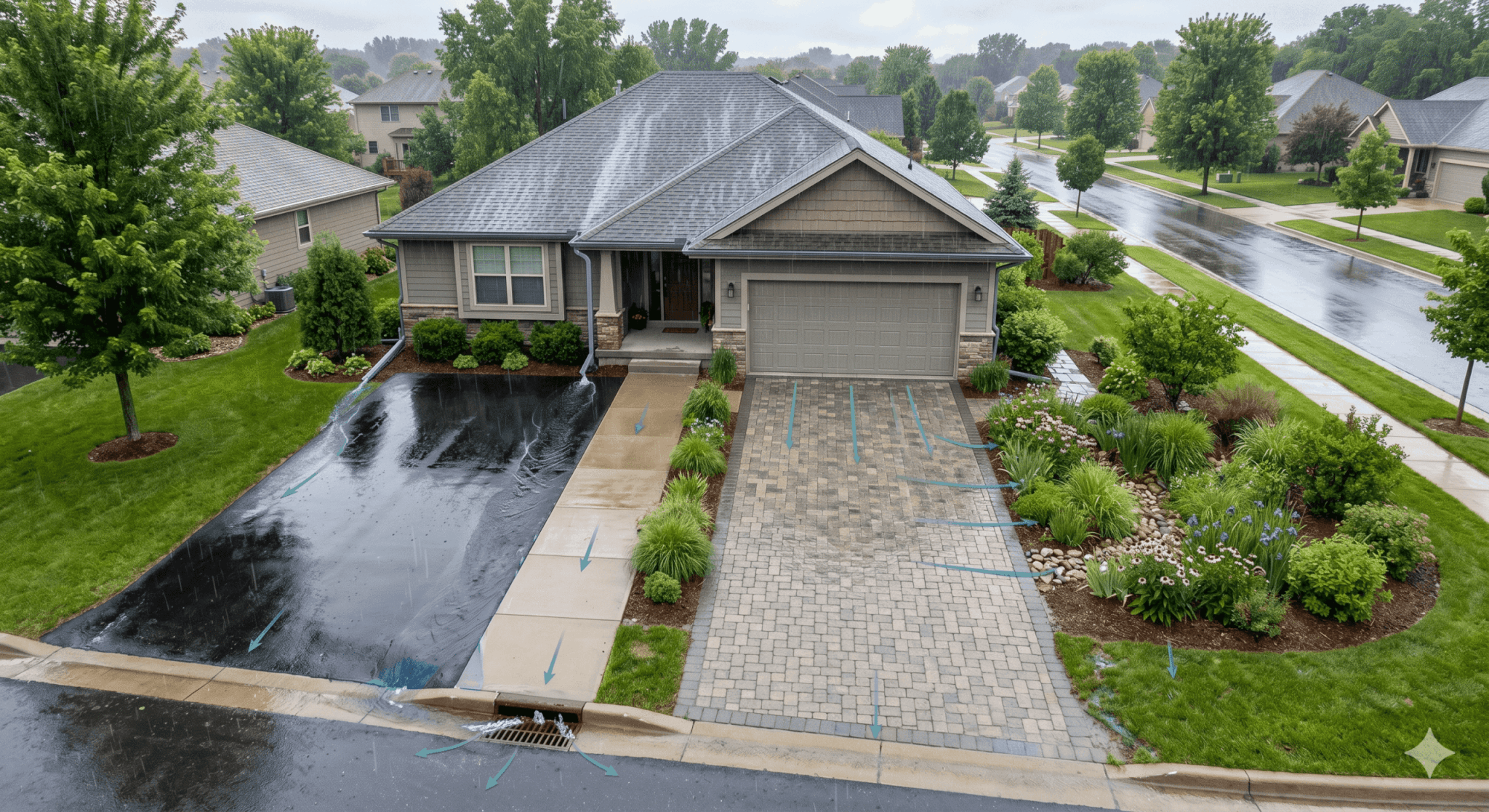
Those hard surfaces are called impervious surfaces. An impervious surface is any material that prevents rain from soaking into the ground: your roof, driveway, patio, sidewalk, or parking lot. The more impervious surface on a property, the more runoff it creates.
Why does this matter for your community’s budget and your bill? Three reasons:
- Runoff increases with development: A single home with a roof and driveway can generate thousands of gallons more runoff than the same footprint of grass or forest during a typical storm.
- Infrastructure requires ongoing maintenance: Pipes, inlets, culverts, detention ponds, and street sweeping all need steady funding. Without steady funding, these systems fall apart – which means flooding, erosion, and expensive emergency fixes.
- Water quality is legally mandated: Under the Clean Water Act, municipalities must manage stormwater pollution through MS4 permits. MS4 stands for Municipal Separate Storm Sewer System – the network of drains, pipes, and channels that carry stormwater away from streets and properties.
The more impervious surface on your property, the more runoff you contribute, and the more you typically pay. So how does your utility figure out what you owe?
Find Rainwater Rebates in Your Area
Enter your address to see local rebates for rain barrels and green infrastructure. Many programs cover 50%+ of costs.
How is your stormwater fee calculated?
The calculation varies by city, but it almost always comes down to one thing: how much hard surface is on your property. Once you get the logic, the math is simple.
Most utilities use one of three methods to calculate your bill. Each one measures your property’s runoff a bit differently:
| Method | How it works | Who it applies to |
| Impervious area measurement | Charges a rate per square foot of hard surface | All property types |
| Equivalent residential units (ERUs) | Bills based on multiples of a standard residential baseline | Residential and commercial |
| Tiered rate structure | Groups properties into tiers by development intensity | Varies by utility |
Impervious area measurement
Some utilities measure the actual square footage of hard surfaces on your property and charge a rate per square foot. This includes rooftops, driveways, patios, sidewalks, and any other surfaces that prevent rain from soaking in.
Here’s a simple example of how the math works:
- Property size: 2,000 sq ft of impervious surface
- Rate: $0.005 per sq ft per month
- Monthly bill: $10
Your utility’s rate will be different, but the math works the same way.
Equivalent residential units (ERUs)
An ERU represents the average impervious area of a typical single-family home in your community, often somewhere between 2,000 and 5,000 square feet depending on local housing patterns. Here’s an example:
- Residential properties are typically billed at 1 ERU.
- Larger or more developed properties are billed at multiples.
- If 1 ERU equals 3,000 square feet and your property has 6,000 square feet of impervious surface, you’d be billed at 2 ERUs.
Tiered rate structures
Some communities group properties into tiers based on development intensity or impervious coverage percentage, rather than measuring exact square footage. Tier 1 might be low-density residential, while Tier 3 might be a commercial parking lot or industrial site.
Your bill reflects which tier your property falls into. This makes billing easier for utilities managing thousands of different properties. Your utility’s website or annual bill should explain which method they use. And here’s the good news: credits are often available to lower what you pay.
Where does the money go?
Your stormwater fee pays for real infrastructure, not just another random charge on your bill. Here’s what your money actually pays for and how it helps your neighborhood.
Stormwater utilities use this money to keep drainage systems running and reduce flood risk in your area. The money typically goes toward three things:
- Drainage system operations and maintenance: Cleaning pipes, inspecting inlets, repairing culverts, and running street sweepers to prevent debris from entering waterways. This keeps water moving and prevents backups when it rains hard.
- Flood prevention capital projects: Funding detention basins, upgraded pipe systems, and other infrastructure that reduces flood risk for surrounding properties. These projects take years to plan and build, which is why steady funding matters.
- Green stormwater programs and incentives: Many utilities use a portion of fee revenue to fund rebates, grants, and incentive programs for property owners who install green infrastructure. Rain gardens, permeable driveways, and rain barrels all qualify in many areas.
5 ways to reduce or offset your stormwater fee
Most stormwater utilities offer credits or discounts when you install approved green infrastructure. A stormwater credit reduces your fee when you demonstrate that your property manages its own runoff onsite.
Credit amounts and eligibility vary by utility, but the basic idea is the same. These five steps can reduce your runoff and lower your bill:
1. Install a rain barrel
A rain barrel captures rainwater from your roof’s downspout before it enters the stormwater system. Capture and reuse that water for your garden, and you’ll send less runoff into the system.
Many utilities offer rebates for rain barrel installation. Some Rainplan users have gotten these rebates with no upfront cost, making rain barrels one of the easiest places to start.
2. Use permeable pavement
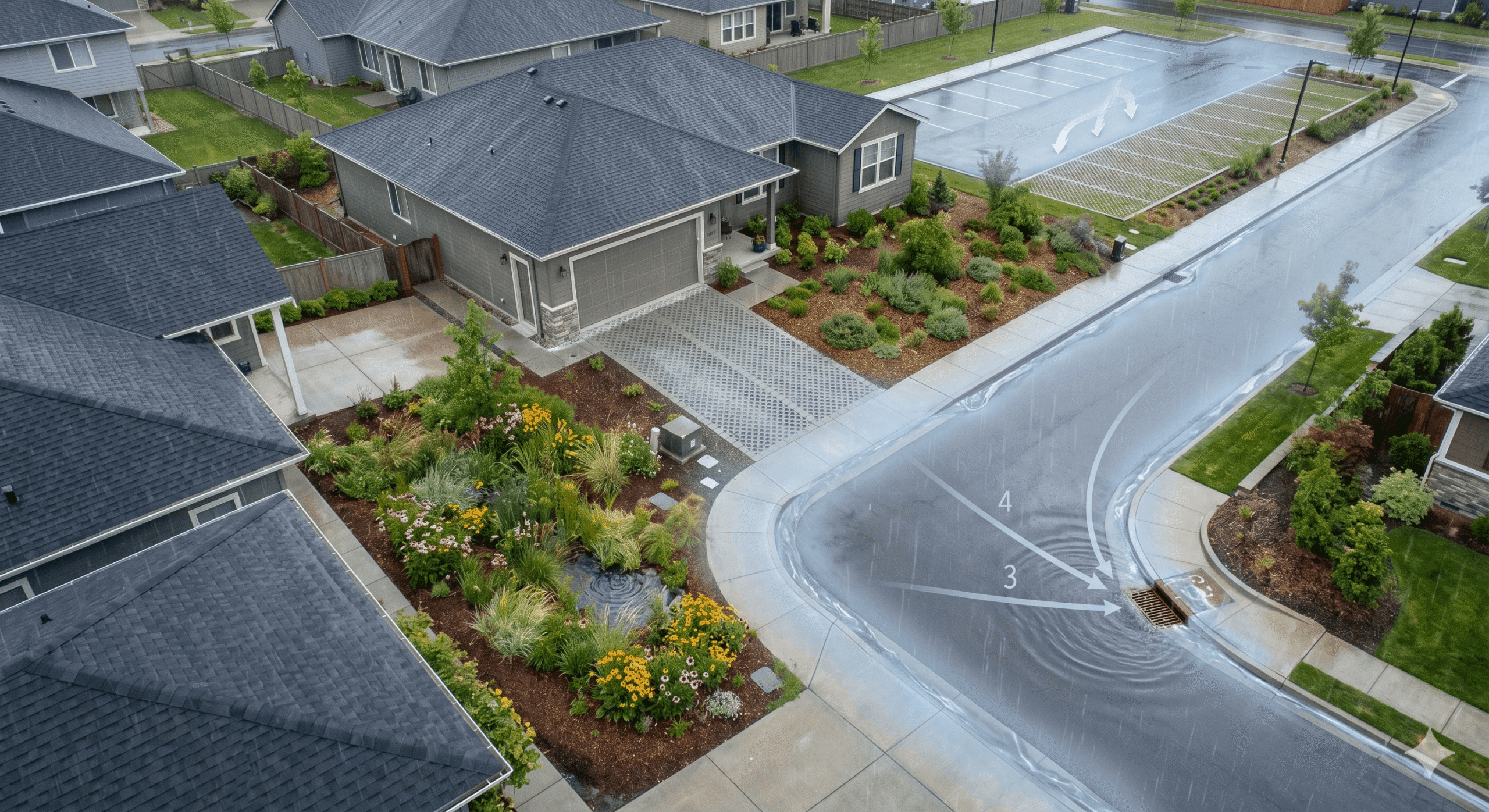
Permeable pavement allows rainwater to pass through it and soak into the ground below. Unlike concrete or asphalt, it doesn’t create runoff, so less water leaves your property and enters the drainage system.
Replace a conventional driveway or patio with permeable pavers, and you’ll cut your property’s hard surface area – which can lower your fee.
3. Build a rain garden
A rain garden is a shallow, planted depression in your yard designed to collect and absorb runoff from rooftops, driveways, or lawns. Rain gardens use native plants and specially designed soil to filter and absorb stormwater right on your property.
Many utilities recognize rain gardens as qualifying improvements for stormwater credits. They also look great and support local pollinators, so you win on both fronts.
4. Replace conventional turf with native landscaping
Traditional lawns, especially ones with compacted soil, shed more runoff than you’d think. The grass may look green, but water often runs right off the surface during heavy rain.
Replace turf with native plants and deep-rooted vegetation, and your soil will absorb more rain. Some utilities offer landscaping incentives specifically for this type of conversion.
5. Maintain onsite stormwater controls
If your property already has a detention basin, dry well, or other stormwater control, you’ll need to keep it maintained to get and keep your credit. Utilities may require:
- Annual documentation of maintenance activities
- Periodic inspections to verify performance
- Records showing the system is functioning as designed
Regular maintenance keeps your system working the way it should. Many of these upgrades come with rebates that cover the upfront cost.
Understanding financial incentives and credits for stormwater improvements
You can get financial support for green infrastructure from utilities, local governments, and state programs. Most of these incentives go unused because homeowners don’t know about them.
Knowing what’s available helps you plan upgrades that pay for themselves. Three types of financial help are available if you want to manage stormwater better:
Available tax credits for stormwater improvements
Some states and localities offer income tax credits for qualifying green infrastructure installations. These are separate from utility credits. They lower your taxes, not your monthly bill.
Utility bill credits
Stormwater utility credits are the most common incentive. They cut your monthly or quarterly fee when you install and maintain approved systems on your property.
Some utilities offer credits that can cut your base fee in half or more. Contact your utility or check their website to see how to apply and what qualifies.
Local rebate and grant opportunities
Many cities and regional water authorities offer rebates or grants for specific upgrades. The most common qualifying projects include:
- Rain barrels: Often $50-$200 per barrel
- Rain gardens: Typically $500-$2,000 per installation
- Permeable pavers: Usually calculated per square foot
- Native landscaping: Often based on area converted
Unlike credits, rebates get paid directly to you after you finish the work.
Lower your stormwater fee with Rainplan
Once you understand your stormwater fee, you can actually do something about it. Want to lower your bill, grab a rebate, or upgrade your property? The options are easier to access than most people think.
Green infrastructure upgrades, from rain barrels to native landscaping, can qualify you for credits, rebates, and tax breaks that cover installation costs. You just need to know which programs work at your address and which upgrades your utility accepts.
Rainplan shows you your property’s hard surfaces, finds eligible incentives, and connects you with vetted contractors – all in one place. Enter your address to see what programs are available in your area.
Frequently asked questions
Is a stormwater fee the same as a tax?
No, a stormwater fee isn’t a tax. It’s a user fee based on how much runoff your property creates, not what your home is worth. Unlike a tax, it pays for a service you get – and you can often lower it by managing runoff yourself.
Who is responsible for paying a stormwater fee?
The property owner usually pays the fee since it’s based on the land’s hard surfaces. For rentals, whether the tenant pays depends on the lease.
Can tax-exempt properties be charged a stormwater fee?
Yes. Churches, nonprofits, and government buildings can be charged because the fee is based on service use, not property value. Many states require all developed properties to pay, regardless of tax-exempt status.
How often is a stormwater fee billed?
It depends on your utility – fees are billed monthly, quarterly, or annually. Check your utility bill or city website for the billing schedule.
Can a property owner dispute a stormwater fee charge?
Yes. Contact your utility and ask them to review how they calculated your property’s hard surfaces. Most utilities have an appeals process, and measurement errors are a common reason bills get adjusted.
What happens to stormwater fees if you install green infrastructure?
Install approved green infrastructure like a rain garden, permeable driveway, or rain barrel, and you could qualify for a credit that cuts your fee. Credit amounts and application steps vary by utility, but most require proof of installation and regular maintenance.
Turn Runoff Into Rebates
Join Rainplan to access personalized data and discover sustainable solutions tailored to your specific site.