
Rain Gardens, Coast to Coast: Same Idea, Different Drama 🌧️🌵
“Oh, that? That’s Splashley Olsen. She keeps 500 gallons out of the sewer every storm.” Mic drop. TLDR: Rain gardens are shallow, planted basins that catch stormwater from roofs and driveways, let it soak into the ground, and filter out pollutants before they hit creeks and bays. The core idea is universal—but the playbook shifts…

“Oh, that? That’s Splashley Olsen. She keeps 500 gallons out of the sewer every storm.” Mic drop.

TLDR: Rain gardens are shallow, planted basins that catch stormwater from roofs and driveways, let it soak into the ground, and filter out pollutants before they hit creeks and bays. The core idea is universal—but the playbook shifts by coast.
East vs. West: What actually changes?
It started with a downspout tantrum. One good summer storm, and my gutters were auditioning for a water park. And it NEVER rains here! Yet, one session is enough to cause enough muddy pooling-and of course, it’s around my house’s foundation- to make me start deep diving on TikTok. (Don’t judge. It’s the information highway in the most valid form.)
Thanks for reading Stormy’s Substack! Subscribe for free to receive new posts and support my work.
Rain barrels, downspouts, various connections, and French drains all seem a bit over the top for me, and I also wanted something to add some curb appeal, not another tubular lump in my yard. Finding out about rain gardens, checked all my boxes, and became my summer crush.
A rain garden is, essentially, a shallow planted bowl that catches water from roofs and driveways so it can soak into the ground like nature intended—cleaner, calmer, with fewer side quests to your local creek. (I AM NOW A MICROPLASTIC WARRIOR!) However, all the research did make me wonder if rain gardens would be as beneficial on both coasts where plants and rain are vastly different. Here’s what I found:
Same concept on both coasts, but the vibe? Oh, wildly different.
Same Idea, Different Coastline Drama
East Coast:
Think frequent showers, humidity, and a yard that rarely has a dry martini moment. East Coast rain gardens host a steady stream of small to medium storms—more “drip, drip, drip” than “biblical epic.” Plants tend to enjoy the moisture, and mulch behaves itself. Your job is to size for regular rainfall and keep things level so water spreads out politely.
West Coast:
Picture a months-long dry spell where your rain garden lives its best crunchy-gravel life…followed by winter storms that arrive like a marching band. The West is all feast-or-famine, so the garden needs two superpowers: it must shrug off drought and gracefully handle sudden downpours. Translation: sturdier overflow, tough-as-nails plants that can go from dust bowl to kiddie pool without therapy, and—if you’re in fire country—rock or gravel near the house instead of wood mulch.
Wait—How Much Water Are We Talking?
Grab a normal paper napkin. One inch of rain on 1,000 square feet = ~623 gallons.
So if 800 sq ft of roof drains into your garden and you design for a 1-inch storm, you’re managing ~498 gallons each event. That’s a lot of “not in your basement” energy.
Rule-of-thumb sizing that actually works:
- Aim for a basin 6–12 inches deep that drains within 24–48 hours (no mozzie spa days).
- Start with the garden area at ~10% of the roof/driveway area, feeding it (or design for that 1-inch storm volume).
- Slower soils? Go wider and shallower. Faster soils? You can go a bit smaller or deeper.
Planning One Without Losing Your Weekend
1) Pick the spot like a pro.
Keep it ~10 feet from the foundation, not over septic, away from big roots and utilities. A gentle slope (1–10%) is *chef’s kiss*.
2) Test the soil’s patience.
Dig a hole 8–12 inches deep, fill it with water, and time it. If it drains in 24–48 hours, you’re golden. If not, try a larger footprint, amend the soil (more sandy-loam), or pick a different location. (Rainplan has some great infographics and sheets for how to conduct your own perc test.)
3) Sketch the bowl.
Level bottom. Low berm around the edge. Include a clear overflow spillway that points to lawn or another safe area—especially out West, where atmospheric rivers like to say hi.
4) Build a better sponge.
A sandy-loam mix (often ~50–60% sand with compost) helps water sink. East: don’t be shy with compost. West: easy on the compost so plants don’t expect room service in August.
5) Plant in zones (the runway look).
- Bottom: species that can handle wet feet after storms.
- Side slopes: sturdy natives that like “sometimes damp.”
- Top/berm: drought-tolerant, sun-happy types.
East Coast faves: blue flag iris, Joe-Pye weed, coneflower, switchgrass.
West Coast icons: yarrow, Juncus patens, California fuchsia, salvia.
Fire zones: gravel or rock mulch near structures; wood mulch farther out.
6) Connect the dots.
Extend the downspout or add a rain chain to a rock “splash pad” that diffuses flow into the basin. The more you spread it, the less it scours.
7) Finish flat, sleep easy.
A truly level basin = even ponding = faster infiltration and fewer soggy surprise corners.

Bonus: Naming Rights
When it’s done, name your rain garden something ridiculous and dignified. Our top choices:
“Splashley Olsen.”
“SoakTok.”
“Drainoncé.”
“Pore Decision.”
“Soaklahoma!”(for those in Oklahoma).
Your neighbors will ask questions; you’ll casually say, “Oh, that? That’s Splashley Olsen. She keeps 500 gallons out of the sewer every storm.” Mic drop.
If you want, share your roof square footage, your general soil type (sand, loam, clay), and which coast you’re on. Even better and easier in all honesty, is to use Rainplan’s free tools to understand your property—the Virtual Site Visit is a great start.
How to Pay for “Splashley Olsen”
Use Rainplan to hunt down the money hiding in plain sight—city and utility rebates, stormwater fee credits, and green-infrastructure incentives you probably didn’t know existed.
Pop in your address, and Rainplan screens local programs, pre-checks eligibility, and turns your design into a reimbursable scope (think native plants, soil mix, rain barrels, downspout extensions, even permeable paths).
End result: you build a gorgeous, flood-taming garden while Rainplan helps stack incentives, submit the paperwork, and shrink your out-of-pocket cost, which has been shown to move your project along by 53%.
From The Runoff Blog

What Is a Bioswale?
After a heavy rainstorm, water pooling in your driveway or overwhelming your gutters carries more than just rainwater – it picks up oil, fertilizers, and debris before flowing…
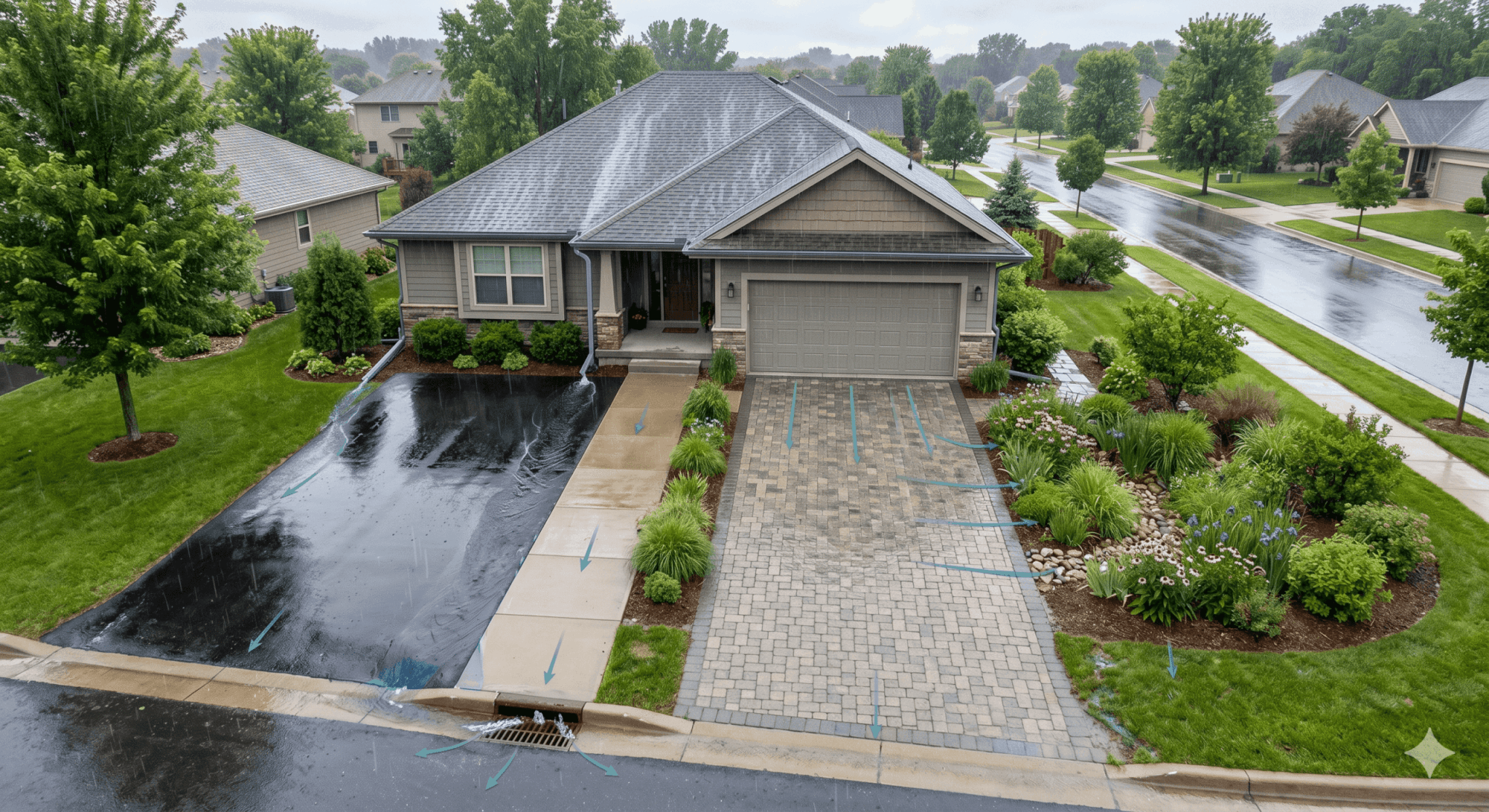
Impervious Surface: Definition, Impacts and Solutions [2026]
Most homeowners never think about their driveway, roof, or patio until a heavy rainstorm floods the street, or a stormwater fee appears on their utility bill. That’s when…

Drought Resistant Landscaping Ideas for a Low-Water Yard [2026]
Outdoor water use makes up nearly 30% of what the average household uses – in drier regions, it’s over 50%. Most of that water goes to lawns that need constant attention and…