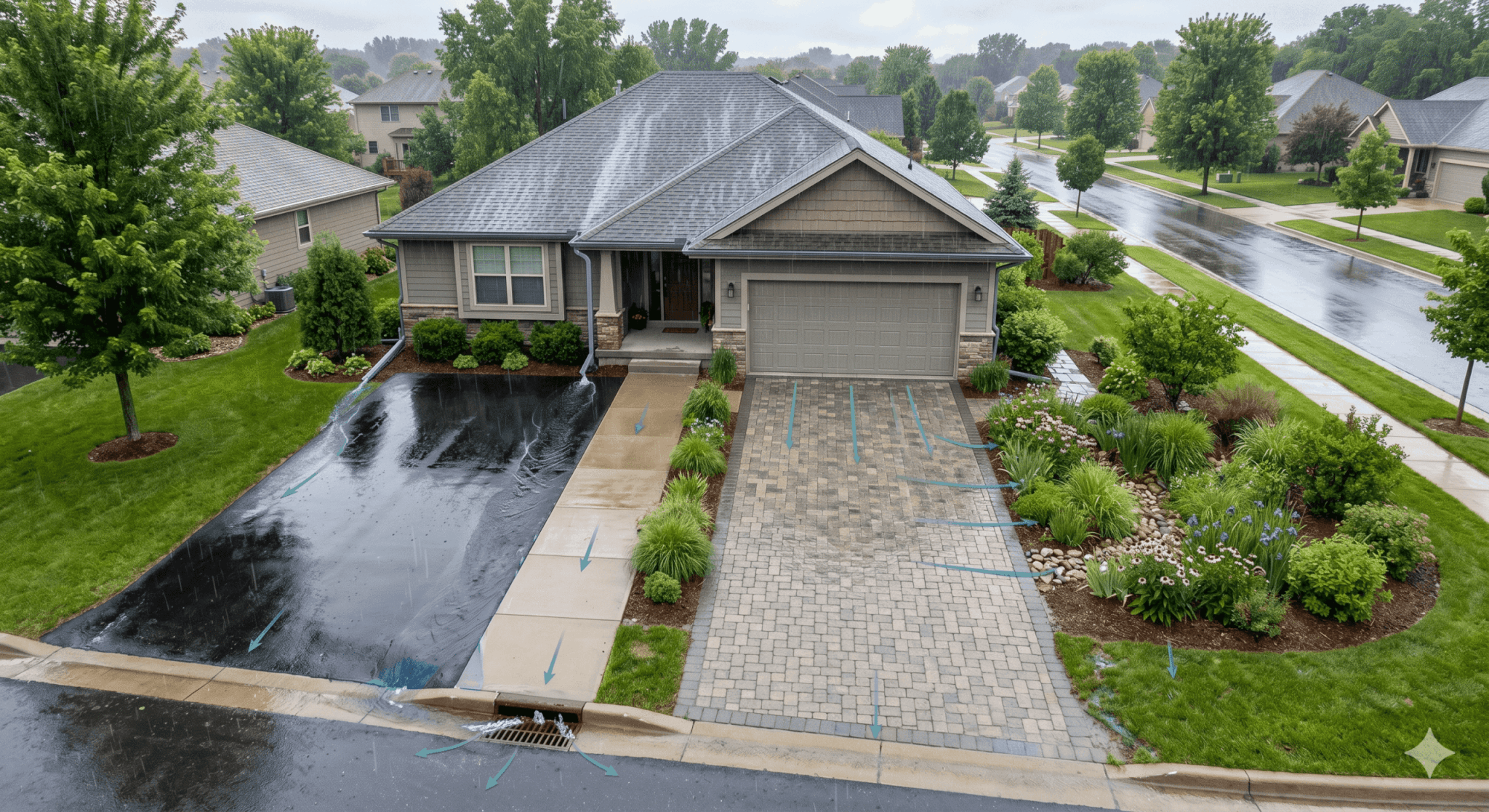



You walk downstairs after a heavy rainstorm and find water pooling across your basement floor. The familiar sinking feeling hits as you realize this isn’t the first time, and it probably won’t be the last. Water always finds the path of least resistance. When your property can’t manage runoff, your foundation becomes that path.
Basement flooding has three main culprits: surface water overwhelming your drains, groundwater seeping through walls, or sewers backing up during storms. The key is identifying which pattern matches your situation. Water that appears only during rain points to surface drainage issues like clogged gutters or poor grading. Water that shows up hours after storms suggests groundwater pressure. Sewage odors or discolored water means you’re dealing with a backup that requires immediate attention.
We’ll cover the most common causes of basement flooding, from simple afternoon fixes to larger drainage projects that protect your home long-term. You’ll diagnose the source quickly, prioritize solutions by cost and impact, and see how rain gardens and permeable surfaces stop runoff before it reaches your foundation. We’ll also cover incentives that offset improvement costs, making flood prevention pay for itself.
Key takeaways
- Fix surface water problems first: Check that your yard slopes away from the foundation and extend downspouts at least 6 feet from your house — these simple fixes solve most basement flooding.
- Test your sump pump monthly: Pour water into the pit to ensure it activates properly, and consider battery backup since pumps typically fail during storms when you need them most.
- Catch early warning signs before major flooding: Look for damp walls after rain, musty odors, and white chalky stains that prove water moves through your foundation regularly.
- Combine traditional fixes with green infrastructure: Rain gardens and permeable surfaces reduce water reaching your foundation while qualifying for municipal rebates that offset project costs.
- Access funding through Rainplan’s platform: Get virtual property assessments, connect with vetted contractors, and receive upfront project payment while the platform handles rebate paperwork and approvals.
7 common causes of basement flooding
Your basement floods because water finds its way through the path of least resistance. Rainwater pooling against your foundation, groundwater pushing up from below, a backed-up sewer line — each leaves distinct clues. Recognize these patterns and you’ll target the actual problem instead of throwing money at solutions that won’t work.
The usual suspects: surface runoff, groundwater pressure, failed drainage systems, and cracks in your foundation. Figure out which combination affects your home, and you’ll know exactly what to fix.
Key flooding sources to investigate:
- Surface runoff around the foundation: Water flows toward your house instead of away
- Rising groundwater and hydrostatic pressure: Underground water pushes through walls and floors
- Faulty or missing sump pump: Your main defense system fails when you need it most
- Leaking sewer lines or backups: Municipal systems overflow into your home
- Gutters and downspouts draining poorly: Roof water concentrates at your foundation
- Cracks and seepage in basement walls: Concrete develops pathways for water entry
- Window wells and below-grade openings: Low points collect and channel water inside
Surface runoff around the foundation
When your yard slopes toward the house, every rainstorm becomes a flooding risk. Water follows gravity, and if the ground around your foundation sits lower than the surrounding yard, you’ve created a moat. The soil next to your basement walls gets saturated and forces water through any crack, joint, or porous spot in the concrete.
Check your grading after the next rain. Stand at your foundation and look outward — water should flow away from the house, dropping at least 3 inches over the first 5 feet. Puddles near the foundation or water flowing toward the house? Poor grading is your problem.
Downspouts dumping water within 3 feet of your foundation make this problem worse, turning manageable rainfall into concentrated streams aimed at your basement.
Rising groundwater and hydrostatic pressure
Groundwater doesn’t care about your basement. It simply seeks its own level. When heavy rain or snowmelt raises the water table, that water pushes against your basement floor and walls with surprising force. A water table rise of just 2 feet creates enough pressure to force water through microscopic pores in previously dry concrete.
You’ll typically see this water first at the cove joint, where the basement wall meets the floor. If your basement stays damp even during dry spells, or if water appears hours after rain stops, groundwater is your likely culprit.
This delay happens because groundwater moves slowly through soil, gradually building pressure against your foundation.
Faulty or missing sump pump
Your sump pump is the only thing stopping thousands of gallons from flooding your basement. When it fails (usually during the exact storm when you need it most), water that normally gets pumped away fills your basement instead.
Common failure points include:
- Power outages during storms
- Stuck float switches
- Clogged discharge lines
- Overwhelmed pump capacity
During a major storm, a failed sump pump means 6 inches of water in under an hour. Many homes built before 1970 don’t have sump systems at all.
Testing your pump takes 5 minutes: pour a bucket of water into the pit and watch it activate. If nothing happens, or if the pump runs but doesn’t move water, you’ve found your problem.
Leaking sewer lines or backups
Sewer water in your basement brings a special kind of misery. Older cities often have combined sewer systems that carry both stormwater and wastewater in the same pipes. During heavy rain, these systems overflow, pushing sewage back through your floor drains.
Identify sewer-related flooding by these signs:
- Distinct sewage smell
- Gray or brown water discoloration
- Flooding that coincides with toilet flushing or washing machine use
- Water entering through floor drains during storms
If flooding happens when you flush toilets or run washing machines, you’re dealing with a sanitary sewer problem. But if it only happens during storms, the issue involves your storm sewer connection or a combined system backup. Either way, this isn’t just water damage. It’s a health hazard that needs immediate attention.
Gutters and downspouts draining poorly
Here’s the math: one inch of rain on a 1,000 square foot roof means about 600 gallons of water. Your gutters and downspouts need to handle all of it. When gutters clog with leaves or pull away from the fascia, water overflows directly onto the ground next to your foundation.
Watch your gutters during the next rainstorm. Look for overflow spots, sagging sections, and downspouts that disconnect at the joints. Water sheeting off your roof or downspouts creating puddles next to the house? You’ve found a major flooding source.
That concentrated flow saturates the soil exactly where you don’t want it.
Cracks and seepage in basement walls
Concrete naturally develops hairline cracks as it cures and settles. These cracks look harmless, but water travels through openings as narrow as 1/32 inch. Look for white, chalky deposits called efflorescence on your basement walls. These mineral stains prove water moves through the concrete, even without visible leaks.
Different crack patterns indicate different problems:
- Vertical cracks: Often result from normal settling
- Horizontal cracks: Suggest more serious pressure problems
- Staining patterns: Trace from cracks down to the floor, showing exactly where water enters and travels
These clues tell you whether you’re dealing with surface water or deeper foundation problems.
Window wells and below-grade openings
Window wells act like buckets when their drainage fails. Without proper gravel drainage or a working drain tile connection, wells fill with water that seeps through window frames and sills. Leaves and debris compound the problem by blocking what little drainage exists.
Check your window wells after heavy rain. Standing water means the drainage system has failed. Also inspect where utilities enter your basement. Gas lines, water pipes, and electrical conduits leak if their entry points aren’t sealed properly.
How to recognize early warning signs
Small moisture problems announce themselves long before major flooding occurs. Catch these signals early and you can fix problems during dry weather when contractors are available and materials are in stock. Know what to look for and check regularly, especially during seasonal transitions when freeze-thaw cycles and heavy rains stress your drainage.
Early detection saves thousands in damage costs and prevents the health hazards of prolonged moisture. Here’s what to monitor in your basement throughout the year.
Damp floors or walls
Touch your basement walls after a rainstorm. Damp spots that appear during or after rain indicate seepage, while moisture that forms on cool surfaces during humid weather is just condensation. Location matters. Dampness at the cove joint suggests groundwater pressure, while wet spots high on walls point to surface water entry.
Dark patches on concrete floors or walls show where water regularly enters. These areas might dry between storms, but the discoloration remains. Map these spots to identify patterns. Do they align with downspout locations, follow crack lines, or concentrate near windows?
Musty odors and humidity
That distinctive basement smell isn’t normal. It’s mold and mildew signaling moisture problems. Even without visible water, persistent musty odors mean moisture is hiding somewhere. Basements should stay below 60% relative humidity. Above that threshold, mold thrives on organic materials like wood framing, drywall paper, and stored cardboard boxes.
If walking downstairs feels like entering a different climate zone, investigate before visible problems develop. High humidity damages stored items, corrodes metal, and creates perfect conditions for wood rot and mold.
White chalky stains (efflorescence)
Efflorescence looks like someone brushed white powder on your basement walls. These mineral deposits form when water moves through masonry, dissolving salts and leaving them behind as it evaporates. While the stains themselves won’t hurt anything, they’re proof that water regularly travels through your walls.
Fresh efflorescence feels powdery and brushes off easily. Old deposits become hard and crusty. The pattern tells you about water movement. Vertical streaks mean water running down walls, while widespread deposits mean moisture wicking through large areas of masonry.
Visible mold growth
Mold appears first in corners, behind stored items, and around windows. Anywhere moisture lingers. Black spots, green patches, or fuzzy white growth all signal ongoing water problems. Beyond health concerns, mold is your early warning that moisture control needs immediate attention.
Don’t just clean visible mold and forget about it. Find and fix the moisture source, or it will return. Mold can’t grow without water, so its presence always means moisture is getting in somewhere.
8 ways to fix a flooding basement
Fix basement flooding by starting with simple, low-cost solutions before moving to complex installations. The right fix depends on your water source, but combining multiple approaches gives you the most reliable protection. Each solution addresses different water entry points. Understanding which ones apply helps you prioritize your investment.
Here’s how to tackle each solution, from simplest to most involved, with real costs and maintenance needs.
Step 1: Improve grading and redirect surface water
Proper grading keeps surface water moving away from your foundation. Soil should slope away at a 6-inch drop over the first 10 feet. Adding and compacting soil to achieve this grade typically costs $500–2,000, depending on your yard size. This single fix often eliminates flooding when surface water is your main problem.
Start by building up low spots near the foundation with clay-rich soil that sheds water. Avoid loose topsoil or mulch directly against the house. These materials hold water like a sponge. After grading, maintain the slope by checking annually and adding soil where settling occurs.
Step 2: Install or repair sump pump
A properly functioning sump pump moves 35–40 gallons per minute away from your foundation. If your pump runs constantly during normal rain, you need either a higher-capacity unit or additional drainage improvements. Battery backup systems keep pumps running during power outages, exactly when you need them most.
Test your pump monthly by pouring water into the pit until it activates. Clean the intake screen, check that the discharge line isn’t frozen or blocked, and verify water exits at least 10 feet from your foundation. Consider adding a second pump if your basement has flooded before. Redundancy gives you peace of mind.
Step 3: Waterproof basements with sealants
Interior sealants offer temporary relief for minor seepage, costing $3–9 per square foot. These coatings work for cosmetic dampness but won’t stop serious water pressure. Exterior waterproofing addresses water before it reaches your walls but requires excavation and costs $80–230 per linear foot.
Choose interior sealants only for surface dampness without active water pressure. For ongoing seepage or visible water entry, exterior waterproofing is the only permanent solution. The excavation also lets you inspect and repair foundation drainage systems.
Step 4: Clean and extend downspouts
Downspouts should discharge at least 6 feet from your foundation, or 10 feet if you have clay soil that drains slowly. Extensions, splash blocks, and underground pipes all work. Just move water far enough away that it won’t flow back toward the house.
Clean gutters twice yearly and check connections after storms. Many homeowners discover their flooding stops completely after extending downspouts. This simple, low-cost fix often works immediately. Underground extensions work great but need periodic cleaning to prevent clogs.
Step 5: Maintain and upgrade footing drains
Footing drains (perforated pipes around your foundation perimeter) collect groundwater before it enters your basement. Signs of failure include water at the wall-floor joint and dampness during dry weather. Homes built before 1950 often lack these drains entirely.
Cleaning existing drains might restore function, but collapsed or missing systems require new installation. Interior French drains offer an alternative, collecting water inside the basement and routing it to a sump pump. While less ideal than exterior drainage, interior systems work when exterior excavation isn’t practical.
Step 6: Investigate sewer backflow prevention
Backflow preventers stop municipal sewer overflow from entering your home through floor drains. Gate valves, flap valves, and overhead sewers each offer different protection levels. Installation requires permits and professional plumbing, typically costing $1,500–5,000.
If your basement floods with sewage-smelling water during heavy rain, prioritize backflow prevention. Document these incidents for insurance claims and notify your municipality. Widespread backups might qualify for infrastructure improvements or compensation programs.
Step 7: Repair cracks and seepage channels
Different crack types need different repairs:
- Active leaks: Hydraulic cement stops flowing water
- Structural cracks: Epoxy injection restores strength
- Minor seepage: Polyurethane sealants flex with movement
Call professionals for cracks wider than 1/4 inch, horizontal cracks indicating pressure, or cracks that continue growing. Properly repaired cracks stay watertight for 10–15 years, but monitor them annually for new movement or moisture.
Step 8: Monitor plumbing and appliances
Indoor flooding sources include water heater failures (releasing 40–80 gallons), washing machine hose bursts, and frozen pipes. Schedule annual water heater inspections, replace washing machine hoses every 5 years, and maintain basement temperatures above 55°F in winter.
Install water sensors near potential leak sources. These inexpensive devices alert you to leaks before major damage occurs. Some smart sensors even shut off water automatically when they detect leaks.
Green infrastructure solutions for basement flooding
Green infrastructure (rain gardens, permeable pavers, rain barrels) manages stormwater where it falls, reducing the volume reaching your foundation. These nature-based solutions protect your basement while improving your yard’s appearance and environmental impact. Many municipalities now offer substantial rebates for green infrastructure, making these solutions more affordable than traditional drainage fixes.
Unlike conventional drainage that simply moves water elsewhere, green infrastructure absorbs, filters, and slowly releases stormwater. This approach reduces peak flows during heavy rain and provides long-term environmental benefits.
| Solution | Typical cost | Water capacity | Maintenance needs |
| Rain barrels | $100–300 | 50–80 gallons | Low |
| Cisterns | $1,500–5,000 | 500–2,000 gallons | Medium |
| Rain gardens | $500–2,000 | Infiltrates 1–2 inches/hour | Low |
| Permeable pavers | $10–20/sq ft | 80–90% infiltration | Medium |
Rain gardens and native landscaping
Rain gardens are shallow depressions that capture and filter stormwater through specially selected soils and plants. Size your rain garden at 20–30% of the drainage area it serves. A 100 square foot garden handles runoff from 300–400 square feet of roof or pavement. Native plants develop deep roots that maintain soil infiltration rates while requiring minimal maintenance once established.
Position rain gardens at least 10 feet from your foundation to avoid creating new water problems. The depression should be 4–8 inches deep with flat bottom and gently sloped sides.
Rainplan helps identify whether your property qualifies for rain garden rebates and connects you with contractors who understand proper sizing and plant selection for your area’s climate.
Permeable pavers and driveways
Standard driveways shed nearly 100% of rainfall directly toward storm sewers or your foundation. Permeable pavers infiltrate 80–90% of rainfall through joints filled with gravel, cutting runoff volume by up to 90%. At $10–20 per square foot installed versus $6–12 for standard concrete, the premium pays off through reduced flooding risk and potential stormwater fee credits.
Maintenance involves occasional vacuuming to prevent sediment clogging. In winter, avoid sand for traction. Use coarse salt or gravel instead. The investment makes sense if your driveway contributes to basement flooding or if you’re replacing deteriorated pavement anyway.
Rain barrels and cisterns
One inch of rain on a 1,000 square foot roof fills about 10 standard rain barrels. While barrels hold just 50–80 gallons each, they reduce peak flow during storms when every gallon counts. Cisterns store 500 gallons or more, giving you serious capacity plus irrigation water during dry periods.
Position barrels on stable blocks near downspouts, ensuring overflow directs away from the foundation. Some areas require mosquito-proof screens and child-safe lids. Check local regulations before installation. Some municipalities restrict or incentivize rainwater harvesting differently.
Finding financial relief and incentives
Basement flooding solutions often qualify for financial assistance you might not know exists. Municipalities benefit when private properties manage stormwater effectively, reducing strain on aging infrastructure. These programs turn your flooding problem into an opportunity for property improvement with reduced out-of-pocket costs.
Understanding available programs before starting work maximizes your savings and ensures you meet all requirements for reimbursement. Many programs require pre-approval or specific contractor certifications.
Rebates and municipal programs
Cities increasingly offer rebates for stormwater improvements on private property. Programs vary widely by location, but most focus on reducing runoff volume and improving water quality.
Typical rebate ranges include:
- Rain barrels: $50–200 per barrel
- Permeable surfaces: $2–5 per square foot
- Rain gardens: $1,000–3,000 per property
- Downspout disconnection: $50–100 per downspout
Washington DC’s RiverSmart program offers up to $1,200 per property for stormwater improvements. Similar programs exist nationwide, though amounts and eligible improvements vary. Some focus on water conservation, others on flood reduction, and many address both simultaneously.
Financing with specialized loans or grants
PACE (Property Assessed Clean Energy) financing covers water management improvements with loans attached to your property, not you personally. Repayment happens through property tax bills over 10–20 years, often at below-market interest rates. This structure makes improvements immediately cash-flow positive if they prevent even one flooding incident.
Some utilities offer on-bill financing for water management improvements. These programs let you pay for upgrades through monthly utility bills, spreading costs over time without traditional loan applications.
How Rainplan helps you access incentives
Rainplan streamlines the entire process from assessment to installation. The platform identifies available incentives based on your specific address and planned improvements, eliminating hours of research across multiple agency websites. Virtual assessments analyze your property’s characteristics, recommending solutions tailored to your flooding issues and local rebate programs.
The platform connects you with vetted contractors familiar with program requirements and application processes. Most importantly, Rainplan can pay approved project costs upfront, removing the financial barrier that stops many homeowners from protecting their properties. You focus on selecting solutions while Rainplan handles the paperwork and funding logistics.
Protect your home with smart stormwater solutions
Stopping basement flooding starts before the storm – learn exactly what to do before the next storm hits.
Basement flooding doesn’t have to be your recurring nightmare. Whether you start with simple downspout extensions or pursue comprehensive green infrastructure, each improvement reduces your risk. The key is taking action before the next storm, not after the next flood.
Smart homeowners combine traditional drainage fixes with green infrastructure to create layered protection. This approach addresses multiple water sources while potentially qualifying for rebates that offset project costs.
Your flooding solution starts with understanding your specific water sources and available incentives. Rainplan’s assessment process identifies both, connecting you with contractors who can implement solutions that work for your property and budget. The platform’s upfront payment model means you can start protecting your home immediately, without waiting for reimbursements or loan approvals.
Frequently asked questions
How do I handle basement flooding if my home is over 50 years old?
Older homes often lack modern drainage systems but can be retrofitted with interior French drains, sump pumps, and exterior waterproofing to match current standards. Start with a professional assessment to identify which original features still function and which need updating.
What should I do if I tried multiple solutions and my basement still floods?
If multiple solutions haven’t resolved your flooding, a professional assessment can identify overlooked causes like failed municipal infrastructure, underground springs, or structural foundation issues that DIY fixes can’t address.
Are there temporary fixes I can implement immediately during heavy rain?
Emergency measures include sandbags around window wells, portable pumps for standing water, and plastic sheeting over window wells, though these provide only short-term relief during active storms.
Should I call a plumber or waterproofing contractor for basement flooding?
Plumbers handle sewer backups and indoor plumbing issues, while waterproofing contractors address foundation seepage and exterior water intrusion — choose based on whether you smell sewage or see clean water entering.
Can green infrastructure prevent flooding during extreme weather events?
Green infrastructure reduces flooding frequency and severity but may not prevent all flooding during record-breaking storms that exceed designed capacity — it’s about risk reduction, not absolute prevention.
How quickly do I need to address basement water damage?
Address basement water damage within 24–48 hours to prevent mold growth, prioritizing immediate water removal and dehumidification while documenting everything for insurance claims.
Related reading: drainage and flood prevention
- Stormwater management plan: full checklist, costs, and rebates
- Permeable pavement: types, costs, and stormwater benefits
- Rain gardens: a homeowner’s complete guide
- What is green infrastructure? Examples and rebates for homeowners
- Rainwater harvesting 101: collect, store, and use rainwater at home
- Stormwater utility fees: what they are and how to reduce them
- What is a green bank? Financing for stormwater and green infrastructure