

Most homeowners know their sewer bill exists. Few know what’s actually driving it up.
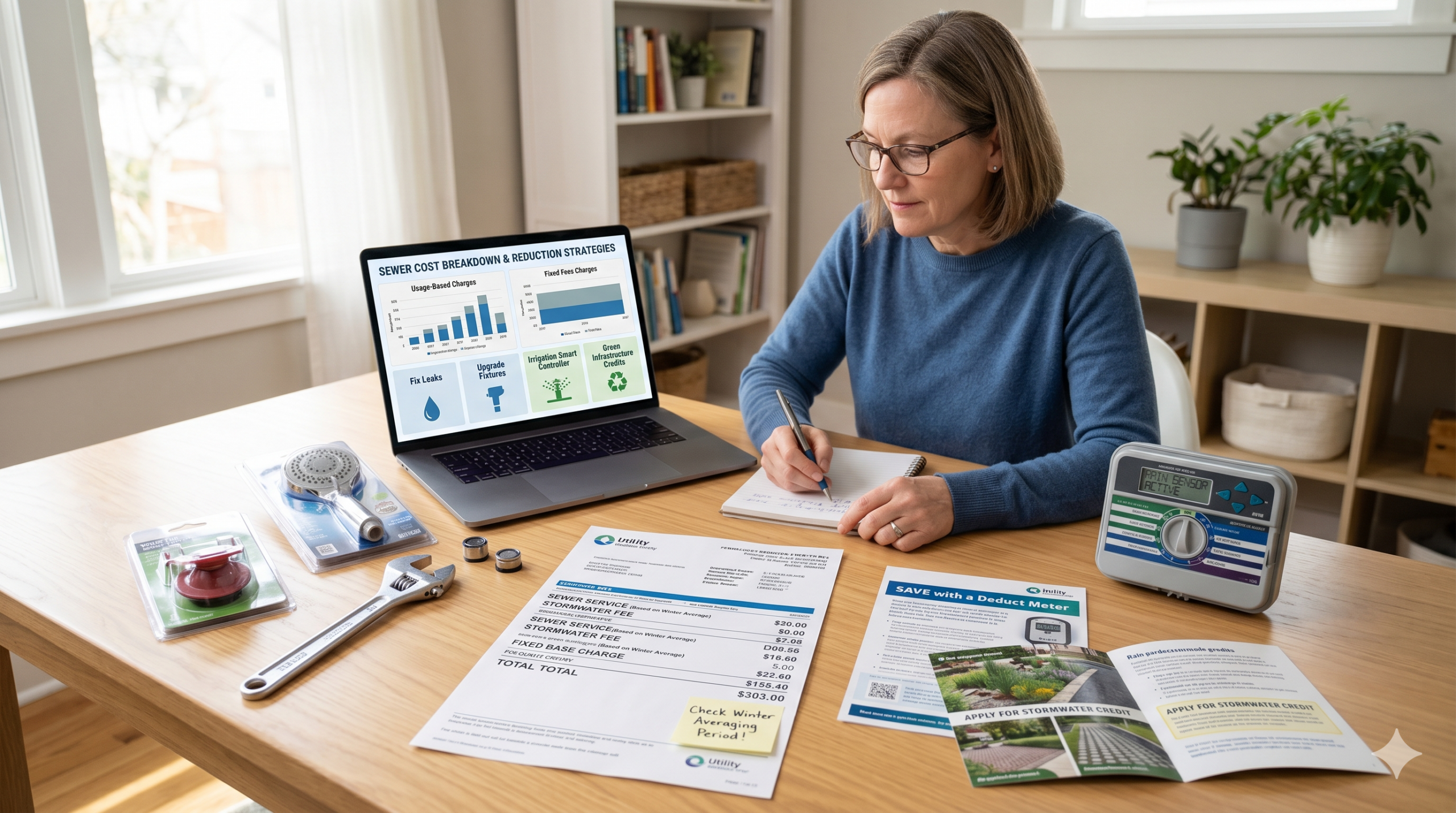
Your sewer charge is rarely just one thing. It can include a wastewater fee tied to your metered water use, a fixed base charge, and in many cities, a separate stormwater fee based on how much hard surface your property has — your roof, driveway, and patio all count. That means fixing a leaky toilet and installing a rain barrel can both lower your bill, just through completely different mechanisms. Knowing which lever to pull makes the difference between a small tweak and real, lasting savings.
This guide covers 10 practical ways to reduce your sewer bill in 2026, from quick behavioral changes and fixture upgrades to utility credits, deduct meters, and stormwater fee reductions through green infrastructure. Whether your bill crept up gradually or jumped without warning, you’ll find a path forward here — and for homeowners ready to explore property-specific incentives, platforms like Rainplan can help identify exactly which improvements qualify at your address.
Quick answer: Sewer charges are calculated at 80–130% of your metered water use, so every gallon you save on water directly lowers your sewer bill too. The fastest wins are fixing a running toilet (which wastes up to 200 gallons per day), cutting outdoor irrigation (30–50% of household use), and installing low-flow fixtures. Cities with stormwater credit programs offer additional reductions of $10–$30 per month for rain barrels and permeable pavement.
Key takeaways
- Fix leaks before anything else: A running toilet can waste tens of thousands of gallons a year — and every wasted gallon raises your sewer bill.
- Your stormwater fee is a separate charge you can actually reduce: Installing a rain garden, rain barrel, or permeable driveway can qualify you for local credits that lower this line item directly.
- Outdoor water use is quietly inflating your bill: Irrigation water gets billed as sewer in most cities, even though it never enters a drain — a deduct meter removes it from your sewer calculation entirely.
- Rainplan identifies which green infrastructure upgrades qualify at your address, connects you with vetted contractors, and can cover approved project costs upfront so you’re not paying out of pocket to get started.
- You can request a sewer bill adjustment after a leak — most people don’t know this: Contact your utility’s billing department and ask specifically about a leak adjustment or winter average appeal to recover overcharges.
What is a sewer bill?
A sewer bill is the charge your utility sends for treating and transporting the wastewater that leaves your home. Every time you flush a toilet, run the dishwasher, or take a shower, that water travels through pipes to a treatment facility where it gets cleaned before returning to the environment.
Most U.S. cities calculate your sewer charge based on how much water you use, not on what actually goes down the drain. Your utility reads your water meter and assumes that most of the water entering your home eventually leaves through the sewer system. Use less water, pay less for sewer.
Most sewer bills have three parts that make up your total charge. Knowing what each one represents helps you identify which parts of your bill you can control through usage changes versus property improvements.
- Fixed base charge: A flat monthly fee tied to your water meter size that stays the same regardless of usage
- Volumetric sewer charge: A variable charge based on how many gallons of water you use each billing period
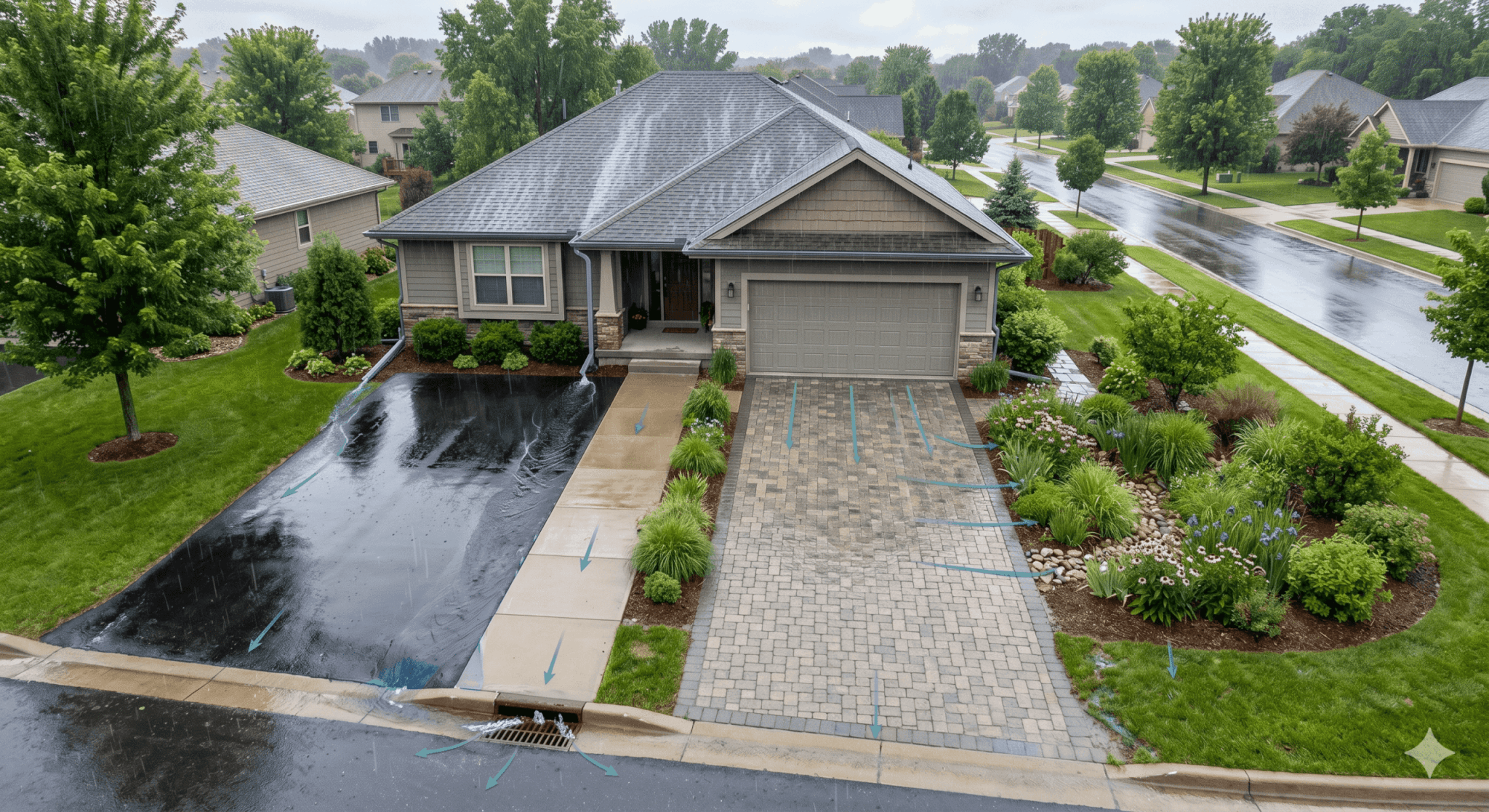
- Stormwater fee: A separate charge tied to the amount of hard surface on your property that sheds rainwater into the public drainage system
Why is my sewer charge so high?
A high sewer charge usually traces back to one of several common causes. Figure out which one applies to you, and you’ll know exactly where to start. Here’s what to look for.
| Cause | What’s happening | Impact |
| Hidden leaks | A running toilet or dripping faucet adds to metered usage silently | Tens of thousands of wasted gallons per year |
| High indoor water use | Long showers, partial laundry loads, running faucets | Compounds metered volume every billing cycle |
| Outdoor irrigation billed as sewer | Irrigation water is included in metered usage even though it never enters the drain | Can double or triple summer bills |
| Winter averaging | Your winter consumption sets your sewer rate for the rest of the year | A single winter leak can elevate your rate all year |
| Oversized water meter | Fixed base charges scale with meter size | You pay a higher base charge every month regardless of usage |
| Stormwater fee | Tied to roof, driveway, or paved surface area — not water use | Reducing water use won’t lower this charge |
10 practical ways to reduce your sewer bill
Turn Runoff Into Rebates
Join Rainplan to access personalized data and discover sustainable solutions tailored to your specific site.
The following methods address the most common causes of high sewer bills, from quick fixes to longer-term upgrades. Some take minutes; others require a contractor. Work through this list to find what’ll actually move the needle for your home.
1. Fix leaks and drips first
Leaks are the single highest-impact fix for most households. A running toilet wastes water silently around the clock, and because sewer charges are based on metered water use, every wasted gallon adds to your bill.
Two simple ways to check for leaks at home:
- Food coloring test: Put a few drops in the toilet tank and wait 15 minutes without flushing. If color appears in the bowl, the flapper is leaking and needs replacement.
- Meter test: Check your water meter before and after a two-hour window when no water is being used. If the meter moves, there’s a leak somewhere that needs attention.
2. Shorten showers and turn off faucets
Daily habits add up fast on your meter, which means they add up on your sewer bill too. Cutting a 10-minute shower to 5 minutes, done daily across a household, meaningfully reduces monthly water volume. Small adjustments add up quickly when you’re paying for every gallon twice: once for water, once for sewer.
Turn off the tap while brushing teeth, washing dishes by hand, or soaping up in the shower. These changes are free and can cut hundreds of gallons from your monthly usage.
3. Run full loads for laundry and dishwashing
Washing machines and dishwashers use the same amount of water whether they’re full or half-empty. Running half-empty loads doubles the water and sewer cost per item washed. Waiting for a full load is one of the simplest habit changes with a direct impact on monthly usage.
Using the dishwasher rather than hand-washing with a running faucet saves 3–5 gallons per load on average. If you’re trying to reduce your sewer bill, the dishwasher is often your ally, not your enemy.
4. Switch to low-flow fixtures
Low-flow or WaterSense-labeled fixtures cut water use without any noticeable difference in pressure or performance. WaterSense is the EPA’s labeling program for water-efficient products, similar to Energy Star for appliances. Here’s where to start:
- Toilets: Older models manufactured before 1994 can use significantly more water per flush than modern low-flow versions. Replacing them directly lowers both the water and sewer portions of your bill.
- Faucet aerators: The lowest-cost upgrade available. They screw onto existing faucets and reduce flow rate without affecting water pressure. If budget is a concern, start here.
5. Use energy-efficient appliances
Energy Star-certified washing machines use less water per cycle than standard models, which reduces metered water volume and therefore sewer charges. It’s a bigger upfront cost, but if your washer’s on its last legs anyway, the water savings add up over time.
When shopping for a new washer, check the water usage specifications alongside energy ratings. The water savings built into the machine itself can pay off over time on your utility bills.
6. Adjust outdoor watering habits
Outdoor irrigation is a major source of metered water use, and in most cities, it’s billed as sewer even though it never enters the drain. Two quick changes can cut waste right away:
- Water early: Irrigate before 9 a.m. to reduce evaporation. Less water is needed to achieve the same result.
- Add a rain sensor: A rain sensor automatically pauses irrigation when it has recently rained, preventing unnecessary watering cycles.
7. Understand how winter water use affects your annual bill
Some utilities calculate your sewer charge based on your average water use during winter months (usually December through March), then use that number as your baseline for the rest of the year. This billing method is called winter averaging.
Two things to know about how this affects you:
- Past leaks carry forward: If you had a leak or unusually high usage during those winter months, your sewer charge for the following months could be elevated, even after the leak is fixed.
- Low winter usage locks in savings: Keeping winter usage low sets a lower sewer rate for the year ahead.
Check with your local utility to find out whether winter averaging applies to your account. Cities like Seattle and Portland use this method. If it applies to you, fixing leaks and reducing indoor water use during those months has an outsized impact on your annual bill.
8. Request a sewer bill adjustment or credit
Many utilities offer adjustments or credits that most customers never ask about. These adjustments aren’t automatic — you must request them. Here’s what to ask about:
- Leak adjustment: If a leak inflated your water use and therefore your sewer charge, many utilities will recalculate your bill once the leak is repaired and you provide documentation.
- Pool-fill credit: Some utilities offer a one-time annual credit for water used to fill a swimming pool, since that water doesn’t enter the sewer.
- Winter average appeal: If your winter average was inflated by an unusual event, some utilities allow you to appeal the calculated baseline.
- Customer assistance programs: Many utilities offer income-based bill discounts, payment plans, or crisis vouchers.
Call your utility’s billing department and ask specifically about each of these options. Ask like you’re solving a problem together, not filing a complaint.
9. Install a separate irrigation or deduct meter
A deduct meter — also called a sewer submeter or irrigation meter — is a secondary meter installed on the line that supplies water to outdoor irrigation, pools, or other uses that don’t return water to the sewer. The gallons registered on this meter are subtracted from your sewer charge, so you pay for water but not for sewer treatment on that volume.
This works best for homes with big lawns, gardens, or pools where outdoor watering makes up a large chunk of your total water use. Keep in mind:
- The meter must be approved by your local utility and installed to their specifications.
- The homeowner typically covers the installation cost.
- Not all utilities offer this program — confirm availability before committing.
10. Reduce your stormwater fee with green infrastructure
The stormwater fee is a separate charge on many utility bills, based on how much hard surface you have, not how much water you use. Some cities offer stormwater fee discounts or credits when property owners manage rainwater on-site using green infrastructure.
Green infrastructure includes features that absorb or slow stormwater runoff before it reaches the public system. Several cities have active programs worth exploring:
- Portland: Clean River Rewards
- Washington D.C.: RiverSmart Rewards
- Philadelphia: Stormwater Credits Program
Rainplan shows you which green infrastructure upgrades qualify for local incentives, connects you with vetted contractors, and can cover approved project costs upfront so you’re not stuck paying out of pocket or hunting for the right installer.
How a separate irrigation meter removes outdoor water from your sewer bill
If outdoor watering makes up a significant portion of your water use, a deduct meter can create meaningful savings. Here’s how to get one installed:
Step 1: Confirm the program with your utility.
Contact your utility’s billing or engineering department to confirm the program exists and get the specifications for approved meters and installation.
Step 2: Hire a licensed plumber.
Install the approved meter on the irrigation supply line according to utility requirements.
Step 3: Submit documentation to activate the deduction.
Submit the required paperwork to your utility to activate the deduction on your account.
Not every utility offers this, and some have waiting lists or only accept applications at certain times of year. Ask your utility directly about availability and timeline before committing to installation.
Stormwater credits for green infrastructure
Stormwater credits lower the stormwater charge on your utility bill, not the sewer or water portion. To qualify, you typically need to install an approved green infrastructure practice and submit an application with supporting documentation such as photos, site plans, or contractor verification.
Common qualifying practices vary by city, but most programs recognize the following:
| Practice | How it works |
| Rain gardens | Shallow planted depressions that collect and absorb runoff from roofs or driveways |
| Permeable pavement | Allows water to pass through the surface into the ground below |
| Rain barrels or cisterns | Capture roof runoff for later use, reducing volume entering the stormwater system |
| Green roofs | Vegetated roof layers that absorb rainfall before it becomes runoff |
What qualifies and how much you save depends on your city and utility. Search your utility’s website for “stormwater credit” or “stormwater incentive” to find local programs. Rainplan’s incentive database aggregates local stormwater programs and rebates so you can see what’s available at your address — without searching utility by utility.
How to request a sewer bill adjustment
If you’ve had a leak, filled a pool, or experienced an unusual billing event, requesting an adjustment can recover some of the overcharge. It’s simple once you know what to ask for.
Step 1: Gather your documentation.
Collect recent utility bills, plumber invoices or repair receipts, and meter readings before and after the event.
Step 2: Contact your utility’s billing department.
Ask specifically for the “leak adjustment,” “sewer credit,” or “winter average appeal” process. Use those exact terms. Utilities often have specific program names, and using the right words helps you get routed to the right department.
Step 3: Submit your request in writing.
Many utilities require a written or online form submission. Keep a copy for your records.
Step 4: Follow up.
If you don’t hear back within 30 days, follow up. Adjustments can take one to two billing cycles to appear.
A few things to keep in mind:
- Adjustments are typically one-time credits, not permanent rate changes.
- Act promptly after a leak is repaired — many utilities have a time limit on retroactive adjustments.
Take control of your sewer bill, one step at a time
Reducing your sewer bill boils down to two things. The first is lowering metered water use through daily habits, fixture upgrades, and leak repairs. The second is exploring billing programs — deduct meters, stormwater credits, and adjustment requests — that remove certain water uses from sewer calculations entirely.
For homeowners focused on the stormwater fee specifically, green infrastructure improvements like rain gardens, permeable driveways, and rain barrels can qualify for local rebates and credits that offset installation costs. The savings are real, and the path to qualifying is more accessible than most people expect.
Rainplan identifies which improvements qualify at your specific property address, connects you with vetted local contractors, and can pay approved project costs upfront. See if you qualify — enter your property address to find local stormwater incentives and green infrastructure options available at your home.
Frequently asked questions
How much should a monthly sewer bill typically cost for a single-family home?
A monthly sewer bill for a single-family home in the U.S. typically falls between $15 and $80, depending on water use and local rates. Check your utility’s published rate schedule for the exact calculation method used in your area.
What specific actions can I take to lower my sewer bill immediately?
To lower your sewer bill, reduce metered indoor water use by fixing leaks, installing low-flow fixtures, and adjusting daily habits. You can also explore billing programs like deduct meters, stormwater credits, and leak adjustments that remove certain water uses from sewer calculations.
What are the most common reasons for a high sewer bill?
A high sewer bill is most commonly caused by hidden leaks, high indoor water use, outdoor irrigation billed as sewer, an elevated winter average, an oversized water meter, or a stormwater fee tied to impervious surface area.
Why does my sewer bill remain high even though my water bill has decreased?
Your sewer charge may be based on a winter average set months ago, while your water charge reflects current usage. A past leak or high-usage period during the winter averaging window can keep the sewer charge elevated even after water use returns to normal.
How do sewer and water charges differ on my utility bill?
Sewer and water are separate charges on most utility bills. The water charge covers the cost of supplying clean water to your property, while the sewer charge covers the cost of treating and transporting wastewater away from it.
Can installing green infrastructure actually reduce my monthly sewer bill?
Green infrastructure such as rain gardens, permeable pavement, and rain barrels can reduce the stormwater fee portion of a combined utility bill in cities that offer stormwater credit programs. The reduction applies to the stormwater line item specifically, not the wastewater sewer charge.
Find Rainwater Rebates in Your Area
Enter your address to see local rebates for rain barrels and green infrastructure. Many programs cover 50%+ of costs.