

A single dripping faucet wastes around 3,000 gallons of water per year. That’s not a plumbing emergency — it’s just a worn washer most homeowners never think to check. Multiply that across a leaky toilet, an aging showerhead, and a sprinkler system running on last summer’s schedule, and a high water bill starts to make a lot of sense.
Lowering your water bill means finding where water’s actually going, then making a few targeted changes. Some fixes take five minutes. Others involve smarter outdoor watering or swapping out an old fixture for a WaterSense-certified one. A few require nothing more than adjusting a habit you already have.
We’ve organized 15 practical changes by speed — from quick wins you can tackle today to longer-term property upgrades. You’ll also see how to find rebates and local incentive programs at your address using Rainplan, so you’re not leaving money on the table while you conserve.
Quick answer: The three highest-return changes are fixing a running toilet ($100–$300/yr), installing a smart irrigation controller ($150–$400/yr), and converting to drought-tolerant landscaping ($200–$500/yr). Together these can cut 30–50% off the average water bill. Low-flow showerheads and ENERGY STAR washers add another $50–$150/yr with minimal upfront cost.
Key takeaways
- Fix leaks first — they’re costing you more than you think: A silent toilet leak can waste up to 200 gallons daily, adding hundreds of dollars to your annual water bill.
- Swap out old fixtures for instant, ongoing savings: WaterSense toilets, low-flow showerheads, and faucet aerators cut water use by 20% or more — and many qualify for utility rebates.
- Smarter outdoor watering makes a big dent: Watering before 10 a.m., adding mulch, and using a weather-based irrigation controller can reduce outdoor water use by up to 30%.
- Rainplan finds the money you didn’t know was available: Enter your address to instantly see local rebates, grants, and green infrastructure incentives — including programs that cover costs upfront.
- Daily habits add up faster than you’d expect: Cutting two minutes from your shower and running only full loads can save a family of four over 7,000 gallons a year.
Fix water leaks for immediate savings
Your water bill’s probably higher than it needs to be, and the culprit is often right in front of you. Leaks waste thousands of gallons annually, yet many property owners never realize they’re paying for water escaping through tiny cracks, worn seals, or underground pipes.
Before you upgrade fixtures or change habits, run a simple meter test. Read your water meter, then avoid using any water for two hours. Check the meter again — if it moved, water is escaping somewhere on your property. This five-minute test shows you exactly where you’re losing hundreds of dollars a year.
Step 1: Check faucets and showerheads
Watch for water dripping when fixtures are off, or listen for a faint hiss near connection points. The numbers add up fast:
- A single dripping faucet wastes over 3,000 gallons yearly — enough water for 180 showers.
- A showerhead leaking just 10 drips per minute wastes 500 gallons annually.
The fix takes minutes:
- Tighten all connections first.
- Replace worn washers or O-rings if dripping continues.
- Both parts cost under $5 at any hardware store and don’t need special tools.
Step 2: Inspect toilets for hidden drips
Toilet leaks often go unnoticed because they’re silent. The flapper valve — the rubber seal controlling water flow from tank to bowl — wears out over time, allowing water to seep continuously without a sound and wasting up to 200 gallons daily.
Test yours in under 15 minutes:
- Drop food coloring into the tank.
- Wait 15 minutes without flushing.
- If color appears in the bowl, you need a new flapper.
This $10 part installs in minutes and stops wasting your money.
Step 3: Examine outdoor spigots and hoses
Check hose connections, outdoor faucets, and visible irrigation lines for drips or pooling water. Even a pinhole leak wastes significant water monthly — an irrigation leak the size of a pencil tip can waste 6,300 gallons per month.
To detect underground leaks:
- Turn off all outdoor water sources.
- Check your meter. If it continues moving, you likely have an underground leak requiring professional repair.
Catch these early to prevent water waste and foundation damage.
Upgrade key indoor fixtures
After you’ve fixed leaks, upgrade water-hungry fixtures for consistent monthly savings. Older fixtures weren’t built for conservation, but today’s certified models use 20% less water while matching or beating performance.
Look for the EPA’s WaterSense label when shopping. This certification guarantees fixtures use at least 20% less water than standard models while meeting strict performance standards. Same experience, lower bills.
High-efficiency toilets
Toilets account for nearly 30% of indoor water use. Here’s the difference between old and new models:
| Fixture type | Gallons per flush | Annual savings (family of 4) |
| Older toilet (standard) | 3.5 – 7 gallons | — |
| WaterSense-labeled toilet | 1.28 gallons | ~16,000 gallons |
Check three things when shopping:
- WaterSense label: Ensures efficiency without sacrificing performance.
- Flush rating: Shows gallons per flush.
- MaP score: Measures waste-clearing effectiveness.
Many utilities offer toilet rebates from $50 to $200. Rainplan’s incentive database shows what’s available at your address, making smart upgrades more affordable.
Low-flow showerheads and faucet aerators
Standard showerheads use 2.5 gallons per minute. WaterSense models use 2.0 gallons or less while keeping pressure strong through better spray patterns. A family of four saves thousands of gallons yearly without changing shower routines.
Faucet aerators are the cheapest upgrade you can make. These small mesh screens screw onto faucet tips and mix air into the water:
- Most cost under $5.
- Reduce flow from 2.2 to 1.5 gallons per minute.
- You’ll barely notice the difference, except on your bill.
ENERGY STAR washers and dishwashers
Washers and dishwashers use the most water after toilets. ENERGY STAR certification means appliances meet strict efficiency standards for water and energy use. The numbers:
| Appliance | Standard model | ENERGY STAR model | Annual savings |
| Washing machine | 20 gallons/load | 14 gallons/load | ~2,000 gallons/year |
| Dishwasher | 6 gallons/cycle | 3.5 gallons/cycle | Significant per household |
Running full loads in efficient appliances beats handwashing. Check for rebates before purchasing. Many utilities offer incentives for ENERGY STAR appliances, and Rainplan helps you find these programs quickly.
Adjust your landscaping to reduce water demand
Turn Runoff Into Rebates
Join Rainplan to access personalized data and discover sustainable solutions tailored to your specific site.
Outdoor watering often accounts for 30% to 70% of total home water use, depending on your climate and yard size. Smart landscaping choices cut this demand while creating a healthier property.
Two strategies work together: reduce how much water your landscape needs, and capture free rainwater so you rely less on tap water for irrigation.
Drought-tolerant plants and mulch
Native plants thrive in your local rainfall patterns and need minimal watering once established. Replacing even a quarter of your lawn with native groundcover or ornamental grasses cuts outdoor water use by 25% or more.
Mulch protects soil like a blanket. A 2–3 inch layer of wood chips or bark:
- Slows evaporation: Keeps moisture in soil longer.
- Regulates temperature: Protects roots from heat stress.
- Reduces watering frequency: Plants stay hydrated with less irrigation.
Rain barrels for free outdoor water
Rain barrels connect to downspouts and store roof runoff. A typical 55-gallon barrel fills completely from just one inch of rain on a 500-square-foot roof section — that’s free water for gardens, lawns, and landscaping.
Using collected rainwater for outdoor watering cuts tap water use during peak summer months when bills spike. Many local programs offer free or discounted rain barrels. Rainplan identifies these opportunities at your address and connects you with programs that make rain collection affordable.
Streamline irrigation with smart controls
Automatic irrigation systems save time but waste water. Fixed timers water on schedule regardless of recent rainfall or soil moisture. Smart controls solve this by adjusting schedules based on actual conditions.
Weather-based irrigation controllers
Smart irrigation controllers connect to local weather data and skip watering after rain or when it’s forecast. WaterSense-labeled controllers pass independent tests for water savings and reliability.
What you need to know:
- These devices typically reduce irrigation water use by 15% to 30%.
- For homes using 50,000 gallons annually on landscaping, that’s 7,500–15,000 gallons saved per year.
- Many utilities offer rebates on smart controllers, making the upgrade more affordable.
How to audit and adjust your outdoor watering schedule
Even without smart technology, simple schedule adjustments cut waste by 20% or more. Most people set irrigation systems once and forget them, leading to overwatering and runoff. These adjustments deliver immediate savings:
- Water between 4–10 a.m.: Reduces evaporation loss by up to 30%.
- Use cycle and soak: Run shorter cycles with breaks between for better absorption.
- Check sprinkler alignment: Ensure heads water plants, not pavement.
- Group plants by water needs: Match runtime to plant requirements.
Walk your system monthly while it runs. Look for broken heads, misaligned sprays, and areas getting too much or too little water. Quick fixes like these prevent waste and keep plants healthy.
Explore water bill assistance and payment plans
Financial relief programs go beyond just reducing consumption. Many property owners qualify for assistance they don’t know about. Understanding what’s available helps you get support before bills become unmanageable.
Local utility rebates
Most utilities offer rebates for water-saving products. Common rebate items include:
| Product | Typical rebate range |
| WaterSense toilets | $50 – $200 per toilet |
| Smart irrigation controllers | $100 – $300 |
| Rain barrels | $25 – $75 |
| Permeable pavers | Varies by square footage |
Rebates vary by location. Check your utility’s website for current programs, or use Rainplan to instantly see what’s available at your property. The platform collects local incentives, making it simple to find and apply for rebates.
Payment plan options
Most utilities offer payment plans that let you pay overdue balances in installments. Other programs include:
- Low-income assistance: Reduced rates for qualifying households.
- Senior discounts: Age-based rate reductions.
- Emergency funds: One-time assistance for unexpected hardships.
- Leak adjustment credits: Bill reduction after major leak repairs.
Call your utility before bills become overdue. Programs are easier to access early, and customer service reps can walk you through your options.
Adopt simple daily habits
Small behavior changes cost nothing and cut water use when you stick with them. These habits work alongside fixture upgrades and create lasting savings without any investment.
Shorten showers and turn off taps
Cutting two minutes from daily showers saves 4–6 gallons per person. For a family of four, that’s over 7,000 gallons yearly. Turning off the tap while brushing teeth saves an additional 4 gallons per session.
More water-saving habits:
- Fill a basin for dishes: Uses a fixed water amount versus continuous flow.
- Defrost food in the refrigerator: Eliminates running water for thawing.
- Scrape plates before washing: Reduces pre-rinse water needs.
Run only full loads
Washers and dishwashers use similar water amounts regardless of load size. Running half-full loads effectively doubles water use per item cleaned. Wait until machines are full before you run them. If you don’t generate much laundry, adjust the load size settings on older washers to match what you actually need.
Use technology to track your water usage
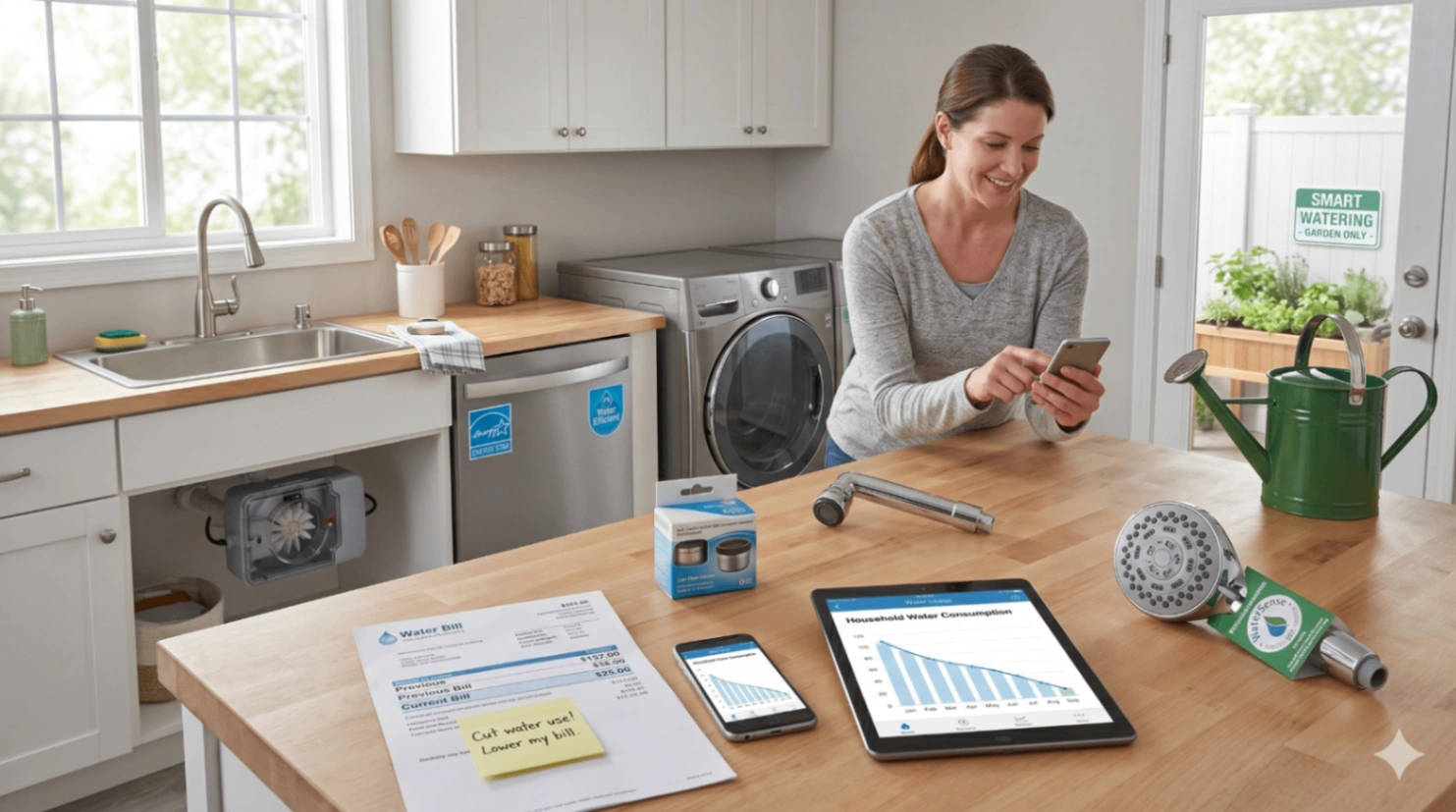
Monitoring consumption shows waste patterns and confirms your changes are working. Several technologies make tracking simple, giving you a real-time view of where water’s going.
Apps and platforms for monitoring water use
Modern monitoring options show you exactly where water’s going:
- Utility dashboards: Many utilities provide online portals showing daily consumption.
- Smart water monitors: Devices like Flume attach to existing meters for real-time data.
- Rainplan’s property assessment: Analyzes your property’s surfaces and runoff patterns to identify specific savings opportunities.
These tools help you spot unusual spikes that signal leaks or inefficient practices. Rainplan goes further by connecting usage patterns to specific green infrastructure projects that cut both water bills and stormwater runoff.
How to review your water bill statements
Your monthly statement shows more than just what you owe. When it arrives, look for:
- Current vs. prior period usage: Flags unusual increases month over month.
- Average daily consumption: Helps you benchmark against similar households.
- Household comparisons: Shows how your usage stacks up in your area.
Sudden usage spikes without behavior changes? That signals leaks or billing errors. Call your utility about unexplained increases. Many offer one-time leak adjustment credits after you verify repairs.
Transform your property with green infrastructure
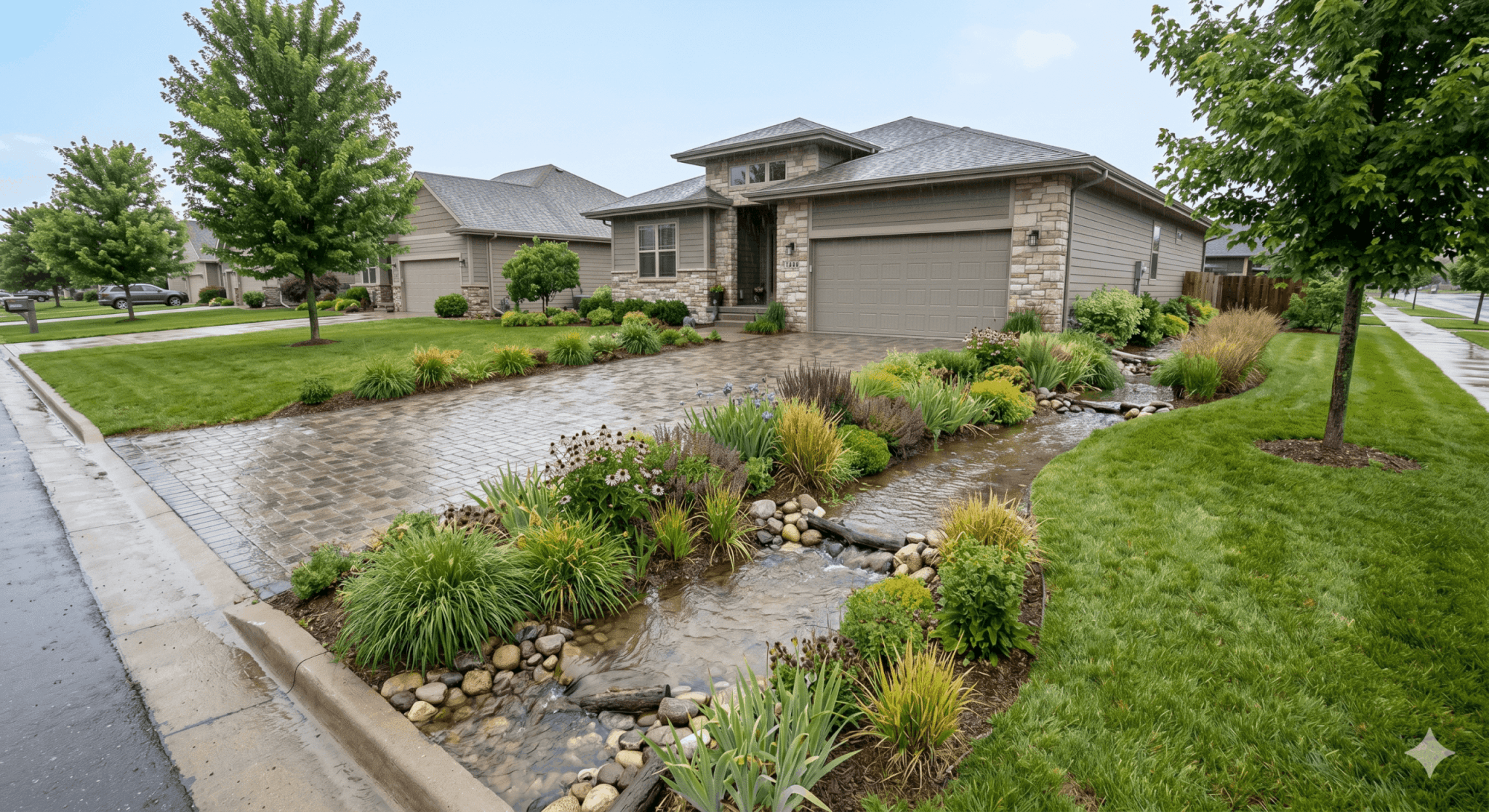
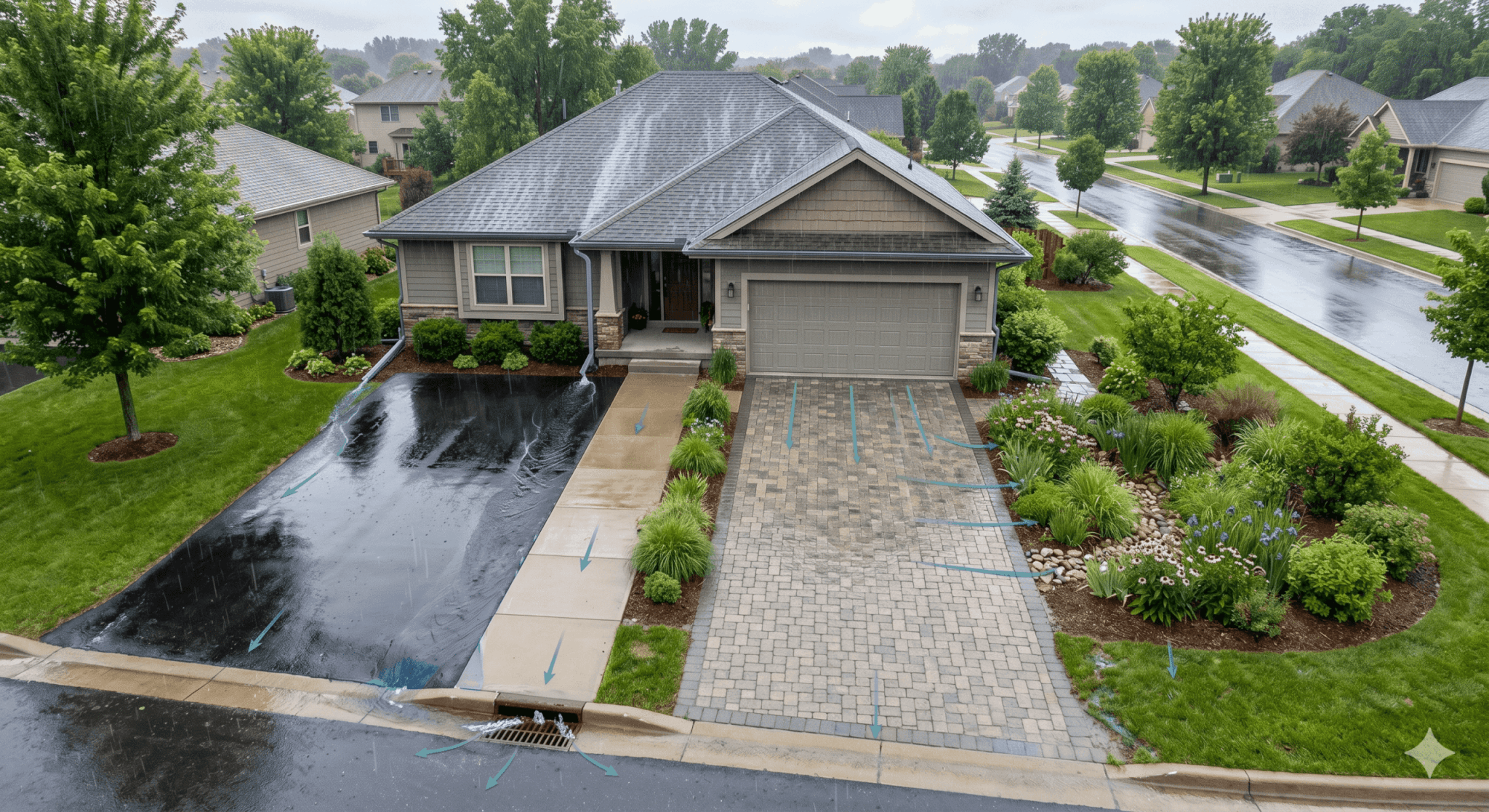
Green infrastructure is the next step in water savings. These systems manage stormwater on your property while cutting reliance on municipal water. Rain gardens, permeable driveways, and bioswales work with natural processes to capture and filter runoff.
Most property owners think these upgrades are expensive. Local rebates, grants, and financing often cover a big chunk of project costs. Rainplan analyzes your property, identifies eligible incentives, and connects you with qualified contractors. The platform can even pay approved costs upfront, making green infrastructure accessible no matter your budget.
These improvements bring multiple benefits:
- Lower water bills.
- Reduced stormwater fees in some areas.
- Improved property drainage.
- Increased home value.
- Cleaner local waterways and stronger community resilience.
Small changes, real savings — here’s where to start
Reducing your water bill doesn’t need a complete home overhaul. Fixing a silent toilet leak, swapping in a $5 aerator, or adjusting your irrigation schedule to early morning hours can each save you money with minimal effort. Stack these changes together and the savings add up fast.
Upgrading fixtures and landscaping takes things further. High-efficiency toilets, ENERGY STAR appliances, and drought-tolerant plants reduce your baseline water demand month after month — and many of these upgrades come with rebates that lower the upfront cost significantly.
When you’re ready to go further, green infrastructure projects like rain gardens and permeable driveways offer long-term savings alongside real property benefits. Rainplan makes it straightforward to find what incentives are available at your address, connect with qualified contractors, and take the next step — whatever that looks like for your property.
Annual Water Bill Savings: Which Upgrades Deliver the Most?
Not all water-saving upgrades pay back equally. This comparison shows estimated annual savings for a typical single-family home, combining direct bill reduction and available rebate programs:
Estimated Annual Savings by Water-Saving Upgrade
Typical single-family home — direct savings + stormwater credits where applicable
| Fix running toilet | $150–$300/yr | |
| Smart irrigation controller | $100–$300/yr | |
| Drought-tolerant landscaping | $200–$500/yr | |
| Low-flow showerheads | $70–$140/yr | |
| ENERGY STAR washer | $50–$100/yr | |
| Rain barrel + stormwater credit | $50–$150/yr |
Sources: EPA WaterSense, ENERGY STAR, municipal stormwater programs. Savings vary by location and water rates.
Annual savings estimates for a typical US single-family home. Drought-tolerant landscaping and smart irrigation deliver the highest returns, especially in tiered-rate water markets.
Frequently asked questions
How do I decrease my water bill quickly?
To decrease your water bill quickly, start by fixing all leaks, especially silent toilet leaks that waste up to 200 gallons daily. Install low-cost aerators on faucets, take shorter showers, and only run dishwashers and washing machines with full loads.
What causes sudden water bill increases?
Sudden water bill increases typically result from hidden leaks in toilets or underground pipes, increased irrigation during hot weather, or malfunctioning appliances. Check your water meter with all water off to detect leaks, and review your irrigation schedule for unnecessary watering.
Which home upgrades save the most water?
High-efficiency toilets save the most water, reducing usage from 3.5–7 gallons to 1.28 gallons per flush. Low-flow showerheads save $70–$140 per year and ENERGY STAR washing machines save $50–$100 per year — especially impactful for larger households that run multiple loads daily.
How much money can fixing leaks save?
Fixing leaks can save hundreds of dollars annually depending on the leak size and location. A single dripping faucet wastes over 3,000 gallons yearly, while a running toilet can waste up to 73,000 gallons annually.
Are there programs to help lower water bills?
Yes, most utilities offer rebate programs for water-efficient fixtures, payment plans for high bills, and income-based assistance programs. Check your utility’s website or use Rainplan to find specific programs available at your address.
Do rain barrels really reduce water bills?
Rain barrels significantly reduce water bills by providing free water for outdoor use during peak summer months when irrigation costs are highest. A 55-gallon barrel fills from just one inch of rain and can offset hundreds of gallons of tap water monthly.
Find Rainwater Rebates in Your Area
Enter your address to see local rebates for rain barrels and green infrastructure. Many programs cover 50%+ of costs.