

Water pooling near your foundation after a rainstorm is one of those property problems that’s easy to ignore — until it isn’t. Whether you’re dealing with a soggy corner of the yard, runoff from a driveway, or a downspout that dumps water somewhere it shouldn’t, the fix often comes down to one question: do you need a rain garden or a bioswale?
Both use plants and soil to handle stormwater right where it falls. But they work differently, fit different site conditions, and come with different costs and maintenance expectations. Choosing the wrong one doesn’t just waste money — it means the water problem stays.
This guide covers what property owners actually need to know: how each system works, which fits your site, what installation costs, how much maintenance they need, and where you can find rebates to offset the expense. By the end, you’ll know which option fits your property and what it takes to get from planning to installation.
Quick answer: Rain gardens handle residential runoff from areas under 0.5 acres and cost $3–$6 per square foot — a practical DIY option. Bioswales handle linear drainage paths and larger areas at $15–$50 per linear foot, but typically require professional design. Both remove pollutants and qualify for stormwater fee credits; the right choice depends on your drainage area size and lot shape.
Key takeaways
- Your site’s shape decides which feature fits: a flat yard near a downspout suits a rain garden, while a sloped property with a defined flow path calls for a bioswale.
- Both features drain within 24–48 hours when designed correctly: if water sits longer, your soil likely needs amending or an underdrain added beneath the planting media.
- Native plants do the real work: choose species adapted to your local wet-dry cycles and you’ll spend far less time on maintenance after year two.
- Rebates can significantly reduce your costs: many municipalities pay per project or per square foot managed — search your address on Rainplan to see which incentives apply to your property before you start planning.
- Soil drainage determines your design: run a simple percolation test first — if your soil drains slower than half an inch per hour, plan for an engineered soil mix from the start.
What is the difference between a rain garden and a bioswale?
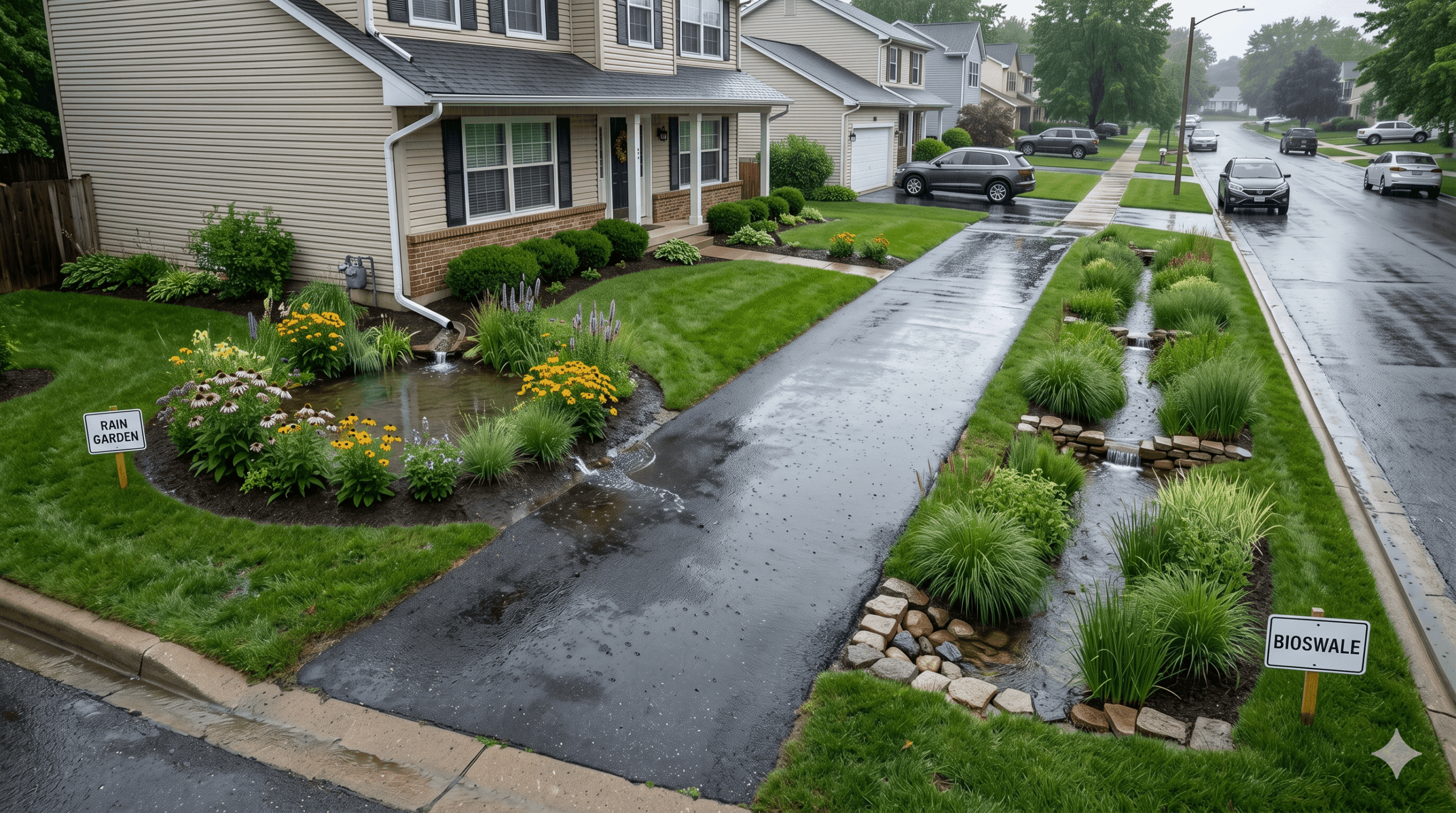
A rain garden is a shallow bowl planted with native plants that catches runoff from your roof, driveway, and other hard surfaces. The water pools temporarily while it soaks into the ground. A bioswale is a long, planted channel that moves runoff slowly while filtering out pollutants as it flows.
The key difference? Movement. A rain garden holds water in place while it filters through soil layers and plant roots. A bioswale moves water along a defined path, slowing it down and treating it as it travels. So which one belongs on your property?
| Feature | Rain garden | Bioswale |
| Shape | Basin (bowl-shaped depression) | Linear channel |
| Primary function | Capture and absorb runoff on-site | Convey and filter runoff along a path |
| Typical size | Small to medium (residential yards) | Medium to large (roadsides, parking edges) |
| Slope required | Flat or gently sloped site | Gentle longitudinal slope (1–2%) |
| Best for | Individual properties, yards | Roadsides, parking lots, larger sites |
| Drains within | 24–48 hours | 24–48 hours |
Both rely on infiltration—water soaking into the ground—and native plants that slow the flow, filter pollutants, and loosen up the soil. Your property’s shape, slope, and runoff source determine which works best. The sections below show how each one actually works.
How rain gardens work
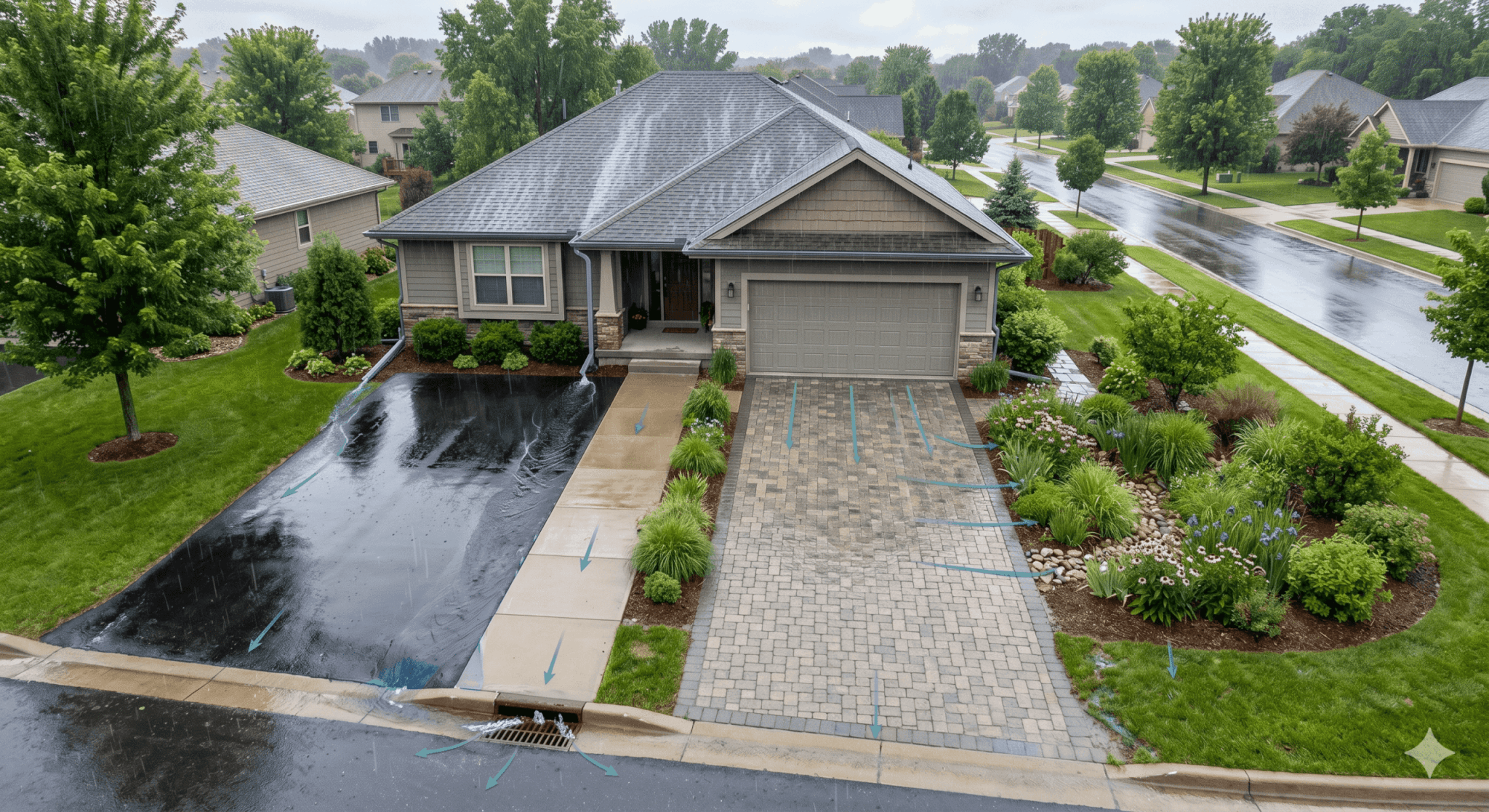
Rain hits your roof or driveway and flows downhill to the lowest spot it can find. A rain garden becomes that low point by design. Water enters the shallow basin, pools temporarily at a depth of 6–12 inches, and slowly filters through layers of soil and plant roots. A well-built rain garden drains within 24–48 hours after a storm.
The plants aren’t just decorative—they’re doing the heavy lifting. Their roots break up compacted soil, open pathways for water, and soak up nutrients before they reach storm drains. Native plants are your best bet—they’re built for local wet-dry patterns and practically take care of themselves after the first year or two.
A rain garden has three layers working together to handle stormwater. Here’s what each layer does:
- Mulch layer: Sits on top, slows water velocity, and reduces evaporation between rain events.
- Planting media: A mix of sand, compost, and native soil that supports plant growth and allows water to pass through.
- Native soil base: The foundation layer where water continues to infiltrate into the ground.
Each piece has a job in catching and cleaning runoff from your property. Now let’s look at how bioswales tackle the same problem.
How bioswales work
Turn Runoff Into Rebates
Join Rainplan to access personalized data and discover sustainable solutions tailored to your specific site.
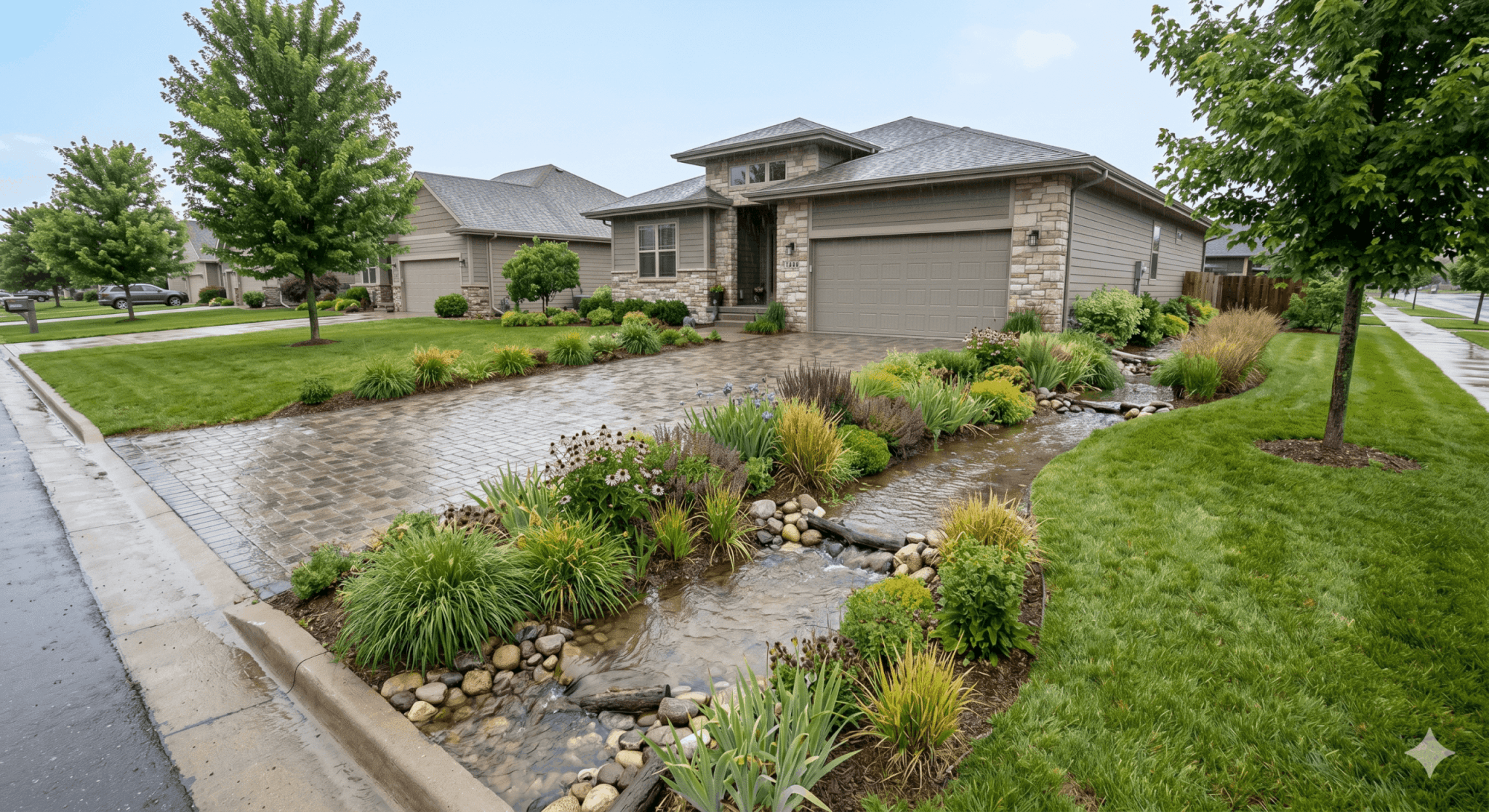
A bioswale is a long, shallow channel lined with plants that moves water from point A to point B. Rain gardens hold water still. Bioswales keep it moving—just slowly enough to filter it as it flows. You’ll spot bioswales along roadsides, parking lot edges, or property lines—anywhere runoff needs to move before it drains away.
In a bioswale, slope and plants team up. A gentle slope—usually 1–2%—keeps water moving without rushing. Too steep and you get erosion. Too flat and water just sits there. Check dams are small barriers placed across the channel. They slow water even more and create little pooling zones in between.
Bioswales do two things at once—move water and clean it. Here’s what each part does:
- Vegetated channel: The main body, planted with grasses or native plants that slow flow and filter pollutants.
- Check dams: Low barriers (often stone or wood) placed at intervals to reduce velocity and create small pooling zones.
- Inlet and outlet: Entry and exit points that control where water enters and where it discharges after treatment.
- Pretreatment area: A forebay or gravel strip at the inlet that catches coarse sediment before it enters the main channel.
Now that you know how each works, let’s figure out which fits your site.
Design differences and key considerations
Pick the wrong feature and you’ll end up with flooding, erosion, or standing water that won’t drain. Slope, soil type, and plant selection decide which option works. Get them right from the start and you’ll save time and money.
Slope and layout
Your yard’s shape usually tells you which one you need. Here’s which feature fits which site:
- Rain gardens need a relatively flat or gently sloped site. They’re depressions that catch water at the lowest point. If your yard already has a low spot near a downspout or driveway, that’s usually your best location.
- Bioswales need a defined flow path and follow the natural slope of a site. A slope of 1–2% keeps water moving without rushing. Too steep and you get erosion. Too flat and water just sits there.
If you’ve got a slope running across your property, a bioswale can follow it naturally. Flat area near a downspout or driveway? A rain garden usually works best.
Infiltration media and soil requirements
Both need soil that drains well, but they handle clay or compacted soil differently. Sandy or loamy soils drain fast and need little adjustment for either feature.
- Rain gardens in clay-heavy soils often require an engineered soil mix of sand, compost, and topsoil to ensure water drains within 24–48 hours. Water sitting longer than that gives mosquitoes time to breed.
- Bioswales in low-infiltration soils can use underdrains — perforated pipes installed beneath the planting media that collect water and direct it to a discharge point when native soils drain too slowly.
Before you build either one, test your soil drainage.
- Dig a hole and fill it with water.
- Time how fast it drains.
- If your soil drains at least half an inch per hour, a standard design should work fine.
- Slower than that? You’ll need better soil or help from a pro.
Plant selection for rain gardens and bioswales
Plants aren’t just decorative. They’re functional. Pick the right plants and your feature thrives. Pick wrong and you’ll be replanting constantly. Both use plants to slow water, help it soak in, filter out pollutants, and hold the soil in place.
- Rain gardens need plants that tolerate both wet feet (temporary flooding) and dry periods between rain events. Native species work best—they’re built for your local climate.
- Bioswales need dense, low-growing vegetation that can handle flowing water without being uprooted. Grasses and sedges fill the channel. Taller plants hold the edges in place.
Here’s what to plant where:
- Rain garden center (wet zone): Blue flag iris, swamp milkweed, cardinal flower
- Rain garden edges (transition zone): Black-eyed Susan, switchgrass, wild bergamot
- Bioswale channel: Buffalo grass, sedges, rushes
- Bioswale edges: Native wildflowers and shrubs that stabilize the banks
Cost breakdown for rain gardens and bioswales
Cost depends on size, soil conditions, and whether you DIY or hire a contractor. Both often qualify for local rebates and incentives that can cut what you actually pay.
| Property type | Rain garden estimated cost | Bioswale estimated cost |
| Small residential lot | $300–$1,500 (DIY to basic install) | Less common at this scale |
| Medium residential/small commercial | $1,500–$5,000 | $2,000–$8,000 |
| Larger commercial or municipal site | $10,000–$50,000+ per acre | $5,000–$25,000+ per acre |
Several factors affect cost. Know them upfront so you can budget accurately.
What drives cost up:
- Engineered soil mixes and underdrains
- Site grading and contractor labor
- Large plant material orders
What drives cost down:
- DIY installation for small rain gardens
- Locally sourced native plants
- Rebate programs that offset material and labor costs
Rainplan shows you which rebates and incentives are available at your address, so you know what help’s out there before you commit. Knowing your real cost after incentives makes it easier to pick what fits your budget.
Small residential lots
A small rain garden (roughly 50–150 square feet) is one of the easiest green infrastructure projects to tackle. Basic DIY installation (digging the basin, amending soil, planting natives) can run just a few hundred dollars in materials.
Bioswales aren’t common at this scale, but they can work along a driveway edge or property line if there’s a clear flow path. Downspout dumping water on your lawn or driveway? A small rain garden 10 feet from your foundation is usually your best bet.
Medium multifamily properties
At this scale, both options work. Rain gardens work for shared parking areas or courtyards. Bioswales fit along property edges or between parking rows.
You’ll typically need professional installation at this scale, which costs more but qualifies you for bigger rebates. Some cities pay per square foot or per project for multifamily properties.
Larger commercial sites
At commercial scale, bioswales usually work better—they handle larger drainage areas and fit into site grading plans. Rain gardens can still work in clusters across a large site (one per parking island, for example).
You’ll need engineered design and permits at this scale. Costs per acre vary widely depending on soil and local rules.
Maintenance tips to keep your project performing well
Both are living systems. A little seasonal care keeps them working the way they should. Most maintenance is basic garden care, plus a few stormwater checks. Here’s what to expect each season.
Seasonal care
A seasonal checklist keeps both working all year. Here’s what matters each season.
- Spring: Clear inlets and outlets, add fresh mulch, and fill in bare spots before things start growing.
- Summer: Water new plants during dry spells the first year. By year two, natives mostly take care of themselves. Keep an eye out for invasives.
- Fall: Cut back dead plants, clear sediment from the inlet, and make sure overflow areas are clear before winter hits.
- Winter: Stay off saturated soil and watch for erosion or settling you’ll need to fix in spring.
Vegetation management
Weeding is the most time-intensive maintenance task in the first two years, before native plants establish and crowd out competition. Avoid using herbicides near rain gardens or bioswales — chemicals can leach into the water being filtered.
Once established, native plantings in both features are largely low-maintenance. Here’s a realistic timeline:
- Year one: Plan to weed monthly.
- Year two: Native plants begin to establish and crowd out weeds.
- Year three and beyond: Most well-planted rain gardens and bioswales need only a seasonal tidy-up.
The goal is a dense, self-sustaining plant community that does the filtering work for you.
Sediment and debris checks
Sediment accumulates at inlets over time and can reduce infiltration capacity. Checking and clearing the inlet area once or twice a year keeps the feature performing as designed.
For bioswales, check dams trap sediment effectively — remove buildup before it overtops the dam. Water pooling for more than 48 hours after a rain event signals compaction or sediment clogging at the base of the feature.
A quick annual walkthrough after a rain event catches issues early:
- Check inlets and outlets: Remove leaves, debris, and sediment buildup.
- Inspect check dams (bioswales): Clear sediment that has accumulated behind barriers.
- Test drainage: Observe the feature after a rain event; water should drain within 48 hours.
- Look for erosion: Bare soil or rilling near the inlet signals a need for additional mulch or plant cover.
Which option suits your site conditions?
The right choice depends on three things: your site’s shape, your soil, and how much runoff you’re managing. Each factor narrows the decision — and Rainplan helps property owners work through all three to identify the right green infrastructure solution for their site.
Soil type and drainage capacity
Sandy or loamy soils drain quickly and work well for both features with minimal amendment. Clay-heavy soils drain slowly; rain gardens in clay soils need engineered soil mixes, and bioswales in clay soils may need underdrains.
A simple percolation test gives you a baseline before you commit to a design:
- Dig a hole 12 inches deep and fill it with water.
- Measure how fast it drains.
- If your soil drains at least half an inch per hour, a standard rain garden design will likely work.
- If it drains more slowly, plan for an amended soil mix or consult a professional.
Runoff volume and drainage area
Rain gardens are sized to capture a specific volume of runoff. A common rule of thumb: the rain garden footprint should be roughly 5–10% of the impervious area draining to it. A 500-square-foot driveway might need a 25–50-square-foot rain garden.
Bioswales are suited to larger drainage areas because they’re designed to handle flow from roads, parking lots, or multiple properties. If your property generates more runoff than a single rain garden can handle, a bioswale or a series of connected rain gardens may be the answer.
To put that in perspective: a 1,000-square-foot roof draining to a single downspout generates a meaningful volume of runoff during a storm. A rain garden sized at roughly 75–100 square feet, positioned to receive that downspout, can capture and infiltrate most of that flow.
Local incentives and rebate programs
Many municipalities, utilities, and watershed organizations offer rebates for installing rain gardens or bioswales on private property. Every gallon absorbed on-site reduces the load on public stormwater infrastructure — and many programs pay you for that contribution.
Incentive amounts vary widely. Some programs offer flat rebates per project, while others pay per square foot of impervious area managed. Rainplan analyzes your property’s impervious surfaces and matches you with available stormwater incentives at your address, so you can see what financial support is on the table before you start planning.
Ready to put the right solution in the ground?
Rain gardens and bioswales both manage stormwater effectively — the difference is in how they do it and where they fit. A rain garden captures and infiltrates runoff on-site; a bioswale conveys and filters it along a path. Your site’s slope, soil, and drainage area are the deciding factors.
Both features qualify for incentives in many regions, and the financial support available can meaningfully reduce your out-of-pocket cost. Knowing what rebates apply to your address before you start planning puts you in a stronger position to choose the right feature and size it correctly.
Rainplan helps property owners identify the right green infrastructure solution for their site, find available rebates, and connect with vetted contractors who can install it — all in one place. Search your address on Rainplan to see which solutions fit your property and what incentives are available in your area.
Frequently asked questions
What is the main difference between a rain garden and a bioswale?
The main difference between a rain garden and a bioswale is how they handle water: a rain garden is a planted basin that holds and absorbs runoff in place, while a bioswale is a linear vegetated channel that moves runoff slowly while filtering it.
Can a rain garden or bioswale be installed in a small residential yard?
Yes, rain gardens are well-suited to residential yards and can be as small as 50 square feet. Bioswales are less common at residential scale but can work along a driveway edge or fence line where there’s a defined flow path.
How long does a rain garden take to drain after a storm?
A properly designed rain garden drains within 24–48 hours after a rain event. If water sits longer than 48 hours, it typically signals a soil drainage issue that may require amending the planting media or adding an underdrain.
Do rain gardens and bioswales attract mosquitoes?
A well-designed rain garden or bioswale drains within 48 hours, which is faster than the 7–10 days mosquitoes need to breed. Keeping inlets clear and ensuring proper drainage eliminates standing water before it becomes a problem.
What types of plants work best in a rain garden?
Native plants are the most reliable choice for rain gardens because they’re adapted to local wet-dry cycles and require minimal maintenance once established. Good wet-center-zone options include blue flag iris, swamp milkweed, and cardinal flower.
Are there rebates or incentives available for installing a rain garden or bioswale?
Many municipalities, utilities, and watershed organizations offer rebates for rain gardens and bioswales installed on private property. Search your address on Rainplan to see which incentives are available at your specific property.
Find Rainwater Rebates in Your Area
Enter your address to see local rebates for rain barrels and green infrastructure. Many programs cover 50%+ of costs.