
What Are the Top Home Improvement Grants? A 2026 List by Eligibility
Most homeowners assume home improvement grants are reserved for seniors in rural areas or veterans with specific disabilities. That assumption leaves money on the table. Federal, state, and local programs collectively fund billions in home repairs, energy upgrades, and
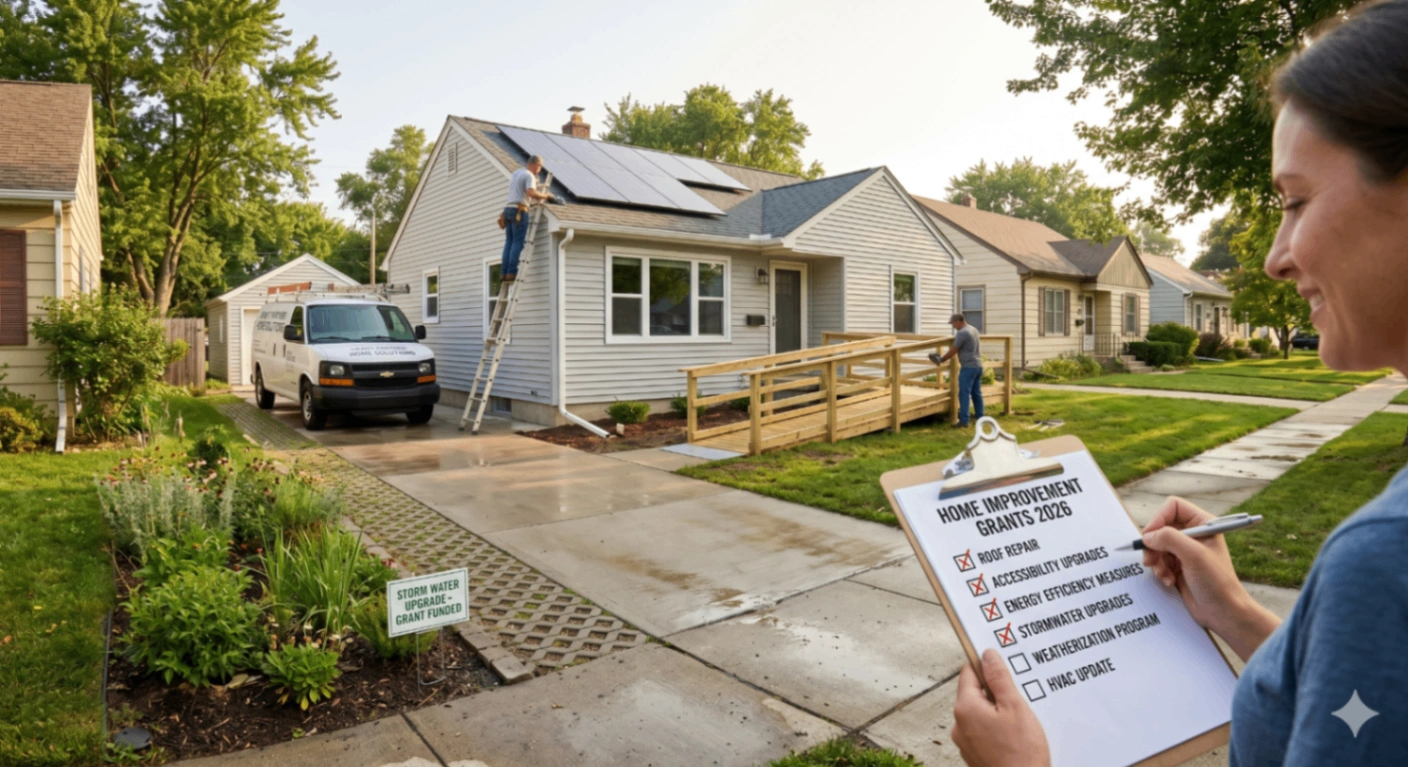
Most homeowners assume home improvement grants are reserved for seniors in rural areas or veterans with specific disabilities. That assumption leaves money on the table. Federal, state, and local programs collectively fund billions in home repairs, energy upgrades, and green infrastructure improvements each year – and eligibility is broader than most people realize.
This guide organizes the top home improvement grants available in 2026 by who qualifies rather than by agency name. You’ll find federal programs for rural homeowners, veterans, low-income households, and Native American families – plus energy rebates, disaster assistance, and green infrastructure incentives for stormwater improvements like rain barrels and rain gardens. Rainplan makes that last category accessible for homeowners who want to explore local incentives without piecing together the research alone.
Key takeaways
- Grants don’t need to be repaid – but eligibility is everything: income, location, age, and homeownership status all determine which programs you can access, so check requirements before you apply.
- Most federal grants are applied for locally, not nationally: you’ll go through your city, county, state energy office, or tribal government, not a federal website, to access programs like CDBG, USDA Section 504, or WAP.
- Veterans and rural homeowners have dedicated programs with significant funding: VA disability housing grants go up to $126,526, and USDA Section 504 offers up to $50,000 for rural homeowners who qualify.
- Rainplan matches your property to local stormwater incentives and pays approved project costs upfront: search your address to see which rebates for rain gardens, rain barrels, or permeable driveways are available in your area.
- Timing your application matters: many programs run on annual funding cycles and close fast – applying early in the fiscal year gives you the strongest chance of securing funds before they run out.
Understanding federal home improvement grants
A home improvement grant is funding from a government agency or program that covers repairs or upgrades on your primary residence. Unlike loans, grants don’t need to be repaid. The real key to finding the right grant? Understanding eligibility requirements, not just which programs exist.
Most federal grants get administered locally. You apply through your city, county, state energy office, or tribal government rather than directly to a federal agency. That means the same federal program looks different depending on where you live.
The table below organizes the top home improvement grants by who qualifies, so you can quickly identify which programs fit your situation.
| Grant program | Administered by | Who qualifies | Max grant amount |
| USDA Section 504 | USDA Rural Development | Rural homeowners 62+, very low income | Up to $10,000 |
| HUD CDBG / HOME | Local city or county | Low-to-moderate income homeowners | Varies by locality |
| VA SAH / SHA grants | U.S. Department of Veterans Affairs | Veterans with service-connected disabilities | Up to $126,526 |
| BIA Housing Improvement Program | Bureau of Indian Affairs / tribal governments | American Indian and Alaska Native households | Up to $75,000 |
| DOE Weatherization Assistance | State energy offices | Income-eligible households (all areas) | Varies by state |
| FEMA IHP Home Repair | FEMA (disaster declarations only) | Primary homeowners in declared disaster areas | Up to $43,600 |
| Stormwater / green infrastructure rebates | Local utilities and municipalities | Property owners in participating programs | Varies by program |
Grants for rural homeowners
If you own a home in a rural area and have a low income, the USDA Single Family Housing Repair program is one of the most accessible federal grant programs available. Commonly called Section 504, this program helps homeowners address health and safety hazards. You can check your address on the
Find Rainwater Rebates in Your Area
Enter your address to see local rebates for rain barrels and green infrastructure. Many programs cover 50%+ of costs.
Find my rebateUSDA eligibility map to see if your area qualifies.
Section 504 has two components that work differently based on your age and repair needs. Here’s how these distinctions affect your application strategy:
- Grants (age 62+): Up to $10,000 lifetime to remove health and safety hazards. The cap increases to $15,000 in presidentially declared disaster areas.
- Loans (any age, 1% interest): Up to $40,000 for broader repairs beyond immediate hazards.
- Combined assistance: Up to $50,000 total, or $55,000 in disaster areas.
The USDA Housing Preservation Grant (HPG) takes a different approach. USDA funds nonprofits and local governments, which then pay for repairs on behalf of eligible rural residents. You don’t apply to USDA directly for HPG. Instead, you apply through a local organization that received the funding.
Eligibility requirements for USDA Section 504
A few key factors determine whether you qualify for Section 504 assistance. Review these requirements before you apply to save time and gather the right documents:
- Income threshold: Must meet “very low income” as defined by USDA for your county
- Occupancy: Must own and occupy the home as a primary residence
- Location: Property must be in a USDA-designated rural area
- Age (for grants): Must be 62 or older to qualify for the grant component
- Property condition: Home must need repairs that address health or safety hazards
Where to apply for rural home repair grants
Applications go through local USDA Rural Development offices, not a national portal. Find your local office through the USDA service center locator.
Some areas have waitlists, so applying early in the fiscal year increases your chance of receiving funds before they run out. Not in a rural area? You still have solid options depending on your situation.
Home repair funding through HUD programs
HUD doesn’t give grants directly to homeowners. Instead, it funds two major programs that local governments use to run their own homeowner rehabilitation programs: the Community Development Block Grant (CDBG) and the HOME Investment Partnerships Program.
To access these funds, search for your city or county’s housing rehabilitation program. Some cities label these programs “owner-occupied rehab,” “housing repair assistance,” or “home improvement loans.” The naming varies by locality, so searching your city name plus “housing rehabilitation” often works well.
The two main HUD-funded programs serve different purposes, but both help homeowners with repairs:
- CDBG (Community Development Block Grant): Federal funds allocated to cities and counties to address community needs, including housing repair for low-to-moderate income residents. Eligible repairs often include roofing, plumbing, electrical, and structural work.
- HOME Investment Partnerships Program: Focused specifically on affordable housing. Local governments use HOME funds to offer repair grants or forgivable loans to income-eligible homeowners. Forgiveness typically ties to remaining in the home for a set number of years.
Combining grants with low-interest loans
Many local programs combine grants with low-interest or deferred loans to cover larger repair costs. You might receive a partial grant and a forgivable loan for the remainder.
This blended funding approach helps homeowners tackle bigger repairs without the full upfront burden. Rainplan takes a similar approach with green infrastructure projects: it pays approved project costs upfront and ties its success to project completion. That removes the financial barrier that often stops homeowners from getting started.
VA disability housing grants for veterans
Veterans and service members with service-connected disabilities can access dedicated housing grants for accessibility modifications. Three main VA grant programs cover different disability levels and living situations.
Here’s which program fits your situation and how to maximize available benefits:
- SAH (Specially Adapted Housing) grant: For veterans with severe service-connected disabilities. Covers building, buying, or adapting a home. Maximum grant: $126,526.
- SHA (Special Housing Adaptation) grant: For veterans with less severe but qualifying disabilities. Maximum grant: $25,350.
- TRA (Temporary Residence Adaptation): For veterans temporarily living in a family member’s home. Maximum: $50,961 (SAH-based) or $9,100 (SHA-based).
The Home Improvements and Structural Alterations (HISA) grant is a separate VA benefit covering medically necessary home modifications like wider doorways, roll-in showers, or accessible bathroom features. HISA is available to a broader group of veterans and can sometimes be used alongside SAH or SHA.
Visit the VA housing grants page to learn more. A VA-accredited claims agent can help you determine which combination of grants applies to your situation.
Housing assistance for Native American communities
American Indian and Alaska Native homeowners can access the Bureau of Indian Affairs (BIA) Housing Improvement Program (HIP). This program is separate from other federal housing grants and runs through tribal governments and BIA regional offices.
The program has three main grant categories, each addressing different housing needs:
- Category A (Safety and sanitation repairs): Up to $7,500 for urgent repairs addressing health or safety hazards
- Category B (Renovation to standard): Up to $60,000 to bring a substandard home up to livable condition
- Category D (Homeownership assistance): Up to $75,000 toward the purchase of a modest home
Eligibility depends on tribal enrollment, income, and housing need. Start by contacting your tribal housing office or BIA regional office. The BIA housing program page provides regional contact information.
Energy and weatherization programs for cost-saving upgrades
Not all home improvement funding comes labeled as a “grant.” Weatherization and energy efficiency programs function like grants for eligible households because the work costs you nothing. The DOE Weatherization Assistance Program (WAP) is the primary federal example.
Weatherization covers upgrades that reduce energy loss: insulation, air sealing, and HVAC improvements. Households at or below 200% of the federal poverty guidelines typically qualify, though states set their own thresholds. You apply through your state energy office or a local community action agency, not the DOE directly.
The Inflation Reduction Act (IRA) Home Energy Rebates offer another pathway. These state-run rebate programs cut out-of-pocket costs for energy upgrades:
- Home Efficiency Rebates: Performance-based rebates for whole-home energy savings
- Home Electrification and Appliance Rebates: Income-targeted rebates for specific upgrades like heat pumps, water heaters, and electric appliances
State and utility rebates worth knowing about
Beyond federal programs, most states and many utilities offer rebates and incentives for energy efficiency, green infrastructure, and stormwater improvements. DSIRE (Database of State Incentives for Renewables and Efficiency) is the go-to resource for finding state and utility incentives by ZIP code.
These programs change often. Checking DSIRE regularly (or using a platform like Rainplan) helps you stay current on what’s available in your area.
Green infrastructure incentives for stormwater improvements
A growing category of home improvement funding targets green stormwater infrastructure. These projects manage rainwater runoff on private property and, while they’re not traditional “repair” grants, they function the same way: eligible homeowners receive rebates, incentives, or upfront funding to install improvements that reduce stormwater runoff.
Green infrastructure projects qualify for different incentive programs depending on your location. The most common project types include:
- Rain garden: A planted depression that absorbs and filters rainwater runoff from roofs, driveways, or lawns
- Permeable driveway: A driveway surface that allows rainwater to pass through rather than run off into storm drains
- Rain barrel: A container that collects and stores rainwater from roof downspouts for later use in irrigation
Local utilities, municipalities, and stormwater authorities fund these programs. Availability depends on where you live. Some programs offer flat rebates, while others cover a percentage of project costs or provide upfront financing.
Incentive types for rain gardens, rain barrels, and permeable driveways
Available incentives vary widely by location, so start by identifying which programs exist in your area. Here are the most common incentive types:
- Flat rebates: A fixed dollar amount reimbursed after installation (e.g., $50 to $500 for a rain barrel)
- Cost-share programs: The utility or municipality covers a percentage of total project costs
- Upfront financing: Some programs pay approved project costs before installation, removing the financial barrier entirely
- Tax credits or deductions: Some states offer property tax incentives for green infrastructure improvements
Rainplan analyzes your property’s impervious surfaces and runoff to identify the right green infrastructure solutions. It matches your property with eligible local incentives and rebates, then connects you with vetted providers. For homeowners who qualify, Rainplan pays approved project costs upfront. Search your address on Rainplan to see which stormwater incentives are available in your area.
5 steps to apply for home improvement grants
The application process varies by program, but the prep steps stay consistent. Gathering what you need before applying saves time and boosts your chances of approval.
Step 1: Confirm your eligibility
Eligibility is the first hurdle. Income limits, location, age, and homeownership status determine which programs you can access. Use the table in the first section as a starting point, then verify current requirements with the administering agency. Thresholds update annually.
Step 2: Gather your documents
Most programs require the same basic documentation. Have these ready before you start to avoid delays and incomplete submissions:
- Proof of homeownership: Deed or mortgage statement
- Proof of income: Tax returns, pay stubs, or benefit award letters
- Photo ID: Driver’s license or state-issued ID
- Proof of primary residency: Utility bill or government-issued mail
- Contractor estimates: Required by some programs before approval
Step 3: Research local application windows
Many grant programs run on a first-come, first-served basis within a fiscal year. Some close within weeks of opening. Contact your local USDA Rural Development office, city housing department, or tribal housing office for current funding availability and application deadlines.
Programs funded through CDBG and HOME often follow annual cycles tied to the federal fiscal year (October 1 through September 30).
Step 4: Submit your application
Some programs accept online applications. Others require in-person or mailed submissions. The administering agency’s website specifies the method. Keep copies of everything you submit and request confirmation of receipt. Incomplete applications cause most delays.
Step 5: Follow up and track your application status
Processing times vary. Some programs respond within weeks, while others take several months depending on funding availability and application volume. Follow up with the administering office if you haven’t received a status update within the stated timeframe. Ask about your waitlist position or whether you need additional documentation to keep your application moving.
Make your home upgrades a reality
Home improvement grants exist at every level: federal, state, local, and utility. The right option depends on your eligibility, location, and what you’re trying to fix. Knowing which programs align with your situation (and applying at the right time) makes a real difference in whether you receive funding.
Green infrastructure improvements like rain gardens and permeable driveways are an often-overlooked category of home improvement funding. Programs in this space are expanding. If stormwater improvements are on your list, local incentives can offset a significant portion of your costs.
Next step: see which incentives and rebates are available at your address. See if you qualify
Frequently asked questions
What is a home improvement grant and does it need to be repaid?
A home improvement grant is funding from a government agency or program that covers repairs or upgrades on a primary residence. Grants don’t need to be repaid, though some programs require you to stay in the home for a set number of years.
Who qualifies for federal home improvement grants?
Eligibility depends on the specific program. Common qualifying factors include income level, homeownership status, location (rural vs. urban), age, and disability status. The eligibility table earlier in this article provides a program-by-program overview.
Can renters apply for home improvement grants?
Most federal home improvement grant programs require you to own and occupy the home as your primary residence. Some local programs funded through CDBG may assist renters indirectly through landlord rehabilitation programs, but direct grant access is typically limited to homeowners.
How long does it take to receive a home improvement grant?
Processing times vary by program and where you live. Some local programs respond within a few weeks, while others have waitlists that extend several months. Applying as early as possible in the program’s funding cycle reduces wait time.
Are there home improvement grants specifically for green or eco-friendly upgrades?
Yes, local utilities and municipalities offer rebates and incentives for green infrastructure improvements such as rain gardens, permeable driveways, and rain barrels. Rainplan helps homeowners identify and access these programs by matching their property to eligible local incentives.
What is the difference between a home improvement grant and a rebate?
A grant is typically awarded before or during a project to fund the work, while a rebate is a reimbursement paid after the project is completed. Both reduce out-of-pocket costs, but the timing and application process differ.
Turn Runoff Into Rebates
Join Rainplan to access personalized data and discover sustainable solutions tailored to your specific site.
Find my rebateFrom The Runoff Blog
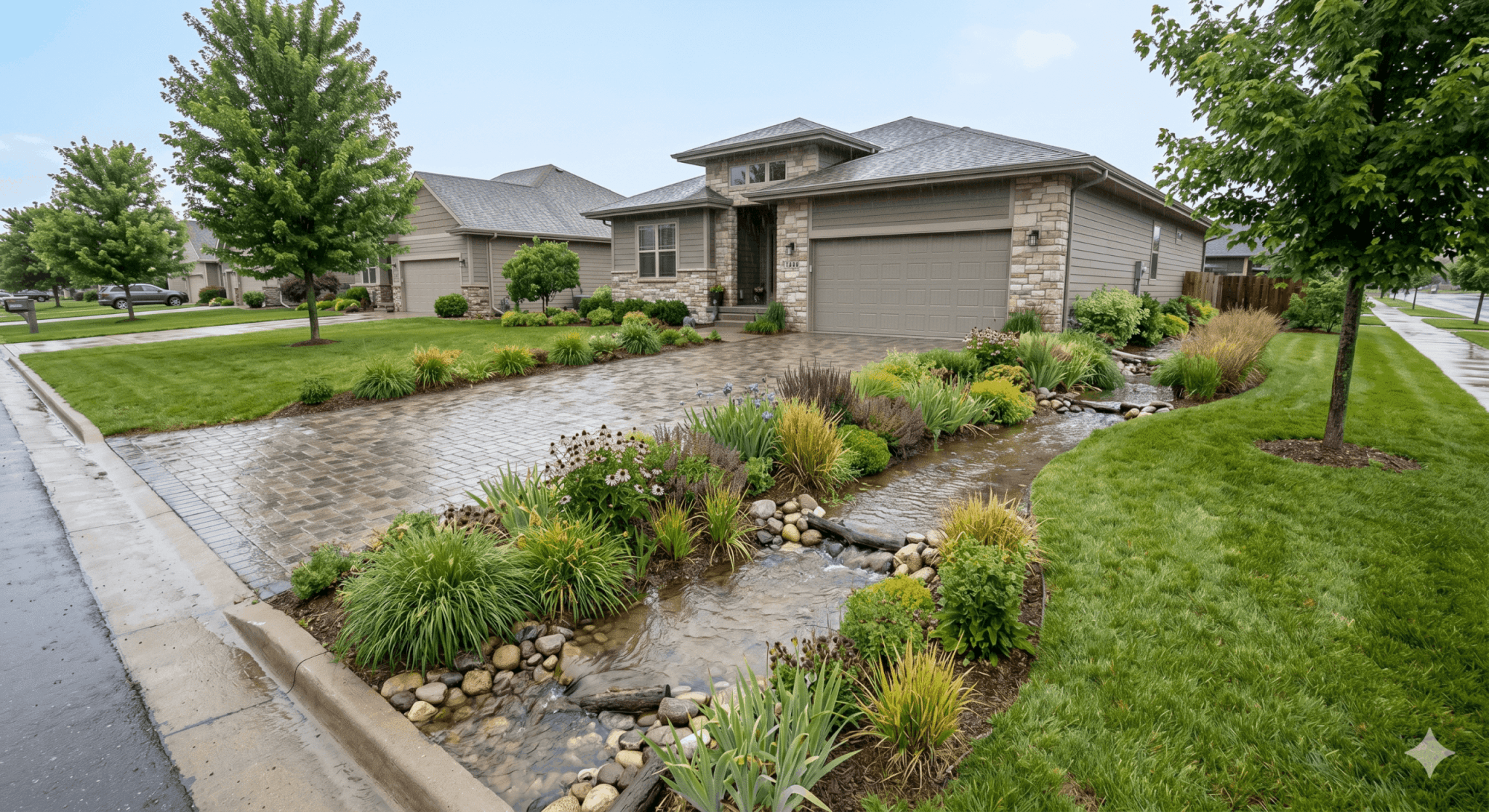
What Is a Bioswale?
After a heavy rainstorm, water pooling in your driveway or overwhelming your gutters carries more than just rainwater – it picks up oil, fertilizers, and debris before flowing…
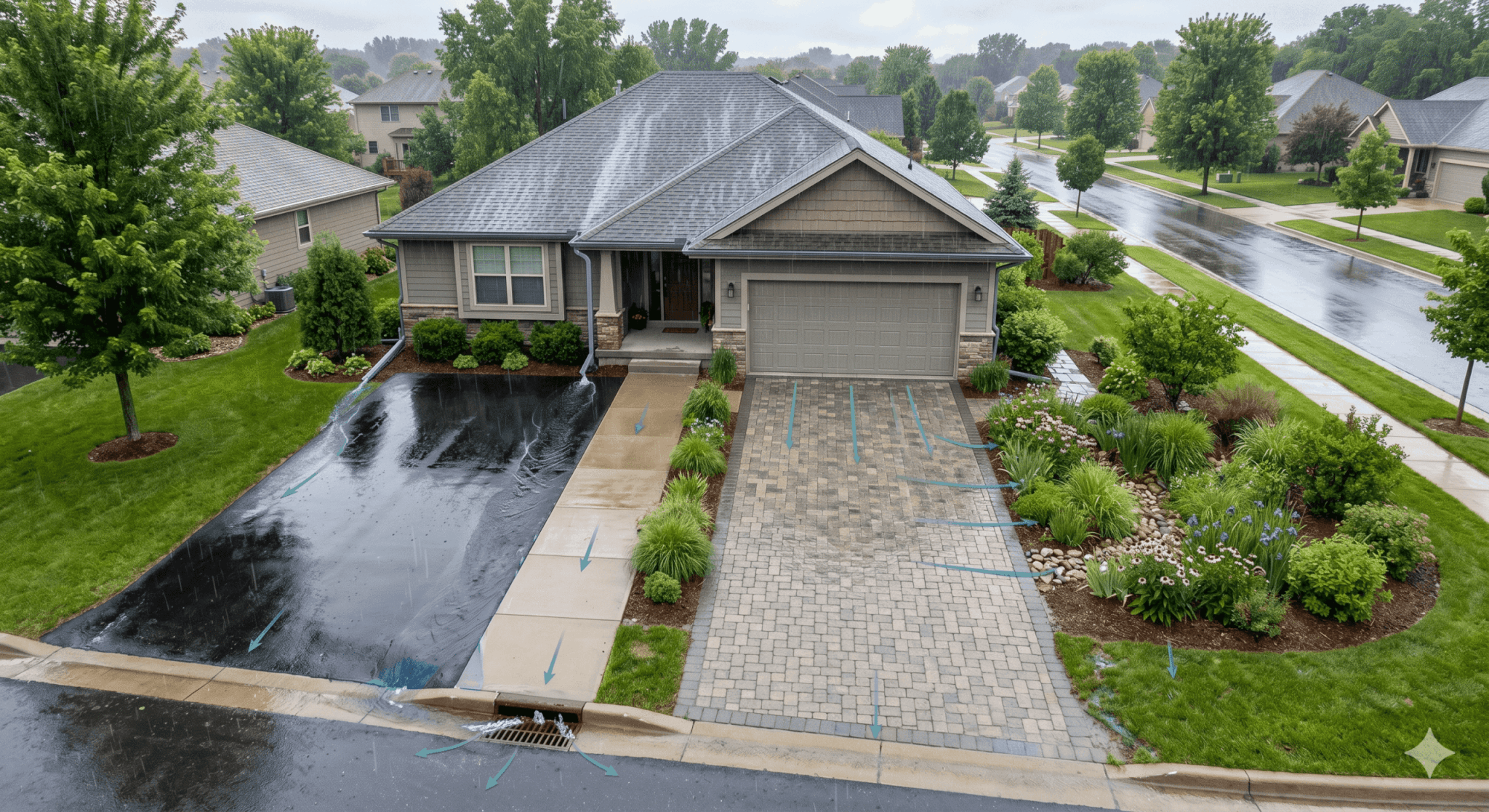
Impervious Surface: Definition, Impacts and Solutions [2026]
Most homeowners never think about their driveway, roof, or patio until a heavy rainstorm floods the street, or a stormwater fee appears on their utility bill. That’s when…
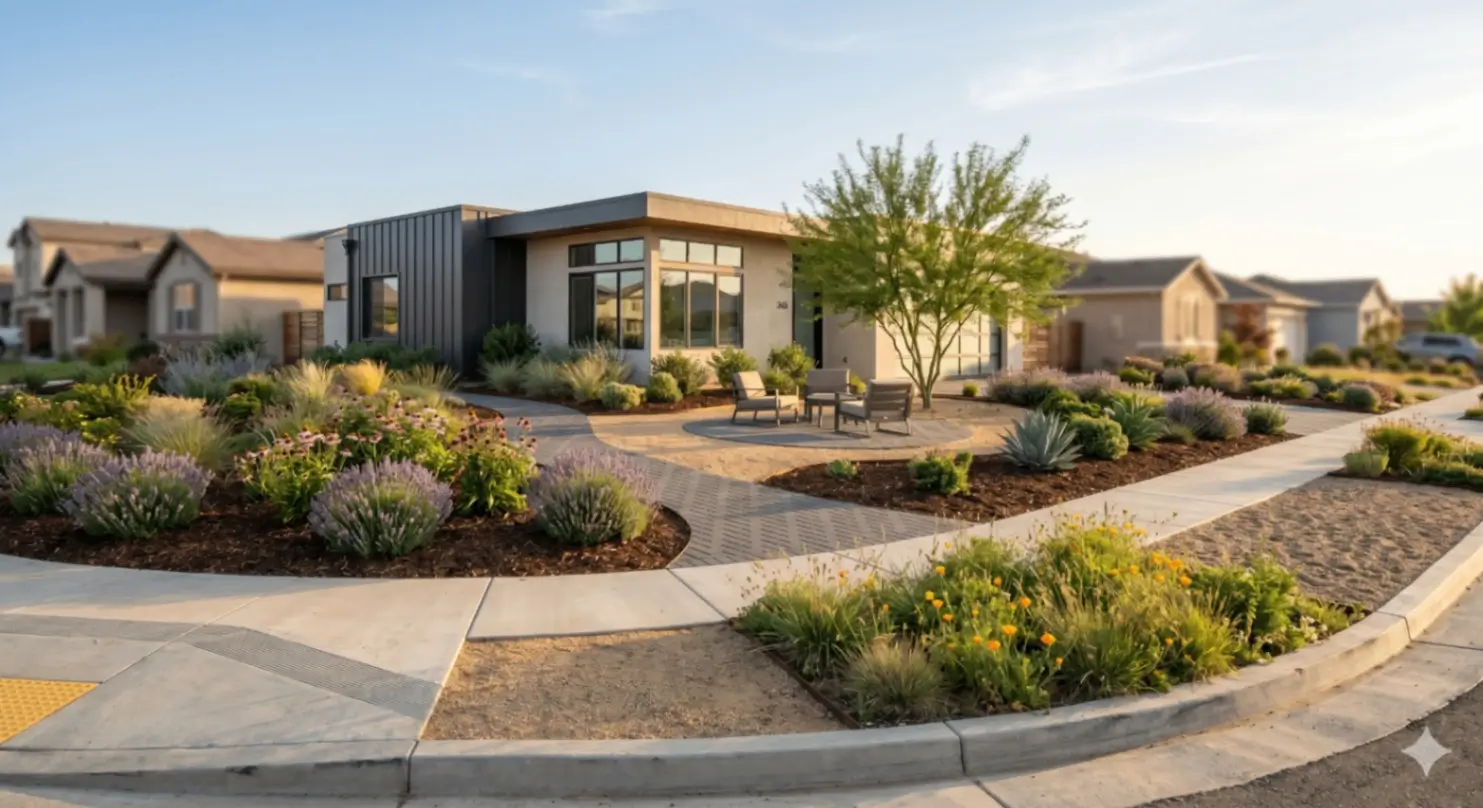
Drought Resistant Landscaping Ideas for a Low-Water Yard [2026]
Outdoor water use makes up nearly 30% of what the average household uses – in drier regions, it’s over 50%. Most of that water goes to lawns that need constant attention and…