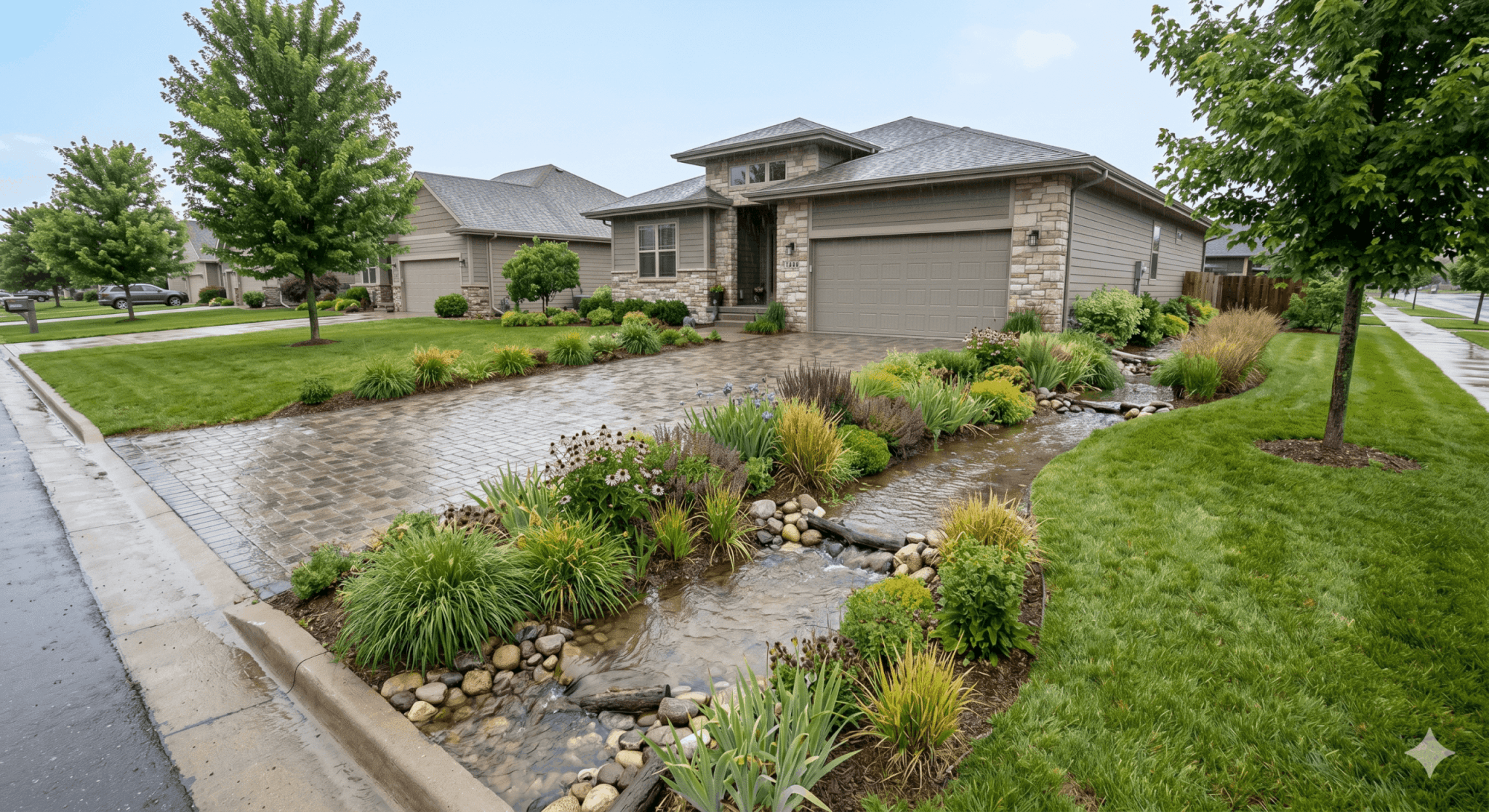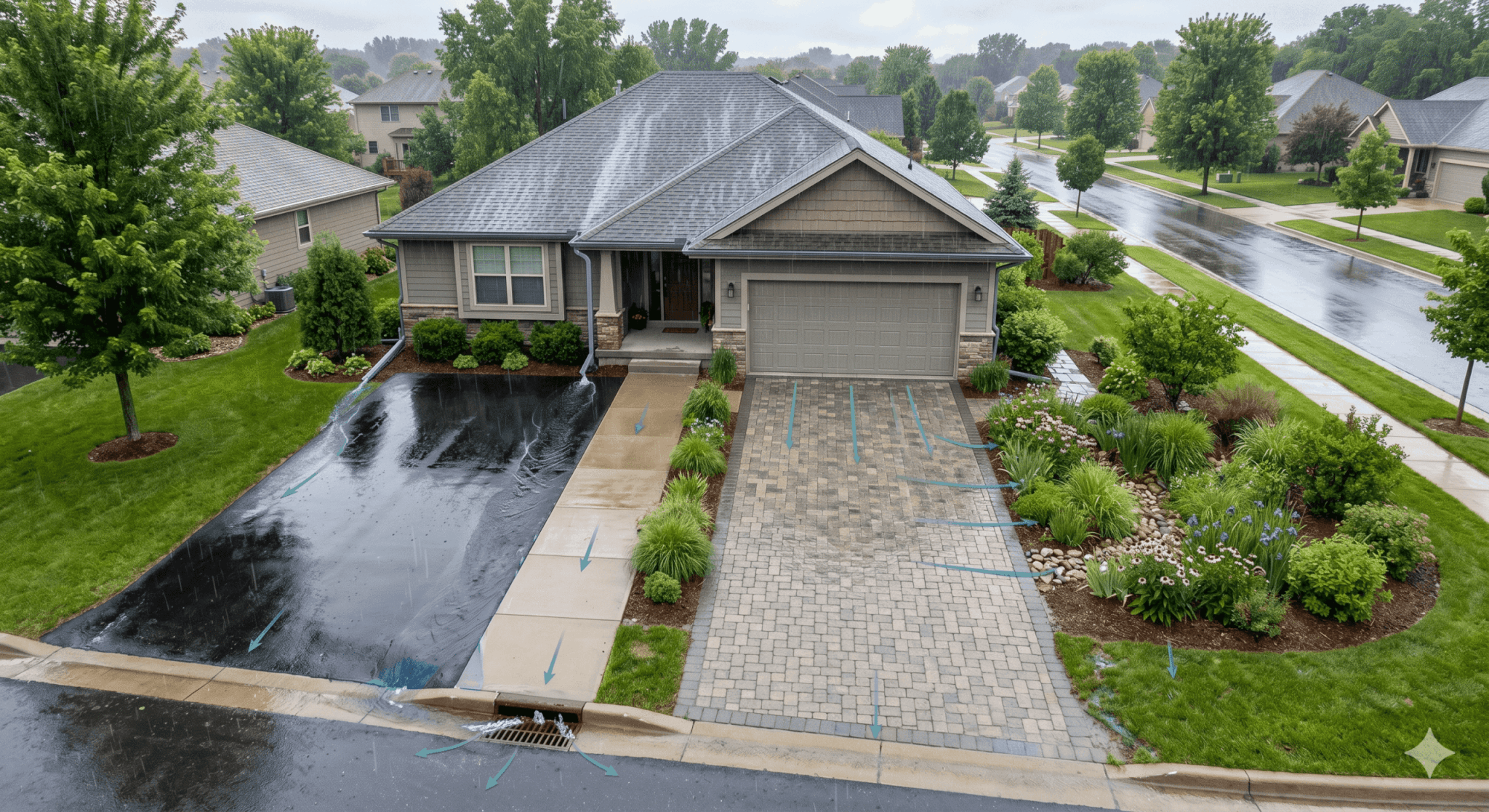



Every time it rains, your driveway tells you something. Water pools near the garage, runs toward the foundation, or sheets off the surface and floods the lawn. A permeable driveway works differently – rain soaks through the surface instead of running off it, filtering down through a layered base and back into the ground where it belongs.
This guide walks you through material options, real costs, installation steps, and how to find rebates that can cut your project cost in half. Municipalities across the country are actively funding these projects through rebates and stormwater credits – programs most homeowners never hear about. Rainplan helps you find programs at your address, so you can see the real financial picture before you decide.
Key takeaways
- Permeable driveways absorb water instead of sending it to the street: this protects your foundation, reduces pooling, and turns your driveway into part of your drainage solution.
- Rebates and stormwater credits can significantly offset your upfront costs: many cities and utilities pay homeowners back for installing permeable surfaces – some programs cover up to 50% of installation costs.
- Your material choice shapes cost, appearance, and drainage performance: plastic grids are the most affordable DIY option, while permeable pavers (PICP) deliver the best combination of curb appeal and drainage capacity.
- Maintenance is straightforward – twice-yearly vacuuming keeps the system working: avoid sand for winter traction, and most clogging issues resolve quickly with the right equipment.
- Rainplan matches your address to available incentives and connects you with qualified contractors: search your address to see your property’s rebate opportunities and get a personalized stormwater plan.
What is a permeable driveway?
A permeable driveway lets rainwater soak through instead of running off into the street. Traditional concrete and asphalt create a waterproof barrier. Permeable driveways use porous materials and a layered stone base to absorb water right where it falls. This design turns your driveway into a water management system that reduces runoff (the water that normally flows off hard surfaces and causes pooling, erosion, or drainage problems).
Water passes through the surface rather than sliding off it. This happens through tiny voids in the material itself or gaps between pavers that let water drain into the ground below.
How a permeable driveway works
A permeable driveway is a complete drainage system built in layers, not just a different surface material. Each layer captures, stores, and releases rainwater back into the ground. Here’s how these layers work together and why installation quality matters:
Turn Runoff Into Rebates
Join Rainplan to access personalized data and discover sustainable solutions tailored to your specific site.
From top to bottom:
- Surface layer: The visible top material (porous asphalt, pavers, or grids) where water first enters the system.
- Bedding layer: A thin layer of small stones that levels the surface and distributes water evenly downward.
- Aggregate base: A deep reservoir of crushed stone that temporarily stores water like an underground tank.
- Native soil: The natural ground beneath where filtered water slowly soaks in over time.
Rain filters down through these layers instead of rushing toward storm drains. Most systems let water soak directly into the soil below. If your property has clay soil that drains slowly, the system may include an underdrain (a perforated pipe that carries excess water to a rain garden or approved drainage area).
Permeable vs. traditional driveways
Here’s what makes a permeable driveway worth considering over traditional concrete or asphalt. The difference comes down to how each surface handles water and impacts your property over time.
Traditional driveways create a waterproof barrier that sends water rushing toward the street. Permeable surfaces absorb that water into the ground. That difference affects puddle formation, maintenance needs, and long-term costs.
| Factor | Traditional driveway | Permeable driveway |
| Water management | Creates runoff that flows to street drains | Absorbs water directly into the ground |
| Surface temperature | Gets hot and stays hot in summer | Stays cooler through water evaporation |
| Winter performance | Forms ice patches from standing water | Drains water before it can freeze |
| Maintenance needs | Cracks require patching and sealing | Needs periodic cleaning to prevent clogging |
| Environmental impact | Increases stormwater volume and pollution | Filters pollutants and reduces runoff |
If you’re dealing with water pooling near the garage, erosion along driveway edges, or foundation drainage concerns, a permeable surface fixes the source instead of just redirecting water elsewhere.
6 popular permeable driveway materials
Your material choice shapes appearance, drainage capacity, and maintenance requirements. Your decision depends on soil type, rainfall patterns, vehicle traffic, and budget. Here’s how each material performs, so you can match the right option to your property.
1. Porous asphalt
Porous asphalt looks like regular asphalt but contains fewer fine particles, creating tiny voids throughout the surface. Key facts to know:
- Drainage rate: 100-200 inches per hour
- Best for: Standard residential driveways where appearance matters
- Cost position: Lower than most other poured permeable surfaces
Homeowners choose this when they want permeable performance without changing their property’s look.
2. Pervious concrete
Pervious concrete uses a special mix with minimal fine aggregate, creating a rougher, pebbly texture that handles high water volumes quickly. Key facts to know:
- Drainage rate: 200-500 inches per hour
- Best for: Areas with heavy downpours where drainage capacity is the priority
- Cost position: Higher than porous asphalt
It costs more, but pervious concrete offers superior drainage capacity for homeowners who prioritize water management over aesthetics.
3. Permeable interlocking concrete pavers (PICP)
PICP systems use solid concrete blocks with permeable joints filled with small stones. Water flows through these joints, not the pavers themselves. Key facts to know:
- Drainage rate: 40-100 inches per hour
- Best for: Homeowners who want drainage performance and enhanced curb appeal
- Cost position: Higher end of the cost spectrum
You can customize colors, patterns, and textures, making PICP the best choice when aesthetics and performance both matter.
4. Plastic grid systems
Plastic grids are lightweight, interlocking frames that you fill with gravel or grass. Key facts to know:
- Drainage rate: 30-50 inches per hour
- Best for: Secondary driveways, overflow parking, or lighter traffic areas
- Cost position: Most affordable permeable option
Handy homeowners can install these systems over a weekend.
5. Grass or turf reinforcement
Reinforced grass driveways combine plastic or concrete grids with living turf to create a green, fully permeable surface. Key facts to know:
- Best for: Mild climates with moderate rainfall; overflow parking areas
- Climate requirement: Works best where regular mowing, watering, and reseeding are practical
- Cost position: Affordable, but ongoing maintenance adds to the total cost
The grid supports vehicle weight while protecting grass roots from compaction. Ideal for properties that want to maximize green space.
6. Resin-bound paving
Resin-bound surfaces mix natural stones with clear resin to create a smooth, decorative finish that remains porous. Key facts to know:
- Drainage rate: 50-100 inches per hour
- Best for: Homeowners seeking a polished, unique aesthetic
- Cost position: Premium pricing
Resin-bound paving is more common in Europe but gaining popularity in the US. Rainplan’s property assessment tools identify which material works best for your soil conditions, drainage patterns, and local incentive programs.
Permeable driveway cost breakdown
The true cost of a permeable driveway goes beyond the initial price tag. These surfaces cost more upfront than traditional options, but the complete financial picture includes rebates, reduced stormwater fees, and lower repair costs over time. Here’s what to budget for:
Material costs
Material choice is the biggest variable in project pricing. Costs vary by region and contractor. Here’s how materials compare:
| Material | Relative installed cost |
| Plastic grid systems | $ (most affordable) |
| Grass reinforcement | $-$$ |
| Porous asphalt | $$ |
| Pervious concrete | $$-$$$ |
| Resin-bound paving | $$$ |
| Permeable pavers (PICP) | $$$-$$$$ (premium) |
Site preparation and labor costs
Site preparation often adds significant cost beyond materials. Several factors drive this number up:
- Excavation depth: Deeper systems require more labor and disposal costs.
- Grading requirements: Uneven or sloped properties need more extensive leveling work.
- Soil conditions: Poor drainage or clay-heavy soil increases base preparation complexity.
Labor costs vary widely by region. Get multiple quotes from vetted contractors to see accurate local pricing.
DIY vs. professional installation
Not every permeable material requires a contractor. Here’s the breakdown:
- DIY-friendly: Plastic grids and basic gravel systems are realistic weekend projects for handy homeowners.
- Professional required: Porous asphalt, pervious concrete, and PICP need specialized equipment and experience to perform correctly.
DIY saves money upfront, but improper installation can compromise drainage performance and void warranties. Match your approach to the material.
Incentives and rebates that offset costs
Many homeowners don’t realize their local utility or municipality offers financial incentives for permeable driveways. These programs exist because permeable surfaces reduce strain on public stormwater systems and save cities money on infrastructure. Rebates range from a few hundred to several thousand dollars, depending on location and project size. Rainplan maintains a comprehensive database of these programs – search your address to discover what’s available in your area.
7 steps to install a permeable driveway
Permeable driveway installation follows a specific sequence, regardless of material. These steps help you plan effectively, whether you’re hiring pros or going DIY. Follow this process from assessment through final testing.
Step 1: Assess your soil and slope
Your soil’s drainage rate determines whether a permeable driveway works on your property. Check these two factors first:
- Drainage rate: Soils that drain at least 0.5 inches per hour support full infiltration systems. Slower-draining clay soils might need an underdrain to handle excess water.
- Slope: Grades steeper than 5% may require terracing or special design considerations.
Get a professional assessment or use Rainplan’s virtual site evaluation to check your property’s suitability before investing in materials or permits.
Step 2: Check local permits and regulations
Many municipalities require permits for driveway modifications, especially when you’re changing grades or connecting to public rights-of-way. Contact your local building department before starting work. If you’re applying for stormwater rebates, many programs require pre-approval before installation begins. Skipping this step could disqualify you from funding.
Step 3: Excavate and prepare the subgrade
Remove the existing driveway surface and excavate to the required depth for your complete system. Key preparation details:
- Excavation depth: Typically 12-24 inches, depending on your design storm requirements.
- Grading: Grade the bottom (subgrade) flat or with a slight slope to ensure even water distribution across the entire area.
Step 4: Install the aggregate base
Add open-graded stone in compacted layers to create your structural base and water storage reservoir. This crushed stone has minimal fine particles, leaving voids for water storage. The depth depends on how much rainfall your system needs to handle during heavy storms. Proper compaction keeps the base stable while maintaining permeability.
Step 5: Add the bedding layer
Spread a thin layer of smaller aggregate over the base to create a level surface for your top material. This bedding or choker course helps water move evenly from the surface into the reservoir below. The specific size and depth depend on your chosen surface material.
Step 6: Install the surface material
Place your chosen surface according to manufacturer specifications. Requirements vary by material:
- Pavers (PICP): Fill joints with permeable aggregate.
- Poured surfaces (pervious concrete or porous asphalt): Allow proper curing time before use.
- Grid systems: Fill with gravel or soil and grass seed.
Each material has specific installation requirements. Following them precisely protects drainage performance and warranties.
Step 7: Inspect and test drainage
After installation, verify the system works by pouring water on the surface and watching it absorb. Additional steps to complete at this stage:
- For PICP systems, contractors often perform formal infiltration testing.
- Document the installation with photos and measurements for any rebate applications.
- Keep records of the installation date and materials used for future maintenance reference.
Keeping your permeable driveway performing well
Maintenance concerns make homeowners hesitant about permeable driveways, but the routine is straightforward. Regular care keeps your driveway draining properly for years, and most of it takes less effort than you’d expect.
Routine sweeping and vacuuming
The main maintenance task is removing sediment, leaves, and debris that can clog surface pores. Here’s a simple schedule to follow:
- Year-round: Use a standard leaf blower to handle light debris as it accumulates.
- Spring and fall: Schedule a thorough vacuum sweep to restore full infiltration capacity and clear any buildup from the previous season.
Preventing and clearing clogs
Catching clogging early keeps the fix simple. Watch for these signs and follow these guidelines:
- Warning sign: Water pooling on the surface after rain signals clogging that needs attention.
- Fix: Vacuum sweeping typically restores drainage quickly.
- Avoid: Never use sand for winter traction – it clogs pores rapidly and is difficult to remove.
- For PICP systems: Refresh joints with new aggregate if drainage slows noticeably.
Most clogging occurs in the top inch of material and is easily reversible with the right equipment.
Winter care and deicing
Permeable driveways handle winter conditions well because water drains instead of refreezing as black ice. A few practical guidelines:
- Snow plowing: Standard plowing works fine – keep the blade slightly raised to avoid catching pavers or damaging porous surfaces.
- Deicing salt: Use sparingly. Improved drainage means you need less than on traditional driveways.
- Sand: Never use sand for traction, as it will clog the system.
Is a permeable driveway worth it?
The value of a permeable driveway depends on your property’s challenges and priorities. Here are 3 concrete ways homeowners benefit from making the switch.
Reduced flood and drainage risk
A permeable driveway absorbs rainwater at the source, reducing runoff volume that flows toward your foundation, basement, or yard. For properties experiencing pooling after storms or water flowing toward the house, this direct absorption provides real protection. The driveway becomes part of your property’s drainage solution rather than contributing to the problem.
Lower surface temperatures
Traditional asphalt absorbs heat all day and radiates it back at night, raising temperatures around your home. Permeable surfaces stay noticeably cooler because water evaporates from within the material, providing natural cooling. This temperature difference makes your driveway and surrounding outdoor spaces more comfortable during hot months.
Long-term property and financial value
Permeable driveways can boost curb appeal, especially decorative options like PICP or resin-bound surfaces. Consider the financial upside:
- Some municipalities reduce monthly stormwater fees for properties with permeable surfaces, creating ongoing savings.
- Reduced drainage problems lower the risk of costly foundation or yard repairs over time.
- Decorative permeable surfaces can increase property value alongside functional benefits.
Rainplan helps you calculate these potential savings – search your address to see your property’s financial opportunities.
Incentives and rebates for permeable driveways
Financial incentives for permeable driveways exist across the country, but many homeowners never discover them. These programs can cut your project cost substantially. Three main funding sources are worth exploring before you finalize your budget.
Local utility stormwater credits
Your water bill likely includes a stormwater fee based on your property’s impervious surface area. Installing a permeable driveway reduces this area, potentially lowering your monthly fee. Some utilities offer credits ranging from 10% to 50% off your stormwater charges. Check your water bill for a stormwater line item, then contact your utility about their credit program.
Municipal and regional rebate programs
Cities and counties increasingly offer one-time rebates for permeable pavement installations, similar to energy efficiency rebates. These programs typically pay per square foot of permeable surface installed, with amounts varying widely by location. Some programs cover up to 50% of installation costs. Rainplan’s incentive database tracks these programs nationwide and matches your address to available rebates automatically.
Green infrastructure grants
State environmental agencies and nonprofit organizations offer grants for residential green infrastructure projects, particularly in areas with combined sewer systems where stormwater and sewage share pipes. These competitive grants can cover significant portions of installation costs. Priority often goes to properties in targeted watersheds or environmental justice communities.
Make your driveway work harder for your property with Rainplan
A permeable driveway does more than look good. It actively manages water, protects your foundation, and can put money back in your pocket through rebates and reduced stormwater fees. Whether you’re dealing with chronic pooling, rising utility costs, or want a smarter surface, the case for going permeable is grounded in real outcomes.
The right material, proper installation, and a little routine maintenance are all it takes to keep your driveway performing for 20-30 years. With incentive programs available in communities across the country, the upfront investment is often more accessible than you’d expect.
Rainplan simplifies every step – from assessing your property’s conditions and identifying available incentives to connecting you with qualified contractors. Search your address to get a personalized stormwater plan and see exactly what you qualify for.
Frequently asked questions
What are the main disadvantages of installing a permeable driveway?
The main disadvantages of a permeable driveway include higher upfront installation costs compared to traditional asphalt or concrete and the need for periodic maintenance to prevent clogging. You’ll need to vacuum or sweep the surface twice yearly to maintain drainage performance. However, many homeowners find these requirements manageable, especially when offset by available rebates and long-term savings on stormwater fees.
Which permeable driveway material offers the best value for homeowners on a budget?
Plastic grid systems filled with gravel provide the most affordable permeable driveway option for budget-conscious homeowners. These DIY-friendly systems cost significantly less than other permeable materials while still providing effective drainage. For those preferring a solid surface appearance, porous asphalt offers the most economical poured option.
How long does a properly maintained permeable driveway typically last?
A properly maintained permeable driveway typically lasts 20-30 years, similar to traditional surfaces. Permeable pavers can last even longer with individual blocks replaced as needed. Regular maintenance like biannual cleaning and avoiding sand or excessive sediment helps ensure your driveway reaches its full lifespan while maintaining drainage performance.
Can permeable driveways support heavy vehicles like RVs or delivery trucks?
Most residential permeable driveway systems handle standard passenger vehicles without issue. PICP and pervious concrete can be engineered for heavier loads including RVs and delivery trucks when properly designed with adequate base depth. Plastic grid and grass reinforcement systems work best for lighter traffic and may not suit regular heavy vehicle use.
What time of year should I schedule permeable driveway installation?
The ideal time for permeable driveway installation is late spring through early fall when temperatures stay consistently above freezing. Poured surfaces like pervious concrete and porous asphalt need warm temperatures to cure properly. PICP and grid systems offer more flexibility and can be installed in a wider range of weather conditions.
Do permeable driveways qualify for tax credits or utility rebates in my area?
Many municipalities and utilities offer rebates, tax credits, or stormwater fee reductions for permeable driveway installations, though availability varies by location. These incentives exist because permeable surfaces reduce strain on public stormwater systems. Search your address on Rainplan to discover which programs are available in your area and calculate potential savings.
Find Rainwater Rebates in Your Area
Enter your address to see local rebates for rain barrels and green infrastructure. Many programs cover 50%+ of costs.