


Green infrastructure manages stormwater through natural systems like rain gardens and permeable pavement, reducing property flooding while qualifying for municipal rebates covering 25-50% of costs.
Your water bill keeps climbing, your basement flooded last spring, and every heavy rain turns your yard into a swamp. Meanwhile, you’re watching neighbors install rain barrels and wondering if those small changes actually make a difference — or if there’s something bigger you’re missing.
Green infrastructure manages stormwater right on your property using natural systems like rain gardens, permeable driveways, and bioswales. Unlike traditional concrete solutions that push water elsewhere, these nature-based systems capture, filter, and slowly release rainwater where it falls. The result? Reduced flooding, lower utility bills, improved water quality, and often significant rebates that help offset installation costs.
We’ll break down what green infrastructure means for homeowners, explore solutions that work in residential settings, and show you how to access financial incentives that make these improvements affordable. You’ll discover practical examples, understand the real benefits for your property and wallet, and learn how platforms like Rainplan connect you with rebates and qualified contractors to bring these projects to life.
Key takeaways
- Start with a simple property assessment during the next rainstorm: walk around and note where water pools, flows, or causes problems to identify which green infrastructure solutions will work best for your specific situation.
- Combine multiple solutions for maximum impact and savings: pair rain barrels with rain gardens or permeable pavers with downspout disconnections to create comprehensive water management that qualifies for higher rebates.
- Research local rebates before starting any work: many cities offer 25-50% cost reimbursements for qualifying projects, but most programs require pre-approval to receive funding.
- Use Rainplan’s platform to streamline your entire project: from identifying available incentives based on your address to connecting with pre-qualified contractors who understand local requirements and rebate programs.
- Focus on solutions that prevent expensive problems: proper drainage through green infrastructure protects your foundation and prevents basement flooding, avoiding repair costs that often exceed the initial investment.
What is green infrastructure?
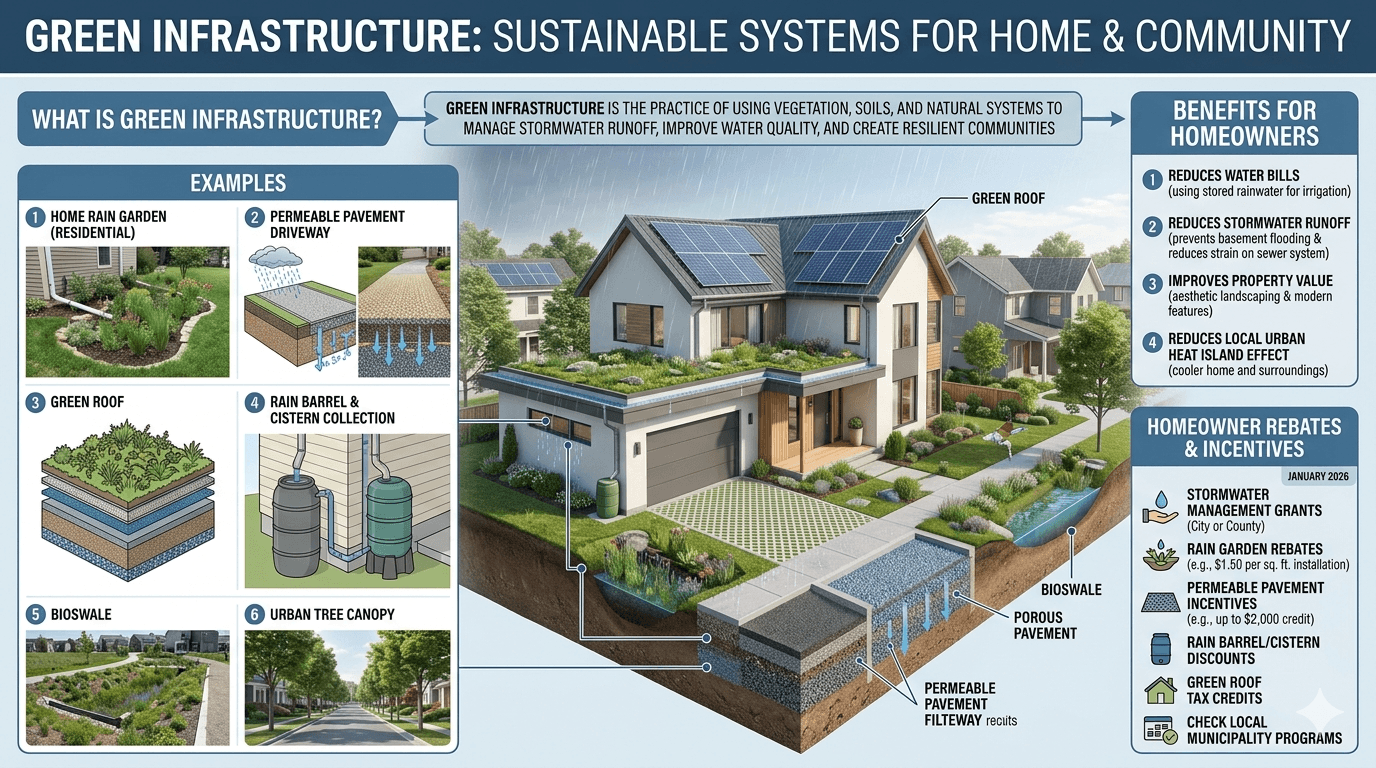
Green infrastructure uses natural systems like plants, soil, and permeable surfaces to manage stormwater where it falls. Instead of rushing rainwater into storm drains through pipes and concrete, these solutions absorb, filter, and slow down water right on your property. Picture your yard working like a sponge, soaking up rain rather than sending it flooding down the street.
For homeowners, this translates into practical upgrades you can actually implement:
- Rain gardens capture runoff from your driveway
- Permeable pavers let water seep through your patio instead of pooling on top
- Green roofs absorb rainfall while insulating your home
Each solution uses natural absorption and filtration to handle the water that lands on your property.
The key difference between green and traditional infrastructure comes down to how water moves through your property:
- Natural absorption: Green infrastructure lets water soak into the ground where it falls, recharging groundwater and reducing runoff that overwhelms storm systems
- Property-level control: You manage stormwater on your own lot with solutions sized for residential properties, not massive municipal projects
- Multiple benefits: Beyond managing water, these systems filter pollutants, create habitat, and can even lower your utility bills
These stormwater solutions turn drainage problems into opportunities for savings and property improvements. Whether you’re dealing with a soggy backyard, worried about basement flooding, or simply want to reduce your environmental footprint, green infrastructure offers practical answers that work at the homeowner scale.
Key benefits for homeowners
Green infrastructure benefits your property and your wallet in measurable ways. These benefits go beyond helping the environment. They solve real problems while saving you money and increasing your home’s value.
Environmental advantages
Every hard surface on your property contributes to local flooding and water pollution. Your driveway, roof, and patio send rainwater rushing toward storm drains, picking up oil, fertilizers, and debris along the way. During heavy storms, this runoff overwhelms drainage systems and causes the flooding you see in streets and basements.
Green infrastructure directly benefits your property by:
- Flooding prevention: Solutions absorb rainfall where it lands, keeping water from overwhelming storm drains and backing up into your yard or basement
- Water quality protection: Natural filtration removes oil, fertilizers, and pollutants before they reach local streams, protecting the waterways in your community
- Wildlife support: Native plants in rain gardens and bioswales create habitat for pollinators and birds, bringing life back to suburban landscapes
Potential cost savings
The financial benefits surprise most homeowners who start out focused on environmental impact. Between rebates, lower utility bills, and avoided repairs, the savings add up quickly.
Many cities now offer stormwater fee reductions for properties with green infrastructure. Some municipalities cut these fees by 25% to 50% when you install qualifying solutions. Beyond fee reductions, proper drainage prevents expensive problems:
- Foundation protection: Foundation damage from poor drainage can cost tens of thousands to repair
- Basement waterproofing: Professional waterproofing runs several thousand dollars
- Energy savings: Green roofs and strategic landscaping reduce heat absorption in summer and provide insulation in winter, lowering your heating and cooling bills throughout the year
Green infrastructure prevents these problems before they start, saving you from costly repairs and reducing ongoing expenses.
Property value and community appeal
Green infrastructure investments increase your property value and neighborhood appeal beyond the immediate savings. These improvements boost curb appeal while making your neighborhood more resilient to flooding.
Rain gardens and native landscaping boost curb appeal with attractive, low-maintenance plantings that serve a functional purpose. Potential buyers recognize the value of proper drainage and reduced flooding risk. As cities implement stricter stormwater requirements, properties with existing green infrastructure become more desirable.
Your improvements also contribute to neighborhood-wide benefits. When multiple properties manage their own stormwater, the entire area experiences less flooding and cleaner waterways. This collective impact makes your community more resilient and attractive to residents.
Examples of green stormwater infrastructure
The right green infrastructure for your property depends on your site conditions, budget, and how much maintenance you want to handle. Each solution manages stormwater differently and brings its own benefits to your home and yard.
| Solution type | Best property types | Approximate cost range | Maintenance level |
| Rain garden/bioswale | Small or large yards | $1,000–$5,000 | Low to moderate |
| Permeable pavement | Driveways, patios | $2,000–$10,000+ | Low |
| Green roof | Flat or low-slope roofs | $5,000–$20,000+ | Moderate |
| Rain barrel | Any size yard | $50–$500 | Very low |
Rain gardens and bioswales
Rain gardens are shallow depressions in your landscape designed to collect and filter stormwater runoff. You typically place them in naturally low areas or near downspouts where water already flows. These gardens use native plants with deep root systems, engineered soil mixtures, and gravel drainage layers to absorb and clean runoff from your roof and driveway.
Bioswales function similarly but feature a longer, narrower design that channels water across your property. Both solutions add visual interest to your landscape while solving drainage problems. The plants you choose can attract butterflies and birds, turning a wet problem area into an attractive garden feature.
Rainplan’s platform helps identify the ideal locations for rain gardens on your property and connects you with contractors who understand proper sizing and plant selection for your local climate.
For sites with larger drainage areas or clay-heavy soil, bioretention cells offer a more engineered solution with the same filtration principles.
Permeable pavements
Traditional driveways and patios create large areas of runoff that contribute to flooding and pollution. Permeable alternatives like porous concrete, permeable pavers, or reinforced gravel allow water to soak through the surface instead of running off.
These surfaces work particularly well for driveways, walkways, and patio areas. Water filters through the pavement into stone reservoirs below, then slowly infiltrates into the soil. This approach delivers multiple benefits:
- Reduced puddles: Water soaks through instead of pooling on the surface
- Winter safety: Prevents ice buildup during cold months
- Groundwater recharge: Keeps rainwater on your property where it can replenish local water supplies
Installation requires careful base prep, but once in place, permeable pavements need only occasional cleaning.
Green roofs and downspout disconnections
Green roofs transform your roof into a living system that absorbs rainwater and provides insulation. Extensive green roofs use shallow soil depths (2-6 inches) with hardy, drought-tolerant plants like sedums. Intensive green roofs support deeper soil and diverse plantings, even small gardens, but require stronger structural support.
Downspout disconnection offers a simpler approach. Instead of connecting directly to storm drains, you redirect roof runoff to landscaped areas, rain gardens, or storage systems. This low-cost modification reduces the stormwater leaving your property by 30% to 50%. Combined with other solutions, disconnected downspouts create a complete water management system.
Rain barrels
Rain barrels are the simplest way to start with green infrastructure. These containers collect roof runoff from your downspouts, storing it for later use in irrigation. Available in sizes from 50 to 500 gallons, rain barrels fit almost any property and budget.
A single 55-gallon rain barrel can capture over 600 gallons during a typical storm season, reducing your water bill while keeping runoff out of storm systems. The stored water works perfectly for:
- Garden irrigation: Water plants during dry spells
- Car washing: Use collected rainwater for outdoor cleaning
- Lawn maintenance: Supplement irrigation without increasing utility costs
Installation takes less than an hour, and maintenance involves only seasonal cleaning and winter preparation in cold climates.
5 steps to implement green infrastructure at home
Transforming your property with green infrastructure is manageable when you follow these five steps. These five steps take you from initial assessment through ongoing maintenance so you get the most from your investment.
Start by building a stormwater management plan: a site-specific roadmap that coordinates all your green infrastructure choices.
Step 1: Identify your runoff issues
Start by observing your property during and after heavy rain. Walk around with a notebook or phone, documenting where water flows and collects. Look for these specific indicators:
- Pooling water: Note areas where water stands for more than 24 hours after rain
- Erosion patterns: Check for bare soil, channels, or areas where mulch washes away
- Overflow points: Watch where gutters overflow or downspouts create concentrated flow
Pay special attention to water entering your basement, flowing toward your foundation, or leaving your property in concentrated streams. These observations show which solutions will work best. A soggy lawn might need a rain garden, while a flooding driveway could benefit from permeable pavement.
Step 2: Choose the right solutions
Match solutions to your problems, property limits, and budget. When selecting green infrastructure, think about:
Start with your biggest water problem and work outward. If basement flooding threatens your home, prioritize solutions near the foundation. For general yard drainage, rain gardens offer versatility and visual appeal. Properties with large paved areas benefit most from permeable surfaces.
Consider combining solutions for comprehensive water management:
- Rain barrel + rain garden: A rain barrel captures initial runoff, while overflow feeds a rain garden
- Downspout disconnection + permeable pavers: Disconnected downspouts direct water to permeable pavers that filter it into the soil
- Layered approach: This comprehensive strategy gets you the most from your investment
Step 3: Find rebates or local incentives
Research rebates and incentives before starting any work. Many programs require pre-approval, so investigate incentives early in your planning process.
Check these sources for potential savings:
- Municipal stormwater programs: Cities often offer rebates ranging from $500 to several thousand dollars for qualifying projects
- Utility companies: Water and sewer authorities provide incentives for projects that reduce demand on their systems
- State environmental programs: Larger grants support residential green infrastructure, especially in watersheds with water quality concerns
Rainplan simplifies this by analyzing your property’s eligibility for local incentives. The platform identifies available programs based on your address and project type, showing potential savings before you commit to any work.
Step 4: Hire qualified professionals
Experienced contractors make sure your green infrastructure works properly and meets local requirements. Not all landscapers understand the engineering behind effective stormwater management.
Look for contractors with specific green infrastructure experience:
- Project portfolio: Ask about previous rain garden or permeable pavement projects
- References: Request contact information from similar residential installations
- Local expertise: Verify they understand local soil conditions and plant requirements
Many rebate programs maintain lists of approved contractors who meet specific qualifications. Rainplan’s network includes vetted professionals familiar with local requirements and incentive programs, removing guesswork from contractor selection.
Step 5: Maintain and monitor your upgrades
Proper maintenance keeps your green infrastructure working well for years. Most solutions require less attention than traditional landscaping once established.
Schedule these maintenance tasks:
- Seasonal inspections: Check for sediment buildup, plant health, and proper water flow each spring and fall
- Plant care: Water new plantings during dry spells in the first year; remove invasive species and replace plants as needed
- System cleaning: Clear rain barrel screens, vacuum permeable pavers annually, and remove debris from rain garden inlets
Monitor how your solutions perform during storms. Does water infiltrate as expected? Are plants thriving? Adjust mulch levels, add plants, or modify grading based on your observations.
How rebates and incentives work
Financial incentives make green infrastructure more affordable, but most homeowners never find these programs. Understanding how incentives work and where to find them can save you thousands.
Common programs and grants
Residential green infrastructure support comes from several sources, each with its own requirements and benefits. Knowing where to look helps you find funding that applies to your project.
Municipal stormwater rebates represent the most common incentive type. Cities reimburse homeowners for installing approved green infrastructure, often covering 50% of project costs up to a set maximum:
- Washington, D.C.: Offers up to $4,000 for residential RiverSmart Homes projects
- Philadelphia: Provides up to $2,000 per property through their Rain Check program
- Local variations: Each city structures programs differently based on local needs
Utility incentives focus on reducing demand on water and sewer systems. These programs often combine rebates with reduced stormwater fees for participating properties. Some utilities offer free rain barrels or discounted permeable pavement materials.
State and federal grants typically support larger initiatives but sometimes include residential components. These programs often target specific watersheds or environmental justice communities, providing higher reimbursement rates for qualifying areas.
Navigating local utilities and municipalities
Finding and applying for incentives takes research and careful documentation. Each program has specific requirements, deadlines, and approval processes.
Start with your city’s environmental or public works department website. Search for “stormwater incentives,” “green infrastructure rebates,” or “rain garden programs.” Many cities bury these programs deep in their sites, so persistence pays off. Call directly if online searches prove fruitless.
Document everything from the start:
- Before photos: Capture existing conditions from multiple angles
- Receipts and invoices: Save every purchase receipt and contractor invoice
- Installation photos: Document the installation process and completed project
- Measurements: Record square footage, depths, and other specifications
Most programs require applications before starting work. Read requirements carefully, as starting construction before approval often disqualifies you from rebates.
Using Rainplan for financing and coordination
Navigating incentive programs while planning a green infrastructure project often feels overwhelming. Rainplan simplifies this with digital tools that connect your property analysis to available funding.
The platform starts by analyzing your property’s specific conditions and stormwater challenges. Based on your address, it identifies all applicable local, state, and utility incentives. You see potential savings upfront, making it easier to budget and choose projects with the best payoff.
Beyond incentive discovery, Rainplan coordinates the entire project process:
- Contractor matching: The platform connects you with pre-qualified contractors familiar with local rebate requirements
- Compliance assurance: This makes sure your project meets program requirements and qualifies for maximum reimbursement
- Application support: Some programs even allow Rainplan to handle rebate applications on your behalf, reducing paperwork and improving approval rates
Overcoming common hurdles
Many homeowners hesitate to start green infrastructure projects because of cost, regulations, or finding qualified help. Let’s address these obstacles directly.
Budget concerns
Initial costs often stop homeowners from starting green infrastructure projects, but you can make them more affordable.
Consider starting small with a rain barrel or small rain garden. These entry-level projects cost a few hundred dollars and demonstrate immediate benefits. Success with a rain barrel or small rain garden builds confidence to tackle larger projects. You can also phase installations over multiple years, spreading costs while gradually improving your property’s water management.
Incentives and rebates cut out-of-pocket expenses by 30% to 50%:
- Recovery rates: Many homeowners recover 30% to 50% of project costs through available programs
- Financing options: Some municipalities offer additional support, including low-interest loans or property tax credits for green infrastructure improvements
- Long-term savings: Calculate ongoing benefits when evaluating costs
Calculate long-term savings when evaluating costs. Reduced stormwater fees save hundreds annually. Prevented foundation damage avoids repairs costing thousands. Lower water bills from rain barrel irrigation add up over time. These ongoing benefits usually pay back your initial investment within a few years.
Understanding regulations
Permitting requirements vary by location, but most residential green infrastructure projects need little regulatory approval.
Rain barrels and rain gardens typically require no permits in most jurisdictions. These projects fall under standard landscaping activities that homeowners can undertake freely. Larger projects like permeable driveways or extensive green roofs may need permits, particularly if they affect grading or structural elements.
Check with your local building department before starting major projects:
- Streamlined processes: Many cities streamline permitting for green infrastructure, recognizing its environmental benefits
- Fee waivers: Some even waive permit fees for qualifying stormwater projects
- Professional guidance: Experienced contractors navigate local requirements daily
Experienced contractors navigate local requirements daily. They know which projects need permits, how to file applications, and what inspections to expect. This expertise means your project meets all regulations without delays or complications.
Finding skilled contractors
Finding contractors with real green infrastructure expertise takes more effort than hiring standard landscapers.
Ask specific questions when interviewing contractors:
- Project experience: How many rain gardens or permeable driveways have you installed?
- Technical knowledge: How do you size bioretention areas for local rainfall patterns?
- Plant expertise: Which native plants do you recommend for rain gardens in our area?
- Maintenance guidance: What maintenance schedule do you recommend for these systems?
Request references from recent residential green infrastructure projects. Contact these homeowners to verify the contractor’s work quality and professionalism. Look for contractors certified through programs like the National Green Infrastructure Certification Program or local stormwater management training.
Rainplan vets all contractors in its network for green infrastructure expertise. The platform matches you with professionals who understand both the technical requirements and local incentive programs, ensuring your project succeeds from planning through completion.
Start your green infrastructure journey
Green infrastructure changes how you manage water on your property and delivers environmental and financial benefits. These natural solutions address flooding, reduce pollution, and can save you money through rebates and reduced utility costs.
Start by walking your property during the next rainstorm. Notice where water flows, pools, and causes problems. This simple assessment shows which green infrastructure solutions work best for your situation. Whether you begin with a rain barrel or plan a comprehensive system including rain gardens and permeable pavement, each improvement contributes to better water management.
You don’t have to navigate from interest to installation alone. Local incentive programs can cover significant project costs when you know where to look and how to apply. Qualified contractors exist in most areas, ready to help design and install solutions that work for your property and climate.
Use these resources to make your green infrastructure project successful. Research local rebate programs through your city and utility websites. Connect with experienced contractors who understand both the technical and regulatory requirements. Rainplan’s platform simplifies the entire process, from identifying incentives to coordinating installation.
Your property becomes part of the solution to urban flooding and water pollution. Each rain garden, permeable driveway, and green roof contributes to community resilience while solving your own drainage challenges. Between environmental benefits, cost savings, and property improvements, green infrastructure is a smart investment.
See If You Qualify for rebates and financing in your area.
Frequently asked questions
What exactly is green infrastructure and how does it work on residential properties?
Green infrastructure on residential properties uses natural systems like plants, soil, and permeable surfaces to manage stormwater where it falls, replacing traditional pipes and concrete with solutions like rain gardens, permeable driveways, and rain barrels that absorb and filter rainwater on your property.
Can I install green infrastructure solutions if I have a small yard?
Yes, small properties can successfully use green infrastructure through compact solutions like rain barrels, permeable walkways, and small rain gardens designed specifically for limited spaces.
Who maintains residential green infrastructure after installation?
Property owners maintain their residential green infrastructure, though most solutions require only seasonal attention like weeding, mulching, and occasional replanting once established.
Do green infrastructure rebates exist for renters or only homeowners?
Most rebate programs require property ownership, though renters can explore portable solutions like rain barrels or collaborate with landlords on permanent installations that benefit the property.
What minimum project cost qualifies for green infrastructure incentives?
Minimum costs vary by program, with some municipal rebates starting at projects as small as $500 while others focus on larger installations above $2,000.
How do I find contractors approved for green infrastructure projects?
Many rebate programs maintain lists of certified contractors, and platforms like Rainplan connect property owners with vetted professionals experienced in local green infrastructure requirements and incentive programs.