
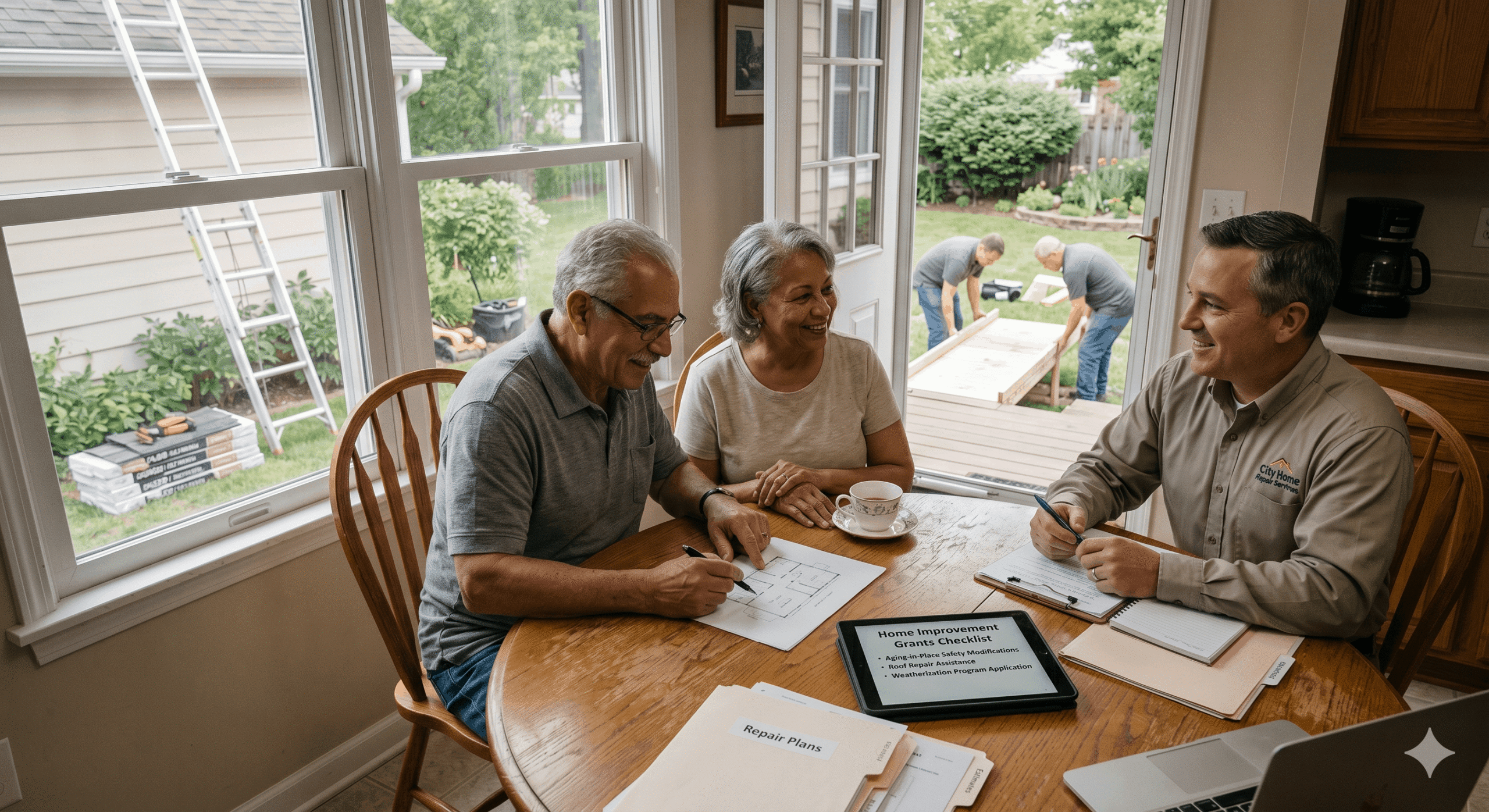

Federal programs like the USDA Section 504 grant, the Weatherization Assistance Program, and VA housing adaptation grants fund repairs, accessibility upgrades, and energy improvements. State agencies, local housing offices, and nonprofits like Habitat for Humanity and Rebuilding Together add even more options to the mix. And for seniors interested in property-level improvements like stormwater management or green infrastructure, platforms like Rainplan help you search by address to uncover location-specific rebates and incentives you might otherwise miss.
This guide breaks down the major programs available in 2026, eligibility requirements, covered repairs, and how to apply without wasting time on programs that won’t work for you. Whether you’re researching options for yourself or helping a parent navigate this process, you’ll find clear next steps here.
Key takeaways
- Free money exists – you just need to know where to look: Federal, state, and nonprofit programs offer grants up to $10,000 (and sometimes higher) for seniors who need home repairs, with no repayment required.
- Apply to multiple programs at once to maximize your chances: Eligibility varies by location, income, and repair type, so applying to multiple programs increases your chances of getting funded.
- Your documents determine how fast you get approved: Gathering proof of age, income, and homeownership before you apply keeps your application moving and puts you ahead of other applicants.
- Rainplan helps you find green infrastructure rebates that most seniors overlook: By analyzing your property’s specific details, Rainplan identifies stormwater incentives (like rain barrel rebates worth $50-$200) that stack on top of traditional grants.
- Veterans and Medicaid recipients have access to additional funding most people don’t know about: VA housing grants reach up to $117,014, and Medicaid waivers may cover accessibility modifications that Medicare won’t touch.
What are home improvement grants for seniors?
Home improvement grants for seniors help older adults repair, modify, or upgrade their homes without paying the money back. The money comes from government agencies, nonprofits, or utilities and covers essential repairs, accessibility modifications, and energy upgrades that help seniors stay safely at home.
You’ll find these programs use different names like “assistance,” “rebates,” or “incentives,” but they all share one key feature: unlike loans, you don’t pay them back. These programs exist because keeping seniors at home costs less than institutional care and preserves independence.
Eligibility typically depends on three main factors:
- Age requirements: Usually 62 or older, though some local programs start at 60
- Income limits: Most target low to very low-income households based on area median income
- Property ownership: You must own and occupy the home needing repairs
Which programs you can access depends on where you live and what repairs your home needs. Rural areas have different options than cities, and each state administers certain programs differently.
Who qualifies for senior home improvement grants?
Turn Runoff Into Rebates
Join Rainplan to access personalized data and discover sustainable solutions tailored to your specific site.
[gutenberg_cta id=’6574′]
Knowing eligibility requirements upfront saves time and helps you focus on programs you’re most likely to qualify for. Most programs look at similar factors, though specific thresholds vary by location and program type. Here’s what matters:
Age serves as the primary qualifier for senior-specific programs. Federal programs like the USDA Section 504 grant require you to be 62 or older, while Area Agencies on Aging typically serve adults 60 and above. Some local programs set their own age thresholds.
Income requirements target assistance to those who need it most. “Very low income” means earning 50% or less of your area’s median income, though exact dollar amounts vary by location and household size. Programs use your total household income, including Social Security, pensions, and other sources.
Location matters more than many seniors realize. The USDA Section 504 program only serves rural areas, while HUD programs operate through local housing authorities in cities and suburbs. Your address determines which federal, state, and local programs you can access.
Beyond these core criteria, certain groups have access to additional options:
- Veterans: Access to VA housing adaptation grants based on service-connected disabilities
- Medicaid recipients: Potential coverage for home modifications through state waivers
- Tribal members: Specific programs through tribal housing authorities
- People with disabilities: Enhanced eligibility for accessibility modifications
6 home improvement grant programs for seniors
These are the most widely available funding sources for senior home repairs and modifications. Each covers different needs and areas, so you might qualify for several at once. Here’s what each one covers and how to access it.
USDA Section 504 home repair loans and grants
The USDA Section 504 program provides grants up to $10,000 for seniors in rural areas who need to remove health and safety hazards from their homes. If you’re 62 or older with very low income and own a home in a USDA-eligible rural area, this program provides funding for critical repairs.
The program covers repairs that address immediate health and safety concerns:
- Roof repairs: Fixing leaks or structural damage
- Heating systems: Replacing broken furnaces or unsafe heating equipment
- Electrical hazards: Updating dangerous wiring or electrical panels
- Plumbing issues: Repairing failed septic systems or water lines
You can combine the grant with a 1% interest loan up to $40,000 if repairs exceed the grant amount. The total assistance available reaches $50,000, or $55,000 in presidentially declared disaster areas.
Apply through your local USDA Rural Development office, which you can find using the USDA’s online service center locator. Important: if you sell your home within three years, you’ll need to repay a portion of the grant.
HUD Older Adults Home Modification Program
The HUD Older Adults Home Modification Program (OAHMP) funds local organizations that provide free or low-cost home modifications for low-income seniors. You don’t apply directly to HUD. Instead, you work with local housing authorities or nonprofits that receive these funds.
This program focuses on modifications that support aging in place (maintaining your independence and living safely at home as you age, instead of moving to assisted living or nursing facilities).
Common modifications funded through OAHMP include:
- Bathroom safety: Grab bars, walk-in showers, raised toilet seats
- Mobility improvements: Wheelchair ramps, widened doorways, stair lifts
- Kitchen accessibility: Lowered counters, lever-style handles, accessible storage
- General safety: Improved lighting, non-slip flooring, handrails
Contact your local housing authority or Area Agency on Aging to find participating organizations in your area. They’ll tell you what’s available and whether there’s a waitlist.
Weatherization Assistance Program
The Weatherization Assistance Program provides free energy-efficiency upgrades to reduce utility costs for low-income households. The Department of Energy prioritizes elderly households for this assistance. Trained technicians handle assessment and installation at no cost to you.
Covered improvements include:
- Insulation upgrades: Adding or improving attic, wall, and floor insulation
- Air sealing: Closing gaps around windows, doors, and other openings
- HVAC improvements: Repairing or replacing inefficient heating and cooling systems
- Health and safety measures: Addressing carbon monoxide risks or ventilation issues
To access weatherization assistance:
- Locate your local weatherization agency using the Department of Energy’s online directory
- Call or visit to request an energy assessment
- If you qualify, technicians evaluate your home and schedule the work for free.
Area Agencies on Aging and local senior services
Area Agencies on Aging (AAAs) connect you to various senior services, including home repair assistance. Funded through the Older Americans Act, these agencies don’t always provide repairs directly, but they connect you with local programs, vetted contractors, and funding resources you might not find on your own.
AAAs help seniors aged 60 and older access:
- Minor repair programs: Fixing small safety hazards like loose steps or broken locks
- Volunteer services: Groups that provide free labor for basic repairs
- Referrals to funding: Information about local grants and assistance programs
- Contractor connections: Lists of vetted, affordable repair services
Your local AAA prioritizes people with the greatest social and economic need, considering income, isolation, and disability status. Call the Eldercare Locator at 1-800-677-1116 or visit eldercare.acl.gov to find your local AAA and learn about current programs, waitlist status, and application procedures.
Veterans housing adaptation grants
The Department of Veterans Affairs offers substantial grants for veterans with qualifying service-connected disabilities. These grants don’t consider income. Eligibility depends entirely on your disability rating and how it affects your housing needs.
| Grant type | Purpose | Maximum amount (2024) |
| Specially Adapted Housing (SAH) | Buy, build, or modify permanent home | $117,014 |
| Special Home Adaptation (SHA) | Adapt home for specific disabilities | $23,444 |
| Temporary Residence Adaptation (TRA) | Modify family member’s home | SAH: $47,130 / SHA: $8,415 |
The VA also provides the Home Improvements and Structural Alterations (HISA) benefit for medically necessary modifications:
- Service-connected conditions: Up to $6,800
- Non-service-connected conditions: Up to $2,000
Apply online at va.gov/housing-assistance/disability-housing-grants or work with your VA regional office. You’ll need to document your service-connected disability and planned modifications.
Medicaid home and community-based services
Medicaid Home and Community-Based Services (HCBS) cover environmental modifications that help eligible seniors stay at home. These state-run programs vary widely in coverage and eligibility, but many cover home accessibility improvements.
HCBS programs may cover modifications that help you perform daily activities safely:
- Bathroom modifications: Roll-in showers, grab bars, accessible sinks
- Mobility aids: Ramps, stair glides, widened doorways
- Safety features: Emergency response systems, improved lighting
- Kitchen adaptations: Accessible appliances, lowered work surfaces
What’s covered depends on your state’s HCBS waivers and your care plan. Contact your state Medicaid office to learn what’s available. The application process typically involves a needs assessment showing how modifications help you stay at home.
Important: Medicaid differs from Medicare, which generally doesn’t cover home modifications. If you have both, Medicaid may provide modification coverage that Medicare won’t.
What repairs and improvements do these programs cover?
Programs focus on repairs and modifications that affect your health, safety, and independence. Knowing what’s typically covered (and what isn’t) helps you match your needs with the right funding source before you apply.
Health and safety repairs receive top priority across most programs. These fix immediate dangers that could injure you or make your home unlivable. Programs consistently fund:
- Roof repairs to stop leaks
- Plumbing fixes for failed systems
- Electrical updates to remove fire hazards
- Heating system repairs or replacements
Accessibility modifications help you navigate your home safely despite mobility challenges. Standard covered improvements include:
- Bathroom grab bars and walk-in showers
- Wheelchair ramps and widened doorways
- Stair lifts or main-floor bedroom additions
- Lever-style door handles and accessible light switches
Energy efficiency upgrades reduce utility costs through weatherization programs. Covered improvements typically include:
- Insulation additions: Attic, wall, and floor insulation to reduce heat loss
- Air sealing work: Caulking and weather-stripping to eliminate drafts
- Window replacements: Energy-efficient windows when cost-effective
- HVAC updates: Furnace tune-ups or replacements for efficiency
Programs don’t cover cosmetic improvements, luxury upgrades, or routine maintenance. You won’t receive funding for:
- Kitchen remodels without accessibility needs
- Landscaping or exterior beautification
- Swimming pools or hot tubs
- General painting and decorating
Documents to gather before you apply
Getting your documents together upfront prevents delays. Many programs work first-come, first-served, so being prepared improves your chances of getting funded.
Essential documents most programs require:
- Proof of age: Driver’s license, birth certificate, or passport showing you meet age requirements
- Income verification: Recent tax returns, Social Security award letters, pension statements
- Homeownership proof: Property deed, mortgage statement, or property tax bill
- Residency confirmation: Utility bills or bank statements with your current address
- Repair documentation: Photos of needed repairs, contractor estimates if available
- Veteran status: DD-214 discharge papers or VA disability rating letter if applicable
Some programs need medical statements for accessibility modifications. Others require proof of insurance or property tax payment status. Contact the program directly to confirm their complete documentation list before submitting your application.
7 steps to apply for senior home improvement grants
Here’s how to tackle the application process step by step. Each step gets you closer to the assistance you need. Applying to multiple programs at once improves your chances.
Step 1: Identify your best-fit programs. Review the programs above and figure out which ones match your age, income, location, and repair needs. Rural seniors should prioritize USDA, while those needing energy improvements should focus on weatherization programs.
Step 2: Contact local offices for current information. Call your Area Agency on Aging at 1-800-677-1116 or your local housing authority to confirm which programs are accepting applications. Ask about waitlists, funding availability, and local programs that aren’t well-known.
Step 3: Gather required documentation. Use the document checklist above to compile everything before starting applications. Having materials ready keeps the process moving.
Step 4: Submit applications to multiple programs. Apply to every program you qualify for since you can often combine assistance. Follow each program’s specific submission method, whether online, by phone, or in person.
Step 5: Schedule required assessments. Most programs send someone to evaluate your home and verify what needs fixing. Clear access to problem areas and have any repair history ready.
Step 6: Review and accept offers carefully. Read approval agreements carefully before signing. Make sure you understand what work gets done, who does it, and any conditions like recapture provisions.
Step 7: Coordinate the work schedule. Once you’re approved, the program usually handles contractor selection and scheduling. Stay available for questions and be flexible with timing since contractors often juggle multiple program projects.
Rainplan helps property owners identify additional funding opportunities through its database of green infrastructure incentives, which can complement traditional repair grants for qualifying improvements.
Free grants for home repairs by state
State and local programs provide crucial funding beyond federal options, but availability varies widely by location. These programs typically combine federal Community Development Block Grant (CDBG) funds with state or local budgets to serve area seniors. How they’re administered varies widely from state to state.
Knowing how your state handles these programs speeds up your search. Some states run centralized programs. Others delegate entirely to counties or cities.
Examples of state-level approaches:
- California: Cities like Los Angeles and San Francisco operate owner-occupied rehabilitation programs through local housing authorities, offering grants and deferred loans for critical repairs
- Texas: The Texas Department of Housing and Community Affairs coordinates weatherization and home repair programs statewide, with applications processed through local agencies
- Pennsylvania: Counties administer home repair programs using CDBG funds, with eligibility and funding amounts varying by county
- Florida: Local housing finance authorities offer repair programs for seniors, often combined with property tax deferral options
Instead of searching every state website, try these approaches:
- Contact your city or county housing department directly
- Search “[your county] senior home repair program” or “CDBG home rehabilitation [your city]” online
- Call 211 for local resource information
- Check with your state housing finance agency for statewide programs
Nonprofit programs that help seniors with home repairs
Nonprofit organizations step in when government programs have waitlists or when repairs don’t qualify for public funding. These groups often provide free labor, making limited grant dollars stretch further. In some cases, they’re the fastest way to get work done.
Habitat for Humanity Aging in Place programs operate through local affiliates, providing critical repairs and accessibility modifications. Each affiliate sets its own guidelines, but most serve seniors earning below 80% of area median income. They focus on repairs that address health, safety, and accessibility to help seniors keep their homes. Find your local affiliate at habitat.org to learn about their specific programs and application process.
Rebuilding Together operates the Safe at Home program specifically for older adults and people with disabilities. Their local affiliates provide free repairs focused on safety, accessibility, and energy efficiency. Volunteers handle the labor. The organization covers materials through donations and grants. Visit rebuildingtogether.org to locate your nearest affiliate and check their application periods, as many work on annual cycles.
Local faith-based organizations and community groups often run smaller repair programs. They often provide volunteer labor for painting, yard work, or minor repairs that don’t qualify for larger programs. Your Area Agency on Aging maintains lists of these local resources.
Loans to consider when grants aren’t enough
Low-interest loans help when repair costs exceed available grant funding. These options make sense when you need immediate repairs or when grants alone won’t cover everything. Here’s how the main options compare.
| Loan program | Maximum amount | Interest rate | Best for |
| USDA Section 504 loan | $40,000 | 1% over 20 years | Rural seniors; combinable with $10,000 grant |
| FHA Title I loan | $25,000 | Varies by lender | Urban/suburban areas without home equity |
| HUD 203(k) rehabilitation loan | Varies | Mortgage rate | Buying or refinancing a home needing repairs |
USDA Section 504 loan offers exceptional terms for rural seniors. Borrowing up to $40,000 at 1% interest over 20 years, combined with the $10,000 grant, gives you $50,000 total. That’s often enough to cover substantial repairs while keeping payments affordable on a fixed income.
FHA Title I loans provide another option without requiring home equity. These federally insured loans provide up to $25,000 for single-family home improvements through approved lenders. Interest rates are higher than the USDA program, but they’re available in urban and suburban areas where USDA loans aren’t.
HUD’s 203(k) rehabilitation loan works when you’re buying a home needing repairs or refinancing to fund major renovations. This program rolls repair costs into your mortgage and spreads payments over the full loan term. It works well for seniors downsizing to homes that need modifications.
Before taking out a loan, think about:
- Monthly payment impact: Calculate whether your budget accommodates new payments
- Total project cost: Determine if combining grants and loans completes necessary work
- Urgency of repairs: Weigh waiting for grants against immediate loan-funded repairs
- Future plans: Consider how long you’ll stay in the home before taking on debt
Green home improvements that qualify for additional incentives
Environmental improvements are an overlooked funding source that works alongside traditional repair grants These green infrastructure projects reduce utility costs while qualifying for rebates many seniors don’t know exist – and they address real property problems at the same time.
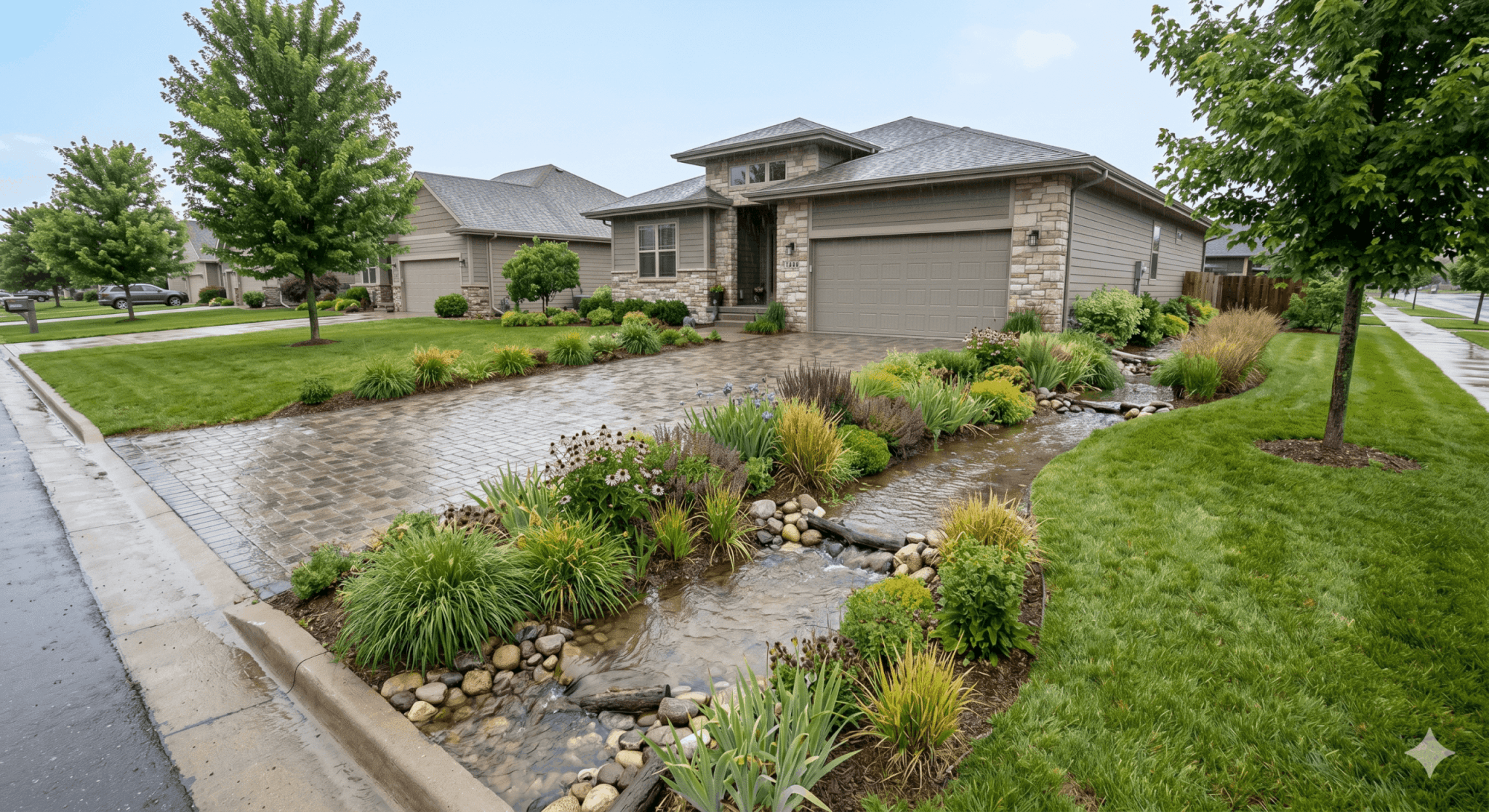
Stormwater management improvements address drainage issues while earning incentives:
- Rain barrels collect roof runoff for garden watering, reducing water bills and qualifying for rebates ranging from $50 to $200 in many municipalities
- Rain gardens manage yard drainage naturally while beautifying your property and potentially earning stormwater credits
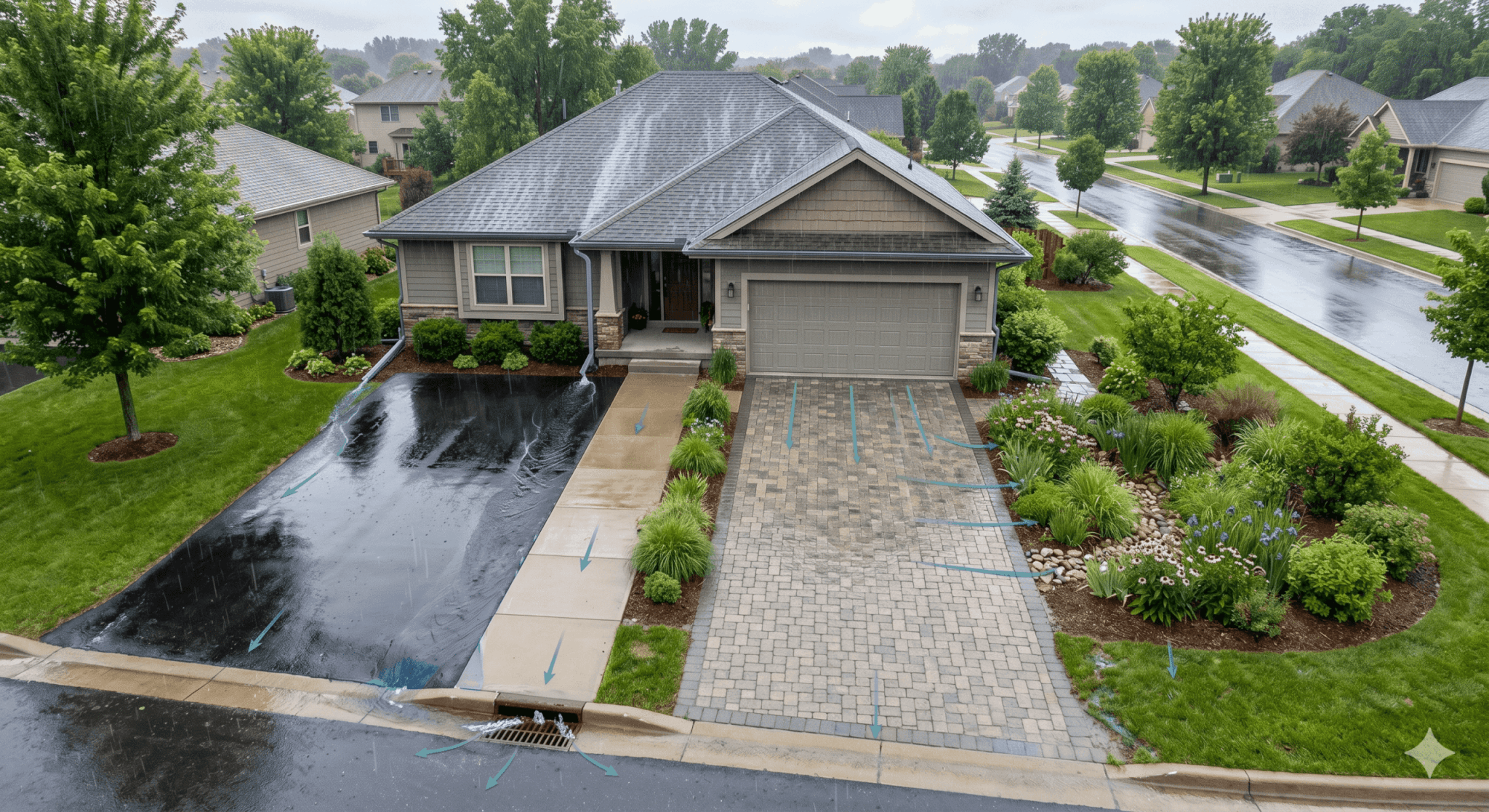
- Permeable driveways allow water to soak into the ground rather than running off, addressing drainage problems while qualifying for green infrastructure rebates
These improvements particularly benefit seniors by reducing maintenance needs and preventing water damage. Standing water creates slip hazards and foundation problems, while proper drainage protects both your property and your mobility.
Rainplan streamlines the process of finding and accessing these incentives. The platform analyzes your property’s specific characteristics to identify available rebates, connects you with qualified contractors, and helps navigate application requirements. For seniors managing multiple home improvement needs, combining traditional grants with green infrastructure incentives through Rainplan maximizes available funding.
Energy-related green improvements often qualify for utility rebates beyond weatherization programs. Solar panels, heat pumps, and smart thermostats may earn additional incentives that stack with other assistance programs.
Start securing your home improvement funding today
Navigating home improvement grants takes persistence, but the funding is real and accessible. Start by contacting your Area Agency on Aging or USDA Rural Development office to understand current local options – these conversations reveal which programs have active funding versus long waitlists, so you can focus your energy where it counts.
Apply to multiple programs simultaneously, since eligibility and funding vary across sources. A repair that doesn’t qualify for one program might be a strong fit for another. Keep detailed records of all applications, correspondence, and deadlines to stay organized throughout the process.
While waiting for grant decisions, explore immediate alternatives. Nonprofit organizations might provide volunteer labor for urgent safety repairs, and low-interest loans can fund critical work while you await grant approval. For property owners interested in going further, Rainplan identifies both traditional and green infrastructure funding opportunities specific to your address – helping you maximize available assistance while improving your home’s resilience and long-term value.
Frequently asked questions
Can seniors apply for more than one home improvement grant simultaneously?
Yes, seniors can and should apply for multiple home improvement grants at the same time. Programs have different funding cycles and eligibility requirements, so applying to several increases your chances of securing assistance while some programs may have waitlists.
Does Medicare cover home modifications for seniors?
Medicare generally does not cover home modifications like grab bars, ramps, or bathroom renovations. However, Medicaid Home and Community-Based Services may cover these modifications for eligible seniors through state-specific programs.
How long does the home improvement grant approval process typically take?
The approval timeline varies significantly by program, ranging from a few weeks for local nonprofit assistance to several months for federal programs like USDA Section 504. Apply early and to multiple programs since demand often exceeds available funding.
Are home improvement grants for seniors considered taxable income?
Most home improvement grants for seniors are not considered taxable income when used for necessary repairs, health, safety, or accessibility improvements. Consult a tax professional about your specific situation and grant type.
What happens if a senior sells their home after receiving a grant?
Some programs include recapture provisions requiring partial repayment if you sell within a specified period, typically three years for USDA Section 504 grants. Review your grant agreement carefully for any sale restrictions or repayment requirements.
Can seniors who rent their homes qualify for any home improvement assistance?
Most home improvement grants require homeownership, but some local programs work with landlords to improve rental properties occupied by seniors. Contact your Area Agency on Aging to explore tenant-specific resources or landlord participation programs.
[gutenberg_cta id=’6661′]
Find Rainwater Rebates in Your Area
Enter your address to see local rebates for rain barrels and green infrastructure. Many programs cover 50%+ of costs.