

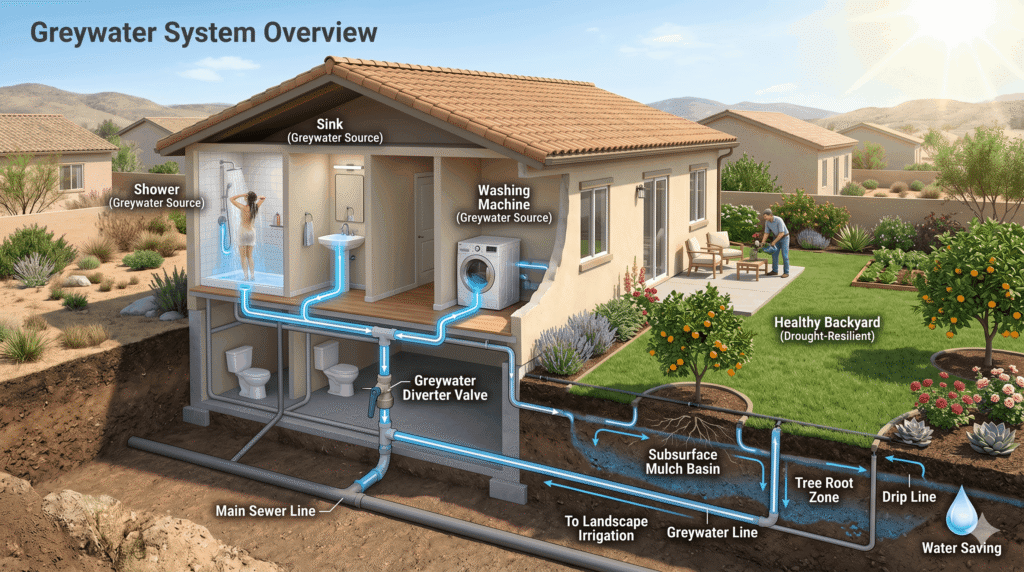
Every time you water your yard, some of that water’s already been through your home once. Your shower, bathroom sink, and washing machine generate dozens of gallons of reusable water every day. Most households send it straight to the sewer without a second thought. A greywater system flips the script by capturing this lightly used household water and sending it to your landscape instead, cutting your reliance on treated drinking water for outdoor irrigation.
The case for greywater reuse? Pretty straightforward. In drought-prone states like California, Arizona, and Texas, outdoor water use accounts for roughly 30% of a household’s total consumption. Redirecting even part of that demand to greywater cuts your water bill, takes pressure off local supplies, and keeps your landscaping healthy through dry seasons. Some utilities and municipalities even offer rebates to offset installation costs, which makes the numbers work better than most homeowners expect.
Here’s everything you need to evaluate greywater reuse for your property. You’ll get a plain-language breakdown of how greywater systems work, a comparison of the most common types, what installation actually involves, realistic cost ranges, and how to find local incentives that cut your upfront investment. Whether you’re exploring this for the first time or ready to move forward, you’ll have what you need to make a confident call for your home.
Quick answer: A greywater system captures water from showers, sinks, and laundry — typically 50–150 gallons per day for a 4-person household — and reuses it for irrigation or toilet flushing. Entry-level laundry-to-landscape systems cost $200–$700 with no treatment needed; full treated systems run $2,000–$8,000. Permits are required in most states, and rebates are available in California, Arizona, Texas, and several other states.
Key takeaways
- Greywater gives your daily water a second life: Shower, sink, and laundry water can irrigate your yard instead of going down the drain, cutting outdoor water use by 30–50%.
- Pick the right system for your property: From a simple laundry-to-landscape setup ($100–$500 DIY) to a full treatment system, your budget and yard layout determine the best fit.
- Check local rules before you buy anything: Permit requirements vary widely by state and city, so confirming what’s allowed in your area protects your investment.
- Use Rainplan to find rebates specific to your address: Search your property to see which greywater incentives and local programs apply to you before committing to a system.
- Maintenance is simpler than you think: A monthly check of outlets, occasional filter cleaning, and plant-friendly detergents keep your system running with minimal effort.
What is a greywater system?
A greywater system captures wastewater from your showers, bathroom sinks, and washing machines, then redirects it for reuse rather than letting it go down the sewer. That water gets a second life, watering your trees, shrubs, and ornamental plants through subsurface irrigation points.
Unlike blackwater from toilets, greywater has minimal contamination and only needs basic treatment for safe reuse. Kitchen sinks and dishwashers stay out of the system because their high grease and food content requires more complex processing. The idea’s simple: catch usable water before it hits your sewer line and put it to work in your landscape.
What is greywater used for?
Your daily shower and laundry water can become a solid irrigation source for your property. Most homeowners send greywater to their outdoor landscapes, feeding non-edible plants through underground distribution systems. Here’s where greywater makes the most sense for homes.
- Landscape irrigation: Water flows straight to mulch basins or subsurface outlets that get moisture to plant root zones. A typical four-person household makes enough greywater to keep a modest backyard watered year-round.
- Toilet flushing: Where local codes allow it, filtered and disinfected greywater can supply toilet tanks, cutting your potable water use.
- Subsurface application: Water stays below ground to keep people from touching it while feeding established trees, shrubs, and ornamental gardens.
Greywater works best for non-edible plants. Keep it away from vegetables or herbs where the edible parts touch soil. This keeps things safe while turning waste into something useful.
How a greywater system works
Turn Runoff Into Rebates
Join Rainplan to access personalized data and discover sustainable solutions tailored to your specific site.
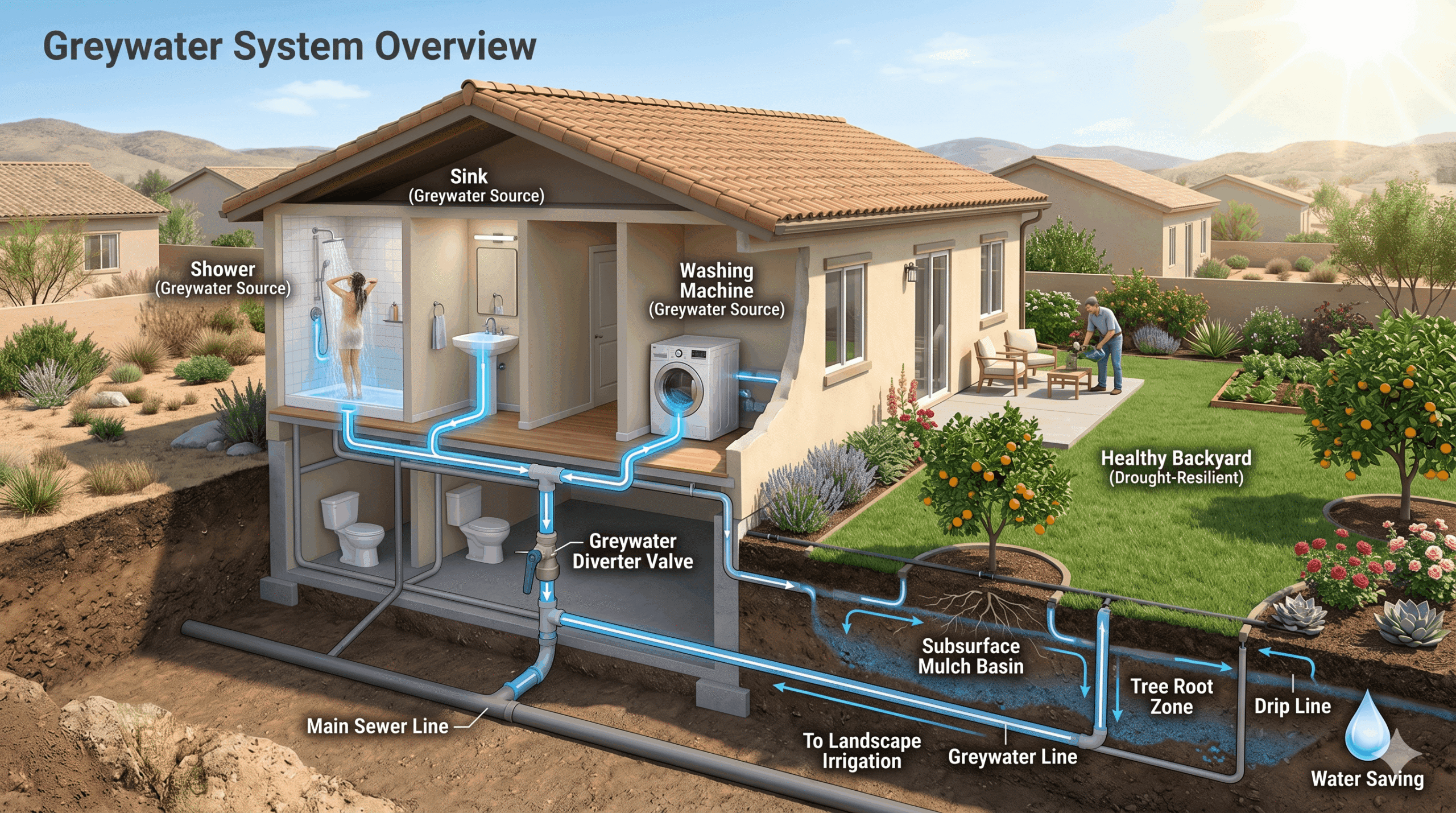
Your morning shower water takes a detour. Instead of flowing straight to the sewer, a greywater system catches it and sends it to your landscape. The path from fixture to landscape is straightforward.
Step 1: Collection
Water leaves your shower, bathroom sink, or washing machine through standard drain plumbing, same as always.
Step 2: Diversion
A diverter valve sends the flow away from your sewer or septic line. You control this valve and can switch water back to the sewer when you’re using bleach or harsh cleaners.
Step 3: Distribution
Dedicated pipes carry greywater to subsurface outlets, usually mulch basins that release water below ground so it won’t pool or run off.
Step 4: Reuse
The water feeds your landscape right at the root zones or, in treated systems, supplies your toilet tank for flushing.
Subsurface application matters because most U.S. health codes require it. Most U.S. health codes require it because keeping greywater below the soil surface stops people from touching it and cuts health risks. Storage stays minimal since greywater degrades quickly. You need to use it within 24 hours to avoid odor and bacterial growth.
5 types of greywater systems for homes
Your property layout, local regulations, and water reuse goals determine which greywater system makes sense. Here are the main system types and what they’re best for.
1. Laundry-to-landscape (L2L)
This entry-level system sends washing machine water straight to subsurface mulch basins without needing a storage tank. Many states offer simplified permit pathways for L2L installations, making approval straightforward. It uses your washer’s built-in pump to move water through the distribution lines.
Best for: Homeowners wanting a low-cost starting point with minimal complexity.
2. Branched-drain gravity system
Gravity handles everything, moving water from showers and bathroom sinks to multiple subsurface outlets. No pumps means no electricity costs, but you need enough slope from source to landscape. Plan your pipe layout and grade carefully so water flows where you want it.
Best for: Properties with natural slope that moves water to irrigation areas.
3. Pumped distribution system
When gravity won’t cooperate, pumps give you the lift to move water uphill or across longer distances. These systems often include coarse filtration before distribution and work with any property layout. The added components cost more upfront but let you irrigate more areas.
Best for: Flat properties or situations where irrigation areas sit far from water sources.
4. Simple diverter system
A basic valve setup lets you manually or automatically switch water between the sewer and your landscape. This component usually works within larger systems instead of on its own. Being able to bypass greywater distribution when you’re using harsh detergents keeps your soil and plants safe.
Best for: Homeowners who want control over when greywater gets reused.
5. Packaged treatment system
The most advanced option packs filtration, biological treatment, and disinfection into one unit. These systems make water clean enough for toilet flushing or drip irrigation where codes allow it. Many jurisdictions require NSF/ANSI 350 certification for these units.
Best for: Properties seeking indoor reuse or drip irrigation in areas with strict treatment requirements.
The real benefits of reusing greywater at home
Greywater reuse pays off in several ways. Your water bills drop, your landscape thrives, and your property handles dry periods better. These benefits add up over time, making the upfront cost worth it.
- Lower water bills: Outdoor irrigation typically accounts for 30–50% of residential water use in dry climates, so redirecting shower and laundry water cuts your potable water consumption significantly.
- Reduced septic and sewer load: Every gallon you reuse is one less gallon hitting treatment systems, which extends capacity and cuts community infrastructure costs.
- Drought resilience: Greywater gives you a backup water source for landscaping even when outdoor watering gets restricted.
- Healthier soil and plants: Subsurface mulch basins get moisture straight to root zones and cut surface evaporation.
- Available incentives: Many utilities and municipalities offer rebates for greywater installations.
Rainplan shows you which incentives apply to your property address, so you can see the actual dollars you’ll save on your project.
What affects the cost of a greywater system for your home?
Knowing what affects cost helps you plan realistically and spot where you might save. System type sets your baseline, but site conditions and local requirements usually determine the final price.
System type and scale
| System type | DIY cost range | Professional install range | Best for |
| Laundry-to-landscape | $100–$500 | $1,000–$2,000 | Simple, low-cost entry |
| Branched-drain gravity | $300–$800 | $2,000–$5,000 | Gravity-fed properties |
| Pumped distribution | $500–$1,000 | $2,500–$6,000 | Flat or distant landscapes |
| Packaged treatment | Not recommended DIY | $5,000–$15,000+ | Indoor reuse, drip irrigation |
Additional cost factors
A few things beyond system type affect what you’ll pay. Don’t forget inspection fees and any required backflow prevention devices on top of the items below.
- Filtration requirements: Basic L2L systems need minimal filtration, while advanced systems add filters, settling tanks, or certified treatment units depending on local codes.
- Site complexity: Longer pipe runs, tough terrain, and landscaping you need to protect all drive up labor and materials.
- Permit costs: Fees vary by location. Some states offer low-cost pathways for basic systems while others require full plumbing permits.
Rainplan shows you local program requirements and available rebates before you commit, so you know the true cost after incentives.
Greywater irrigation system: what to know before you install
Planning ahead saves time, money, and headaches. Making key decisions upfront means your system fits your property, meets local requirements, and delivers what you expect. Focus on these four areas before you start.
Check your local regulations first
Greywater rules change a lot between states and municipalities. California has simplified pathways for L2L systems, while other states require full plumbing permits or don’t allow greywater at all. Your local building department or health authority has the final word on what’s required in your area.
Assess your property layout
Map your property layout early to avoid expensive surprises during installation. Consider these factors:
- Distance from source to irrigation area: Longer runs mean more pipe costs and might need pumps.
- Slope: Gravity systems need a steady downward slope from source to outlet.
- Setback requirements: Most codes set minimum distances from wells, property lines, and water bodies.
- Existing plumbing access: Some water sources are easier to tap than others based on your home’s layout.
Choose the right products
Sodium and boron in standard detergents build up in soil and hurt plants over time. Look for products labeled plant-friendly or biodegradable that are low in sodium. The soaps and detergents you choose affect how well your system works long-term and how healthy your plants stay.
Plan for flexibility
Every greywater system needs a diverter valve to send water back to the sewer when needed. You’ll use it when washing heavily soiled items, using bleach, or doing system maintenance. It’s a safety valve, not something you can skip.
How to maintain a greywater system
Well-designed greywater systems don’t need much maintenance. A few routine checks keep everything running smoothly year-round. The tasks below focus on preventing problems before they start.
- Inspect distribution points: Check for blockages, root intrusion, or ponding at outlet basins monthly.
- Clean filters: Systems with coarse filters need cleaning every few months depending on usage.
- Monitor plant health: Yellowing leaves or poor growth near outlets signals sodium buildup requiring different detergents.
- Use your diverter valve: Redirect water to sewer when using harsh products to protect soil and plants.
- Seasonal adjustments: Winterize exposed pipes in cold climates and reduce irrigation when plants are dormant.
These simple routines take minutes but prevent costly repairs and keep your landscape thriving.
Greywater system incentives and rebates worth knowing about
Installing a greywater system becomes more affordable when you tap into available incentives. Water utilities and municipalities increasingly offer rebates for water reuse projects, particularly in water-stressed regions.
Rebate programs vary widely in structure and amount. Some utilities offer flat dollar amounts per system, while others reimburse a percentage of installation costs. Western states typically provide the most generous incentives, reflecting their water scarcity challenges.
Program availability changes frequently as funding cycles renew or expire. What existed last year might have updated requirements or replacement programs today. Rainplan aggregates current stormwater and water reuse incentives by property address, showing exactly what programs apply to your location before you invest.
Your next step toward smarter water use at home
Greywater reuse is one of the most practical upgrades a homeowner can make. It reduces your reliance on potable water, lowers your bills, and keeps your landscape healthy through dry spells — all with a system sized to your property and budget.
The biggest barrier for most homeowners isn’t the technology. It’s knowing where to start: which system fits your property, what your local rules allow, and which incentives are actually available to you right now.
That’s where Rainplan comes in. Search your address to see which greywater incentives apply to your property, connect with vetted local contractors, and move from planning to installation with a path that’s specific to your home.
Greywater vs. Rainwater Harvesting: Which System Fits Your Property?
| Feature | Greywater System | Rainwater Harvesting |
|---|---|---|
| Water source | Shower, sink, laundry water | Roof runoff from rain events |
| Supply consistency | Daily — tied to household use | Seasonal — depends on rainfall |
| Typical daily volume (4-person home) | 50–150 gallons/day | 0–600+ gallons/rain event |
| Entry-level cost | $100–$500 (laundry-to-landscape) | $50–$150 (rain barrel) |
| Full system cost | $2,000–$15,000+ | $800–$8,000+ |
| Permit required? | Often — varies by state | Rarely for barrels; varies for cisterns |
| Indoor use potential | Yes — toilet flushing (treated) | Yes — with filtration |
| Best for drought resilience | Strong — daily supply regardless of rain | Moderate — storage depletes in dry spells |
| Water bill reduction | 30–50% of outdoor irrigation | Varies — depends on storage size |
| Stormwater fee benefit | Indirect (reduces on-site demand by 30–50%, lowering irrigated runoff) | Direct — reduces roof runoff |
| Maintenance | Monthly checks; filter cleaning | Seasonal; winterization required |
| Best candidate | Dry climates; year-round irrigation needs | Regions with seasonal rain; garden watering |
Many properties benefit from both systems: greywater covers daily irrigation needs while a rain barrel or cistern captures storm events for garden use. Use Rainplan’s property assessment to see which combination is rebate-eligible at your address.
Frequently asked questions
Is greywater safe to use in your yard?
Greywater is safe for yard use when applied subsurface to non-edible plants. This application method prevents direct human contact and meets most U.S. health code requirements while providing valuable irrigation for your landscape.
What is the difference between greywater and blackwater?
Greywater comes from showers, bathroom sinks, and washing machines without human waste contamination. Blackwater contains toilet waste and requires full sewage treatment before any reuse, making it unsuitable for simple home recycling systems.
Do you need a permit to install a greywater system?
Permit requirements depend entirely on your location. Some jurisdictions offer simplified pathways for basic laundry-to-landscape systems without permits, while others require full plumbing permits for any greywater installation.
Can greywater reduce your water bill?
Greywater systems reduce water bills by offsetting potable water used for outdoor irrigation. Since landscape watering accounts for a significant portion of residential water use in dry climates, reusing shower and laundry water creates measurable savings.
What soaps work with greywater systems?
Greywater-safe products are biodegradable with low sodium and boron content. Look for labels indicating plant-friendly formulations and avoid bleach-based or sodium-heavy detergents that harm soil and plants over time.
How much does a basic greywater system cost?
A simple laundry-to-landscape system costs $100–$500 for DIY installation or $1,000–$2,000 professionally installed. More complex systems with pumps or treatment range from $2,500–$15,000+ depending on site conditions and local requirements.
Find Rainwater Rebates in Your Area
Enter your address to see local rebates for rain barrels and green infrastructure. Many programs cover 50%+ of costs.