

Permeable Pavers: How They Work
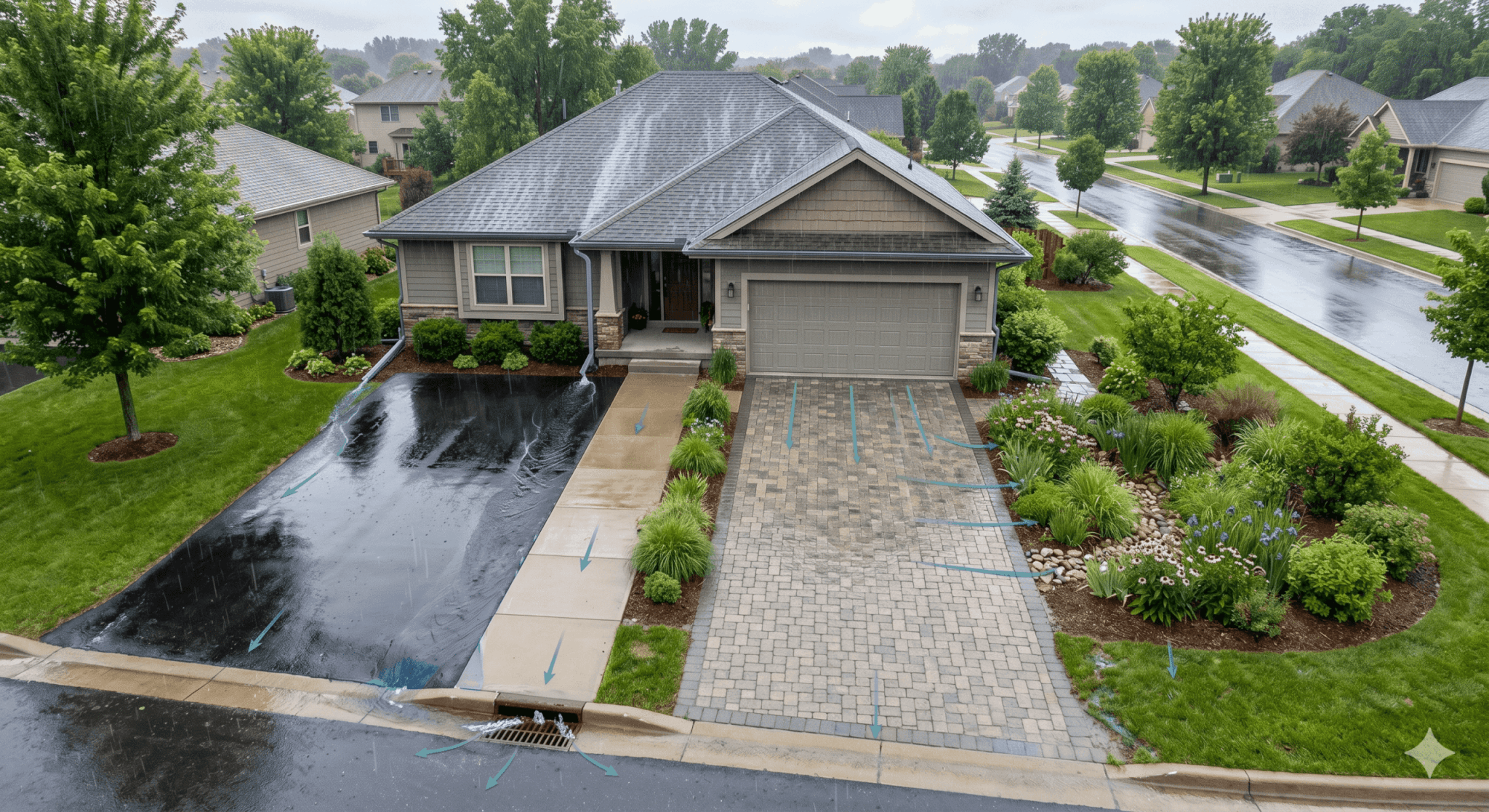
Permeable pavements are supposed to make you feel like an eco‑wizard. They let water infiltrate through the surface and into a stone bed, reducing ponding and recharging groundwater. They even reflect more heat than traditional paving materials, which means your driveway isn’t secretly turning your cul‑de‑sac into a frying pan. So why are you standing in ankle‑deep puddles, wondering if your new patio is actually a demon project?
Common Problems and Solutions
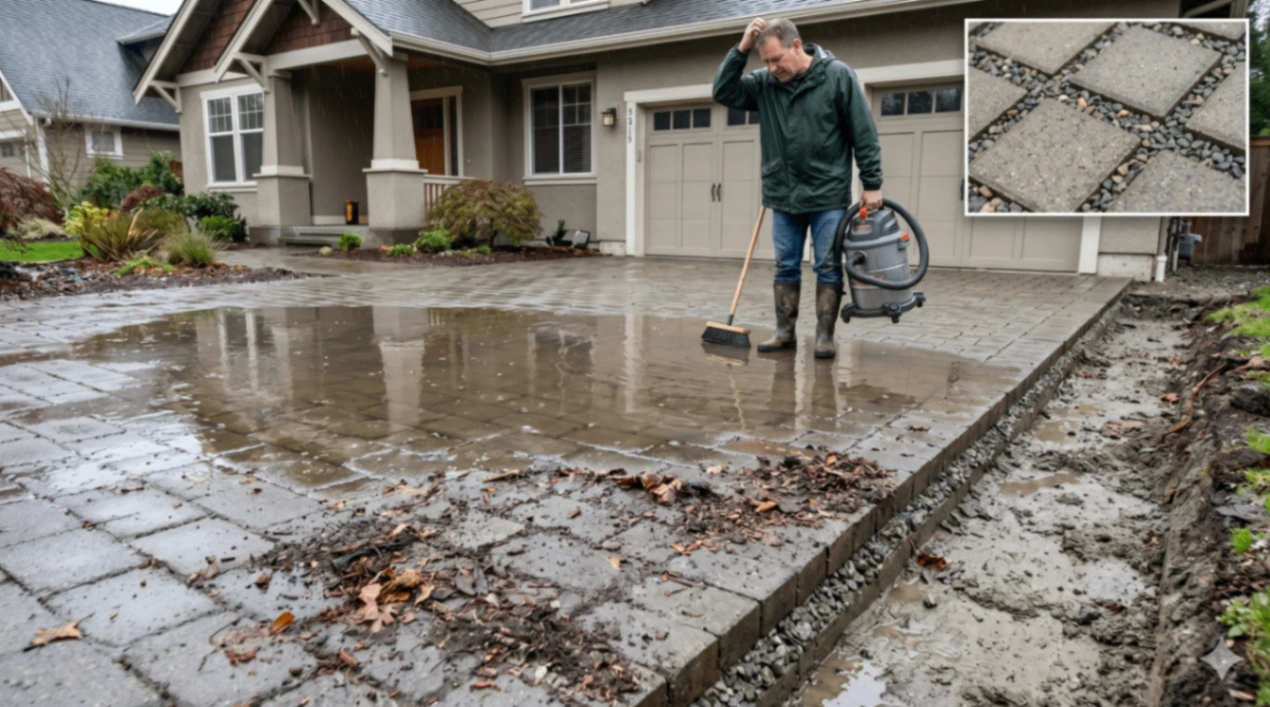
Permeable pavers sit on a deep bed of crushed stone that stores stormwater; if the stone layer is too shallow or the soil underneath is heavy clay, the water has nowhere to go. In very tight soils you may need to install an underdrain or amend the soil. Surface clogging is another culprit. Leaves, silt and stray bits of your neighbor’s mulch can quickly plug the pores. Sweeping once or twice a week keeps the system working (and counts as a cardio workout). Also, avoid using sand for winter traction — you’re basically pouring concrete into the pores.
Permeable Paver Slope
Slope matters too: permeable pavements should be level or gently sloped toward an overflow or underdrain. If you pitch them toward a low spot (or your foundation), the water pools, and you get a spontaneous reflecting pool. And despite marketing brochures, not every project is a candidate. Permeable asphalt, pervious concrete, and permeable interlocking pavers are great for driveways, parking lots and sidewalks, but they aren’t designed for high‑speed or heavy‑load pathways. High groundwater tables can also keep the base saturated.
Installed correctly, permeable pavers reduce runoff and lower flood risk, improve safety by reducing hydroplaning and may qualify for stormwater fee credits (more on that later). They also have a secret superpower: they make you the neighbor whose driveway isn’t covered in mysterious algae come July. There’s nothing like a good environmental measure that also saves you from a slip‑n‑slide.
Reducing Stormwater Fees and Protecting Your Home
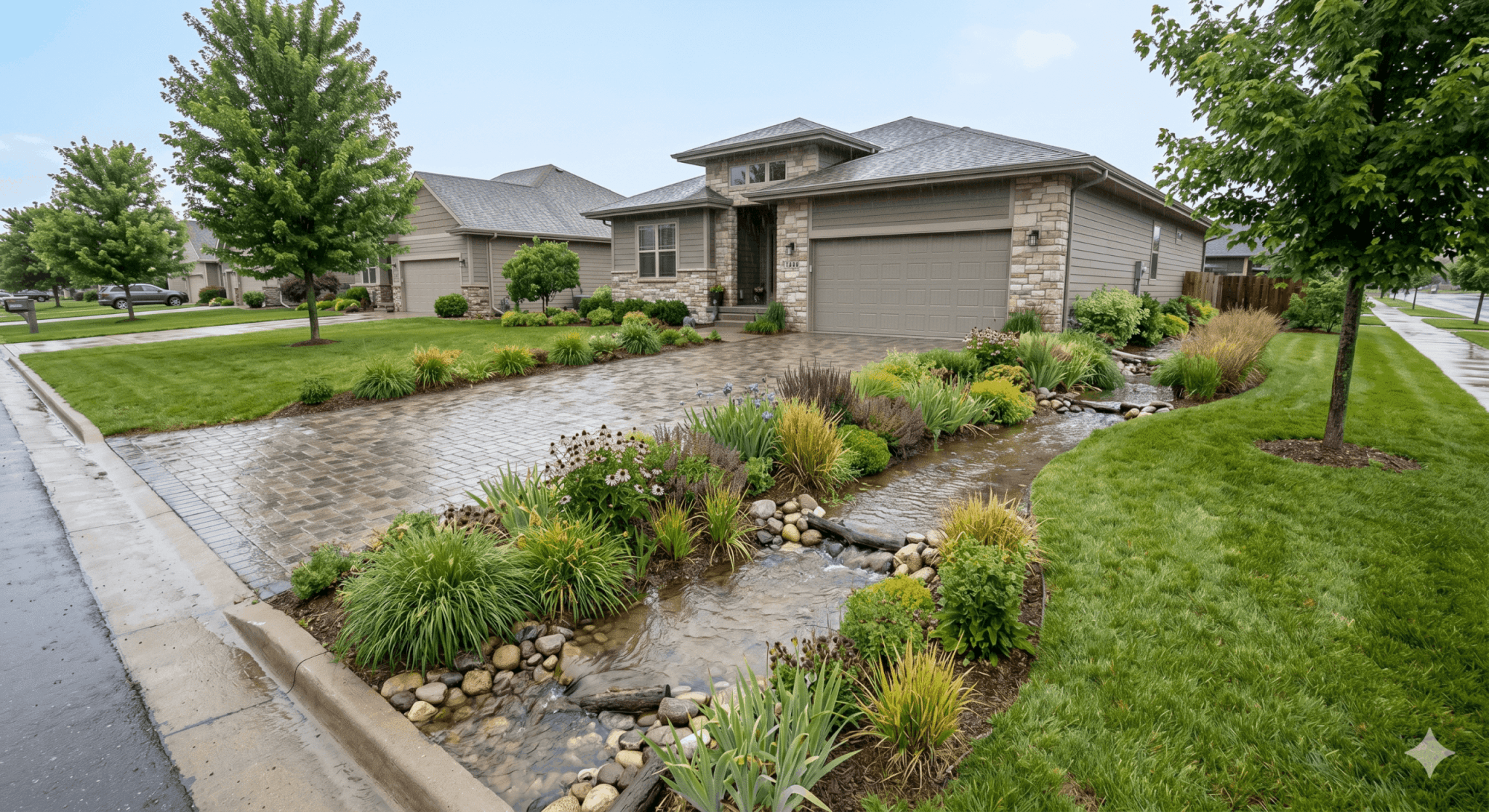
Pairing permeable pavers with a rain garden, French drains, or other home drainage techniques reduces runoff, protects your foundation from water damage, and can even lower your stormwater fees. Paying for themselves very slowly over time. (Although incentive rebates do this a lot quicker and are likely in your area. See below.) These systems slow rainwater so it soaks into the ground instead of overwhelming sewers. You get a drier yard, fewer puddles, and a smaller bill to show for it. Plus, improving infiltration helps recharge groundwater during dry spells, making your landscape more resilient.
Get Help with Rainplan’s Green Spending Advance
Rainplan’s Green Spending Advance services can match you with a trusted contractor, provide the initial payment so your home drainage project kicks off quickly, and help you file for any available rebates or incentive programs. Whether you’re installing new permeable pavers, adding a rain garden or upgrading your drainage system, we make it easier to complete (risk-free) your next project.
We offer speed. We offer service. We offer best pricing and contractor matching. 🙂
Want to learn more about the program? Click here.