

TLDR: Utilizing grants, stormwater management programs, and community empowerment can lead to building community green infrastructure that solves drainage problems aesthetically pleasingly.
What is community green infrastructure?
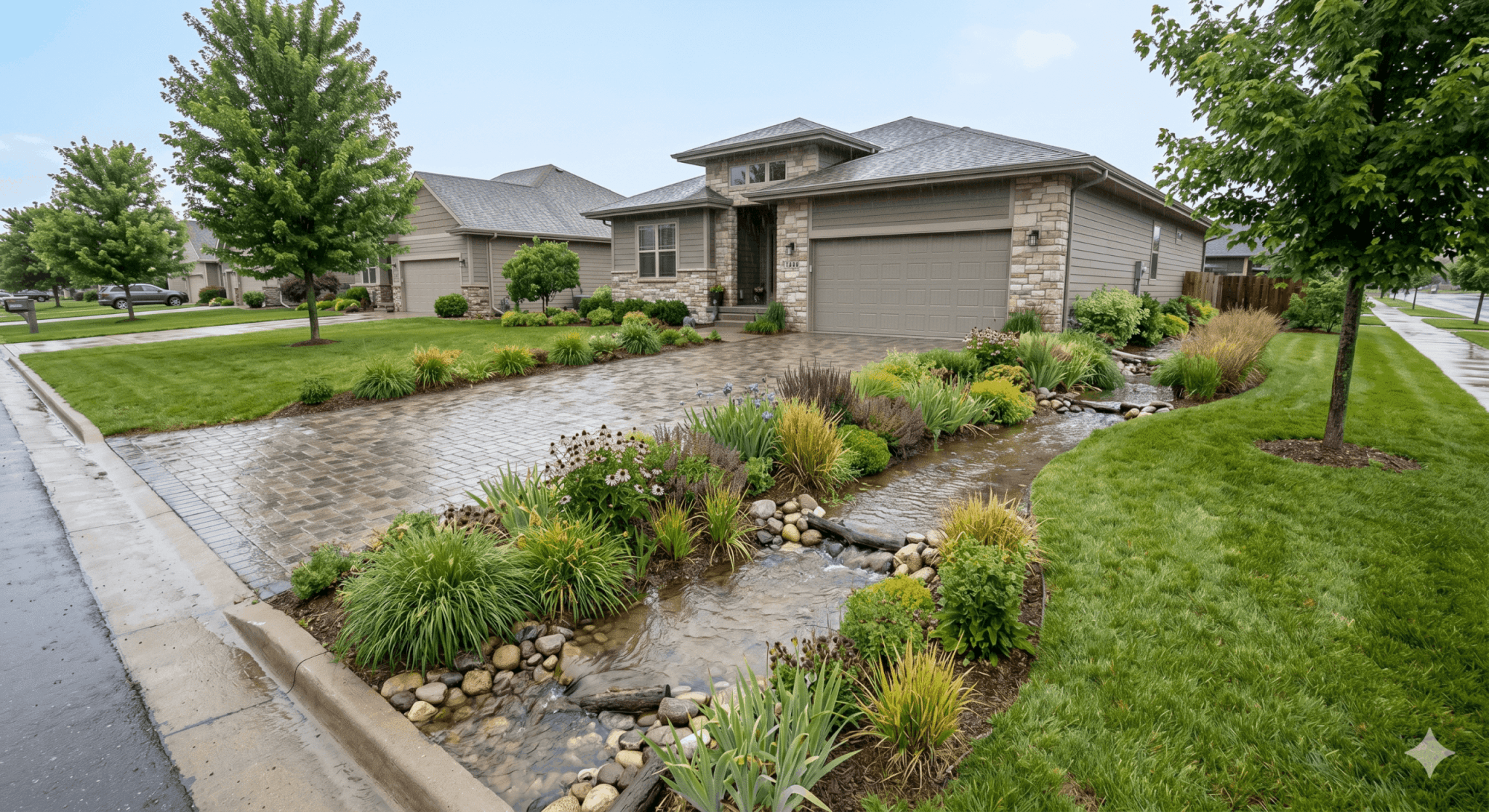
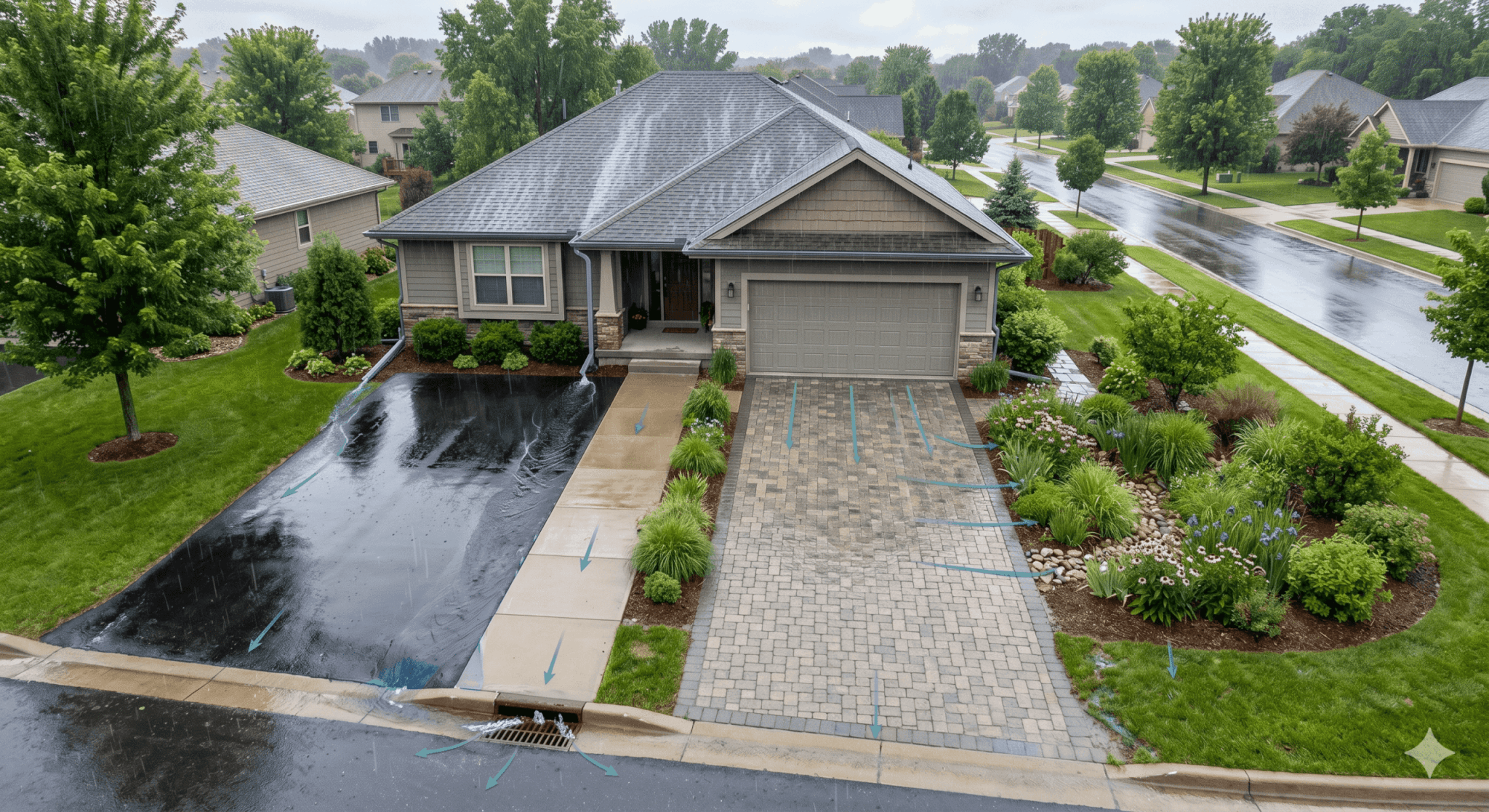
Community green infrastructure uses nature-based solutions to manage stormwater at the neighborhood level. Cities install rain gardens, permeable pavement, and rain barrels in public spaces like parks and schools. These projects reduce flooding while creating recreational spaces for residents.
Communities nationwide use grants and stormwater programs to fund green infrastructure. Art installations combine flood mitigation with public gathering spaces. Schools convert cracked pavement into rain gardens that teach students about environmental protection.
Individual homeowners also participate by installing backyard rain barrels and native plantings. These small-scale projects connect to larger municipal stormwater management plans.
How do art installations manage stormwater?
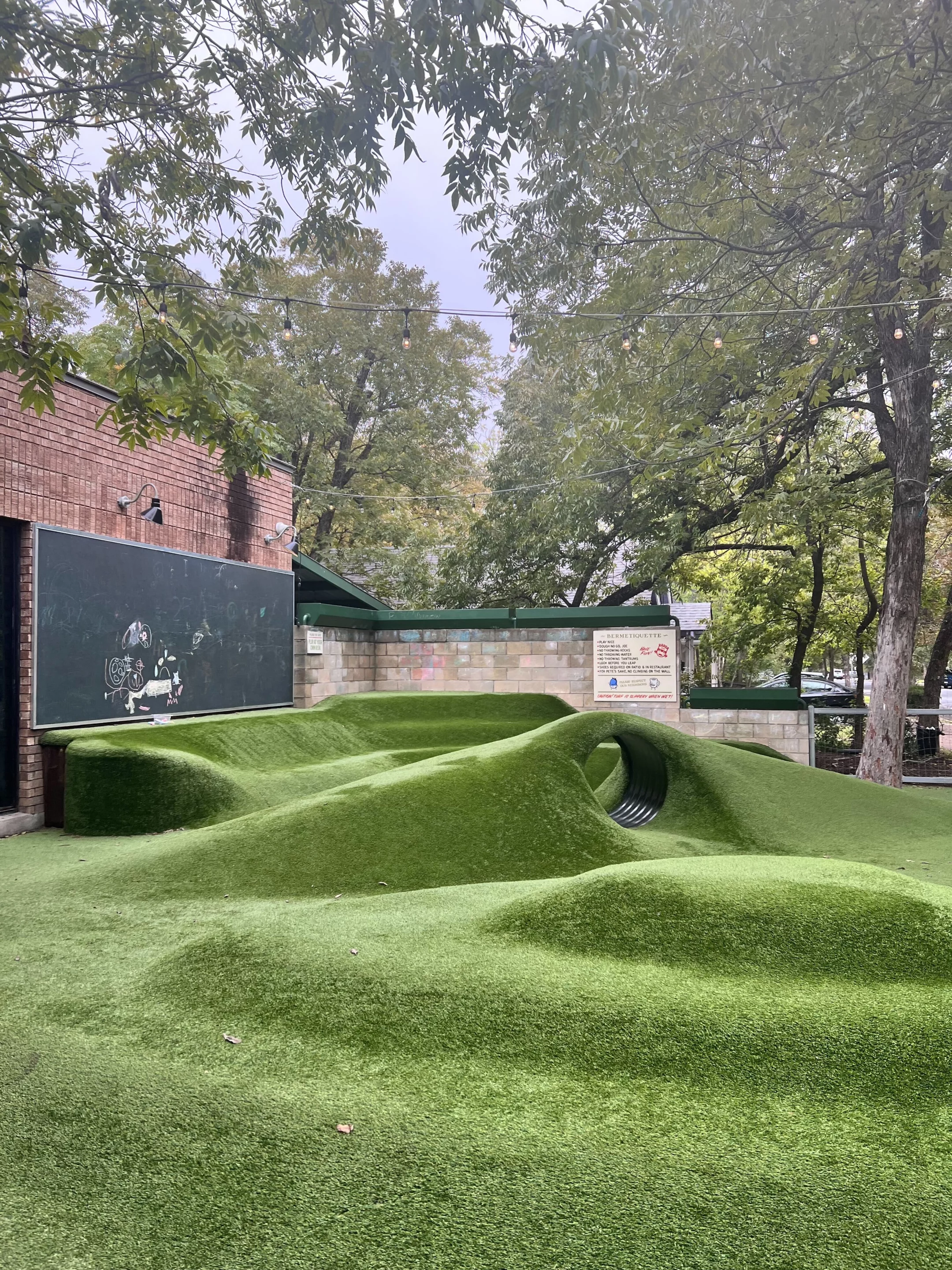
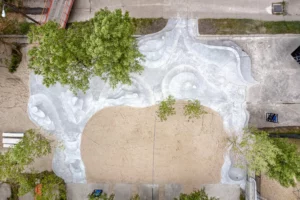
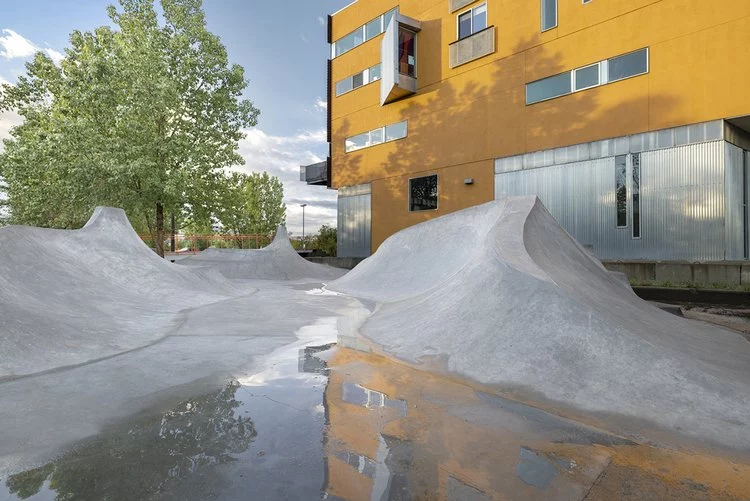
Public art can serve dual purposes for recreation and water management. Denver installed “Community Forms” in a high-traffic area with chronic flooding. The concrete skatepark redirects water from a building’s downspout into a vegetated swale.
Artist Matt Barton designed the structure for the FEMA Region 8 ArtWorks initiative. The project transformed a flooding problem into an interactive art piece. Residents now use the space for skateboarding while the vegetated swale filters stormwater runoff.
This model shows green infrastructure can be functional and aesthetic. The installation creates community gathering space while solving drainage problems.
What are stormwater schoolyard projects?
Schools implement green infrastructure to address flooding and create outdoor learning spaces. These projects convert large impervious schoolyards into areas that absorb rainfall.
Milwaukee Metropolitan Sewer District Schoolyard Program:
- Partnership with Green Print Partners provides grants for schoolyard improvements
- Parents, students, and educators design new schoolyards together
- Projects include green roofs, rain gardens, and stormwater planters
- Green roofs reduce stormwater runoff by up to 65% according to U.S. General Services Administration
Chicago Space to Grow Program:
- Partnership among Chicago Public Schools, Department of Water Management, Healthy Schools, and Openlands
- One elementary school replaced cracked pavement with permeable pavement holding 130,000 gallons of water
- Added playgrounds, track, and basketball court that direct rainwater to surrounding rain gardens
- Promotes ecological literacy while reducing flood risks
These schoolyard transformations provide outdoor classrooms and play spaces. Students engage with green infrastructure through hands-on learning. The large surface areas of school properties make significant impacts on neighborhood stormwater management.
How do neighborhoods organize stormwater projects?
Communities organize through workshops, grants, and collaborative planning to address local flooding.
West Michigan Environmental Council (Grand Rapids):
- Hosts rain barrel and green infrastructure workshops
- Teaches residents to build upcycled rain barrels from existing materials
- Rain barrels collect water from gutters to reduce pollution in local waterways
Vadnais Lake Area Water Management Organization (Minnesota):
- Provides “Community Blue” grants for stewardship projects
- Funded community rain garden installation
- Results: Reduced stormwater volume by 25,593 cubic feet per year
- Results: Reduced sediment by 207.83 pounds per year
Rainplan and Low Impact Development Center Partnership:
- Uses grants to plan stormwater solutions for requesting communities
- Creates master plans to address localized flooding
- Builds stormwater dashboards showing neighbors available solutions by price point
- Targets property damage and flooding issues at the community level
What types of community green infrastructure exist?
Communities implement green infrastructure at multiple scales. Solutions range from individual property improvements to city-wide coordinated projects.
Small-Scale Solutions:
- Rain barrels on residential properties
- Native plant gardens in yards
- Permeable walkways replacing concrete
Mid-Scale Solutions:
- Schoolyard rain gardens
- Park bioswales
- Community garden stormwater features
Large-Scale Solutions:
- Art installations with drainage systems
- City-wide permeable pavement programs
- Coordinated neighborhood stormwater plans
Each project type addresses specific drainage problems. Small projects by individual homeowners accumulate into measurable impacts. Larger installations solve chronic flooding in high-traffic areas.
What funding sources support community green infrastructure?
Multiple grant programs and partnerships fund community stormwater projects:
| Program | Location | Funding Type | Project Examples |
|---|---|---|---|
| FEMA Region 8 ArtWorks | Denver, CO | Federal grant | Art installation stormwater systems |
| Milwaukee Metro Sewer District | Milwaukee, WI | Municipal partnership | Schoolyard green infrastructure |
| Space to Grow | Chicago, IL | Multi-agency partnership | School permeable pavement, rain gardens |
| Community Blue Grant | Minnesota | Regional grant | Residential rain gardens |
| Rainplan-LID Partnership | Multiple states | Grant-funded planning | Community stormwater dashboards |
Cities and utilities often partner with nonprofits to administer programs. Property owners access funding through these partnerships rather than navigating bureaucracy alone.
Rainplan and Your Community
How does Rainplan support community green infrastructure?
Rainplan partners with the Low Impact Development Center to implement community-scale stormwater solutions. The partnership provides planning and implementation support for neighborhoods requesting help.
Services include:
- Master stormwater plans for targeted communities
- Custom dashboards showing property-specific solutions
- Cost analysis for green infrastructure options by price point
- Connection to available grants and incentives
Communities use these tools to address localized flooding and property damage. Neighbors select solutions based on their specific needs and budgets.
Contact Rainplan at hello@myrainplan.com for community partnership information. Read about the Takoma Park, Maryland stormwater management project at https://myrainplan.com/takoma-park-maryland-stormwater-management/.