

Rain barrels and cisterns both collect rooftop rainwater — the difference is scale. A rain barrel holds 50–200 gallons and costs $50–$150; a cistern holds 200 to 10,000+ gallons and costs $300–$5,000+. For most homeowners with a small garden, one or two rain barrels is the right starting point. If you want to offset your water bill significantly or supply drip irrigation for a large property, a cistern makes more sense. Both options may qualify for local rebates that cover 50–100% of equipment cost.
Common Sense
Managing rain where it falls isn’t just a homeowner’s trick—it’s common sense infrastructure. By capturing roof runoff, property owners ease pressure on storm drains, reduce localized flooding, and save money on water. Whether it’s a modest barrel or a full-scale cistern, these systems turn everyday rainfall into a resource, not a nuisance.
Rain Barrels vs. Cisterns: What’s the Difference?
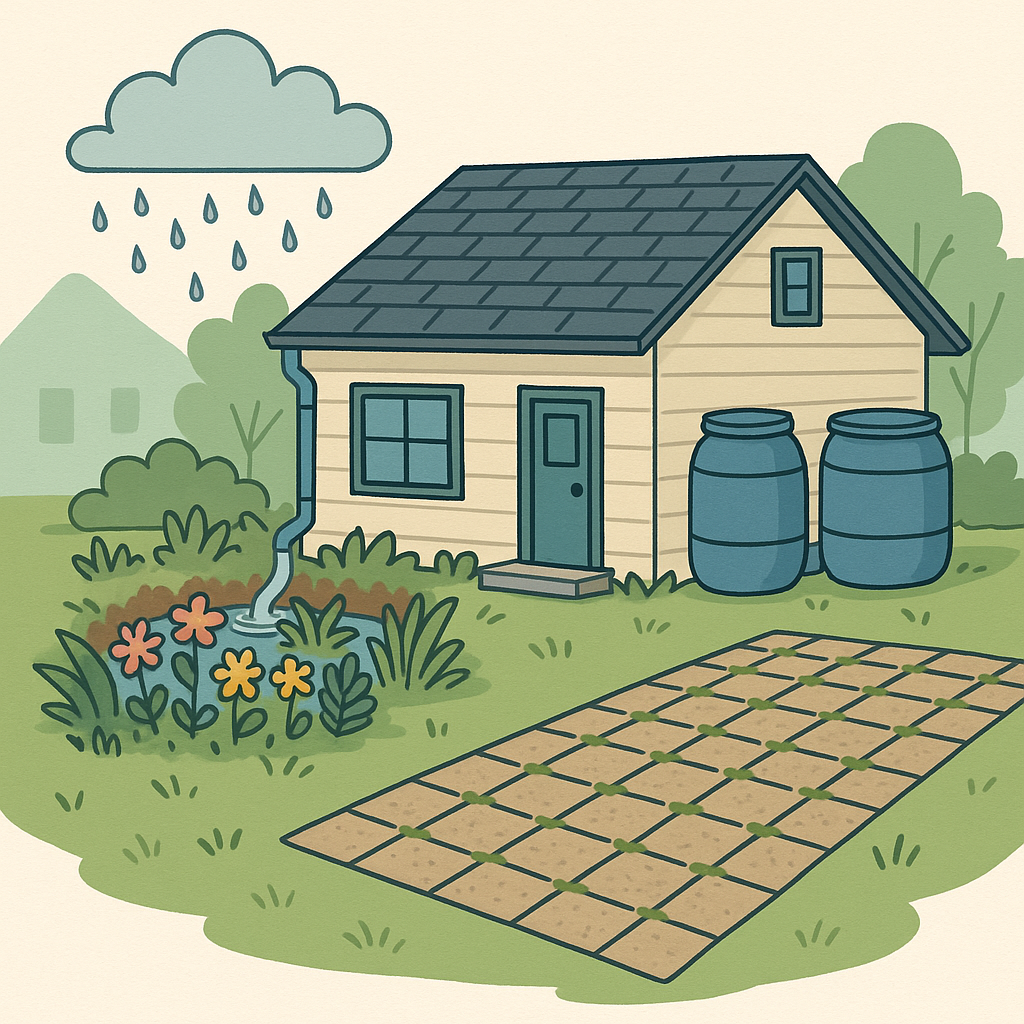
Collecting roof runoff is a bit like coupon clipping for water bills. Rain barrels capture water from downspouts and store it for your lawn or garden. Cisterns are the rain barrels’ bigger cousins, holding 200 to 10,000+ gallons. Both reduce runoff and provide free irrigation water, but the right choice depends on your roof area, space and ambition.
Sizing and Installation Tips
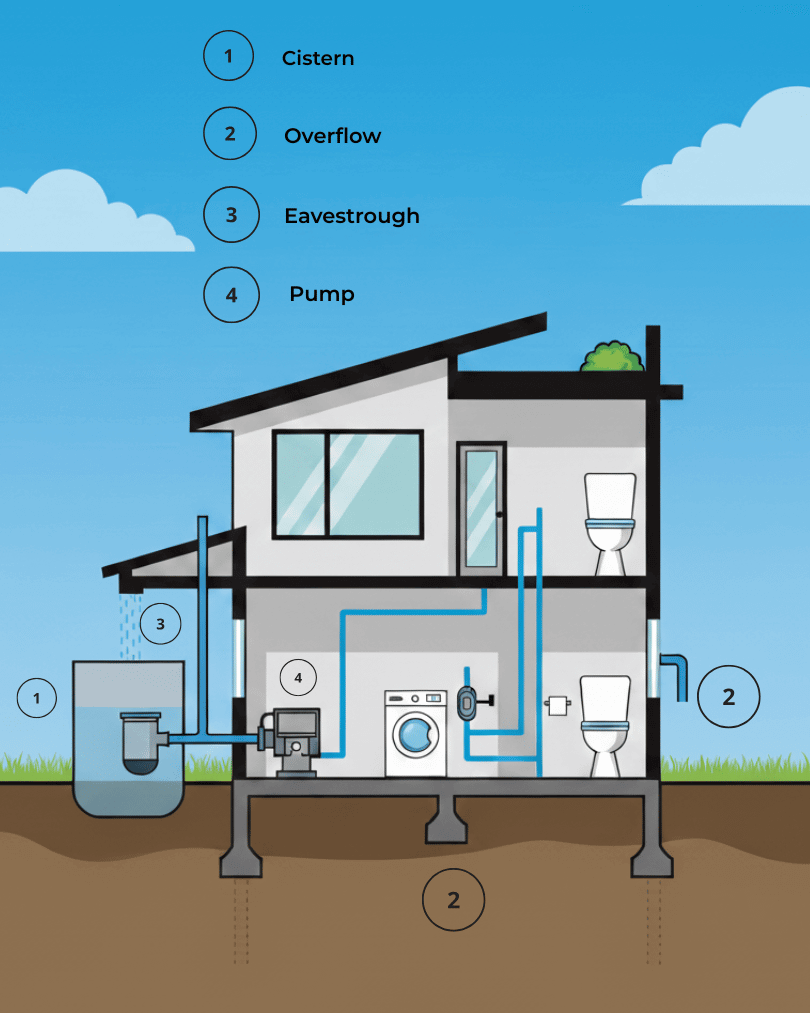
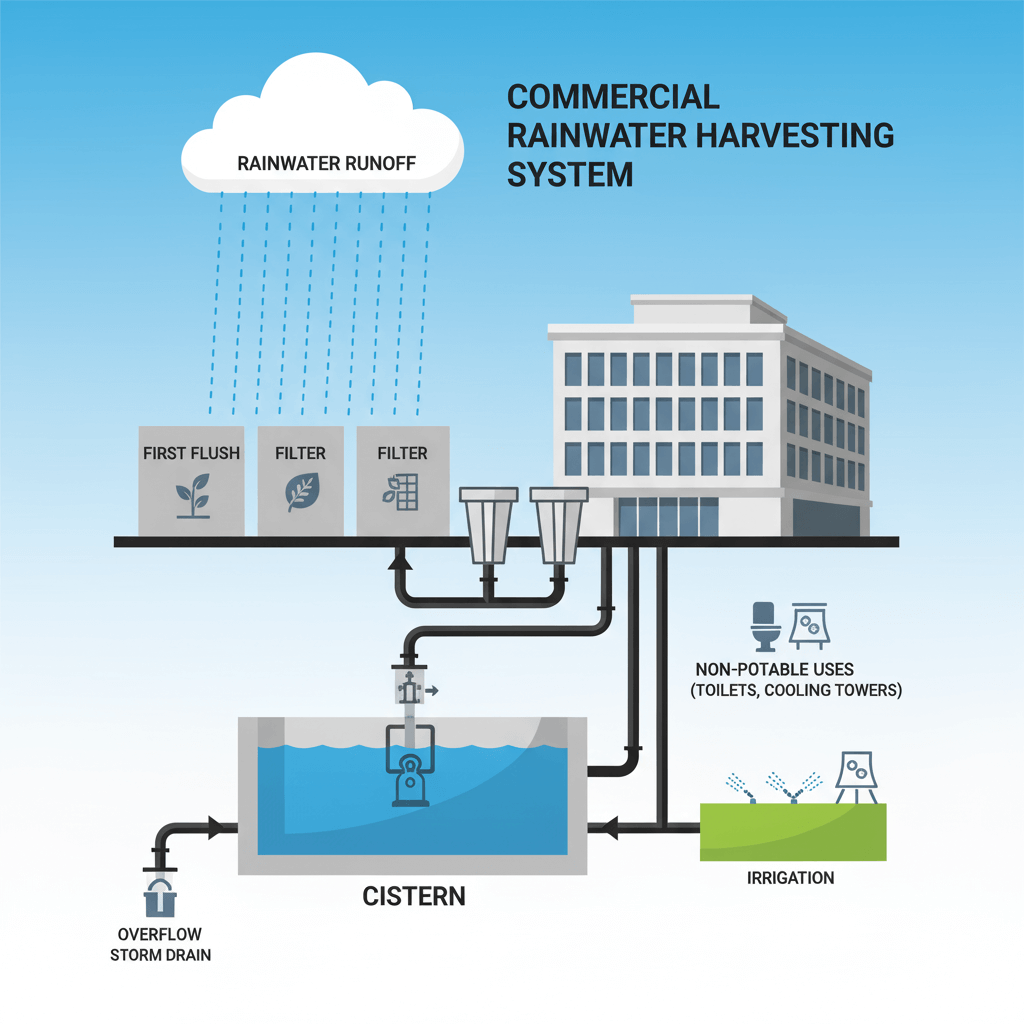
Sizing is key. A guideline suggests one 55-gallon barrel per 750-1,250 square feet of roof area. Barrels typically store 50-200 gallons; you can connect multiple barrels to increase capacity. Cisterns, which may be above- or below-ground, store more water and can be plumbed to drip irrigation lines or even toilets (with permits).
Installation is straightforward but not foolproof. Use gutters and downspouts that direct water to the tank. Install a mesh screen to keep debris and mosquitoes out and a first-flush diverter to discard the first, dirtiest runoff. Set the tank on a level foundation and plan an overflow route to a vegetated area or rain garden away from your foundation. Avoid using water from asphalt shingle roofs or wooden shakes on edible plants unless you treat it; heavy metals and microbes hitch rides on shingles.
Life After Installation: Pairing with Other Systems
Once installed, you’ll wonder why everyone isn’t doing it. Even capturing a small fraction of your roof runoff is a big boon.
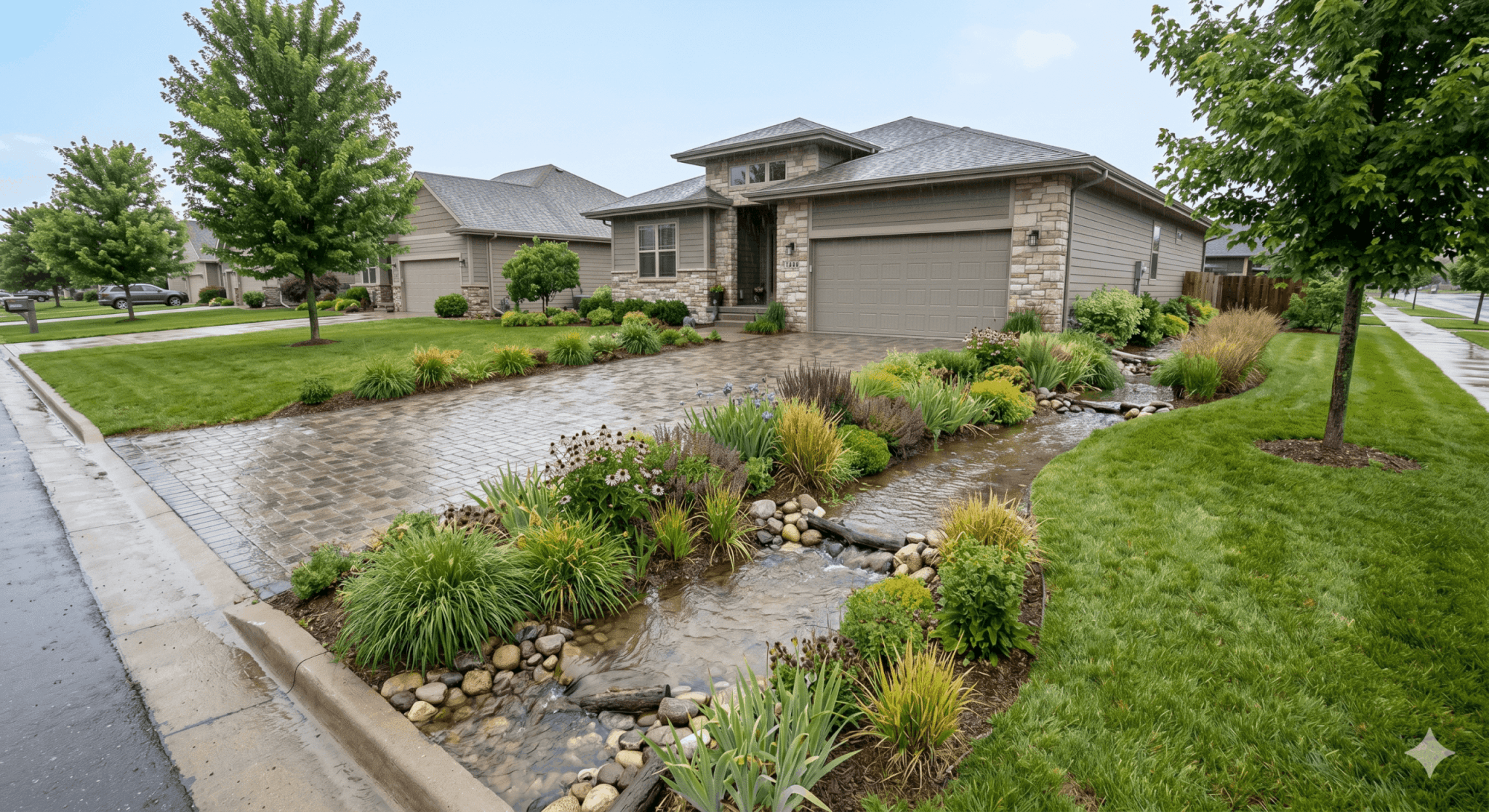
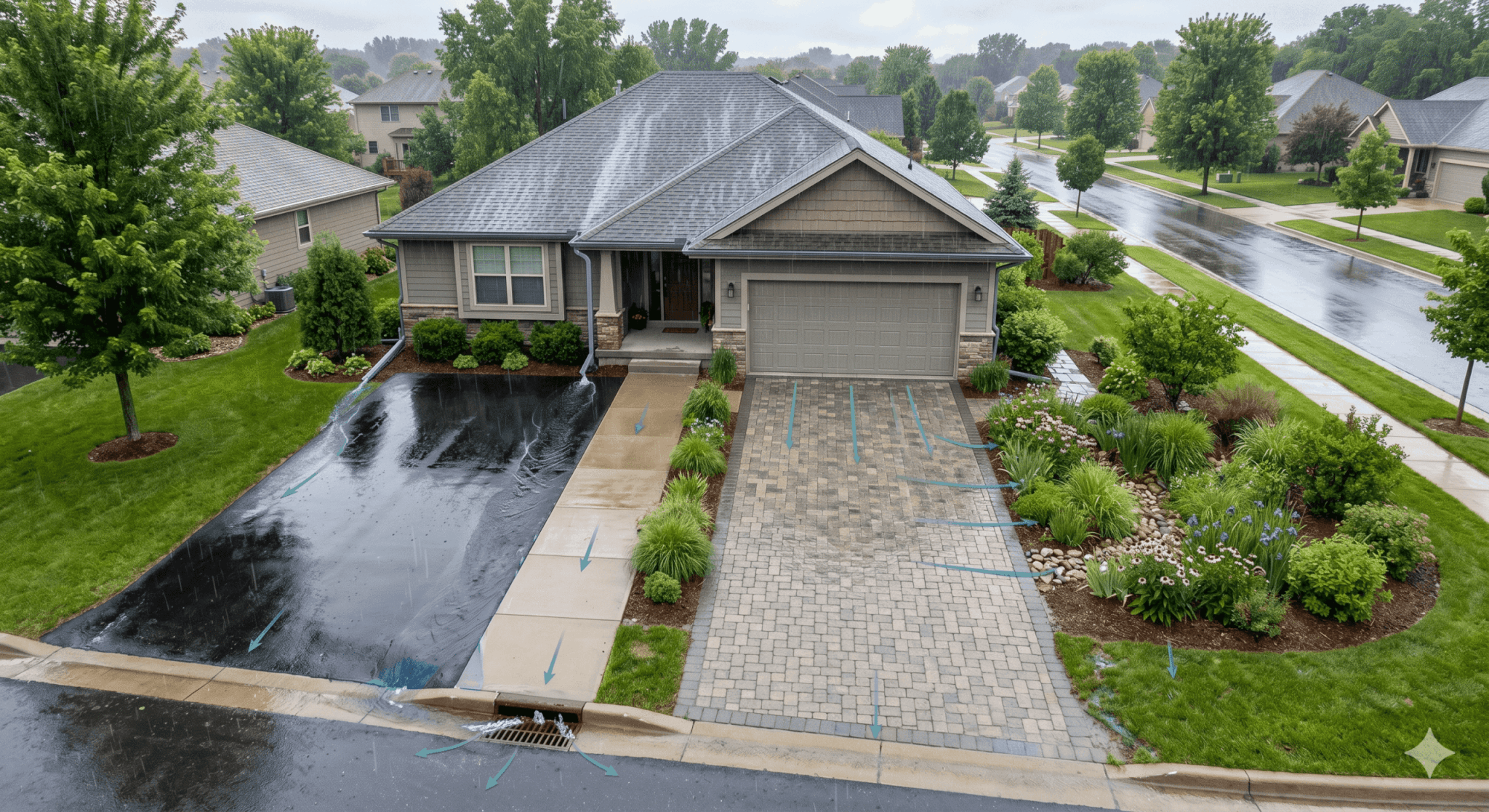
Pairing rain barrels or cisterns with other green infrastructure creates a comprehensive home drainage system. Capturing runoff at the source reduces ponding around your foundation and pairs well with practices like permeable pavers and rain gardens. Directing cistern overflow to a rain garden can protect your yard from flooding and allow infiltration. Similarly, installing permeable pavers on walkways or driveways helps your property soak up water rather than shed it, reducing stormwater fees and preventing water damage.
Get Help with Rainplan’s Green Spending Assurance
If you want expert guidance, Rainplan’s Green Spending Assurance service can help you fund and implement these improvements. We’ll match you with the right contractor, provide initial payments so your project starts quickly, and help you apply for any available rebates or incentive programs.
Whether you need a simple rain barrel, a large cistern, a new rain garden, or permeable pavers, we’re here to help you maximize your investment by connecting you to the right people and programs. At the end of the day, there’s something deeply satisfying about watering your tomatoes with stormwater.
Rain Barrel vs. Cistern: Side-by-Side Comparison
| Feature | Rain Barrel | Cistern |
|---|---|---|
| Typical capacity | 50–200 gallons | 200–10,000+ gallons |
| Average cost | $50–$150 | $300–$5,000+ |
| Installation | DIY in 1–2 hours | 1–3 days, often professional |
| Permit required? | Rarely (check local rules) | Sometimes — varies by state and size |
| Maintenance | Low — clean 1–2x per year | Moderate — inspect quarterly |
| Best for | Garden watering, car washing | Irrigation, toilet flushing, larger properties |
| Footprint | Small — fits beside downspout | Large — often buried or installed in garage |
| Typical rebate eligibility | Common — many municipalities | Less common; varies by program |
| Mosquito risk | Higher — needs tight-fitting lid | Lower — enclosed systems |
| Water quality use | Non-potable outdoor use | Non-potable; can be filtered for indoor use |
How Much Capacity Do You Need? Rainwater System Sizing Guide
The right system size depends on your roof area and intended use. Here is a practical starting point:
| Roof Area | Water Collectable Per Inch of Rain | Recommended Capacity | Best System |
|---|---|---|---|
| Under 500 sq ft | ~300 gal per inch | 55–100 gallons | 1 rain barrel |
| 500–1,000 sq ft | 300–600 gal per inch | 100–200 gallons | 1–2 rain barrels |
| 1,000–1,500 sq ft | 600–900 gal per inch | 200–500 gallons | 2–4 barrels or small cistern |
| 1,500–2,500 sq ft | 900–1,550 gal per inch | 500–1,000 gallons | Above-ground cistern |
| 2,500–4,000 sq ft | 1,550–2,500 gal per inch | 1,000–2,500 gallons | Above- or below-ground cistern |
| 4,000+ sq ft | 2,500+ gal per inch | 2,500–5,000+ gallons | Underground cistern with pump |
Rule of thumb: roof area (sq ft) x rainfall (inches) x 0.623 = gallons collectible. Actual collection is typically 75–85% of theoretical maximum due to evaporation and first-flush diversion.
Frequently Asked Questions: Rain Barrels vs. Cisterns
What is the difference between a rain barrel and a cistern?
A rain barrel is a small above-ground container (typically 50–200 gallons) that captures water from a single downspout. A cistern is a larger storage tank (200 to 10,000+ gallons) that can be above ground, below ground, or installed inside a garage. Cisterns typically serve multiple downspouts and can supply drip irrigation systems or indoor non-potable uses like toilet flushing.
Do rain barrels require a permit?
In most US states, rain barrels under 100 gallons do not require a permit. Cisterns over 1,000 gallons may require a water right permit in some states — particularly Oregon and Washington. Always check with your local building department before installing any system larger than 100 gallons. Colorado caps total collection at 110 gallons regardless of permit status.
How much does a rain barrel cost compared to a cistern?
Rain barrels cost $50–$150 for a basic 50–100 gallon unit. Cisterns range from $300 for a simple 250-gallon above-ground tank to $5,000+ for a buried 2,500-gallon system with pump and filter. Many municipalities offer rain barrel rebate programs covering 50–100% of purchase cost — enter your address at Rainplan to find programs near you.
Can I connect multiple rain barrels together?
Yes. Multiple rain barrels can be linked in series with overflow connectors to increase total capacity. Two 55-gallon barrels give 110 gallons — the maximum allowed under Colorado’s restrictions. In most states there is no practical limit, though connecting 4+ barrels is often the point where a small cistern becomes more cost-effective per gallon stored.
Are rain barrels effective at reducing water bills?
A typical 55-gallon rain barrel can offset roughly 1,300 gallons of irrigation water per summer. At average US water rates, that is about $6–$10 in direct bill savings. The larger financial benefit usually comes from stormwater utility fee credits — many cities reduce monthly fees by $20–$100/year for properties with rain barrels or cisterns that demonstrably reduce runoff.
What can I use harvested rainwater for?
Rainwater collected in standard barrel or cistern systems is suitable for garden and lawn irrigation, car washing, pool top-offs, and — where local plumbing codes permit — toilet flushing. It should not be used for drinking or cooking without proper multi-stage filtration and disinfection. Most residential rainwater systems are designed and permitted for non-potable outdoor use only.
Is a cistern worth it for a typical home?
A cistern makes financial sense if you have a large roof (2,000+ sq ft), live in an area with concentrated seasonal rainfall, or want to supply drip irrigation for a large garden. In cities with meaningful stormwater utility fees, a 500-gallon above-ground cistern ($500–$1,000 installed) can pay back in 3–5 years through fee credits alone.